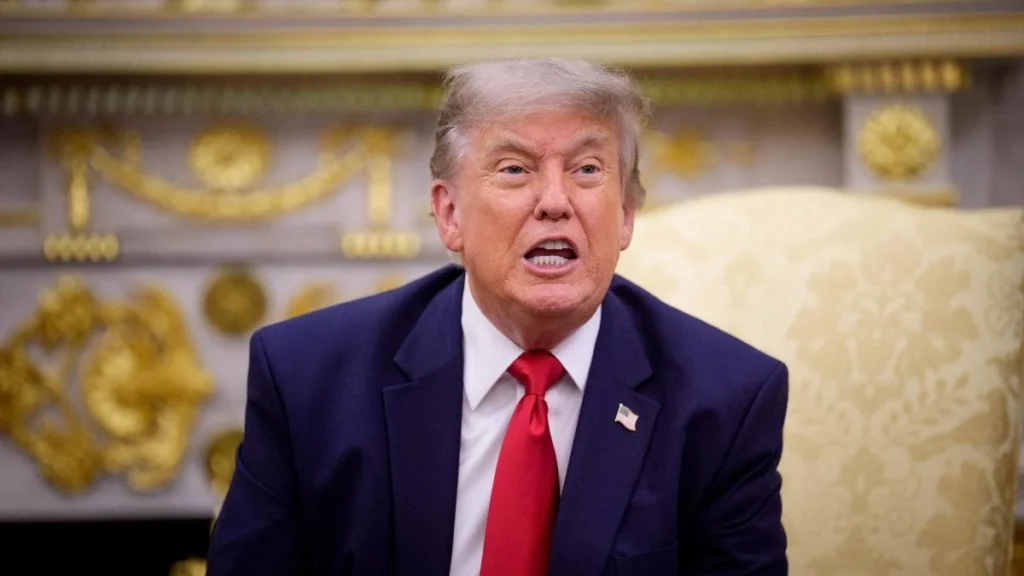

In a notable departure from the traditional political rally format, Donald Trump participated in a special Independence Day edition of the "Storytime with Second Lady" podcast, hosted by Usha Vance. The program, which centers on promoting children’s literacy and historical awareness, featured the former president reading from Jonathan Pliska’s "Presidents Play!", a book that explores the various sports and physical activities enjoyed by U.S. commanders-in-chief throughout history. During the session, Trump blended historical trivia with his characteristic brand of humor, offering commentary on the physical appearances of past presidents and joking about his own public image. The appearance marks a strategic effort to engage with family-oriented programming while highlighting the importance of early childhood education and national heritage.
The "Storytime with Second Lady" initiative was launched by Usha Vance as a platform to encourage reading among young Americans. By inviting high-profile figures to read classic and educational children’s literature, the program aims to bridge the gap between civic leadership and community engagement. The Independence Day episode gained immediate traction on social media and digital platforms, particularly for the candid and lighthearted nature of the conversation between Trump and Vance.
Reflections on Presidential History and Physicality
While reading "Presidents Play!", Trump paused to offer personal observations on several of his predecessors. One of the most discussed moments of the episode involved his assessment of John F. Kennedy. Trump described the 35th president as a "great guy" and a "handsome" figure, specifically ranking him as the "second most handsome" president in American history. In a rhetorical flourish, Trump suggested that Kennedy’s physical appeal played a significant role in his political success, stating, "They say that’s why they brought him back for a second term. So he won the war, and he came back. He ran for president, and he won. That was good credentials."
The conversation shifted toward the 38th president, Gerald Ford, when Trump encountered an illustration of Ford in a swimming context. Ford, who was a star football player at the University of Michigan before his political career, was often depicted as one of the most athletic presidents. Trump used the opportunity to pivot to self-deprecating humor regarding his own fitness and public perception. "I don’t know if I look good in a bathing suit," Trump joked. "I haven’t had a bathing suit in a long time. I’m too busy. I’m looking at these pictures of people swimming, and I’m saying, ‘I don’t know.’"
The discussion also touched upon William Howard Taft, whom Trump identified as the "heaviest" president. Historical records corroborate this, noting that Taft weighed upwards of 330 pounds during his presidency, leading to the installation of a custom, oversized bathtub in the White House. Trump used these comparisons to encourage the younger audience to maintain good health and physical fitness, while also praising Usha Vance for her commitment to a healthy lifestyle.
The Strategic Context of the Podcast Appearance
The decision to appear on a literacy-focused podcast reflects a broader trend in political communication where leaders utilize "soft media" to reach demographics that may not consume traditional news or political broadcasts. By focusing on a children’s book about sports and history, the appearance allowed Trump to present a more personable side while reinforcing themes of American exceptionalism and the continuity of the executive branch.
Furthermore, the episode included a brief commentary on political unity, albeit framed through a humorous lens. Trump made a cheeky suggestion regarding his predecessors and successors, stating, "Maybe I should invite some of those people to watch a football game together. The press would go wild." This reference to Barack Obama and Joe Biden suggests a recognition of the intense media scrutiny surrounding the relationships between current and former presidents, even as he maintained a lighthearted tone for the children’s program.
Background on Usha Vance and the Literacy Initiative
Usha Vance, a graduate of Yale Law School and a former clerk for Supreme Court Chief Justice John Roberts, has made literacy a cornerstone of her public platform. The "Storytime with Second Lady" podcast was conceived as a response to declining reading proficiency scores across the United States. According to data from the National Assessment of Educational Progress (NAEP), often referred to as "The Nation’s Report Card," reading scores for nine-year-olds saw the largest decline in decades following the disruptions caused by the COVID-19 pandemic.
By leveraging her position to highlight children’s books, Vance aims to revitalize interest in reading as a foundational skill for civic participation. The inclusion of Donald Trump in the Independence Day episode was designed to maximize the program’s reach. Jonathan Pliska’s "Presidents Play!", the book selected for the episode, is particularly suited for this purpose, as it combines athletic anecdotes with historical facts, making the lives of the presidents more relatable to children.
A Timeline of Presidential Engagement with Children’s Literacy
The tradition of presidents and their spouses engaging in public reading events is well-established in American history. This timeline illustrates the evolution of these initiatives:
- 1989-1993: Barbara Bush established the "Barbara Bush Foundation for Family Literacy," making the cause a primary focus of her time as First Lady. She famously read to children on the television program "Mrs. Bush’s Story Time."
- 2001-2009: Laura Bush, a former librarian and teacher, launched the National Book Festival in coordination with the Library of Congress, an event that continues to this day.
- 2009-2017: Michelle Obama frequently participated in "Let’s Read! Let’s Move!", an initiative that combined literacy with physical health, much like the themes discussed in Trump’s recent podcast appearance.
- 2024: The launch of "Storytime with Second Lady" represents a modern, digital-first approach to this tradition, utilizing the podcast format to reach families directly on their mobile devices and in their homes.
Analysis of Implications and Public Reception
The public reception to Trump’s appearance on the podcast has been multifaceted. Supporters have praised the former president for his willingness to engage in a non-traditional format and for his ability to make historical topics engaging for children. Critics, however, have pointed to the irony of his comments regarding historical facts, such as the timeline of JFK’s presidency and the Second World War, noting that while the tone was lighthearted, the historical accuracy was occasionally sacrificed for the sake of the narrative.
From a journalistic perspective, the event highlights the ongoing shift in how political figures manage their "brand." By associating himself with a literacy program, Trump is able to soften his public image while still maintaining the "outsider" wit that his base appreciates. For Usha Vance, the episode successfully brought national attention to her podcast, likely increasing its listener base and furthering the reach of her literacy advocacy.
The broader impact of such programming on children’s literacy remains a subject of study. Educators generally agree that seeing high-profile leaders value books can have a positive "role model effect" on young readers. However, the efficacy of a single podcast episode in moving the needle on national reading scores is limited. Experts suggest that these programs are most effective when they serve as a gateway to more sustained, community-based literacy efforts.
Data and Supporting Statistics
The urgency of literacy initiatives is underscored by current educational data. The 2022 NAEP results indicated that only 33 percent of fourth-grade students in the United States performed at or above the "Proficient" level in reading. Furthermore, the gap between the highest and lowest-performing students has widened, suggesting that children in underserved communities are falling further behind.
In terms of media impact, podcasts have become an increasingly influential medium. According to Edison Research, over 40 percent of Americans age 12 and older listen to podcasts monthly. By entering this space, political figures are able to bypass traditional media gatekeepers and speak directly to specific audience segments—in this case, parents and educators interested in historical and educational content.
Conclusion and Future Outlook
As the "Storytime with Second Lady" podcast continues its run, the Independence Day episode featuring Donald Trump will likely remain one of its most cited installments. The blend of presidential trivia, personal anecdotes, and humor serves as a case study in modern political communication. While the primary goal of the program remains the promotion of children’s literacy, the cultural and political subtext of the appearance cannot be ignored.
The event underscores a shared recognition across the political spectrum that the "bully pulpit"—or in this case, the digital microphone—is a powerful tool for shaping the values and interests of the next generation. Whether through discussions of JFK’s appearance, Taft’s weight, or the simple act of reading a picture book, the program reinforces the idea that the history of the American presidency is not just a collection of dates and policies, but a series of human stories that continue to resonate in the modern era. Moving forward, the success of such initiatives will likely be measured not just by download numbers, but by their ability to foster a genuine and lasting interest in reading and history among American youth.