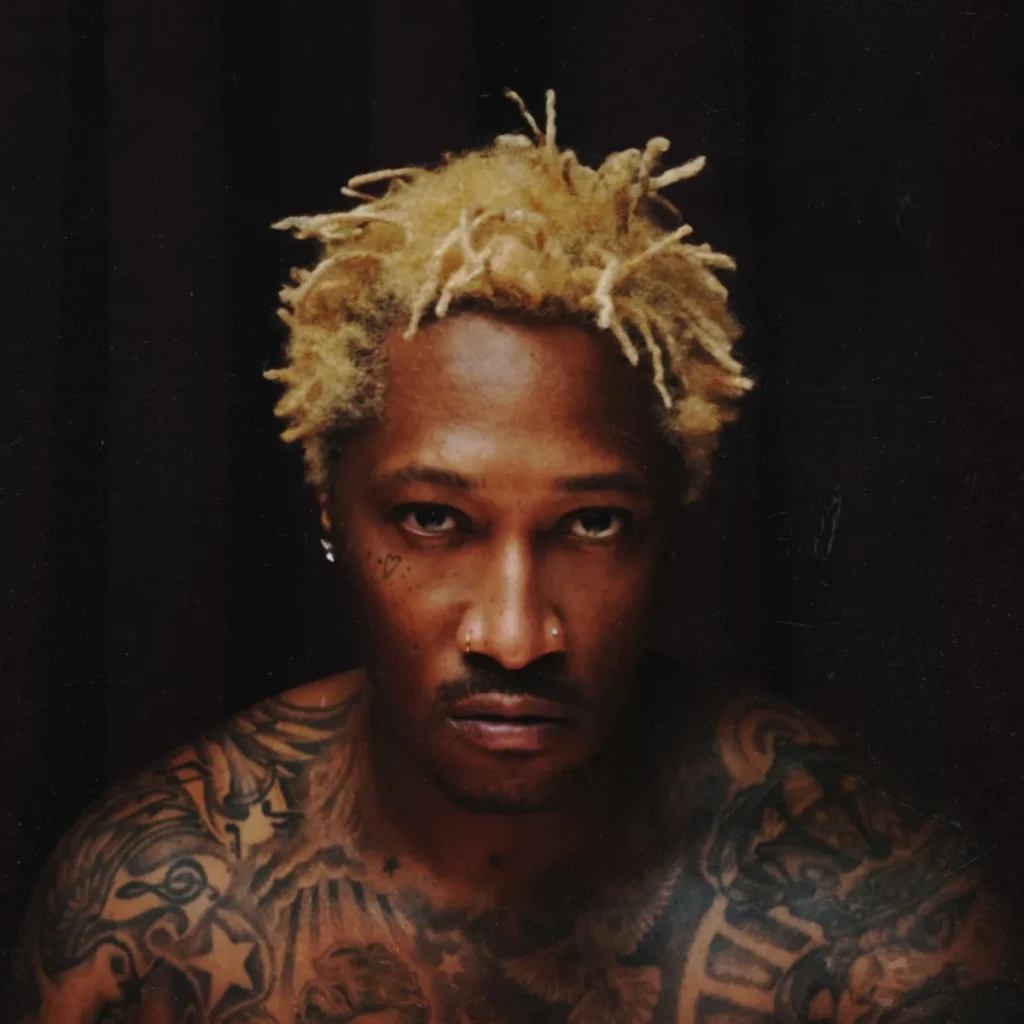

Future’s highly anticipated album, The Real Me, arrives following a period of heightened expectations, largely fueled by its soul-searching lead single, "Radio." Released ahead of the full project, "Radio" saw the acclaimed Atlanta rapper proclaim its intended purpose was far removed from mainstream airwaves, instead serving as a conduit for profound introspection. Lyrically, Future set the stage for an album promising vulnerability and self-examination, rapping lines such as, "A lot of n***s want the spot when I don’t even want the crown/ Already legendary and never tryna talk about it." This seemingly perceptive self-awareness suggested an artist keenly attuned to the weighty expectations surrounding his output, positioning The Real Me* as a deliberate effort to solidify his humanity and offer a genuine glimpse into the man behind the persona.
The album’s opening moments initially reinforced this promising narrative. "Fukk a Interview," the inaugural track, immediately captivated listeners with its production — a soundscape evoking the dramatic onset of an apocalyptic lightning storm, signaling an impending seismic shift in Future’s artistic direction. Adding to this intriguing setup, the first voice heard on the album belongs to rapper and comedian Afroman. A clip from his victorious 2026 defamation lawsuit features prominently, with Afroman declaring, "Yeah, we did it! Freedom of speech! … God bless, power to the people." The inclusion of this particular audio snippet, laden with connotations of truth-telling, legal vindication, and the assertion of personal liberty, seemed to telegraph Future’s readiness to finally unveil his authentic self, by any means necessary. However, as the album progresses, this initial promise largely remains unfulfilled.
The Retreat to Familiar Ground
Instead of delving deeper into the introspection hinted at by "Radio" and the symbolic "Fukk a Interview," Future largely settles into a familiar groove on The Real Me. This mode, while undeniably effective and often placing him a cut above many of his contemporaries, represents a shift into what could be described as "cruise control." With only a few exceptions of pop-adjacent tracks, the album largely inhabits the sonic and thematic atmosphere established by his 2024 project, MIXTAPE PLUTO, an album itself conceived as an homage to his storied family lineage.
Future’s connection to the Dungeon Family, a legendary collective originating from Atlanta, is a crucial piece of his artistic identity. Comprising seminal acts such as Organized Noize, Outkast, and Goodie Mob, the Dungeon Family fundamentally reshaped the landscape of hip-hop through its unwavering dedication to musicality, intricate lyricism, and deeply rooted Southern ideals. Their influence on the genre, particularly in establishing a distinct Southern voice that blended soul, funk, and rap, is indelible. This legacy forms a significant part of Future’s heritage, and his past works have often drawn inspiration from it, whether explicitly or implicitly.
On "No Misery," Future attempts to reconnect with these origins and the deeper artistic currents flowing through his family tree. The track features a poignant clip from Andre 3000, captured from the 2024 The Wizrd documentary. In the clip, Andre 3000 offers a profound assessment of Future’s artistic essence, praising his unique approach to expressing suffering. Through a distorted filter, Andre states, "Future has a certain pain behind what he’s doing. And you can call it soul, you can call it whatever, but to me it comes off as pain, where it comes straight off as pain. ‘And now, I’m gonna let y’all watch me balance the pain and we all on edge watching it.’" This deep and insightful commentary from one of hip-hop’s most revered figures masterfully sets the stage for Future to explore his most raw, mortal experiences, inviting listeners to witness a vulnerable balancing act.
However, the very same track quickly pivots away from this potential for profound revelation. Throughout "No Misery," Future dedicates the majority of his lyrical real estate to asserting a boastful claim: "you’ll never fuck her better than I can." This abrupt shift from the potential for shared suffering to aggressive bravado underscores the album’s central tension. While some might interpret this as an unconventional, albeit insincere, form of vulnerability—a raw, unvarnished expression of his ego and sexual prowess—it notably diverges from the deeper, more empathetic introspection that Andre 3000’s commentary, and the album’s title, initially promised. For listeners familiar with Future’s public narrative and his "collection" of relationships, this particular declaration lands less as a moment of genuine self-exposure and more as a reiteration of a well-worn persona.
The Super Future Formula and Its Limitations
Ultimately, the "real" Future presented on this album is largely the hitmaker—the artist who consistently locks into his "Super Future" mode. This persona is characterized by spitting depraved, instantly catchy rhymes over a landscape of thrumming, high-energy production. While his long-time collaborator Metro Boomin is notably absent from much of the album’s production credits, a formidable roster of beatmakers steps in, including ATL Jacob, DJ Spinz, Pharrell Williams, Southside, TM88, and Wheezy, among others. These producers craft the signature sonic backdrop that has defined much of Future’s commercial success.
Tracks like "Konnichiwa" and "Snow in Skyami" exemplify this Super Future mode, pushing the boundaries of what could be considered vapid in their lyrical content, yet undeniable in their infectiousness. These songs, while sonically compelling, stand as a stark antithesis to the stated mission of The Real Me. If the album’s purpose was indeed to reveal a deeper, more introspective side, these tracks instead lean into the established, often hedonistic and materialistic, narratives that have long been a hallmark of Future’s brand. The implicit question raised by their inclusion is whether Future intends for listeners to understand that this — the hitmaker, the purveyor of braggadocio and excess — is, in fact, who he has been all along, and thus, "the real him."
The album’s perceived artistic stagnation becomes particularly evident on tracks such as "Weight Up." This droning, somewhat lackadaisical offering features Future sounding as though he is phoning in his performance. On the surface, "Weight Up" possesses all the requisite elements of a decent rap song, adhering to established genre conventions. However, it suffers from the pervasive issue that plagues much of The Real Me: a reliance on a formula perfected over a decade ago, from which Future has shown little inclination to deviate.
This adherence to a successful yet unchanging blueprint has led to a sense of artistic stasis. Future, a master of his craft, appears adept at rehashing themes of wealth, street life, and hedonism, often under the guise of revealing personal struggles or weaknesses. When he delivers lines such as, "Got heroin in my cup/ Smell it coming out my pores," it inevitably evokes comparisons to the unstoppable, critically acclaimed mode of his arguably best album, 2015’s DS2. That album, celebrated for its dark, atmospheric production and Future’s raw, often nihilistic exploration of drug use and fame, felt revolutionary. On The Real Me, however, similar lyrical motifs often land plainly, detached from a broader, more cohesive artistic mission or genuine emotional urgency. The impact is diminished, suggesting a recycling of past triumphs rather than a fresh exploration.
A Pattern of Narrative Control and Contradiction
Future’s aversion to accountability and, in some instances, a demonstrable disregard for factual truth, precedes the release of The Real Me. This pattern of narrative control and strategic misdirection forms a crucial backdrop against which the album’s titular promise must be evaluated. The artist who built a significant portion of his career on the imagery and cultural impact of "dirty Sprite" (a reference to lean, a codeine-based drink) has repeatedly asserted his detachment from drug dependency. In a 2016 interview with French video channel Clique TV, Future stated, "I don’t have to do it. It’s not a thing I have to do. I am sober." This declaration stands in stark contrast to his public persona and the explicit lyrical content that has often characterized his music.
The same year, Future made another notable declaration, this time regarding What a Time to Be Alive, his highly successful 2015 collaborative mixtape with Drake. He controversially claimed that the project "never happened," despite its commercial success and cultural impact. Such statements, whether intended as playful provocations or genuine attempts to reshape his narrative, have cultivated a public image of an artist who carefully curates and, at times, manipulates the truth surrounding his life and work.
This pattern continued and escalated into 2024, notably in the context of the high-profile rap beef between Kendrick Lamar and Drake. In March 2024, Future released WE DON’T TRUST YOU with Metro Boomin, a project widely acclaimed for its artistic fidelity to the Atlanta sound and its raw, aggressive energy. This album famously housed the incendiary track "Like That," featuring Kendrick Lamar, which served as a pivotal, beef-igniting moment. On "Like That," K-Dot directly challenged the notion of a "Big Three" in hip-hop (himself, J. Cole, and Drake), unequivocally asserting his singular dominance. Given Future’s direct involvement in the project that housed this catalyst, his subsequent comments regarding the beef were particularly striking. In a November 2024 interview with GQ, Future responded to questions about the conflict with a smirk, asking, "There was a beef? I didn’t even know there was a beef. I didn’t even know they had nothing going on. I ain’t never participated in rap battles, man." This deliberate feigning of ignorance, coming from an artist whose recent collaboration directly fueled the industry’s most significant feud in years, further solidified his reputation for strategic disengagement from inconvenient truths.
The Feature Paradox and Broader Implications
Further illustrating this tendency towards narrative misdirection, ahead of The Real Me‘s release, Future engaged his fanbase on social media with a rhetorical question: "Who u think featured on my album?" This seemingly innocuous query, designed to build anticipation and speculation, was revealed to be a trick question: the album ultimately contains no features. While Future has undeniably forged a monumental career through his rap dominance and a selective approach to emotional storytelling, he has simultaneously become just as renowned for these "little white lies" or calculated omissions.
This consistent pattern of operating from what appears to be a foundation of deception—whether it’s about his personal habits, past collaborations, or involvement in major industry events—casts a long shadow over The Real Me. How can listeners truly trust an artist to reveal his authentic self when his public narrative is frequently punctuated by such contradictions and evasions? The very premise of the album’s title demands a level of transparency and honesty that, based on his established patterns, Future seems reluctant or unwilling to provide.
The implications of The Real Me extend beyond a mere album review. For an artist of Future’s stature, who has consistently pushed boundaries and shaped the sound of modern hip-hop, an album that largely retreats into a familiar, albeit successful, formula raises questions about artistic evolution and legacy. Is this a deliberate choice for comfort, a strategic move to solidify his existing fanbase, or a missed opportunity for genuine growth? Fans, accustomed to his raw honesty, even in its most hedonistic forms, might feel a disconnect when the promise of profound introspection yields more of the familiar "Super Future."
The Real Me stands as a testament to Future’s enduring skill as a hitmaker and his mastery of a specific sonic aesthetic. However, it simultaneously highlights a central dilemma in his artistic journey. While the album hints at a desire for deeper self-reflection and a revealing of "the real him," it largely shies away from truly delivering on that promise. Instead, it offers a refined version of what listeners already expect, leaving them to ponder whether the title was an invitation to a deeper understanding, or simply another carefully constructed narrative from an artist who consistently controls his own truth. The tension between the artist’s public persona, his actual life, and the narratives he chooses to present in his music remains the most compelling, and perhaps frustrating, aspect of Future’s latest offering.