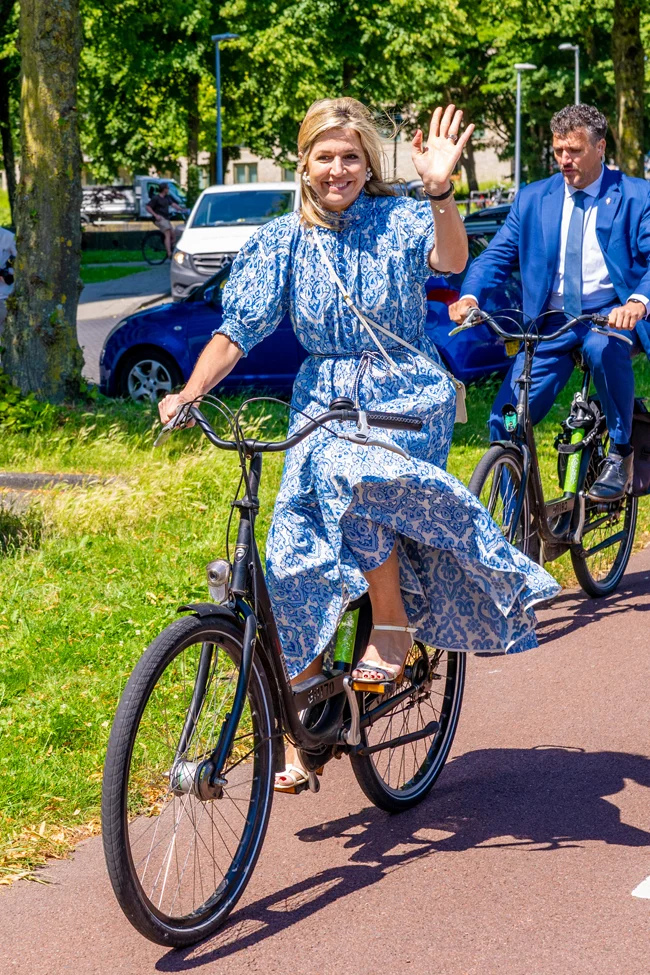

Queen Máxima of the Netherlands conducted a high-profile working visit to the Amsterdam South East district, an engagement that highlighted both the crown’s commitment to local community development and the enduring cultural tradition of cycling within the Dutch royal family. The visit, which took place as part of the Queen’s ongoing efforts to engage with diverse urban neighborhoods, saw the monarch navigating the district on a bicycle, a gesture that resonated with the national identity of the Netherlands while simultaneously drawing international attention for her choice of professional attire.
During the visit, Queen Máxima focused on several key social and economic initiatives aimed at improving the quality of life for residents in Amsterdam South East, an area known for its rich cultural diversity and ongoing urban renewal projects. The Queen’s presence served as a symbolic endorsement of the district’s "Masterplan Zuidoost," a long-term strategic initiative designed to enhance education, employment, and housing within the region over the next two decades.

Chronology of the Working Visit
The royal engagement began in the early afternoon when Queen Máxima arrived in the heart of Amsterdam South East. She was greeted by local officials and community leaders who provided an overview of the recent progress made in social cohesion programs. Following the initial briefing, the Queen transitioned to the most visually striking portion of her itinerary: a bicycle tour through the neighborhood’s extensive network of dedicated cycling paths.
The choice of transport was not merely logistical but deeply symbolic. Cycling is a cornerstone of Dutch daily life, and the royal family frequently utilizes bicycles during public appearances to emphasize their accessibility and alignment with national values. Queen Máxima navigated the route with characteristic poise, stopping at various points to speak with local entrepreneurs and residents who have benefited from regional development funds.
Later in the afternoon, the Queen visited a local community hub that focuses on youth empowerment and financial literacy. As the United Nations Secretary-General’s Special Advocate for Inclusive Finance for Development (UNSGSA), Queen Máxima has a long-standing interest in financial health. She participated in a roundtable discussion with young adults, listening to their experiences regarding the challenges of the modern labor market and the importance of accessible banking services. The visit concluded with a brief reception where the Queen thanked the organizers for their dedication to the district’s future.

Fashion as a Statement of Modern Royalty
The Queen’s attire for the working visit became a significant point of discussion among fashion analysts and the general public. She opted for a Zimmermann "Wylie Fil Coupé" cotton midi dress, a piece characterized by its intricate floral print and feminine silhouette. The choice of Zimmermann, an Australian luxury brand, reflects the Queen’s penchant for international labels that offer a blend of sophistication and contemporary flair.
While the dress was praised for its aesthetic appeal, observers noted the contrast between the high-fashion ensemble and the practical requirements of cycling. Queen Máxima paired the dress with high-heeled footwear and a luxury handbag by Marina Raphael. Fashion commentators observed that the Queen’s ability to maintain a professional and regal appearance while performing the quintessentially Dutch task of cycling in heels is a testament to her years of experience in the public eye.
The "Wylie" dress features a distinctive fil coupé texture and a tiered skirt flounce, elements that, while stylish, present unique challenges for bicycle transit. However, the Queen’s seamless execution of the task reinforced the image of the Dutch monarchy as one that is both modern and deeply rooted in tradition.

Supporting Data: The Infrastructure of Amsterdam South East
The context of the Queen’s visit is underscored by the significant investment being poured into Amsterdam South East. Often referred to as "Zuidoost," the district is home to approximately 90,000 residents representing over 170 different nationalities.
Recent data from the City of Amsterdam indicates that the "Masterplan Zuidoost" aims to create 30,000 new homes and 15,000 new jobs by 2040. The district’s infrastructure is a primary focus of this plan, with a specific emphasis on maintaining and expanding the 35,000 kilometers of cycle paths that crisscross the Netherlands. In Amsterdam alone, there are more bicycles than residents, with an estimated 881,000 bikes for a population of roughly 873,000.
Queen Máxima’s decision to cycle during her visit highlights the success of Dutch urban planning, which prioritizes non-motorized transport. Statistics show that in Amsterdam, 32% of all trips are made by bicycle, a figure that rises to nearly 50% in the city center. By utilizing this infrastructure, the Queen highlighted the district’s connectivity and the government’s commitment to sustainable urban mobility.

Official Responses and Community Impact
Local residents and business owners expressed positive reactions to the royal visit. "Having the Queen visit our neighborhood and ride a bike just like everyone else sends a powerful message of inclusion," stated a local shop owner who spoke briefly with the monarch. "It shows that the royal family is paying attention to what is happening here in South East."
Official statements from the Government Information Service (RVD) emphasized that the working visit was intended to "shine a light on the resilience and creativity of the Zuidoost community." The RVD noted that the Queen was particularly impressed by the local initiatives aimed at bridging the gap between education and the professional world.
Community leaders highlighted that royal visits often result in increased media attention and, subsequently, a boost in interest from potential investors and social partners. The visibility provided by Queen Máxima is seen as a catalyst for further engagement with the Masterplan Zuidoost, ensuring that the district remains a priority on the national agenda.

Broader Implications for the Dutch Monarchy
The visit to Amsterdam South East serves as a case study in how the Dutch monarchy maintains relevance in the 21st century. By combining high-level advocacy (such as financial inclusion) with relatable public actions (such as cycling), Queen Máxima and King Willem-Alexander have cultivated an image of "approachable dignity."
This approach is particularly important in a country where the monarchy’s role is largely ceremonial but holds significant symbolic weight in maintaining national unity. The Queen’s ability to navigate a diverse and sometimes economically challenged district like Zuidoost demonstrates the crown’s role as a unifying force that transcends political and social divides.
Furthermore, the Queen’s fashion choices continue to play a role in her "soft power" diplomacy. By wearing international designers like Zimmermann, she positions the Netherlands as a cosmopolitan and globally connected nation. At the same time, her adherence to Dutch customs, such as cycling, ensures that she remains firmly grounded in the cultural identity of her adopted home.

Analysis of Social and Economic Objectives
Beyond the visual spectacle, the working visit touched upon critical socio-economic themes. Amsterdam South East has historically faced challenges regarding unemployment rates and social integration. The Queen’s focus on youth empowerment and financial literacy aligns with her international mandate to promote economic resilience.
Economic analysts suggest that the Queen’s involvement in these discussions helps to destigmatize financial struggles and encourages a more open dialogue about wealth inequality. Her role as a Special Advocate for the UN allows her to bring global best practices to local Dutch contexts, providing a unique bridge between international policy and community-level implementation.
The emphasis on the "Masterplan Zuidoost" during the visit also points to a shift in how the Dutch government approaches urban development. Rather than top-down mandates, the plan emphasizes "co-creation" with residents. The Queen’s interaction with local community members reinforces this participatory model, suggesting that the monarchy supports a collaborative approach to solving urban challenges.

Conclusion
Queen Máxima’s working visit to Amsterdam South East was a multifaceted event that successfully blended cultural tradition, social advocacy, and modern fashion. By navigating the district on a bicycle while dressed in a high-fashion Zimmermann ensemble, she reinforced the unique identity of the Dutch monarchy—one that is at once regal and remarkably ordinary.
The engagement provided a significant platform for the residents and leaders of Amsterdam South East, highlighting the district’s potential and the ongoing efforts to ensure its prosperous future. As the Netherlands continues to navigate the complexities of urban growth and social integration, the visibility and support of the royal family remain a potent tool for fostering national pride and social cohesion. The visit stands as a reminder of the enduring power of symbolic gestures in modern governance and the continued influence of Queen Máxima as a global and local advocate for progress.