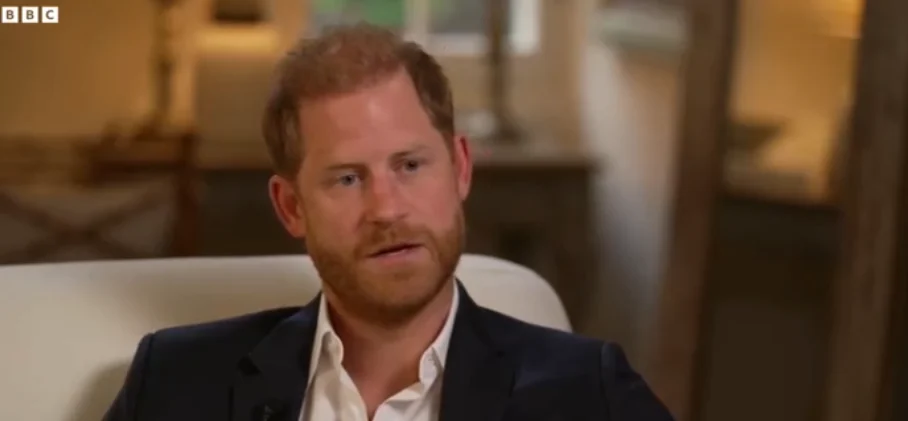

Prince Harry, the Duke of Sussex, will not be staying at Buckingham Palace during his upcoming visit to the United Kingdom, a decision reportedly stemming from a late request for accommodation and concerns over staffing logistics. The Prince is scheduled to arrive in England on July 6th, coinciding with reports that he has been denied residence at his father’s official London home. While initial reports were sparse on detail, further investigation suggests a complex interplay of timing, communication, and ongoing security considerations have led to this outcome.
A Shifting Accommodation Plan
For over a week prior to Prince Harry’s confirmed arrival, media speculation had suggested that he and his family would be accommodated at a royal residence during their time in the UK. This expectation was significantly altered over the weekend when it was revealed that only the Duke of Sussex would be traveling to the capital, with his wife, Meghan, the Duchess of Sussex, and their two children, Archie and Lilibet, remaining in California.
The narrative surrounding accommodation took another turn on July 4th. It is understood that Prince Harry formally declined an offer of accommodation at Buckingham Palace on this date. However, reports indicate that he subsequently changed his mind late on the same day and requested a room at the palace. This last-minute change of heart, according to sources familiar with the situation, was met with a response that the communication was too late, and that available rooms were no longer accessible.
The Rationale Behind the Denial: Staffing and Logistics
The primary reason cited for the denial of accommodation is the insufficient notice provided to palace staff. Decisions regarding staffing rotas, security arrangements, and the allocation of resources are typically made well in advance. A late request, particularly one involving a member of the Royal Family, would necessitate significant logistical adjustments and potentially disrupt pre-existing plans. Insiders suggest that by July 4th, these arrangements had already been finalized, making it impractical to accommodate Prince Harry’s eleventh-hour request.
This situation highlights the intricate operational demands of maintaining royal residences and the importance of adherence to established protocols. The ability to host a royal guest at short notice, especially one requiring a certain level of discretion and security, depends heavily on pre-planned staffing and resource allocation.
Ongoing Security Concerns Fueling Family’s Absence
Prince Harry’s decision not to bring his family to London is intrinsically linked to his ongoing security concerns. He has previously expressed apprehension regarding the level of protection that would be afforded to Meghan, Archie, and Lilibet during their potential stay in the UK. This anxiety has led to a protracted legal battle where the Duke is seeking top-level automatic protection for his family while they are in the United Kingdom.
The UK government’s Home Office has previously rejected these requests, arguing that the existing security arrangements, which include private security personnel and police protection when necessary, are sufficient. Prince Harry, however, maintains that the security provided by private means is not comparable to the state-funded protection he previously received as a working royal. This disparity in perceived security levels has been a significant factor in his family’s absence from his UK visits.
A Glimpse into Potential Future Arrangements
While the immediate focus is on Prince Harry’s solo visit, the possibility remains that the Duchess of Sussex and their children might join him for other segments of his time in the UK. This aspect of their travel plans is still uncertain and likely hinges on the resolution of his security concerns and the logistical feasibility of such arrangements.
Prince Harry is expected to attend events marking the one-year countdown to the Invictus Games, which are scheduled to take place in Birmingham. Reports that his family might not travel to London have been interpreted by some as an indication that they may spend time in other parts of the UK, potentially outside of the immediate vicinity of royal residences. This could offer a more controlled environment for family visits, away from the complexities of London-based royal security.
Broader Implications and Context
The denial of accommodation at Buckingham Palace, while seemingly a minor detail, underscores the evolving relationship between Prince Harry and the Royal Family since his and Meghan’s decision to step down as senior royals in early 2020. This event, coupled with the ongoing security dispute, paints a picture of a Duke of Sussex navigating a new reality, seeking to balance his desire for family connection with his perceived need for personal and familial safety.
The situation also brings into sharp focus the practicalities of royal engagements and the administrative machinery that underpins them. The need for advance notice and pre-planned logistics is a constant for any organization, but for the Royal Household, the stakes are considerably higher, involving not only operational efficiency but also the security and comfort of its members.
This incident serves as a reminder of the delicate balance Prince Harry is attempting to strike between his life in California and his connections to the UK and his family. His visits are often fraught with logistical and emotional complexities, and the accommodation issue at Buckingham Palace is a tangible manifestation of these challenges. The coming days and weeks will likely provide further clarity on his itinerary and the extent to which his family may or may not join him in the UK, all under the persistent shadow of his security concerns. The outcome of his legal challenges regarding state protection will undoubtedly play a pivotal role in shaping future travel plans for the Sussex family.