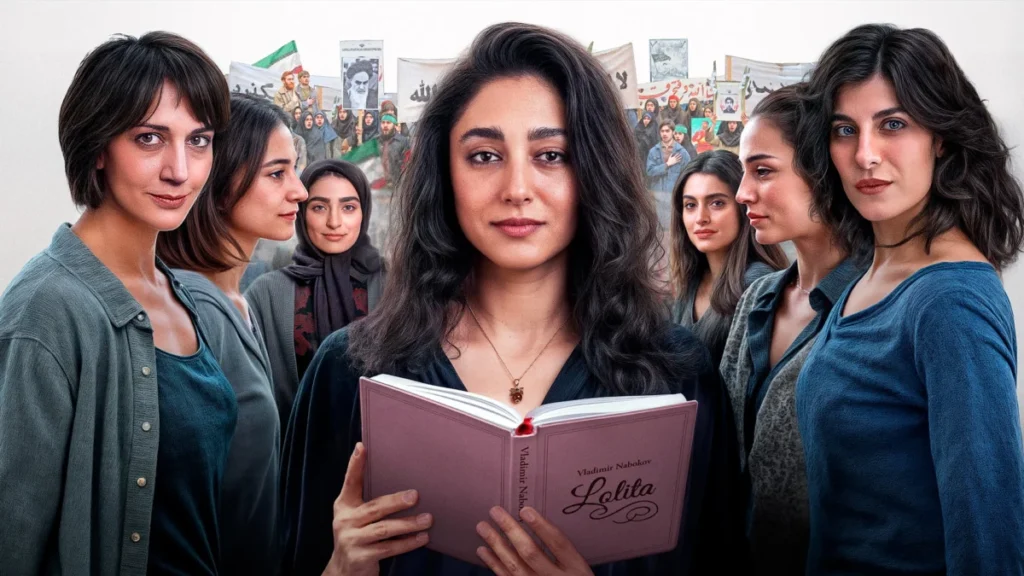

Greenwich Entertainment and Kanopy have unveiled the official United States trailer for the highly anticipated film Reading Lolita in Tehran, a powerful narrative exploring themes of Iranian resistance and intellectual defiance against a backdrop of increasing societal restrictions. The film, which garnered significant critical acclaim following its premiere, is slated for a limited theatrical release in select U.S. cinemas starting July 10, 2026.
The cinematic adaptation of Azar Nafisi’s bestselling memoir of the same name transports audiences to revolutionary Iran during the 1980s. As fundamentalist ideologies began to exert a tightening grip on public life and individual freedoms, a courageous university professor, portrayed by acclaimed actress Golshifteh Farahani, embarks on a clandestine intellectual sanctuary for a select group of her most dedicated female students. Within the privacy of her home, these women engage in the forbidden act of reading and dissecting seminal works of Western literature, including Vladimir Nabokov’s controversial novel Lolita and Jane Austen’s enduring classic Pride & Prejudice.
This act of intellectual rebellion is not merely an academic exercise; it becomes a profound statement of personal agency and a subtle yet potent form of resistance against an oppressive regime. The film delves into the complexities of these women’s lives, drawing parallels between the fictional heroines they study and their own burgeoning desires for self-expression, hope, and love amidst a landscape of political, moral, and personal siege.
A Journey from Acclaim to U.S. Theaters
The film’s journey to American screens has been marked by critical recognition and festival success. Reading Lolita in Tehran first captivated audiences at the 2024 Rome Film Fest, where it was honored with both the prestigious Audience Award and a Special Jury Prize. Following its compelling debut, the film has been a notable presence at various international film festivals, building considerable anticipation for its broader release. While these festival screenings offered glimpses into its narrative power, the upcoming theatrical run marks its formal introduction to the American public.

The decision by Greenwich Entertainment and Kanopy to distribute the film underscores its perceived cultural significance and artistic merit. Greenwich Entertainment has a history of bringing thought-provoking international cinema to American audiences, while Kanopy, a streaming platform often partnered with public libraries and universities, has a mandate to provide access to diverse and intellectually stimulating content. Their joint effort suggests a strategic approach to reaching an audience eager for films that challenge, inspire, and provoke dialogue.
The Core of Resistance: Literature as a Tool Against Oppression
At its heart, Reading Lolita in Tehran is a testament to the enduring power of literature and intellectual freedom as tools against authoritarianism. The trailer itself offers a potent quote: "Great books are supposed to make you feel uneasy, and make you question what you take for granted." This sentiment is central to the film’s narrative. In a society where independent thought is suppressed and individual expression is curtailed, the act of engaging with complex literary works becomes a radical act.
The film’s narrative structure, as indicated by the trailer’s description, intertwines the personal stories of the students with the literary worlds they explore. By dissecting the lives and struggles of characters from novels like Lolita, The Great Gatsby, The Scarlet Letter, and Pride & Prejudice, the women find echoes of their own experiences and gain the courage to confront their realities. The removal of their veils, a visual metaphor for shedding societal constraints and embracing their inner selves, symbolizes the transformative power of shared intellectual exploration.
The choice of these particular literary works is significant. Lolita, for instance, with its exploration of obsession and flawed perception, can be seen as a complex lens through which to examine the societal obsessions and distorted realities imposed by the revolutionary regime. Jane Austen’s Pride & Prejudice, with its focus on social commentary, personal agency, and the pursuit of love and happiness against societal expectations, offers a counterpoint to the restrictive environment. F. Scott Fitzgerald’s The Great Gatsby and Nathaniel Hawthorne’s The Scarlet Letter also delve into themes of societal pressures, moral ambiguity, and the consequences of transgression, providing rich ground for discussion and introspection.
Key Figures and Creative Vision

The film is brought to life by a stellar cast, led by the internationally renowned Golshifteh Farahani as Azar Nafisi. Farahani, an actress celebrated for her nuanced performances and her own experiences navigating artistic expression in challenging contexts, is poised to deliver a compelling portrayal of Nafisi’s strength and intellectual fire.
The ensemble cast also features Zar Amir Ebrahimi, Mina Kavani, Reza Diako, Arash Marandi, Catayoune Ahmadi, and Sina Parvaneh, all contributing to the rich tapestry of female experiences depicted in the film. The direction is helmed by Israeli filmmaker Eran Riklis, a director with a distinguished career known for his ability to craft deeply human stories set against complex socio-political landscapes. Riklis’s previous works, including The Syrian Bride, Lemon Tree, and A Borrowed Identity, demonstrate a consistent interest in exploring cultural nuances and the resilience of the human spirit.
The screenplay, penned by Marjorie David, is based on a screen story co-developed with Riklis. Their collaborative effort, in adapting Nafisi’s deeply personal memoir, aims to translate the introspective and intellectual journey of the book into a visually engaging cinematic experience. The production team includes Marica Stocchi, Gianluca Curti, Moshe Edery, Santo Versace, Eran Riklis, and Michael Sharfshtein, whose collective efforts have culminated in a film that has already resonated with festival audiences.
Contextualizing the 1980s Iran
The setting of the film, Iran in the 1980s, is crucial for understanding the stakes involved. Following the Iranian Revolution of 1979, which overthrew the Pahlavi dynasty and established an Islamic Republic, the country underwent profound social and political transformations. The new regime implemented strict interpretations of Islamic law, leading to significant restrictions on personal freedoms, particularly for women. Public morality became a central concern, with the establishment of morality police and the enforcement of dress codes and behavioral norms. Universities, once centers of intellectual discourse, became sites of ideological control.
In this climate, acts of intellectual defiance, such as forming secret reading groups, represented a courageous challenge to the prevailing order. The women in Nafisi’s group were not only defying legal restrictions but also the broader cultural narrative being imposed upon them. Their engagement with Western literature, often viewed with suspicion by the new regime, was an act of reclaiming intellectual autonomy and preserving a connection to a broader global intellectual heritage.

Supporting Data and Broader Impact
The film’s critical reception, evidenced by its awards at the Rome Film Fest, suggests a strong artistic foundation. Reviews have frequently highlighted the film’s exploration of "culture as a tool against oppression," a theme that continues to hold significant relevance in contemporary global discourse. The ability of art and literature to serve as conduits for resistance and to foster critical thinking remains a potent force in societies grappling with censorship and authoritarianism.
The release of Reading Lolita in Tehran comes at a time when discussions surrounding women’s rights, freedom of expression, and the role of art in social change are particularly prominent. The film offers a historical lens through which to examine these ongoing struggles, providing a narrative that is both specific to its setting and universally resonant.
The film’s potential impact extends beyond its immediate artistic merits. By bringing Azar Nafisi’s story to a wider audience, it can foster greater understanding of the complexities of Iranian society during a pivotal historical period and illuminate the quiet acts of bravery undertaken by individuals seeking to maintain their intellectual and personal freedoms. The success of such films can also encourage further cinematic exploration of diverse cultural narratives and challenge preconceived notions about societies often portrayed through a singular, often politicized, lens.
The choice of July 10, 2026, for its theatrical debut positions the film within the summer movie season, a period often dominated by large-scale blockbusters. This strategic placement suggests Greenwich Entertainment and Kanopy’s confidence in the film’s ability to attract an audience seeking substantive and meaningful cinematic experiences, potentially drawing viewers who appreciate independent cinema and narratives that engage with critical social and political themes. The film’s ability to capture audiences will be a key indicator of the appetite for such stories within the mainstream theatrical landscape. The question, "Who wants to watch?", posed in the original announcement, becomes a compelling invitation for audiences to engage with a story that promises to be both intellectually stimulating and emotionally resonant.