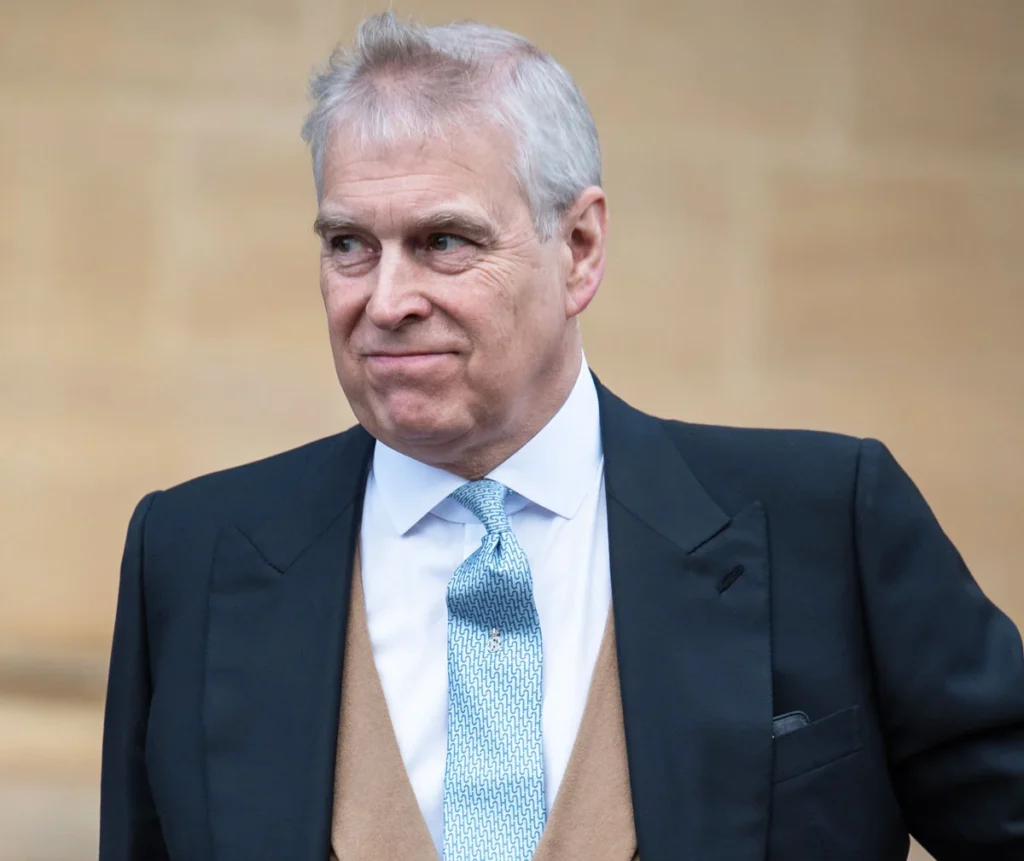

New and deeply disturbing allegations concerning the conduct of Prince Andrew, Duke of York, have emerged from a forthcoming paperback edition of a royal biography, further compounding the already extensive controversies surrounding the second son of the late Queen Elizabeth II. Royal author Andrew Lownie, in anticipation of the release of the paperback version of his book Entitled: The Rise and Fall of the House of York, has detailed alleged instances of highly inappropriate and vulgar behavior, including a deeply offensive pickup line and other acts of public humiliation towards women. These claims, reported on May 26, 2026, add a new layer to the public’s understanding of a royal figure whose reputation has been severely tarnished in recent years.
A Pattern of Alleged Misconduct
According to Lownie, who shared details with Page Six ahead of the paperback release, Prince Andrew allegedly employed a shockingly crude pickup line when addressing women. The author claimed, "His chat-up line was, ‘What’s it feel like to have the royal c**k against your thigh?’ I mean, just [an] extraordinary sense of entitlement, right?" This statement, attributed to Andrew, immediately sparked outrage and reinforced public perceptions of an individual allegedly detached from conventional standards of decorum and respect. The specific language used underscores a perceived arrogance and a profound disregard for personal boundaries, painting a picture of a royal figure who allegedly leveraged his status in an offensive manner.
Beyond this singular, egregious remark, Lownie’s research for Entitled reportedly uncovers a broader pattern of alleged inappropriate behavior. The biographer recounted another particularly uncomfortable incident involving a female flight attendant. As described by Lownie, the woman extended her hand in a polite greeting, only for Andrew to allegedly spin around, thrust his groin towards her backside, and proceed to mimic a golf swing. This alleged act, devoid of any apparent humor or social grace, suggests a consistent pattern of conduct that is both bizarre and deeply disrespectful, especially in a professional setting. Such actions, if true, indicate a severe lapse in judgment and an alleged propensity for demeaning interactions.
Lownie further asserted that his investigations unearthed "lots and lots" of stories detailing inappropriate behavior from the former senior royal. He characterized Andrew as an individual who allegedly found pleasure in humiliating women in public settings. Among the other accusations, Lownie claimed that Andrew would sometimes unzip women’s dresses at formal events, seemingly to embarrass them. These alleged acts, ranging from verbal vulgarity to physical imposition and public humiliation, collectively portray a deeply troubling character and an alarming sense of privilege that allegedly manifested in consistently offensive ways. The sheer volume and consistency of these types of allegations, if substantiated, suggest not isolated incidents but rather a deeply ingrained behavioral pattern.
The Author and His Research
Andrew Lownie is a respected royal biographer known for his meticulous research and critical perspective on the British monarchy. His book, Entitled: The Rise and Fall of the House of York, delves into the life and career of Prince Andrew, aiming to provide a comprehensive account of his trajectory from a prominent royal figure to one embroiled in significant scandal. Biographies of this nature often draw upon a wide range of sources, including interviews with former staff, acquaintances, and official documents, to construct a detailed narrative. The release of a paperback edition often provides an opportunity for authors to update their work with new information or to highlight specific revelations that have garnered significant public interest since the initial hardcover publication. Lownie’s decision to share these particular allegations underscores their perceived importance and their potential to further inform public discourse on Prince Andrew’s character and history. His claims are presented as findings from extensive research, adding a layer of journalistic weight to the allegations.
Background: Prince Andrew’s Troubled Past
Prince Andrew, born on February 19, 1960, as the third child and second son of Queen Elizabeth II and Prince Philip, Duke of Edinburgh, held a prominent position within the British Royal Family for decades. Educated at Gordonstoun and Dartmouth Naval College, he served with distinction in the Royal Navy as a helicopter pilot, famously participating in the Falklands War in 1982. His military career was a source of pride for the monarchy, and he retired from active service in 2001.
In 1986, he married Sarah Ferguson, and they became the Duke and Duchess of York, having two daughters, Princess Beatrice and Princess Eugenie. Their marriage, often characterized by media scrutiny, ended in divorce in 1996. Following his military career, Andrew took on various roles as a working royal, including serving as the UK’s Special Representative for International Trade and Investment, a position he held from 2001 to 2011. During this period, he traveled extensively, representing British business interests globally. However, even before the more recent controversies, his tenure in this role occasionally attracted criticism regarding his expenses and the perceived effectiveness of his efforts.
Andrew’s public image, initially bolstered by his military service, began to face scrutiny in the late 2000s and early 2010s, particularly concerning his associations and personal life. The groundwork for his eventual public downfall was laid during this period, long before the full extent of his connections to convicted sex offender Jeffrey Epstein became widely known. This established history of sporadic negative press and questions about his judgment provides a crucial context for understanding the impact of the current allegations.
The Epstein-Maxwell Connection: A Chronology of Scandal
The most significant and devastating scandal to engulf Prince Andrew revolves around his long-standing friendship with American financier and convicted sex offender Jeffrey Epstein, and Epstein’s associate Ghislaine Maxwell. This association has been the primary catalyst for Andrew’s unprecedented fall from royal grace.
- Early 2000s: Prince Andrew’s friendship with Jeffrey Epstein reportedly began around 1999 or 2000, facilitated by Maxwell, whom Andrew had known since the 1980s. Andrew was a frequent guest at Epstein’s various properties, including his residences in New York, Florida, and the Caribbean.
- 2008: Epstein was first arrested and pleaded guilty to soliciting prostitution from a minor and procuring a minor for prostitution in Florida. Despite Epstein’s conviction, Prince Andrew maintained his friendship with him, even visiting him at his New York mansion in December 2010, after Epstein’s release from prison. This visit, captured by paparazzi, became a significant point of contention later, as it occurred while Epstein was a registered sex offender.
- 2014: Virginia Giuffre, one of Epstein’s alleged victims, publicly claimed she was trafficked to Prince Andrew on three occasions when she was a minor, allegations Andrew vehemently denies.
- 2019: Epstein was arrested again on new federal charges of sex trafficking. He died by suicide in a New York prison cell in August 2019, while awaiting trial. Following Epstein’s death, the scrutiny on Prince Andrew intensified dramatically.
- November 2019: Prince Andrew attempted to clear his name in a disastrous interview with BBC’s Newsnight. In the interview, he denied all allegations, claimed he could not sweat due to a medical condition (contradicting claims he was "sweating profusely" while dancing with Giuffre), and expressed no regret for his friendship with Epstein. The interview was widely criticized as "car-crash" television and was perceived as utterly lacking in empathy or credibility.
- November 2019 (Immediate Aftermath): The public backlash was immediate and severe. Within days, Prince Andrew announced his decision to "step back from public duties for the foreseeable future," a move that was effectively a withdrawal from his role as a working royal, with the "full approval" of Queen Elizabeth II. Major charities and organizations began to distance themselves from him.
- 2020: Ghislaine Maxwell was arrested and charged with sex trafficking and conspiracy. Her trial and subsequent conviction further brought the details of Epstein’s network into the public eye, inadvertently shining more light on Andrew’s connections.
- August 2021: Virginia Giuffre filed a civil lawsuit against Prince Andrew in the U.S., alleging sexual assault and battery. The suit sought unspecified damages. Andrew’s legal team initially attempted to have the case dismissed.
- January 2022: A U.S. judge ruled that the civil lawsuit against Andrew could proceed, rejecting his arguments to dismiss it.
- February 2022: In a pivotal development, Prince Andrew reached an out-of-court settlement with Virginia Giuffre. While the terms were undisclosed, reports suggested a payment of millions of pounds, without any admission of guilt from Andrew. Crucially, as part of this process, Buckingham Palace announced that Andrew would be stripped of his honorary military titles and royal patronages, and would no longer use the style "His Royal Highness" in any official capacity. This effectively severed his remaining ties to official royal life.
This chronology demonstrates a sustained period of scandal, from initial associations to legal battles and the unprecedented removal of royal privileges. The new allegations from Andrew Lownie’s book, therefore, land on a foundation already deeply eroded by years of controversy and public condemnation.
The Aftermath: Public Disgrace and Royal Disengagement
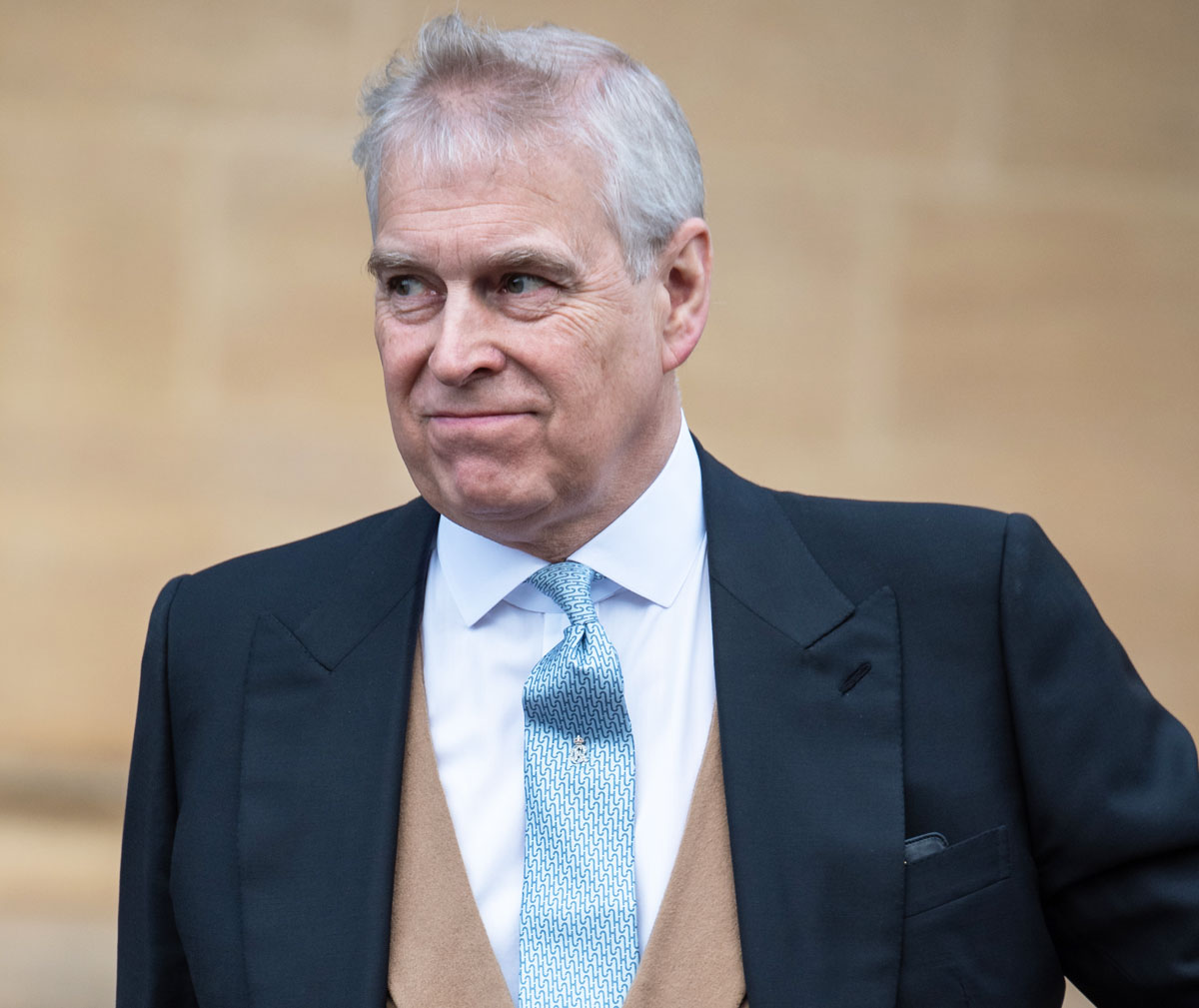
The consequences of the Epstein-Maxwell scandal for Prince Andrew have been profound and arguably unprecedented for a modern senior member of the British Royal Family. His withdrawal from public duties in 2019 marked the end of his active royal life. The subsequent stripping of his military titles and HRH style in 2022 was a clear and unequivocal message from the monarchy that his position was untenable. These actions were not merely symbolic; they represented a practical and public disengagement from an individual whose presence was deemed too damaging to the institution.
Since then, Andrew has lived a largely private existence at Royal Lodge on the Windsor Estate, though his continued residence there has also been a subject of public debate and media speculation regarding his financial arrangements and ongoing ties to the Royal Family. While he retains the title Duke of York, he is no longer a "working royal" and is excluded from most official royal engagements. This public disgrace has had a lasting impact, ensuring that any new allegations, such as those from Lownie’s book, immediately resonate with a public already accustomed to severe criticism of his character and actions. The challenge for the Royal Family, particularly under the reign of King Charles III, continues to be how to manage Andrew’s status and presence without further damaging the monarchy’s image.
The Royal Family’s Stance and Andrew’s Denials
In light of the new allegations from Andrew Lownie’s book, the Royal Family and Buckingham Palace are expected to maintain their consistent stance of silence on specific claims of this nature. Historically, the Palace rarely comments on detailed allegations from biographies or personal matters concerning individual royals, especially those who are no longer working members. Their strategy has generally been to allow legal processes to unfold or to address broader issues of public duty, as seen with the stripping of Andrew’s titles. Therefore, it is highly unlikely that there will be any official statement directly addressing the alleged pickup line or the incidents described by Lownie.
Prince Andrew himself has consistently denied all allegations of sexual misconduct related to Jeffrey Epstein and Virginia Giuffre. While he has not yet publicly addressed these specific new claims from Lownie’s book, his general position of denial would logically extend to any further accusations of inappropriate behavior. His legal team has previously stated that he would contest any allegations vigorously. However, given his current status and the overwhelming public sentiment, any future statements from his representatives are likely to reiterate a general denial without engaging in detailed rebuttals of every specific claim, particularly those from a book. The absence of specific refutation for these new claims from Lownie should be understood within the context of his broader and consistent denials of wrongdoing.
Broader Implications for the Monarchy and Public Trust
The revelations from Entitled: The Rise and Fall of the House of York carry significant broader implications, extending beyond Prince Andrew himself to the British monarchy as an institution and its relationship with public trust.
Firstly, these new allegations further cement Andrew’s image as a deeply problematic figure, adding to an already extensive list of controversies. Even though he has been effectively removed from public royal life, each new claim serves to reinforce the negative perception, making any future rehabilitation or even a quiet existence increasingly difficult. The public memory of his alleged misconduct, now expanded by these vulgar and demeaning claims, is unlikely to fade.
Secondly, the ongoing drip-feed of negative stories about a senior royal, even a non-working one, inevitably casts a shadow over the wider Royal Family. While King Charles III has made efforts to streamline the monarchy and distance the institution from Andrew’s controversies, the persistent emergence of such stories acts as a recurring reminder of the past scandals. It can lead to questions about the judgment of the institution in how it handled Andrew’s earlier conduct and how it continues to manage his status. For a monarchy that relies heavily on public approval and a sense of moral rectitude, these allegations represent a continuing challenge to its credibility and standing.
Thirdly, these claims could reignite public debate about Andrew’s remaining titles and privileges. Although he has lost his military patronages and HRH style, he still retains the Dukedom of York. Calls for him to be entirely stripped of all royal titles have been made in the past, and new, particularly egregious allegations could intensify these demands. This places the Palace in a difficult position, balancing tradition with public sentiment and the need to protect the monarchy’s reputation.
Finally, the publication of such detailed and unflattering accounts in biographies contributes to a shifting public perception of the Royal Family. As traditional deference wanes, the appetite for critical and revealing narratives about royal figures grows. Lownie’s book is part of a trend of royal biographies that delve into the less flattering aspects of royal lives, contributing to a more nuanced, and often more critical, public understanding of the institution. This trend signifies a greater demand for accountability and transparency from figures who once operated largely beyond reproach.
The new allegations from Andrew Lownie’s Entitled: The Rise and Fall of the House of York serve as a potent reminder of the enduring controversies surrounding Prince Andrew. From a shockingly vulgar pickup line to alleged acts of public humiliation, these claims deepen the narrative of a royal figure whose alleged behavior has consistently fallen far short of public expectations and royal standards. These revelations not only further tarnish Andrew’s already damaged reputation but also present ongoing challenges for the British monarchy as it seeks to navigate a modern era demanding greater accountability and integrity from its members. The shadow cast by these allegations is long, and its implications for public trust in the Royal Family continue to unfold.