
The 79th annual Cannes Film Festival, a prestigious platform for cinematic excellence and a bellwether for global film trends, has once again delivered a program that sparks debate and ignites passion. This year, among the highly anticipated selections vying for the Palme d’Or, South Korean auteur Na Hong-jin’s latest offering, "Hope," has emerged as a particularly divisive and polarizing entry. Premiering in the fiercely competitive Main Competition, the film, Na’s fourth feature, has left audiences and critics alike grappling with its ambitious scope and bewildering execution. Despite not securing any awards at the festival’s closing ceremony, "Hope" has cemented its status as a film that elicits extreme reactions, embodying both the dazzling potential and the frustrating pitfalls of contemporary science fiction cinema.
The premiere of "Hope" at the Debussy Theatre was met with an immediate and palpable energy. A full house, buzzing with anticipation for Na Hong-jin’s return to filmmaking after a decade-long hiatus since his critically acclaimed 2016 horror masterpiece, "The Wailing," was treated to an experience that defied conventional expectations. The initial minutes of the screening were reportedly met with thunderous applause, a testament to the filmmaker’s established reputation and the sheer spectacle unfolding on screen. However, as the narrative progressed, the atmosphere shifted dramatically. By the film’s conclusion, the auditorium was a cacophony of boos and cheers, a stark indicator of the profound division the film had sown. This dichotomy of reception underscores the film’s complex nature: a work that simultaneously warrants both fervent praise and sharp condemnation, encapsulating the very best and worst of modern science fiction within its nearly three-hour runtime.
A Decade in the Making: Na Hong-jin’s Ambitious Leap into Sci-Fi
The anticipation surrounding "Hope" was amplified by the considerable gap since Na Hong-jin’s last outing. "The Wailing," a chilling and intricately plotted Korean ghost story, garnered significant international acclaim, solidifying Na’s position as a master of genre filmmaking. His previous works, "The Yellow Sea" and "The Chaser," further cemented his reputation as a director capable of crafting visceral, intelligent, and often unsettling cinematic experiences. "Hope," therefore, represented not just a return, but a significant departure into the realm of hard science fiction. Written, directed, and produced by Na himself, the film appears to be a deeply personal project, a grand statement that perhaps aims to showcase his versatility and ambition to tackle blockbuster-scale narratives on par with established Hollywood franchises.
The narrative of "Hope" unfolds in a small Korean town, identified as "Hope Harbor," which becomes the unexpected focal point of extraterrestrial activity. Contrary to the typical alien invasion tropes, the film endeavors to explore the "why" behind the aliens’ presence on Earth and the consequences for the unsuspecting inhabitants. A recurring theme in Na Hong-jin’s filmography, the portrayal of local townspeople as largely ineffectual or even detrimental to resolving crises is present here, adding a layer of characteristic dark humor. However, the fundamental motivations and origins of the extraterrestrial visitors remain a significant point of bewilderment, even by the film’s conclusion, contributing to the overall sense of mystery and, for some, frustration.
An Epic Smorgasbord of Sci-Fi Influences
"Hope" has been described as an ambitious blend of iconic science fiction touchstones, drawing parallels to Steven Spielberg’s "War of the Worlds," Ridley Scott’s "Prometheus," and J.J. Abrams’ "Super 8," while also evoking the creature-feature sensibility of Bong Joon-ho’s "The Host." The film launches into an immediate, high-octane 45-minute action sequence. The audience is thrust into the chaos alongside local police chief Bum-seok, portrayed by acclaimed actor Hwang Jung-min. This opening segment, characterized by its relentless pace and visceral execution, centers on the pursuit of a colossal alien creature that is wreaking havoc. The action is reportedly reminiscent of the intensity found in "War of the Worlds," with visual and narrative cues that echo "The Host." However, a crucial twist emerges: the creature appears to be fleeing, rather than attacking, the townspeople.
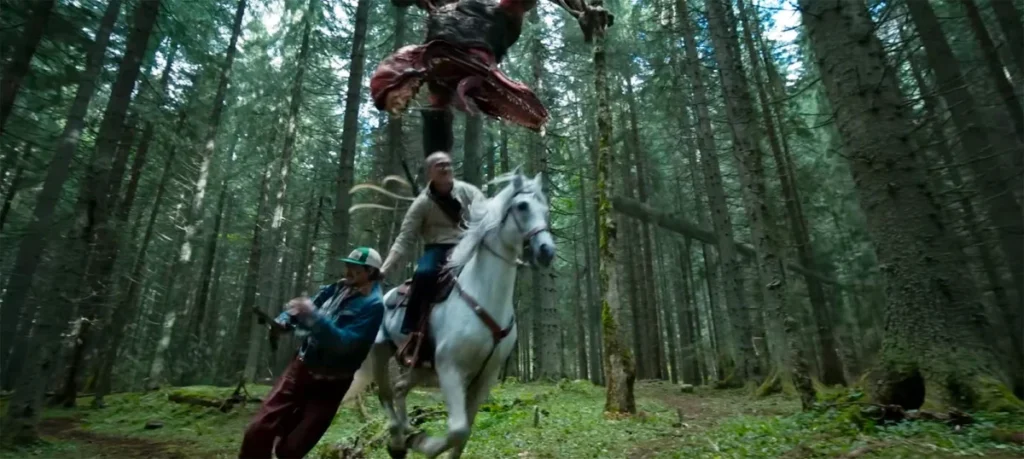
Following this explosive introduction, the film reportedly shifts gears, dedicating the next hour to investigation and attempts to decipher the nature of these extraterrestrial entities. A group of hunters ventures into the surrounding woods, ultimately stumbling upon a crashed alien spacecraft and its occupants. The film then culminates in another extended action finale, a hallmark of Na Hong-jin’s filmmaking style. This concluding hour is packed with elaborate set pieces, including horseback chases through dense forests, high-speed car pursuits, and intense gun battles. Yet, it is within this prolonged climax that the film’s structural issues and visual inconsistencies become most apparent. The extended action sequences, coupled with reportedly sloppy visual effects, disjointed editing, and enigmatic alien designs, lead to a narrative that, for many, culminates in an unsatisfying and incomprehensible resolution. The sheer length and repetition of the action, without a clear narrative payoff, have been cited as particularly detrimental to the film’s overall impact.
A Bewildering Finale and the Perils of Ambition

The perplexing nature of the film’s ending has sparked concerns that audiences might react with outright dismay, potentially even expressing their frustration physically. The lack of clear dialogue and explanatory exposition in the final act has left many feeling that "Hope" functions more as an extended teaser for a potential sequel, leaving crucial plot threads unresolved. Despite these criticisms, the film’s audacious vision and sheer spectacle are undeniable. The nearly three-hour runtime is filled with a relentless barrage of ideas and action, offering an undeniably entertaining, albeit chaotic, sci-fi experience.
However, the execution of these ideas has been called into question. The visual effects, a critical component of any large-scale science fiction film, have been described as notably substandard, contributing to the overall confusion rather than enhancing the spectacle. The disparity between the ambition of the narrative and the quality of its technical realization has led to speculation about whether these perceived flaws are intentional artistic choices or simply the result of production challenges.
"Hope" represents a significant stylistic departure for Na Hong-jin, pushing him into uncharted territory. While the film showcases a bold creative spirit, it also skirts the edge of artistic incoherence. Many observers suggest that additional time for refinement, rewriting, and post-production could have significantly improved the film’s narrative cohesion and thematic clarity. The film’s attempt to reinvent the classic "little green men" alien archetype, while initially intriguing, ultimately contributes to the story’s muddled nature. Furthermore, the inclusion of excessive comedic interludes involving the townspeople, a departure from the more focused thrills of his previous works, is seen by some as a miscalculation, detracting from the core sci-fi narrative.
A Cult Classic in the Making?
Despite its evident flaws and perplexing narrative choices, "Hope" remains a singular creation that commands a certain admiration. The film is punctuated by moments of undeniable brilliance, such as the introduction of rookie cop Sung-ae, played by Korean model and actress Jung Ho-yeon, who makes a dramatic entrance and saves Bum-seok. The audience’s enthusiastic reaction to this sequence highlights Na Hong-jin’s ability to craft exhilarating cinematic moments. The juxtaposition of these powerful scenes with the film’s later narrative stumbles is, for some, as fascinating as the story itself.
Ultimately, "Hope" is positioned as a grand, popcorn-fueled sci-fi spectacle, characterized by its audacious and often ridiculous entertainment value. It offers both the sublime and the absurd in equal measure. Had Na Hong-jin managed to maintain the momentum and clarity of his vision through to the end, "Hope" could have been an instant classic. As it stands, however, the film appears destined for a different kind of legacy: that of a midnight cult classic. The hope remains that future installments, should they materialize, will provide the clarity and resolution that this ambitious, yet deeply flawed, cinematic endeavor currently lacks.
Cannes 2026: A Festival of Contrasts
The 79th Cannes Film Festival, which ran from May 13th to May 24th, 2026, showcased a diverse slate of films from around the globe. The festival, a critical event for the international film industry, serves not only as a platform for awards but also as a crucial marketplace and a barometer for emerging trends. This year’s competition was particularly robust, featuring established auteurs and emerging talents alike. While "Hope" generated significant buzz for its polarizing reception, the Palme d’Or was ultimately awarded to Cristian Mungiu for his film "Fjord," signaling a preference for more traditionally acclaimed narratives among the festival jury. The presence of a film like "Hope" within the main competition, however, underscores Cannes’ commitment to showcasing a wide spectrum of cinematic ambition, even when that ambition leads to unconventional and divisive results. The festival’s role in providing a platform for such films, regardless of their critical reception, is vital for the ongoing evolution and experimentation within the art of filmmaking. The discourse surrounding "Hope" will undoubtedly continue long after the festival concludes, serving as a case study in the challenges and triumphs of pushing the boundaries of science fiction cinema.