
Historical Genesis and the Pamela Smart Influence
The foundations of To Die For are rooted in one of the most sensationalized true-crime stories of the early 1990s. Screenwriter Buck Henry adapted the script from Joyce Maynard’s 1992 novel of the same name, which itself was inspired by the real-life murder trial of Pamela Smart. In 1990, Smart, a media coordinator at a New Hampshire high school, was accused of seducing a 15-year-old student and conspiring with him and three other teenagers to murder her husband, Gregory Smart.
The Smart trial was a precursor to the "trial of the century" era, coinciding with a period where tabloid television and 24-hour news cycles began to merge into a singular, entertainment-focused entity. While Pamela Smart later expressed public disdain for the film’s portrayal of a character inspired by her life, the film’s narrative captures the specific hysteria of that period. Production on To Die For occurred during the height of the O.J. Simpson murder trial, with the Simpson verdict actually being delivered while the cast and crew were still engaged in the filmmaking process. This backdrop of real-world media circus provided a fertile environment for Gus Van Sant to explore the theme that "you aren’t anybody in America unless you’re on TV."
The Casting of Suzanne Stone: A Career-Defining Shift
The role of Suzanne Stone Maretto became a transformative milestone for Nicole Kidman, though her casting was far from guaranteed. At the time, director Gus Van Sant was reportedly pursuing established stars like Meg Ryan for the lead role. Kidman, who was then primarily perceived by the industry as the high-profile spouse of Tom Cruise rather than a leading dramatic force in her own right, had to fight for the part.
Kidman’s persistence is now part of Hollywood lore. She reportedly called Van Sant personally, stating that she was "destined" to play the role. Her performance as the murderous, weather-obsessed aspiring news anchor eventually won her a Golden Globe for Best Actress in a Motion Picture – Comedy or Musical. Critics have since noted that Kidman’s own "feverish ambition" to be taken seriously as an actress mirrored Suzanne Stone’s desperate drive for stardom, lending the character a chillingly authentic edge.
The supporting cast also marked significant moments in mid-90s cinema. Matt Dillon played Larry Maretto, the "gorgeous but dim" husband whose domestic aspirations represent the anchor Suzanne seeks to cut. A young Joaquin Phoenix delivered a raw, unpolished performance as Jimmy Emmett, the vulnerable teenager Suzanne manipulates. The ensemble was rounded out by Casey Affleck and Ileana Douglas, the latter of whom provided the film’s most grounded and comedically sharp performance as Janice Maretto, the skeptical sister-in-law.
Visual Language and the Narrative of "Faked Success"
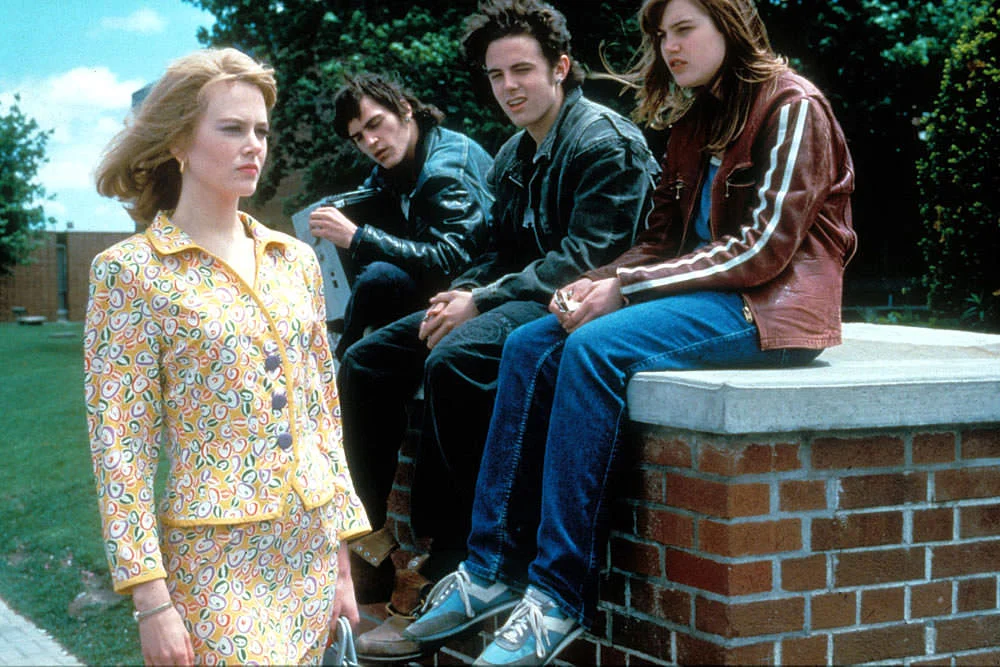
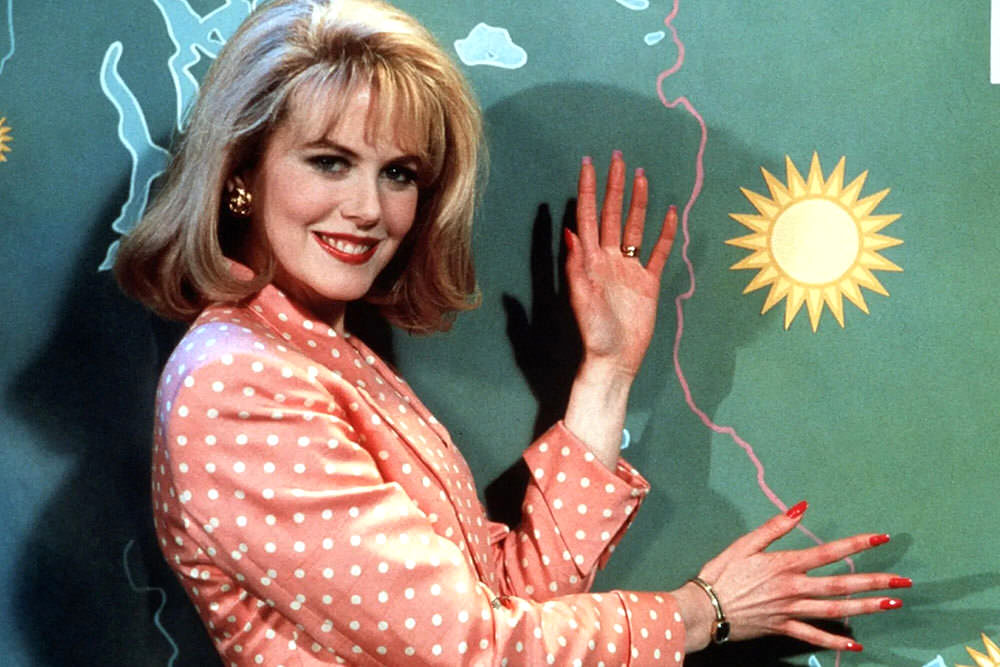
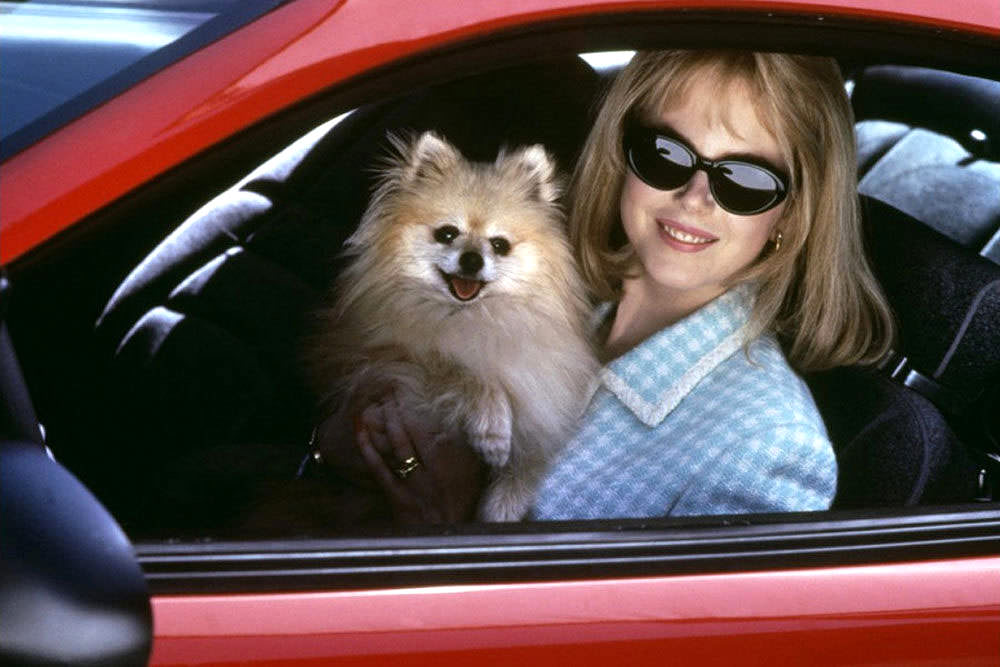
One of the most sophisticated elements of To Die For is its visual storytelling, specifically the work of costume designer Beatrix Aruna Pasztor. In a professional analysis of the film’s aesthetics, it is noted that Suzanne Stone’s wardrobe is meticulously crafted to signal her lack of genuine sophistication despite her immense ambition.
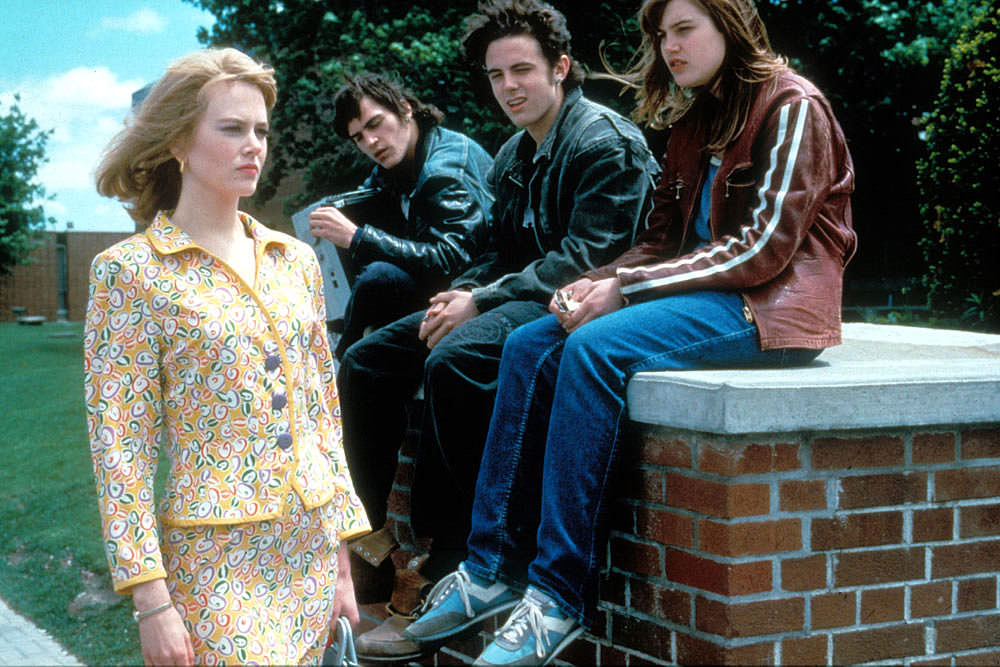
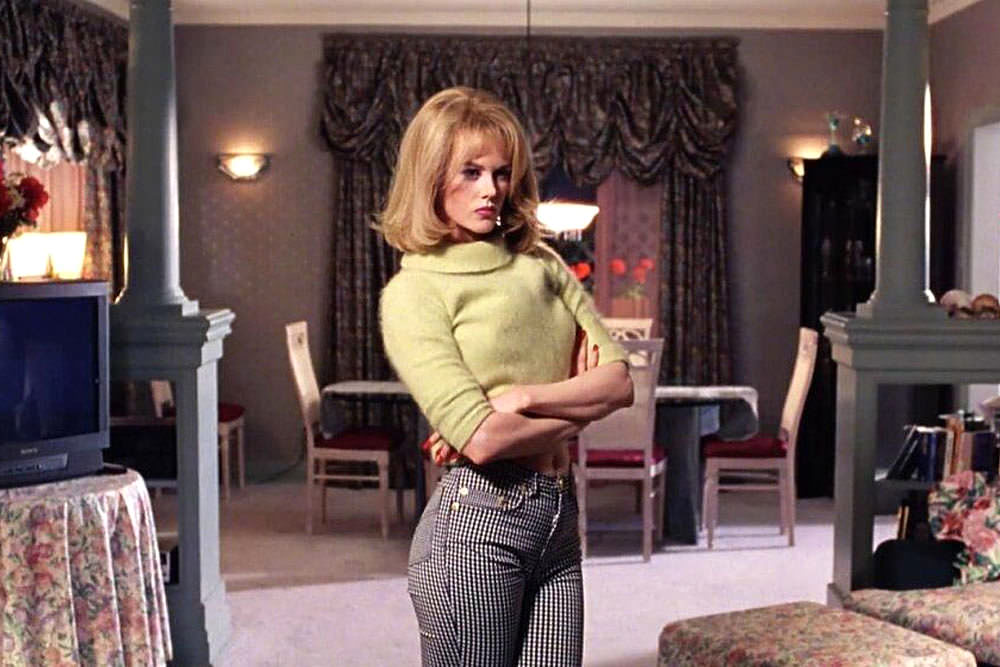
Unlike other "blonde ambition" characters of the era—such as Cher Horowitz in Clueless or Tracy Flick in Election—Suzanne is portrayed as inherently less intelligent than those around her. Her clothes are bright, attention-grabbing, and stylish in a superficial sense, but they often appear ill-fitted or made from flimsy textiles. This was a deliberate choice to show that Suzanne is "mimicking success" rather than achieving it.
Furthermore, the frequent use of polka dots and checkered patterns in her wardrobe serves as a visual metaphor for the pixelation and video noise of pre-high-definition television. In the 1990s, these patterns were known to "strobe" or cause interference on analog TV screens. By dressing Suzanne in these prints, Pasztor effectively turned the character into a living piece of media, a woman who only truly exists within the confines of a broadcast signal.
Chronology of Production and Release
- 1990: The Pamela Smart trial concludes in New Hampshire, capturing national attention.
- 1992: Joyce Maynard publishes To Die For, a fictionalized account of the themes surrounding the Smart case.
- 1994: Gus Van Sant begins pre-production. Nicole Kidman successfully lobbies for the lead role after Meg Ryan passes on the project.
- Late 1994 – Early 1995: Principal photography takes place. The production is shadowed by the ongoing O.J. Simpson trial.
- May 1995: The film premieres at the Cannes Film Festival, receiving immediate critical acclaim for its sharp satire and Kidman’s performance.
- September 1995: To Die For is released in the United States, earning approximately $21 million against a $20 million budget—a modest box office return that would be bolstered by long-term cult status and critical awards.
Satire as Prophecy: From Tabloid TV to Influencer Culture
Watching To Die For in the 2020s reveals a film that was ahead of its time in identifying the shift from merit-based success to fame-based existence. In 1995, the internet was in its infancy, and social media did not exist. Suzanne Stone’s mantra—that life is only real if it is captured on camera—seemed like a hyperbolic satirical jab at the time. Today, that sentiment is the foundational logic of the global influencer economy.
Suzanne Stone represents a "post-second wave feminism" archetype: the "warrior princess" who uses the trappings of femininity—pastels, miniskirts, and a chirpy demeanor—as a weapon. However, unlike her cinematic contemporaries like Elle Woods (Legally Blonde), Suzanne lacks a moral compass or actual talent. Her goal is not to be a great journalist, but to be a "famous person who does journalism." This distinction is the bedrock of modern celebrity culture, where the "brand" precedes the "craft."
The film also captures the 1990s’ casual relationship with class and ethnicity. The narrative features what modern viewers might describe as mean-spirited takes on impoverished teenagers and stereotypical depictions of Italian-American families. These elements, while reflective of the era’s "edgy" indie cinema style, serve to isolate Suzanne even further; she views the people around her not as humans, but as obstacles or supporting characters in her own televised biopic.
Broader Impact and Critical Legacy
The legacy of To Die For is cemented by its influence on the "mockumentary" and "dark comedy" genres. By utilizing a non-linear structure and "talking head" interviews, Gus Van Sant and Buck Henry created a format that would later be popularized by television hits like The Office and Modern Family.
From a sociological perspective, the film is a study of "American Narcissism." It suggests that the desire to be seen is so primal that it overrides basic human empathy. When Suzanne badmouths her late husband to the press immediately after his funeral, she isn’t just being cruel; she is performing the role of the "tragic widow" because she knows it makes for better television.
In the decades since its release, To Die For has been canonized by the Criterion Collection and remains a frequent subject of study for film students and cultural historians. It stands as a warning that went unheeded: a portrait of a society that was beginning to value the image of the thing more than the thing itself. As the line between private life and public performance continues to vanish in the digital age, Suzanne Stone Maretto remains the patron saint of the "always-on" generation, a character who was willing to kill for a spotlight that, in the end, was nothing more than a collection of flickering pixels.