
The 79th annual Cannes Film Festival, a prestigious global cinematic event, has once again illuminated the Côte d’Azur with a dazzling array of new films, premieres, and industry buzz. Among the highly anticipated selections premiering in the Directors’ Fortnight sidebar this year is Zachary Wigon’s latest offering, Victorian Psycho. This dark comedy ensemble feature, starring Maika Monroe, has generated considerable excitement for its audacious premise and stylish execution, presenting a wicked, genre-bending exploration of morality and madness within the opulent confines of a Victorian manor. The film, which bowed on May 22, 2026, has been lauded for its inventive blend of horror, dark humor, and gothic mystery, drawing comparisons to classic literary and cinematic works while forging its own distinct identity.
A Gothic Whodunit with a Wicked Twist
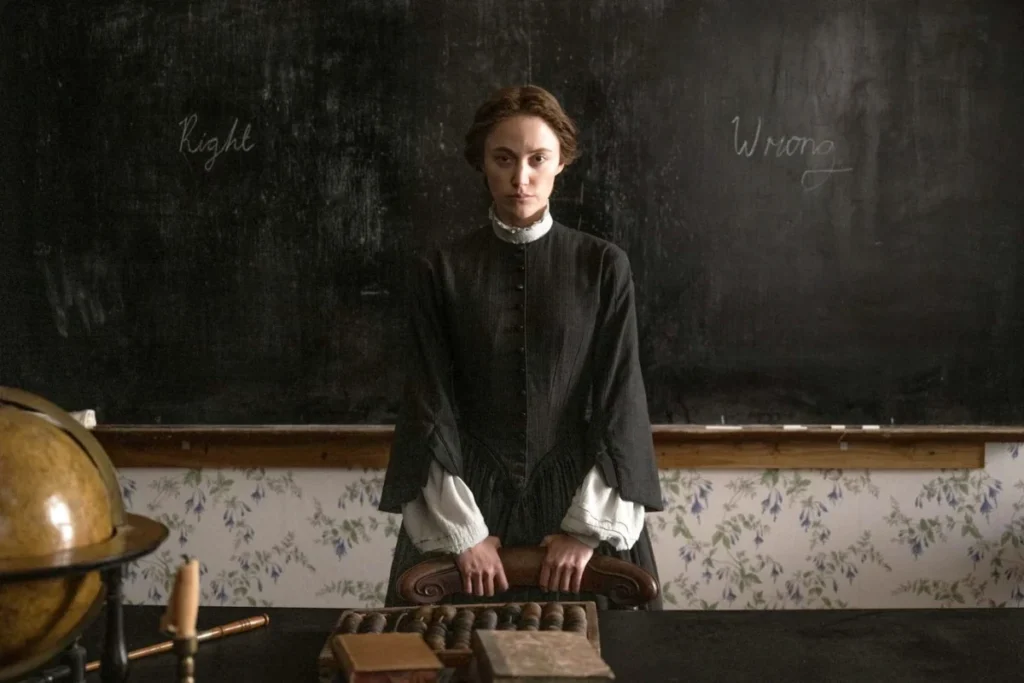
Victorian Psycho transports audiences to the 19th century, a period steeped in atmospheric suspense and societal constraints. The narrative centers on Winifred Notty, a new governess who arrives at the imposing Ensor House to assume her duties. However, her arrival coincides with a series of unsettling deaths, and the question quickly arises: is Winifred a victim of circumstance, an innocent bystander caught in a house of secrets, or something far more sinister? The film’s title itself is a deliberate nod to Bret Easton Ellis’s controversial novel and subsequent film adaptation, American Psycho, suggesting a thematic parallel of a seemingly ordinary individual harboring a dark, violent psyche. Yet, Victorian Psycho carves out its own niche by infusing this serial killer thriller trope with the rich tapestry of Victorian gothic literature and the darkly comedic sensibilities of a Spanish writer, Virginia Feito, who penned the screenplay based on her own novel.
The film’s premise hinges on the idea that while Winifred may possess her own unsettling inclinations, the inhabitants of Ensor House are arguably far more deranged. This inversion of expectation, where the perceived outsider becomes a catalyst for exposing the deeply ingrained corruption within a wealthy family, forms the core of the film’s satirical bite. Wigon, known for his previous work on the intimate thriller Sanctuary, demonstrates a remarkable ability to shift gears and deliver a larger-scale, more overtly genre-focused production. His direction, bolstered by the sharp writing of Feito, navigates the intricate plot with a keen eye for detail and a commitment to theatrical flair.
An Ensemble of Eccentric and Unsavory Characters
At the heart of Victorian Psycho‘s success is its compelling cast, led by Maika Monroe in a performance that has been singled out for its nuanced portrayal of Winifred. Monroe, who has consistently demonstrated her versatility in genre films, including a notable turn in last year’s 100 Nights of Hero, imbues Winifred with a captivating blend of outward composure and underlying intensity. Her ability to convey hidden depths and moral ambiguity makes her an ideal anchor for a story that thrives on deception and psychological manipulation.
The supporting cast is equally crucial in populating the world of Ensor House with memorable, albeit often reprehensible, characters. Thomasin McKenzie, an actress who has garnered acclaim for her mature performances, takes on the role of Ms. Lamb, another servant at the manor. Her character likely serves as a foil or confidante to Winifred, offering a different perspective on the escalating events. Jason Isaacs, a veteran actor known for his commanding presence, portrays Mr. Pounds, the patriarch of the family. Described as "kooky & careless," Isaacs’ portrayal promises to inject a dose of darkly comedic absurdity into the proceedings. Ruth Wilson, another accomplished performer, delivers a "dastardly performance" as the matriarch, whose wickedness, in conjunction with Mr. Pounds’, apparently provides Winifred with ample justification for her actions. The dynamic between Isaacs and Wilson as the debauched heads of the household is a key element in establishing the pervasive atmosphere of decay and moral rot that Winifred seeks to purge.
Adding to the ensemble’s richness is young Jacobi Jupe, who previously impressed audiences with his work in Hamnet. Jupe’s role as one of the "totally nuts" children of the Ensor family offers the potential for both innocence and unsettling precognition, a common trope in gothic narratives that can heighten the sense of unease. The collective effort of this talented cast, working within Feito’s intricately woven script, creates a compelling tapestry of personalities, each contributing to the film’s darkly humorous and suspenseful trajectory.
Filmmaking Prowess and Cinematic Influences

Director Zachary Wigon’s evolution as a filmmaker is evident in Victorian Psycho. While Sanctuary explored themes of power dynamics and consent in a more intimate setting, his foray into the Victorian gothic genre demonstrates a willingness to experiment with scale and tone. The film’s success is also attributed to the collaborative efforts behind the camera, particularly the cinematography by Nico Aguilar. The article highlights "a handful of excellent, twisted shots" and "inspired filmmaking flourishes," suggesting a visual style that complements the narrative’s dark and often unsettling themes. This attention to visual detail is critical in establishing the oppressive atmosphere of Ensor House and enhancing the film’s gothic credentials.
The pacing of Victorian Psycho is another point of praise, with the film clocking in at a brisk 90 minutes. This concise runtime allows the narrative to maintain momentum and deliver its payload of twists and turns without overstaying its welcome. The film’s ability to wrap up its story within this efficient timeframe suggests a tight script and focused direction, ensuring that every scene contributes to the overall impact.
The film’s conceptual lineage, drawing inspiration from both 19th-century mysteries and modern serial killer thrillers, positions it as a contemporary reinterpretation of established genre conventions. By blending the atmospheric dread of gothic literature with the visceral thrills of a slasher narrative, Victorian Psycho aims to offer a fresh perspective on familiar tropes. The comparison to American Psycho is not merely titular; it speaks to the film’s exploration of an anti-hero protagonist whose violent actions are framed within a critique of societal hypocrisy and moral decay. This approach, where the audience is encouraged to empathize with or at least understand the motivations of a killer, is a hallmark of modern psychological thrillers and horror films.
Cannes Context and Industry Reception
The inclusion of Victorian Psycho in the Cannes Film Festival’s prestigious Directors’ Fortnight program signifies its critical recognition and artistic merit. The Directors’ Fortnight, known for showcasing auteur-driven cinema and emerging talents, provides a platform for films that might not fit neatly into the main competition but possess significant artistic ambition. The festival, which typically runs for two weeks in May, serves as a crucial marketplace and launchpad for films destined for international distribution. For a film like Victorian Psycho, premiering at Cannes offers invaluable exposure to distributors, critics, and industry professionals, potentially leading to wider release and critical acclaim.
The reception at Cannes, as reflected in the provided review, suggests that Victorian Psycho has successfully captured the attention of festival-goers. The description of the film as a "horror delight" and a "whimsical, bloody romp" indicates a film that is both entertaining and artistically satisfying. The rating of 8 out of 10 by Alex Billington of First Showing further underscores the positive critical response. This level of enthusiasm from early screenings is a strong indicator of the film’s potential to resonate with audiences beyond the festival circuit.
Broader Implications and Future Outlook
The success of Victorian Psycho at Cannes could have several implications for the genre and for the careers of those involved. For director Zachary Wigon, it solidifies his position as a filmmaker capable of delivering compelling genre work with a distinct voice. His ability to blend dark humor with visceral thrills suggests a promising future in horror and thriller filmmaking. For Maika Monroe, this role further cements her status as a sought-after talent in the horror genre, demonstrating her capacity to carry a film with complex character work and a strong on-screen presence. The film’s success also highlights the continued appeal of gothic and period-set horror, a subgenre that consistently finds new ways to engage audiences with its atmospheric storytelling and exploration of societal anxieties.
Furthermore, the film’s success at Cannes underscores the enduring power of original storytelling within the independent film landscape. In an era often dominated by franchise films and remakes, Victorian Psycho‘s unique concept and execution offer a refreshing alternative. The international recognition gained at Cannes can also pave the way for broader distribution and a wider audience reach, potentially influencing future filmmaking trends and inspiring other creators to explore similar thematic and stylistic avenues.
The film’s thematic exploration of madness and morality, framed within the restrictive social constructs of the Victorian era, offers a commentary that can resonate with contemporary audiences. The critique of societal hypocrisy, embodied by the wealthy and often corrupt inhabitants of Ensor House, is a timeless theme that continues to be relevant. By presenting a protagonist who subverts these expectations and takes matters into her own hands, Victorian Psycho taps into a desire for justice, however twisted, and for the exposure of hidden truths. The film’s ability to be both entertaining and thought-provoking positions it as a significant contribution to the horror genre, and its premiere at Cannes marks a notable moment in the 2026 cinematic landscape. The critical acclaim and audience engagement suggest that Victorian Psycho is more than just a fleeting festival hit; it is a film poised to leave a lasting impression on the genre.