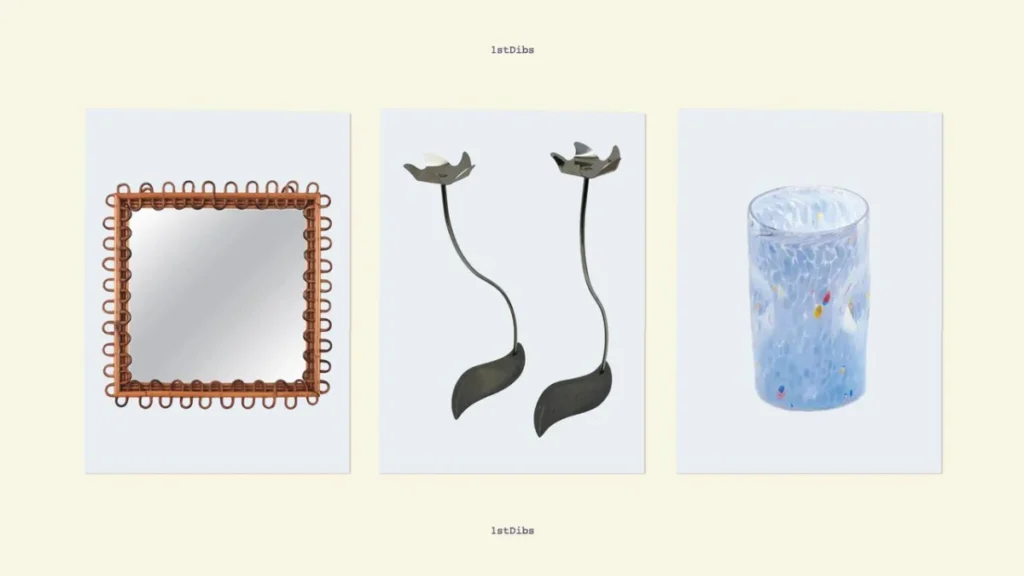

The global luxury secondary market for furniture and fine art is currently undergoing a significant transformation, driven by a renewed consumer interest in sustainability, provenance, and the "curated home" aesthetic. At the center of this movement is 1stDibs, the leading online marketplace for extraordinary design. The platform has officially launched its highly anticipated "Design Lover’s Sale," a major commercial event running through the end of May. This sale features a vast selection of the retailer’s inventory—ranging from midcentury modern icons to Regency-era antiques—with price reductions of up to 60%.
As interior designers and private collectors increasingly move away from mass-produced "fast furniture," sales of this magnitude provide a critical entry point for acquiring investment-grade pieces. The 1stDibs marketplace is uniquely positioned in the industry because it aggregates listings from thousands of vetted global dealers, ensuring that items like original Eames loungers, Cartier collectibles, and Josef Hoffmann textiles are authenticated before they reach the consumer.
The Evolution of 1stDibs and the Digital Antique Market
To understand the significance of the Design Lover’s Sale, one must look at the chronology of 1stDibs itself. Founded in 2001 by Michael Bruno, the company was originally conceived as a way to bring the legendary luxury of the Paris flea markets (Marché aux Puces) to a global digital audience. Over the last two decades, it has evolved into a comprehensive design ecosystem.
The current sale reflects a broader market trend: the blurring of lines between high art and functional decor. Supporting data from the luxury resale sector indicates that the global used furniture market is projected to reach a valuation of approximately $27 billion by 2030, growing at a CAGR of 6.4%. This growth is fueled by "design lovers" who view furniture as a store of value. The 1stDibs sale serves as a barometer for which eras and styles are currently commanding the most attention from the design community.
Midcentury Modernism and the Brutalist Revival
A primary focus of the current sale is the 1960s and 70s, particularly the Brutalist and Midcentury Modern movements. Brutalism, once a polarizing architectural style characterized by raw materials and jagged, geometric forms, has seen a massive resurgence in interior design.
Among the standout listings in the sale is the Vintage 1960s Danish Brutalist Oak Sideboard, designed in the style of Henning Kjærnulf. This piece exemplifies the era’s shift toward heavy, textured wood and "wavy" silhouettes that soften the rigid geometry of traditional cabinetry. Similarly, the "Razorblade" dining chairs by Kjærnulf remain a designer favorite, often appearing in high-end residential tours featured by publications like Architectural Digest.
The sale also highlights the enduring legacy of Finnish architect Alvar Aalto. For collectors who may find his larger furnishings cost-prohibitive, the sale includes more accessible entry points, such as the Alvar Aalto Oak Serving Platter. Aalto’s work, often associated with the Artek brand, is celebrated for its organic humanism, a direct contrast to the cold industrialism of some of his contemporaries.
The "Space Age" and Postmodernism: A 100-Year Legacy
The chronology of design history is also being celebrated through the work of Verner Panton. As the design world marks the legacy of the late Danish designer, 1stDibs has included several of his most iconic "Space Age" pieces in the sale. The set of five Verner Panton XDesign Bar Stools, featuring wire bodies and technicolor wool seats, represents the 1960s obsession with futuristic materials and bold, psychedelic palettes.
Postmodernism and late-20th-century design are also represented through an unlikely but surging category: vintage IKEA. While the Swedish retailer is known for flat-pack affordability, its designer collaborations from the 1980s and 90s have become highly sought-after collectibles. The Storvik Rattan Lounge Chair by Carl Öjerstam (2001) is a prime example. Its sculptural, "platypus-esque" form has turned it into a trophy for collectors of millennial-era design, with prices in the secondary market now far exceeding its original retail value.
Lighting as Functional Sculpture: From Noguchi to Flos
Lighting is often the most critical element in a curated interior, acting as both a utility and a focal point. The Design Lover’s Sale includes significant discounts on "light sculptures," most notably the work of Isamu Noguchi. The Isamu Noguchi Akari 55D Ceiling Lamp is a staple of refined minimalism. Handcrafted from washi paper and bamboo in Gifu, Japan, these lamps provide a soft, ambient glow that has remained stylistically relevant since their debut in the 1950s.
For those seeking a more industrial or contemporary Italian aesthetic, the Tab Floor Lamp by Barber & Osgerby for Flos is another highlighted item. This piece represents the modern "task lighting" movement, where precision engineering meets minimalist form. The inclusion of such diverse lighting options—from paper lanterns to aluminum fixtures—demonstrates the breadth of the 1stDibs inventory.
Decorative Arts and the "New Antiques"
The sale also caters to the "maximalist" trend, which favors the layering of disparate eras and textures. This is seen in the demand for Regency-era brass mirrors and French Faience ceramics. The Antique French Cast Brass Coat of Arms Wall Mirror, for instance, offers an old-world counterpoint to the sleek lines of modern lofts.
In the realm of contemporary collectibles, the Yayoi Kusama Plush Pumpkin remains a high-interest item. Kusama, the world’s top-selling female artist, has turned her signature "infinity dots" and pumpkin motifs into a global brand. These plush iterations allow collectors to own a piece of the Kusama "brand" at a fraction of the cost of her large-scale sculptures or paintings, which can fetch millions at auction.
Supporting the tablescape category are artisanal pieces like the Goto Murano Drinking Glasses by Roberto Beltrami. Murano glass, produced on the Venetian island of Murano for centuries, continues to be a hallmark of luxury. Beltrami’s work is noted for its vibrant, multicolored application, providing a contemporary twist on traditional glassblowing techniques.
Market Analysis: Why Now?
Industry analysts suggest that the timing of the Design Lover’s Sale is strategic. Late spring is traditionally a high-volume period for the real estate and renovation markets. As homeowners finalize spring renovations, the demand for unique finishing pieces increases.
Furthermore, the "pre-vetted" nature of 1stDibs serves as a critical trust mechanism in an era of rampant online counterfeiting. For example, when purchasing a Josef Hoffmann Fledermaus chair, a buyer is not just paying for the wood and fabric; they are paying for the verification that the piece was produced in the 1910s by Thonet, the pioneers of bentwood furniture. This verification is essential for pieces that are intended to be long-term investments.
The Sustainability Factor
Beyond the aesthetic and financial motivations, there is a powerful environmental argument for the vintage market. The furniture industry is a major contributor to deforestation and landfill waste. By incentivizing the purchase of high-quality, pre-owned items, 1stDibs is participating in the "circular economy." Each Eames chair or Brutalist sideboard purchased second-hand represents one less item requiring new raw materials and international shipping of new components.
Broader Impact and Implications for the Industry
The success of the 1stDibs Design Lover’s Sale has broader implications for the retail sector. Traditional furniture retailers are increasingly looking at the "resale" model as a way to bolster their sustainability credentials and capture a younger, more design-conscious demographic.
The data gathered from this sale—such as the high demand for rattan pieces like the Franco Albini Sunburst Mirror or the Italian Magazine Wall Rack—will likely influence future design trends. When specific vintage items sell out or see high engagement during a major sale, it often signals to manufacturers and designers what the "next big thing" will be in contemporary production.
Conclusion
The 1stDibs Design Lover’s Sale is more than a seasonal clearance event; it is a curated window into the current state of global design. By offering substantial discounts on everything from 1910s Vienna Secession chairs to 1970s Italian chrome, 1stDibs is democratizing access to high-end design history. As the sale continues through the end of May, it offers a rare opportunity for collectors to acquire authenticated pieces that bridge the gap between historical significance and modern livability. In a world of fleeting trends, these pieces represent a commitment to quality, provenance, and the enduring power of good design.