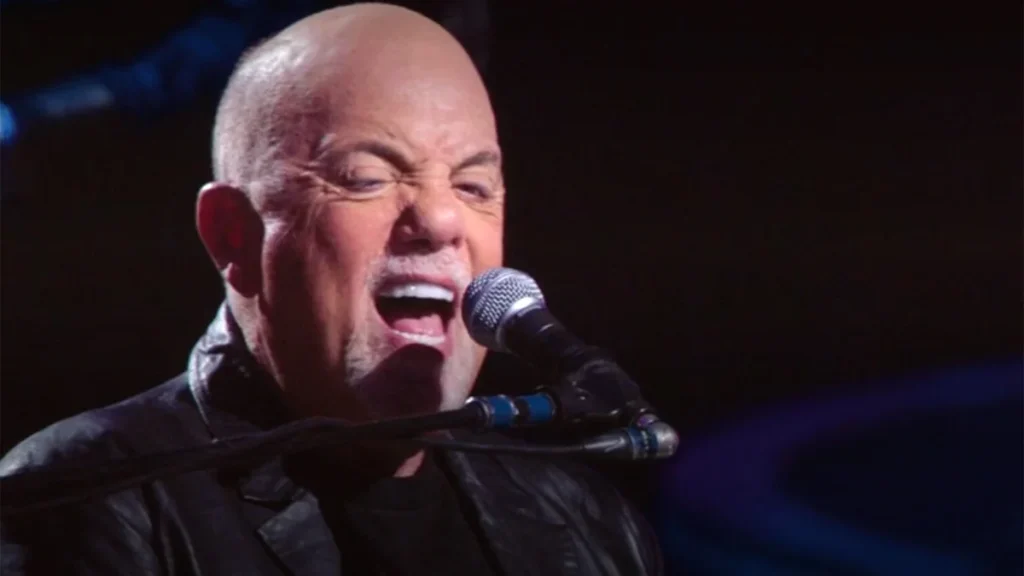

A representative for legendary musician Billy Joel has unequivocally stated that the artist does not endorse or support the recently announced biopic, Billy & Me, calling its development “legally and professionally misguided.” The planned film, which aims to chronicle a chapter of Joel’s life through the lens of his first manager, Irwin Mazur, has been met with a firm rejection from the Piano Man’s camp, confirming that the project will proceed without access to Joel’s iconic music catalog or his life rights. This declaration throws a significant wrench into the production, raising questions about the film’s feasibility and artistic integrity in the absence of the very elements that define its subject.
The controversy erupted following reports on Tuesday that Billy & Me was in active development, with John Ottman, known for his editing work on blockbuster biopics like Bohemian Rhapsody and Michael, attached to direct. The news quickly circulated within entertainment circles, detailing a project that would focus on the early career struggles and triumphs of the Grammy-winning artist. However, the enthusiasm surrounding the announcement was swiftly overshadowed by Joel’s official rebuttal.
The Announcement and Immediate Reaction
The initial reports positioned Billy & Me as a potentially compelling dive into the formative years of one of music’s most enduring figures. John Ottman’s involvement, particularly his experience with Bohemian Rhapsody, which garnered critical and commercial success, suggested a project with serious aspirations. Ottman’s background as an editor and composer often brings a unique sensibility to storytelling, promising a narrative crafted with an understanding of musicality and dramatic pacing. The idea of exploring Joel’s journey, especially from the perspective of someone intimately involved in his early career like Irwin Mazur, offered a fresh angle on a well-documented life. Mazur, who managed Joel during crucial periods of his ascent, holds a unique vantage point on the artist’s path to stardom.
However, the celebratory tone of the announcement was abruptly curtailed by the swift and decisive statement from Billy Joel’s representatives to Variety. The statement left no room for ambiguity: “Since 2021, the parties involved have been officially notified that they do not possess Billy Joel’s life rights and will not be able to secure the music rights required for this project. Billy Joel has not authorized or supported this project in any capacity, and any attempt to move forward without it would be both legally and professionally misguided.” This forceful rejection underscores a fundamental conflict over creative control and intellectual property, setting the stage for a potential legal and public relations battle.
The Heart of the Dispute: Rights and Authorization
At the core of this dispute are two critical components: "life rights" and "music rights." Life rights pertain to the exclusive right to tell a person’s story, often acquired through agreements with the individual or their estate. Music rights, on the other hand, cover the licensing of an artist’s copyrighted songs for use in film, television, or other media. For a biopic about a musician, securing both is paramount, as they allow for authentic portrayal and the inclusion of the very songs that cemented the artist’s legacy.
Billy Joel’s statement is particularly damning because it highlights that the producers were explicitly notified as early as 2021 about their lack of access to these crucial rights. This suggests that the filmmakers have been aware of Joel’s non-cooperation for an extended period, yet have chosen to press forward with the project. Such a decision, as Joel’s camp points out, is not only "legally" but also "professionally misguided," implying a disregard for established industry norms and the artist’s wishes. The phrase "legally misguided" could foreshadow potential legal action if the film progresses in a manner that infringes on Joel’s rights, particularly regarding his persona or public image, even if specific songs are not used.
The Narrative Perspective: Irwin Mazur and Jon Small
The producers of Billy & Me have managed to secure the exclusive life rights for Irwin Mazur, Joel’s first manager, and Jon Small, a long-time collaborator and friend. This is the foundation upon which they intend to build their narrative. Irwin Mazur played a significant role in Joel’s early career, particularly during the period leading up to and immediately following the release of his seminal album Piano Man in 1973. Mazur’s perspective would undoubtedly offer an intimate, albeit potentially subjective, account of Joel’s struggles as an aspiring artist, his breakthrough, and the complexities of early fame. Jon Small, a drummer and director, was also an integral part of Joel’s life, having been a bandmate in The Hassles and Attila, and later directing many of Joel’s music videos. His involvement further enriches the personal angle the filmmakers are pursuing.
By focusing the narrative through Mazur’s and Small’s eyes, the filmmakers are attempting a strategic workaround. They are not claiming to tell "Billy Joel’s story" directly but rather "Irwin Mazur’s story about Billy Joel" or "Jon Small’s story about Billy Joel." This approach aims to circumvent the need for Joel’s direct life rights, relying instead on the experiences and memories of those closely associated with him. However, this strategy, while legally distinct, still faces immense creative and commercial challenges, especially concerning the unauthorized use of Joel’s likeness or the implied endorsement of a story he does not support.
The Precedent: Biopics Without Music Rights
The entertainment industry has seen instances of biopics moving forward without the full cooperation of the subject or their estate, particularly regarding music rights. Sofia Coppola’s 2023 film Priscilla, which depicted the life of Priscilla Presley and her relationship with Elvis Presley, serves as a recent high-profile example. Despite its focus on Elvis, the film notably did not feature any of his original recordings. Instead, Coppola opted for instrumental pieces and covers, skillfully using the absence of Elvis’s voice to subtly underscore Priscilla’s perspective and the emotional distance within their relationship. The soundtrack primarily featured contemporary artists like Phoenix, allowing the film to evoke the era without direct reliance on Presley’s catalog.
While Priscilla demonstrated that a powerful narrative can still emerge, it also highlighted the creative limitations. Audiences familiar with Elvis’s music might have felt a noticeable void, as his iconic voice and arrangements are inseparable from his persona. Filmmakers must employ clever narrative and musical substitutes, often alluding to the original songs without explicitly playing them. This can involve using sound-alike tracks, re-recorded versions by different artists, or focusing heavily on dialogue and plot to convey the musical context. Such creative gymnastics can be challenging to execute effectively without detracting from the audience’s immersion.
Other examples include unauthorized biographies that delve into public figures’ lives without explicit consent. While these productions are legally permissible if they avoid copyright infringement (e.g., using music or direct quotes without permission) and defamation, they often lack the authentic voice or archival material that authorized projects can leverage. The quality and reception of such films can be highly variable, often depending on the strength of the script, performances, and directorial vision to compensate for the missing elements.
The Landscape of Music Biopics
The past decade has witnessed a surge in the popularity and commercial success of music biopics. Films like Bohemian Rhapsody (Queen, 2018), Rocketman (Elton John, 2019), and Walk the Line (Johnny Cash, 2005) have not only captivated audiences but also generated significant box office returns and critical acclaim, often culminating in Oscar wins for acting. These films typically benefit from the full cooperation of the artists or their estates, granting access to their music, personal archives, and direct input on the narrative. This collaboration allows for a richer, more authentic portrayal, resonating deeply with fans and often introducing the artist’s legacy to new generations.
The appeal is undeniable: these films offer a glimpse behind the curtain, exploring the triumphs, struggles, and personal lives of beloved cultural icons. They often serve as a powerful testament to the enduring impact of music and the artists who create it. However, the success of authorized biopics also raises the stakes for unauthorized projects. Audiences have come to expect a certain level of authenticity, especially the inclusion of original music, which forms the soundtrack to an artist’s life and career.
Billy Joel’s Legacy and Control
Billy Joel, with a career spanning over five decades, is one of the best-selling music artists of all time, having sold over 150 million records worldwide. His catalog of hits, including "Piano Man," "Uptown Girl," "Scenes from an Italian Restaurant," and "New York State of Mind," is deeply woven into the fabric of American popular culture. His music is autobiographical, often drawing directly from his experiences, relationships, and observations of life in and around New York. For an artist whose work is so intrinsically linked to his personal narrative, the idea of a biopic created without his consent, and crucially, without his music, presents a profound challenge to his legacy and artistic control.
Joel has historically been protective of his image and his creative output. While he has participated in documentaries and interviews, he has maintained a degree of privacy regarding his personal life. The notion of a dramatic portrayal of his life, especially one that might interpret events differently from his own recollection or without the emotional weight of his original compositions, is clearly something he wishes to avoid. His firm stance underscores the growing trend among artists to assert greater control over how their stories are told, particularly in an era where their life stories are increasingly monetized.
Legal and Creative Hurdles for Billy & Me
The path forward for Billy & Me appears fraught with significant legal and creative hurdles. Legally, while the producers may have Mazur’s and Small’s life rights, they must meticulously avoid any direct infringement on Billy Joel’s intellectual property. This includes not only his music but also his name, likeness, and any copyrighted elements associated with him. The film will likely need to rely heavily on narrative accounts and dramatic interpretations rather than direct depictions of performances featuring Joel’s original songs.
Creatively, the absence of Joel’s music presents an immense challenge. How does one tell the story of the "Piano Man" without his piano? Filmmakers would need to find innovative ways to convey the power and impact of his songs without playing them. This could involve showing characters reacting to "new" songs (which would be original compositions created for the film), focusing on the songwriting process itself, or using existing public domain music to evoke the era. The emotional resonance typically derived from hearing an artist’s original works during key biographical moments would be absent, potentially leaving audiences feeling disconnected or unfulfilled. The film risks becoming a "Billy Joel biopic" in name only, unable to deliver the core artistic experience fans would expect.
Furthermore, public perception could be a significant factor. A film explicitly disavowed by its subject, especially one as beloved as Billy Joel, might face an uphill battle in gaining audience acceptance. Fans might view it as disrespectful or inauthentic, impacting its box office performance and critical reception.
Industry Implications and Future Trends
This dispute serves as a stark reminder of the complexities inherent in creating biopics, particularly those about living artists. It highlights the growing tension between producers eager to capitalize on compelling life stories and artists determined to maintain ownership and control over their narratives and intellectual property. The Billy Joel situation could further embolden other artists to take strong stances against unauthorized biopics, potentially leading to more cautious approaches from studios or an increase in projects that are fully sanctioned and developed in close collaboration with the subject.
The rise of artist-controlled documentaries and biopics, often produced by the artists themselves or their estates (e.g., Taylor Swift’s Miss Americana, Beyoncé’s Homecoming), signals a shift towards artists reclaiming their narratives. This trend suggests that future unauthorized biopics, especially about major figures, will likely face even greater scrutiny and potential opposition.
Conclusion and Outlook
The future of Billy & Me remains highly uncertain. While the filmmakers appear determined to proceed with the rights they have secured, the explicit and public denunciation from Billy Joel himself, coupled with the confirmed lack of music rights, casts a long shadow over the project. It underscores a fundamental clash between creative ambition and artistic autonomy. Whether the film can overcome these formidable obstacles and deliver a compelling, respectful, and legally sound narrative without the very essence of its subject’s artistry will be a testament to its creators’ ingenuity, or perhaps, a cautionary tale for the biopic industry. For now, the Piano Man has spoken, and his message is clear: his story, his music, his terms.