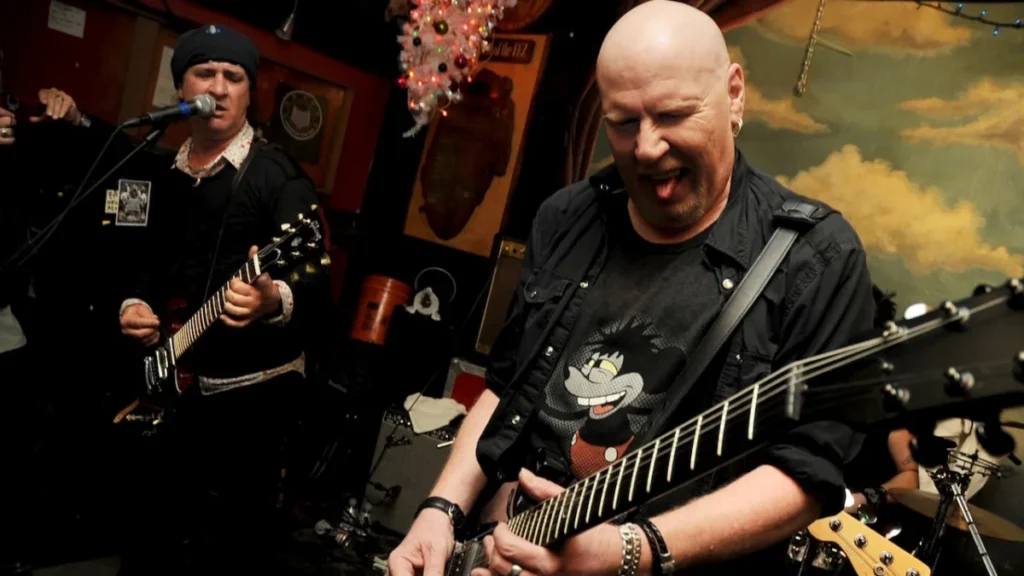

Eugene Richard O’Connor, the influential guitarist and architect of the American punk rock sound known to the world as Cheetah Chrome, has died at the age of 71. His passing marks the conclusion of a storied career that saw him transition from the burgeoning underground scene in Cleveland to the epicenter of the punk explosion at New York City’s CBGB, leaving behind a legacy that fundamentally shaped the trajectory of independent rock music.
The news was confirmed in a formal statement released by the Dead Boys via their official Instagram account on Sunday, September 13. The band members expressed profound sorrow, acknowledging O’Connor not merely as a technical musician but as a defining force of a musical movement. "Cheetah was a true original, an architect of the punk rock movement," the statement read. "A one-man hurricane tearing up the musical landscape with his feral guitar riffs and manic energy."
A Foundation in Proto-Punk
Born in Cleveland, Ohio, O’Connor’s musical journey began in the early 1970s, a period when the industrial landscape of the American Midwest was incubating a raw, aggressive form of rock and roll that would eventually be classified as proto-punk. Before the global recognition of the Dead Boys, O’Connor was a pivotal member of Rocket from the Tombs. Alongside fellow pioneers like Stiv Bators and Johnny Madansky, O’Connor helped refine a sound characterized by distortion, speed, and a nihilistic edge that stood in sharp contrast to the polished stadium rock of the era.
Rocket from the Tombs was short-lived but historically significant, serving as a creative incubator for the musicians who would eventually relocate to New York to participate in the burgeoning scene centered around the legendary venue CBGB. The transition from the Midwest to the Bowery was seamless for O’Connor, as he and his collaborators brought a level of intensity that solidified the identity of the nascent punk genre.
The Rise of the Dead Boys
Upon forming the Dead Boys, O’Connor and his cohorts became synonymous with the confrontational, high-energy performances that defined 1970s punk. Their 1977 debut album, Young, Loud and Snotty, remains a foundational text of the genre. Produced by Genya Ravan, the record featured the anthem "Sonic Reducer," a track that remains a quintessential example of punk’s sonic aesthetic.
The band followed this success with their 1978 sophomore effort, We Have Come for Your Children. While the record did not achieve mainstream commercial success in the traditional sense, its influence on subsequent generations of rock, alternative, and hardcore bands cannot be overstated. O’Connor’s guitar work—characterized by jagged, abrasive chords and an unyielding commitment to volume—served as the structural backbone of the Dead Boys’ sound.
The band’s cultural footprint was further cemented by their appearance in the 1980 documentary D.O.A.: A Right of Passage, directed by Lech Kowalski. The film captured the chaotic spirit of the era, showcasing the Dead Boys as a central component of the global punk explosion and providing a permanent record of their visceral stage presence.
Chronology of a Career
The trajectory of O’Connor’s professional life was marked by both periods of intense collaboration and individual creative exploration:
- 1974–1975: O’Connor plays a key role in Rocket from the Tombs, establishing his reputation as a formidable guitarist in the Cleveland underground.
- 1976: The Dead Boys are formed in New York City, quickly becoming house favorites at CBGB.
- 1977: Release of the landmark album Young, Loud and Snotty.
- 1978: Release of We Have Come for Your Children.
- 1980: The initial dissolution of the Dead Boys occurs, prompting O’Connor to engage in various session works and solo projects.
- 1987: The first of several intermittent reunions for the Dead Boys begins.
- 2010: O’Connor publishes his autobiography, Cheetah Chrome: A Dead Boy’s Tale from the Front Lines of Punk Rock.
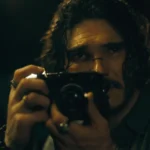
- 2013: The release of the film CBGB, in which O’Connor is portrayed by actor Rupert Grint, bringing his story to a broader audience.
- 2017: A renewed period of activity for the Dead Boys begins, continuing through various tours and live engagements.
Post-Punk Endeavors and Personal Legacy
Following the initial breakup of the Dead Boys in 1980, O’Connor did not retreat from the music industry. He maintained a consistent presence, performing with artists such as GG Allin, whose volatile performances mirrored the aggression of early punk. O’Connor’s willingness to experiment with various styles and collaborations reflected a musician who remained committed to his craft well beyond the peak of his band’s mainstream notoriety.
In 2010, O’Connor provided a firsthand account of his experiences in the music industry through his memoir, Cheetah Chrome: A Dead Boy’s Tale from the Front Lines of Punk Rock. The book offered a candid look at the excesses, the creative triumphs, and the personal struggles that characterized the punk scene of the late 1970s. By chronicling his own life, O’Connor ensured that the historical narrative of the era remained grounded in the perspectives of those who were present at its inception.
Implications and Industry Impact
The death of Cheetah Chrome serves as a poignant reminder of the aging of the original punk generation. As these figures pass, the academic and cultural assessment of their work continues to evolve. Analysis of the Dead Boys’ influence reveals that their contribution was not merely musical but sociological; they provided a blueprint for DIY (do-it-yourself) production and an aesthetic template for the alternative rock movement that would dominate the 1990s.
Industry experts note that the "feral" style of guitar playing pioneered by O’Connor influenced the evolution of heavy metal and hardcore punk, bridging the gap between the blues-based rock of the early 70s and the faster, more aggressive sounds that followed. His passing has triggered an outpouring of tributes from across the music industry, reflecting the high esteem in which he was held by his peers and the legacy of inspiration he leaves for younger generations of musicians.
Official Responses and Remembrance
The reaction from the music community has been swift, with fellow musicians and industry figures highlighting O’Connor’s character. Despite the aggressive persona associated with the punk movement, those who knew him personally often spoke of a humble, generous individual who remained deeply passionate about rock and roll until the very end.
"Beyond all that, Cheetah was also just a really sweet guy that loved rock-roll," the Dead Boys noted in their statement. This sentiment has been echoed in various social media tributes, where fans and contemporaries have characterized him as an approachable mentor and a dedicated practitioner of his art.
The family, bandmates, and representatives of the Dead Boys have requested privacy as they navigate this period of mourning. The band’s statement concluded with a sentiment shared by many in the punk community: "Godspeed Cheetah. Your music lives on and will continue to inspire others for generations to come."
As the dust settles on his long and storied career, O’Connor leaves behind a body of work that serves as a testament to the transformative power of rebellion in music. While the man known as Cheetah Chrome has departed, the sonic landscape he helped forge remains a vital, influential force in the global musical consciousness, ensuring that the legacy of the Dead Boys remains etched into the history of modern music.