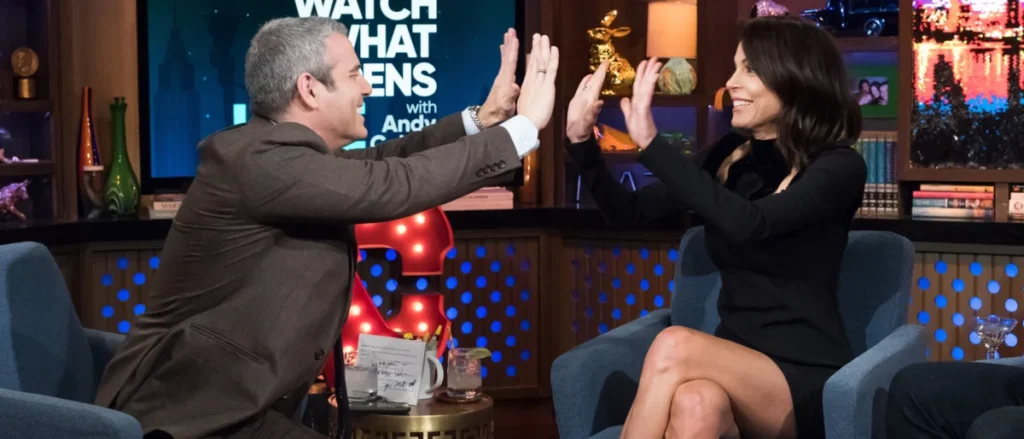

The cultural ecosystem of Bravo has long thrived on a delicate equilibrium between interpersonal friction and eventual catharsis. In recent years, the network’s flagship universe—frequently dubbed the Bravoverse—has leaned heavily into reconciliation. Veteran figures once locked in seemingly permanent estrangement have systematically buried the hatchet, returning to the fold with institutional blessing. Yet, one high-profile fracture remains entirely unhealed: the once-formidable alliance between network executive Andy Cohen and foundational Real Housewives of New York City star Bethenny Frankel.
Once defined by mutual professional respect, genuine off-camera camaraderie, and shared cultural dominance within the unscripted television landscape, the relationship between Cohen and Frankel has devolved into a protracted public stalemate. While Cohen has successfully repaired relations with other high-profile dissidents, such as Carole Radziwill, his ongoing feud with Frankel shows no signs of abating. Their divergent paths highlight the complex intersection of personal loyalty, corporate governance, and the evolving economics of modern reality television.
From Original Allies to Industry Stalwarts
To understand the depth of the current estrangement, one must examine the foundational years of the Real Housewives franchise. When The Real Housewives of New York City premiered in 2008, Frankel emerged instantly as its breakout star. Her sharp intellect, entrepreneurial drive, and unvarnished commentary established her as the archetype of the modern reality television mogul. Concurrently, Cohen, serving as a key executive at Bravo, navigated the network’s exponential growth, with Frankel acting as a primary anchor of its early success.
Over the subsequent decade, their professional association evolved into a personal friendship. When Frankel made her triumphant return to the franchise for its seventh season in 2015, Cohen openly celebrated the homecoming, frequently citing her value to the production. Their rapport extended beyond network-controlled programming; Frankel frequently hosted Cohen on her digital platforms, including her podcast Just B with Bethenny Frankel, where she credited him as a pivotal figure in her career trajectory. As recently as July 2020, public appearances and shared social media posts depicted a relationship characterized by mutual admiration and a shared history as pioneers of a multi-billion-dollar franchise ecosystem.
The Catalyst for Rupture: Podcasts, Commentary, and Corporate Criticism
The deterioration of their dynamic did not occur in a single isolated incident, but rather through a cumulative series of professional disagreements that gradually turned personal. The initial public fracture manifested in December 2022 during Frankel’s appearance on Watch What Happens Live with Andy Cohen. At the center of the dispute was Frankel’s launch of ReWives, a recap podcast wherein she dissected her historical tenure on RHONY.
Cohen openly criticized the venture, labeling it hypocritical given Frankel’s frequent public critiques of the franchise following her permanent departure. Frankel countered that her intellectual property and personal lived experiences remained hers to examine, maintaining a sharp boundary between her historical contributions and her current professional status.
The underlying tension escalated exponentially in 2023 when Frankel launched what she termed a "reality reckoning." The advocacy campaign broadly targeted major television networks and production companies, demanding enhanced compensation structures, mandatory healthcare protections, and fair residual payments for unscripted television talent. Given Cohen’s synonymous association with the Bravo brand and his executive producer status, Frankel’s systemic critiques of the network ecosystem were frequently interpreted as a direct indictment of his leadership, despite her assertions that the movement was not a personal vendetta.
As the public discourse intensified, both figures engaged in thinly veiled media sparring. Cohen publicly dismissed Frankel’s industry commentary and characterized her ongoing criticisms as suffocating, while Frankel suggested that network leadership harbored deep institutional animosity toward her advocacy. What began as a disagreement over podcasting rights had fundamentally transformed into an ideological clash over labor practices within the reality television genre.
The Bravoverse Reconciliation Trend: The Carole Radziwill Blueprint
The persistence of the Cohen-Frankel feud is made more conspicuous by the widespread institutional peace currently prevailing across the network. The most direct point of comparison is Cohen’s reconciliation with former RHONY star Carole Radziwill. Following a bitter fallout stemming from the 2018 reunion special—during which Radziwill believed Cohen exhibited institutional bias—the two former friends spent years in public estrangement.
However, the trajectory of the Radziwill dispute shifted when mutual fatigue over the high-pressure environment of reality television prompted an opening for dialogue. In 2025, Radziwill made a surprise return to Watch What Happens Live, signaling a formal truce. By acknowledging the external pressures that had exacerbated their personal grievances, both parties successfully repaired the relationship, culminating in Radziwill’s return to the Bravo ecosystem.
Media analysts note that the Radziwill reconciliation serves as a potential blueprint for resolving high-profile franchise disputes. Yet, fundamental structural differences distinguish Radziwill’s situation from Frankel’s. While Radziwill’s grievances were largely confined to interpersonal dynamics and reunion-stage politics, Frankel’s campaign challenged the foundational economic model of unscripted television. Consequently, industry observers suggest that any potential remediation between Cohen and Frankel carries significantly higher corporate stakes, rendering a conventional network olive branch far more difficult to extend.
Recent Clashes and the Persistence of Public Stalemates
Despite the passage of time, neither figure has exhibited a willingness to concede ground, ensuring that even minor cultural touchpoints routinely erupt into public friction. A prominent example occurred during a public panel at the Bravo Fan Fest, where Cohen was questioned regarding Frankel’s potential return to the network. Sidestepping the inquiry with a dismissive reference to his lack of engagement with the video-sharing platform TikTok—where Frankel maintains a substantial and active presence—Cohen signaled his continued reluctance to engage with her digital footprint.
Frankel responded swiftly via social media, questioning the trajectory and ratings stability of the network following the departure of its foundational cast members, while drawing attention to broader shifts in network casting strategies. The exchange immediately polarized the fandom. Proponents of Frankel praised her business acumen and unwavering commitment to labor reform within the entertainment sector, arguing that her advocacy addresses systemic industry inequities. Conversely, critics contended that her persistent commentary reflects an inability to detach from a franchise she formally exited years prior, suggesting that continuous public friction benefits neither party.
Implications for the Unscripted Television Landscape
The enduring standoff between Andy Cohen and Bethenny Frankel transcends a mere interpersonal dispute between a network executive and a former cast member; it serves as a micro-level case study of the tensions shaping contemporary unscripted television. As talent increasingly demands residuals, systemic labor protections, and intellectual property control, traditional network structures face mounting pressure to adapt.
For Bravo, the inability to reconcile with one of its most commercially successful architects highlights the challenges of balancing institutional authority with independent creator advocacy. While the network has demonstrated a capacity to mend fences with veterans who operate within traditional parameters, figures who challenge the foundational economics of the genre present a distinct institutional challenge.
As long as both parties maintain their respective positions, the Cohen-Frankel dynamic will remain a symbol of the unresolved tensions underlying the modern reality television industry. Absent a concerted, private effort from either individual to bridge the ideological and personal divide, their shared history will continue to serve less as a foundation for reconciliation and more as a reminder of the high cost of institutional evolution.