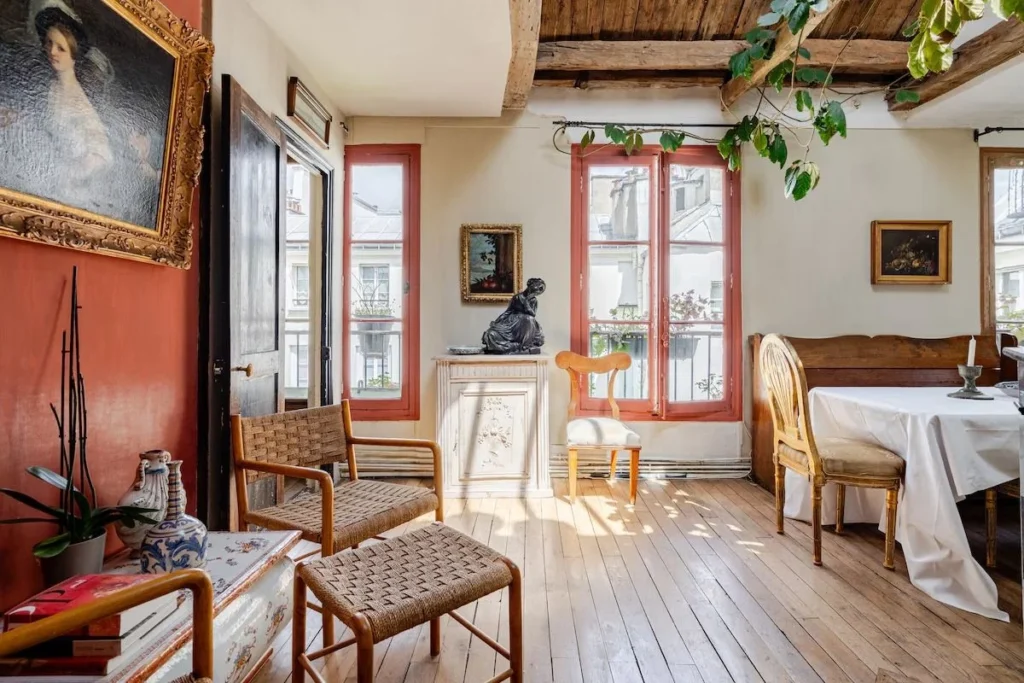

The landscape of luxury accommodation in Paris is undergoing a significant transformation as the traditional boundaries between high-end hotels and short-term rentals continue to blur. For decades, the French capital’s hospitality sector was defined by its "Palace" hotels—an official designation for five-star properties of exceptional prestige. However, a new segment of the market has emerged, driven by seasoned travelers who seek the privacy of a residential home without sacrificing the aesthetic rigor or concierge-level service of a luxury suite. This shift is particularly evident in the curated selection of Airbnbs now available across the city’s 20 arrondissements, where historical preservation meets contemporary interior design.
From the symmetry of Haussmannian boulevards to the bohemian charm of Montmartre’s hidden alleys, the architectural fabric of Paris serves as the primary draw for global visitors. The current trend in the Parisian rental market emphasizes "serviced apartments"—properties that offer professional cleaning, high-end linens, and dedicated concierges while remaining situated within authentic residential buildings. This model allows guests to experience the city’s architectural heritage from the inside, residing in spaces once occupied by literary icons or designed by the master engineers of the industrial age.
The Evolution of the Parisian Short-Term Rental Market
The rise of these stylish rentals occurs against a backdrop of strict municipal regulations. To balance the needs of the tourism industry with the housing requirements of permanent residents, the City of Paris has implemented some of the world’s most stringent short-term rental laws. Most primary residences are limited to a 120-day annual rental cap, and owners of secondary properties must navigate a complex "commercial change of use" process. This regulatory environment has inadvertently curated the market, favoring high-quality, professionally managed properties that can justify the overhead of compliance through premium nightly rates.
Data from the Paris Convention and Visitors Bureau indicates that while hotel occupancy remains robust, there is a growing preference for "alternative lodging" among families and long-stay travelers. This demand has sparked a wave of renovations across the city, where interior designers are hired specifically to transform aging apartments into "Instagram-worthy" yet functional spaces that honor the city’s aesthetic history.
Case Studies in Architectural Heritage and Modern Design
The diversity of the Parisian Airbnb market is best illustrated through specific properties that reflect the unique character of their respective neighborhoods.
The Literary Heritage of Saint-Georges
In the 9th Arrondissement, the Saint-Georges neighborhood remains a bastion of the "New Athens" style. A notable renovated one-bedroom apartment in this district sits within a building that once housed the 19th-century literary master Guy de Maupassant. The interior design of such spaces often reflects this history, blending vintage steamer trunks and mid-century teak furniture with modern Scandinavian lighting. This juxtaposition of eras is a hallmark of the modern Parisian "chic" aesthetic, appealing to travelers who view their accommodation as an extension of the city’s museums.
The Industrial Legacy of Bastille
In the Bastille area, the influence of Gustave Eiffel extends beyond his namesake tower. One loft in the district features exposed iron ceiling beams designed by Eiffel himself, originally intended to house the laborers who constructed the city’s landmarks. Today, these industrial elements are integrated into open-plan layouts with glass partitions and American-scale kitchens, representing a shift toward more spacious, family-friendly urban living that is rare in the city’s older quarters.

The Marais: From 17th-Century Garrets to Modern Luxury
The Marais, or the 4th Arrondissement, offers the most dramatic contrast in styles. At one end of the spectrum is the "Artist’s Studio," a top-floor garret in a 17th-century building featuring centuries-old wooden beams and wood-burning fireplaces. These spaces cater to the "La Bohème" fantasy of old Paris. Conversely, newer developments on the Rue des Rosiers offer ultra-modern, high-luxury apartments with central air conditioning—a rarity in Paris—and professional concierge services, catering to a demographic that demands modern comfort within a historic enclave.
Chronology of Parisian Urbanism and Its Impact on Rentals
To understand the appeal of these properties, one must consider the timeline of Paris’s urban development, which dictates the layout and feel of every rental:
- The Pre-Haussmann Era (Before 1853): Characterized by narrow, winding streets and timber-framed buildings. Rentals in the Marais and parts of the Latin Quarter often feature these low ceilings and irregular floor plans, offering a "medieval" charm.
- The Haussmann Renovation (1853–1870): Commissioned by Napoleon III, Baron Haussmann transformed Paris into a city of wide avenues and uniform stone facades. Most premium Airbnbs are located in these buildings, featuring "noble floors" with high ceilings, balconies, and intricate moldings.
- The Belle Époque (1871–1914): Introduced more ornate wrought-iron work and the first wave of luxury apartment living near the Arc de Triomphe and the 16th Arrondissement.
- Modern Interventions (Post-WWII to Present): The integration of elevators, central heating, and more recently, "smart home" technology into these historic shells.
Supporting Data: Tourism and Economic Implications
The economic impact of high-end rentals is significant. According to recent market analysis, luxury short-term rentals in Paris can command prices ranging from $250 for a studio to over $1,800 per night for penthouses with Eiffel Tower views.
- Average Daily Rate (ADR): High-end rentals in the 1st, 7th, and 8th Arrondissements have seen a 15% year-over-year increase in ADR.
- Occupancy Trends: Properties featuring "unique architectural elements" or "historical significance" maintain a 20% higher occupancy rate than standard units.
- The "Eiffel Tower Premium": A direct view of the Eiffel Tower can increase the rental value of a property by 40% to 60% compared to a similar unit in the same neighborhood without a view.
Official Responses and Industry Reactions
The professionalization of the Airbnb market has drawn mixed reactions. Traditional hoteliers have expressed concerns regarding "unfair competition," leading to the aforementioned strict registration requirements. However, tourism officials acknowledge that these stylish rentals often fill a gap in the market, particularly for families who require multiple bedrooms and kitchen facilities that are often unavailable or prohibitively expensive in traditional luxury hotels.
"We are seeing a new type of ‘residential tourism,’" notes one Parisian real estate analyst. "These guests aren’t just visiting; they are performing a version of Parisian life. They want the marble fireplace, the herringbone floors, and the ability to buy a baguette and bring it back to a kitchen that looks like it belongs in a design magazine."
Broader Impact and Future Outlook
The success of design-focused Airbnbs is influencing broader trends in interior design and urban planning. Many homeowners are now investing in "museum-quality" renovations, utilizing materials like dark marble, inlaid wood floors, and custom millwork to differentiate their properties in a crowded market. This has led to a revitalized interest in traditional French craftsmanship, such as plasterwork and parquet restoration.
Furthermore, the "hotelization" of Airbnbs is expected to continue. Brands like Highstay and The Lander are leading the way by acquiring entire floors or buildings and turning them into serviced apartments. This hybrid model provides the security and consistency of a hotel with the architectural soul of a private home.
As Paris continues to host major global events and remains the world’s most visited city, the demand for high-aesthetic, historically significant lodging is unlikely to wane. Whether it is a "cocoonlike" oxblood-hued bedroom near the Arc de Triomphe or a minimalist studio near the Louvre that feels like a contemporary art gallery, these spaces offer more than just a place to sleep—they provide a curated immersion into the architectural heart of the City of Light. For the modern traveler, the ultimate luxury is no longer just a gold-leafed lobby, but a set of keys to a private, perfectly designed piece of Parisian history.