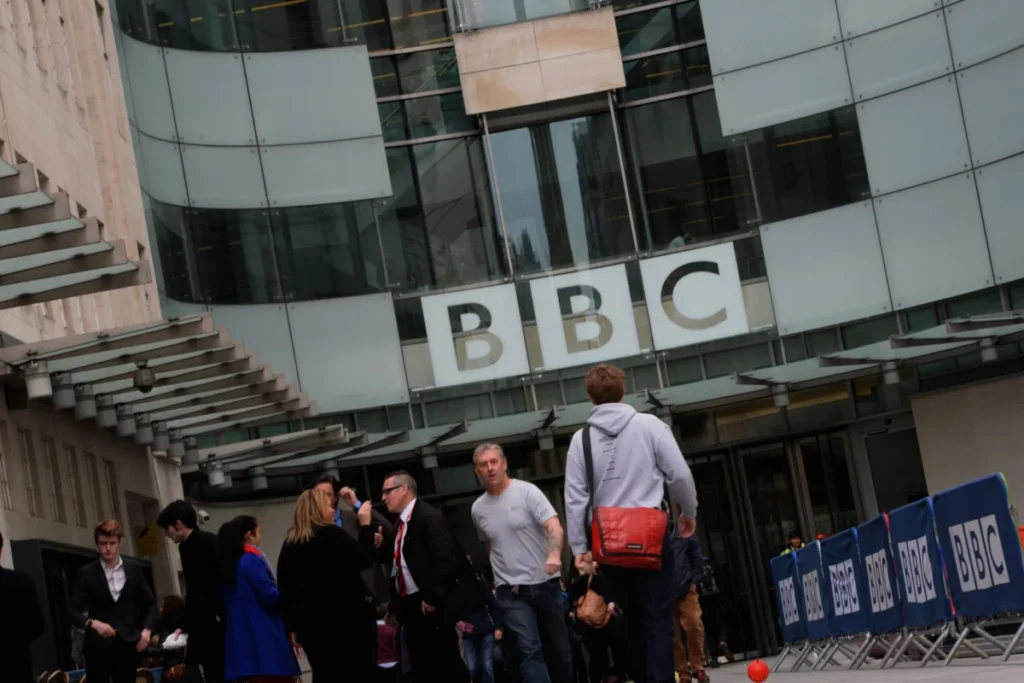

Matt Brittin, the accomplished 57-year-old former Google executive, officially commences his tenure as the Director-General of the British Broadcasting Corporation this Monday, stepping into a role widely regarded as one of the most demanding in global media. His appointment comes at a decidedly tumultuous period for the venerable public service broadcaster, which finds itself grappling with a confluence of unprecedented challenges. From a colossal international lawsuit initiated by a former US President to searing criticism over editorial missteps and an ongoing, existential debate regarding its funding model, Brittin’s inaugural months are poised to be a baptism by fire. The BBC, an institution central to British national identity and a significant global cultural export, is navigating a complex landscape marked by shifting media consumption habits, intense political scrutiny, and a palpable erosion of public trust, demanding strategic leadership and a clear vision for its future.

The Trump Lawsuit: A $10 Billion Legal Gauntlet
One of the most immediate and financially significant hurdles facing Mr. Brittin is the staggering $10 billion (£7.5 billion) defamation lawsuit launched by former US President Donald Trump. This legal action stems from an episode of the BBC’s flagship investigative documentary series, Panorama, broadcast in 2024. The contentious segment, according to Trump’s legal team, inaccurately portrayed him as directly inciting his supporters to storm the US Capitol building on January 6, 2021, following his electoral defeat to Joe Biden. The implications of this lawsuit are multifaceted, touching upon journalistic integrity, freedom of the press, and the financial stability of the BBC itself.
Background to the Capitol Attack and Panorama‘s Role
The January 6, 2021, Capitol riot was a watershed moment in American political history. Fuelled by Trump’s unsubstantiated claims of widespread election fraud, thousands of his supporters converged on Washington D.C., with many subsequently breaching the Capitol building. The event led to fatalities, numerous arrests, and a second impeachment trial for Trump. Media coverage globally focused intensely on Trump’s rhetoric leading up to and during the events, scrutinising his role in what many termed an insurrection.

The Panorama documentary, aired in 2024, presumably offered a retrospective analysis of these events. Trump’s lawsuit asserts that the BBC’s editing of the documentary created a false impression, directly linking his words to the violent actions of his supporters. Such a claim, if upheld, could set a dangerous precedent for how public figures are portrayed in investigative journalism, particularly concerning events of national and international significance. The very essence of investigative reporting, which often involves piecing together complex narratives from various sources, could be imperilled by such expansive liability claims.
The BBC’s Robust Defence and the "Chilling Effect" Argument
In response to the Florida lawsuit, the BBC filed a robust motion to dismiss earlier this month. The corporation’s legal team argued that allowing such a lawsuit to proceed would have a "chilling effect" on "robust reporting on public figures and events." Citing established case law, the BBC contended that "Early dismissal is favoured given the powerful interest in ensuring that free speech is not unduly burdened by the necessity of defending against expensive yet groundless litigation, which would constrict the breathing space needed to ensure robust reporting on public figures and events." This defence underscores a fundamental principle of press freedom: the ability to scrutinise powerful individuals without fear of punitive legal action, especially when reporting on matters of profound public interest.

Further strengthening its case for dismissal, the BBC cited a "lack of personal jurisdiction," arguing that the corporation did not "purposefully aim the documentary at Florida." This jurisdictional challenge is crucial in international legal disputes, questioning whether a US court has the authority to hear a case against a foreign broadcaster for content primarily aimed at a UK audience. Additionally, the BBC argued a "failure to state a claim," suggesting that Trump’s defamation complaint lacks sufficient legal merit. The corporation highlighted Trump’s global prominence, stating, "All the more so when plaintiff (President Trump) is among the most powerful and high-profile individuals in the world, on whose activities the BBC reports every day. The chilling effect is clear." This statement implicitly warns against the potential for high-profile figures to weaponise legal challenges to stifle critical reporting.
Apology, Leadership Shifts, and Broader Implications
The controversy surrounding the Panorama documentary led to significant internal repercussions. BBC Chairman Samir Shah issued an apology on behalf of the broadcaster, acknowledging an "error of judgment" and accepting that the editing of the 2024 documentary might have given "the impression of a direct call for violent action." This apology, while perhaps an attempt to mitigate legal damage, simultaneously fuelled criticism regarding the BBC’s editorial standards and oversight processes. The scandal also preceded the resignation of Brittin’s predecessor, Tim Davie, adding another layer of complexity to the transition of leadership. Mr. Brittin will inherit not only the legal battle but also the challenge of reaffirming the BBC’s unwavering commitment to rigorous, fair, and