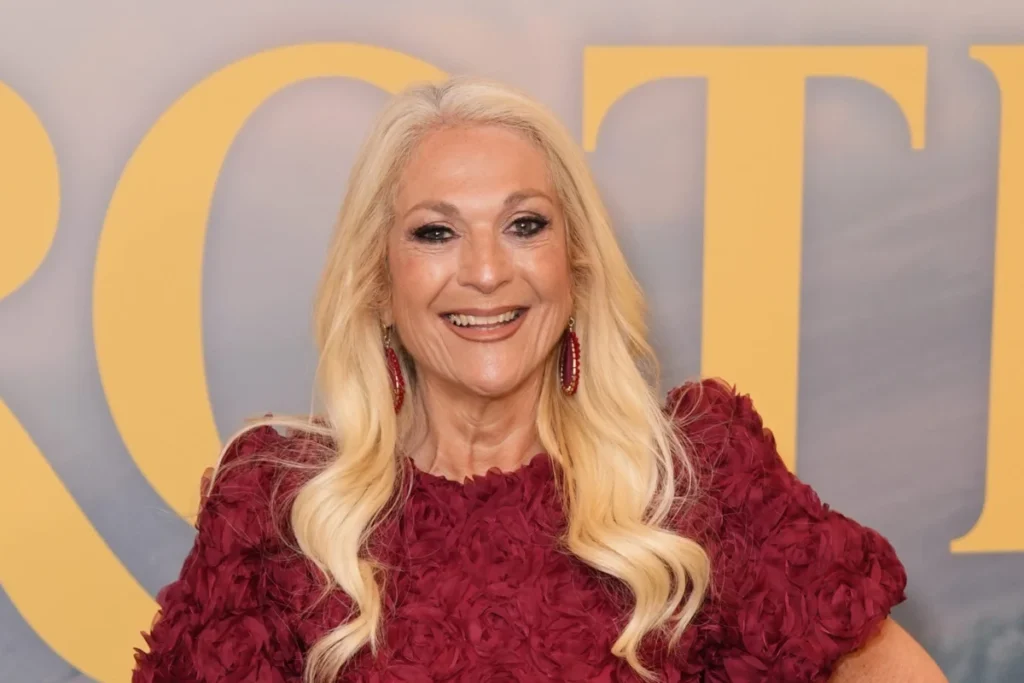

Veteran television and radio presenter Vanessa Feltz has offered a remarkably candid insight into her personal life, disclosing that the surgical removal of her gallbladder profoundly "affected my whole personality." Speaking with comedian Katherine Ryan on her podcast, "What’s My Age Again?", the 64-year-old broadcaster also opened up about the raw pain of navigating singleness following her split from former fiancé Ben Ofoedu, describing herself as "single but reluctantly" and lamenting the "empty, dark, rather cold house" she returns to. Furthermore, Feltz articulated a deep-seated distress regarding the escalating climate of antisemitism in the United Kingdom, stating that the Jewish experience in the country is now "much more stressful" than ever before, challenging her ingrained sense of British identity.
A Candid Revelation: The Gallbladder’s Lingering Influence
Feltz’s disclosure about her cholecystectomy – the medical term for gallbladder removal – marked a rare public discussion of a highly personal medical procedure. She noted her usual reluctance to delve into this topic, describing it as relating to "a very intimate part of my anatomy that I no longer have." However, the profound impact she attributes to the surgery, specifically on her personality, compelled her to share this detail, providing a unique perspective on the long-term, often unforeseen, consequences of medical interventions, particularly those related to weight management.
The Weight Loss Journey and Medical Interventions
The presenter’s health journey has been well-documented over the years, marked by a determined pursuit of weight loss. Feltz recalled losing "an enormous amount of weight" around 2008 through "relentless diet, relentless exercise, relentless privation." This initial phase of significant weight loss predated further surgical interventions, which included both a gastric band and, subsequently, a gastric bypass. Her narrative highlights a prolonged and arduous commitment to managing her weight, a battle shared by millions globally.
Connecting her experience to contemporary health discussions, Feltz pointed to recent media reports about "fat jabs" – a colloquial term for GLP-1 receptor agonists like Ozempic or Wegovy, used for weight loss – and their potential link to gallbladder issues. She specifically noted that "some people are having to have their gallbladder out," presumably because "losing weight at speed isn’t good for gallbladders." This observation underscores a critical, albeit often overlooked, aspect of rapid weight loss: the associated medical risks.
Medical Context: Cholecystectomy and Weight Loss
The gallbladder is a small, pear-shaped organ located just beneath the liver. Its primary function is to store and concentrate bile, a digestive fluid produced by the liver, which aids in the digestion of fats in the small intestine. Cholecystectomy is one of the most common surgical procedures performed worldwide, with hundreds of thousands carried out annually in the UK and millions globally. The most frequent reason for gallbladder removal is the presence of gallstones, which can cause severe pain, inflammation (cholecystitis), or blockages in the bile ducts.
There is a well-established medical link between rapid weight loss and the formation of gallstones. When individuals lose weight quickly, especially more than 3 pounds (approximately 1.4 kg) per week, the liver releases more cholesterol into the bile. Simultaneously, the gallbladder may not empty as efficiently, leading to a higher concentration of cholesterol and bile salts, which can crystallize and form gallstones. This risk is particularly elevated in patients undergoing bariatric surgery (such as gastric bypass or gastric band procedures) due to the dramatic and rapid weight loss that typically follows. Studies have shown that up to one-third of bariatric surgery patients may develop gallstones, with a significant percentage requiring cholecystectomy within a few years of their initial weight loss surgery.

The emergence of GLP-1 receptor agonists has introduced a new dimension to weight management, offering significant weight reduction for many. However, clinical trials and post-market surveillance have begun to identify gallbladder-related issues, including gallstones and acute cholecystitis, as a potential side effect, particularly with rapid weight loss induced by these medications. While the exact mechanisms are still under investigation, the principle remains similar: accelerated weight loss, regardless of method, can predispose individuals to gallbladder complications.
Feltz’s assertion that the lack of a gallbladder "affected my whole personality" is a poignant and less commonly discussed consequence. While cholecystectomy is generally considered safe and most patients adapt well, some report ongoing digestive issues such as bloating, diarrhea, or indigestion. Beyond the physical, the psychological impact of a major organ removal, the chronic management of digestive changes, and the broader context of a prolonged weight loss journey can indeed exert a subtle yet pervasive influence on an individual’s emotional state, energy levels, and overall disposition, potentially altering self-perception and interaction patterns, which might be interpreted as a shift in "personality."
Navigating Solitude: The Aftermath of a High-Profile Split
Shifting to another deeply personal facet of her life, Feltz conveyed profound vulnerability regarding her current single status, describing it as "reluctantly" accepted. Her candid remarks painted a vivid picture of the loneliness she experiences, highlighting the stark reality of life after a long-term relationship. "I don’t like it. I haven’t managed to adjust to it," she confessed, echoing sentiments of many who find themselves unexpectedly alone later in life.
The Pain of Singleness: "Reluctantly" Alone
Feltz’s description of returning to an "empty, dark, rather cold house" where "there’s no one there to say ‘was it all right’… there’s just no one" resonates deeply with the universal human need for connection and companionship. Her lament – "It’s so boring. It’s so quiet. It’s so tedious. Your own thoughts roam and get bigger and bigger. And I already know my own thoughts. I don’t want to know more about my own thoughts" – captures the overwhelming nature of solitude when it feels imposed rather than chosen.
In a raw moment of self-reflection, Feltz admitted to a pattern of staying in "doomed and hellish, sinister, ghastly relationships" primarily to avoid the prospect of being alone. "It was a mistake. I do regret it. I’m not proud of it, and I don’t recommend it to anyone. And I wish I hadn’t done it, but I did do it, and that was the reason why I did it," she stated. This powerful confession speaks to the deep-seated fear of loneliness that can drive individuals to endure unsatisfying or even detrimental relationships, a psychological phenomenon widely recognized. Her current challenge is to "just get on with" her new reality.
A Public Relationship’s End and Its Private Toll
Vanessa Feltz’s relationship with Ben Ofoedu, which lasted for 16 years and included an engagement, was often in the public eye. Their eventual split, announced in February 2023, garnered significant media attention, placing her personal heartbreak under intense scrutiny. While public figures often present a curated image, Feltz has consistently been praised for her authenticity and willingness to share her struggles, making her recent admissions all the more impactful.
The end of a long-term relationship, particularly one that has been publicly visible, carries a unique burden. Beyond the personal grief and adjustment, there is the added pressure of societal expectations and the constant awareness of public perception. For someone like Feltz, whose professional life involves daily interaction with the public, maintaining a brave face while privately grappling with profound loneliness can be incredibly taxing. Her openness serves as a powerful reminder that fame does not insulate individuals from universal human experiences of heartbreak and solitude.

The Broader Societal Conversation on Loneliness and Relationships
Feltz’s candidness about loneliness taps into a growing global concern. Loneliness is increasingly recognized as a public health issue, impacting mental and physical well-being. Studies have shown that chronic loneliness can be as detrimental to health as smoking 15 cigarettes a day, increasing the risk of heart disease, stroke, dementia, and depression. While often associated with older age, loneliness affects people across all demographics, intensified by societal changes, digital connectivity replacing genuine interaction, and the breakdown of traditional community structures.
For women in particular, navigating singleness after a long-term relationship can present unique challenges, including financial adjustments, social identity shifts, and the re-establishment of routines and support networks. Feltz’s regret over staying in "doomed" relationships to avoid being alone highlights a common dilemma where the fear of solitude outweighs the desire for genuine happiness or self-respect within a partnership. Her experience brings into sharp focus the societal pressures that can lead individuals, especially women, to prioritize partnership status over personal fulfillment, and the subsequent struggle to forge a new, independent identity. Her willingness to share these vulnerable feelings offers solace and validation to countless others who may be enduring similar private struggles, contributing to a vital public conversation about mental health, self-worth, and the evolving landscape of relationships in modern society.
Identity and Belonging: The Shadow of Rising Antisemitism
Beyond her personal health and relationship challenges, Vanessa Feltz voiced profound concern over the deteriorating environment for Jewish people in the United Kingdom, describing the experience as "much more stressful" than before. Her heartfelt remarks reflect a widespread anxiety within the Jewish community amidst a noticeable surge in antisemitic incidents.
A Deepening Unease: The Jewish Experience in the UK
Feltz expressed her emotional anguish with palpable intensity, using terms like "very, very disheartening. Heartbreaking. Lots of words with heart in it." This choice of language underscores the deep emotional toll that the current climate is taking on her and, by extension, on many other Jewish individuals in the UK. When asked if this stress could impact her biological age, she hadn’t considered it but acknowledged it "wouldn’t be altogether surprised if it has some impact," pointing to the insidious ways chronic stress can affect long-term health.
An Unwavering British Identity Under Threat
Feltz’s statement was particularly powerful in her unwavering assertion of her British identity. "I’ve grown up, I’ve lived in this country all my life," she declared, emphasizing her roots as a "sixth generation British" on her mother’s side. She invoked her academic background, mentioning reading English Literature at Cambridge, at Trinity College, with a specialism in Chaucer, as further proof of her deep connection to British culture and heritage. "I feel in every particular part of my anatomy, my blood, my cells, my soul, British through and through, because I am," she affirmed, posing the poignant question: "And if I’m not, what am I? What else am I if I’m not British?"
This articulation of identity underscores the profound distress of feeling alienated or ‘othered’ in one’s own homeland. The notion that "people might think me something else because I’m Jewish or decide they despise me before they’ve even met me, or try to stop me doing things or being things or going to places or, you know, judge me and despise me is obviously absolutely unbearable." This sentiment reflects the core fear of discrimination and the erosion of belonging that accompanies rising prejudice, regardless of how deeply integrated one feels into the national fabric.
The Escalating Landscape of Antisemitism in the UK
Vanessa Feltz’s concerns are not isolated but reflect a documented and alarming trend. Data from organizations like the Community Security Trust (CST), which monitors antisemitism and provides security for the Jewish community in the UK, reveal a significant and sustained increase in antisemitic incidents, particularly following major geopolitical events.

Timeline and Data:
- Pre-October 2023: While antisemitism has always been a concern, incidents generally fluctuated. The CST’s annual reports consistently highlighted hundreds of incidents each year, ranging from verbal abuse to violent assaults and damage to property.
- Post-October 7, 2023: Following the Hamas attacks on Israel on October 7, 2023, and the subsequent conflict in Gaza, the UK witnessed an unprecedented surge in antisemitic incidents. The CST reported a staggering increase, with thousands of incidents recorded in the months immediately following, far exceeding previous peaks. For instance, the CST recorded over 4,000 antisemitic incidents in the UK in 2023, marking the highest total ever in a single calendar year, with the vast majority occurring in the final three months. This included record levels of assault, damage and desecration, threats, and abusive behaviour.
- Nature of Incidents: These incidents range from online hate speech, graffiti, and verbal abuse in public spaces to physical assaults and harassment of Jewish individuals and institutions. Jewish schools, synagogues, and community centres have required enhanced security measures.
- Impact: The rise in antisemitism has led to increased fear and anxiety within the Jewish community, with many individuals reporting feeling less safe and more hesitant to openly express their Jewish identity or support for Israel. This mirrors Feltz’s sentiment of increased stress and the fear of being "judged and despised."
Official Responses:
The UK government has repeatedly condemned antisemitism in all its forms, pledging support for the Jewish community and taking steps to combat hate crime. Police forces across the country have increased patrols in Jewish areas and launched investigations into antisemitic incidents. Various parliamentary groups and cross-party initiatives have also been established to address antisemitism. However, the sheer volume of incidents and the pervasive nature of online hate continue to pose significant challenges. Educational campaigns aimed at fostering understanding and combating prejudice are also underway, though their impact in the immediate term is still being assessed.
Broader Impact and Implications
Feltz’s courageous articulation of her feelings about antisemitism transcends a personal grievance; it serves as a powerful testament to the broader societal implications of rising prejudice. When a long-standing minority community, deeply integrated into the national fabric, begins to feel alienated and threatened, it signals a fundamental challenge to the principles of diversity, inclusion, and social cohesion. Her experience highlights how geopolitical conflicts can have profound and often devastating repercussions on diaspora communities, fueling hatred and undermining the sense of belonging for citizens who have called a country home for generations. The implications extend beyond the Jewish community, serving as a stark warning about the fragility of tolerance and the urgent need for robust societal and political responses to combat all forms of discrimination and hatred.
In her multi-faceted revelations, Vanessa Feltz has not only offered an intimate glimpse into her own struggles with health, relationships, and identity but has also inadvertently held a mirror up to contemporary society. Her experiences resonate across diverse demographics, touching upon universal themes of physical and mental well-being, the search for companionship, and the fundamental human need for acceptance and belonging in an increasingly complex and often challenging world. Her candour reinforces the critical importance of open dialogue on these sensitive issues, fostering greater understanding and empathy.