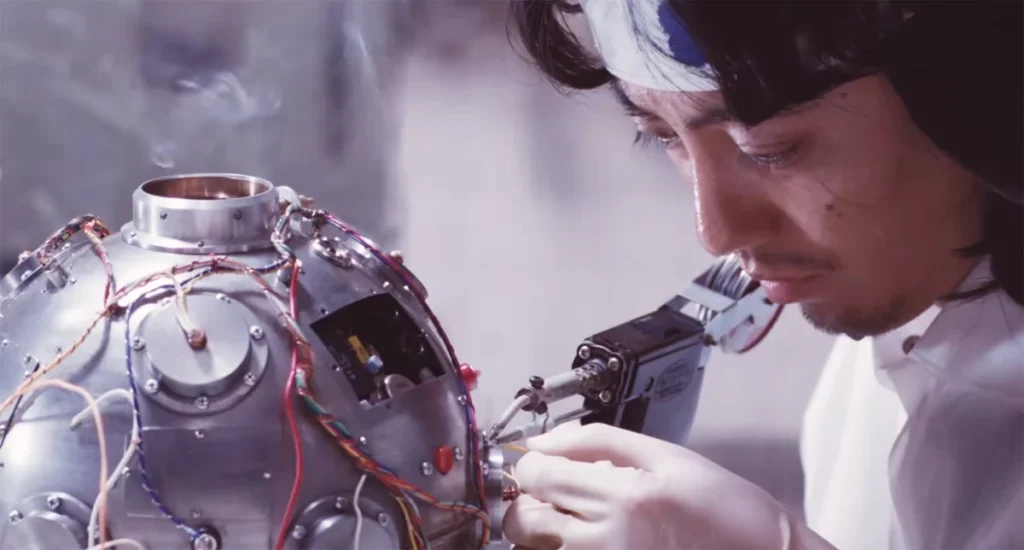

Toho has officially released a brand new promotional trailer for the upcoming 4K digital remaster of Kazuhiko Hasegawa’s subversive 1979 cinematic masterpiece, The Man Who Stole the Sun (Taiyo o Nusunda Otoko). Exactly 47 years after its original Japanese theatrical premiere on October 6, 1979, the legendary film is set to return to Reiwa-era cinema screens across Japan on October 16, 2026. Regarded as a towering achievement of the Japanese New Wave, the film has long maintained an elusive, near-mythical status among international film scholars and domestic cult-movie enthusiasts alike. The newly minted 4K restoration brings high-definition clarity to a production renowned for its chaotic energy, uncompromising political subversion, and high-stakes cat-and-mouse narrative.
Main Facts and Production Overview
The Man Who Stole the Sun follows the downward spiral of Makoto Kido, an ordinary, disgruntled high school physics teacher who is routinely marginalized and dismissed by his unruly students. Kido’s life shifts on a seismic trajectory when a routine school field trip is derailed by a sudden bus hijacking, an incident that exposes the fragility of societal order and ignites a dangerous ambition within the educator. Operating in secret, Kido successfully steals nuclear materials from a heavily guarded Tokai power plant and constructs a fully functional atomic bomb inside his modest Tokyo apartment.
Armed with a weapon of mass destruction, Kido embarks on a campaign of domestic terrorism, not for ideological supremacy or geopolitical ransom, but out of a profound, nihilistic boredom and a desire to bend the Japanese state to his whims. His absurd yet terrifying demands range from forcing the government to broadcast a live baseball game to its conclusion without interruption to demanding exclusive interviews with rock stars. A relentless, battle-hardened police inspector, Yamashita, emerges as Kido’s primary adversary, attempting to outwit the rogue teacher before the unstable nuclear device levels the capital.
The film stars legendary Japanese pop icon Kenji Sawada in a career-defining performance as Kido, alongside acclaimed veteran actor Bunta Sugawara as Inspector Yamashita. The expansive supporting cast features Kimiko Ikegami, Kazuo Kitamura, Shigeru Kamiyama, Kei Sato, Yunosuke Ito, Morio Kazama, Toshiyuki Nishida, and Yutaka Mizutani.

Chronology and Cinematic Lineage
The path of The Man Who Stole the Sun from a controversial late-1970s release to a celebrated 2026 4K restoration is anchored by key milestones in Japanese cinematic history.
- 1976: Director Kazuhiko Hasegawa makes his explosive feature film directorial debut with The Youth Killer (Seishun no Satsujinsha), establishing himself as a fierce, independent voice within the Japanese New Wave.
- October 6, 1979: The Man Who Stole the Sun premieres in Japanese cinemas. Distributed by Toho, the film shocks and captivates audiences with its brazen blending of dark comedy, political critique, and pulse-pounding thriller mechanics.
- Post-1979 to Early 2000s: Despite critical acclaim and numerous domestic accolades upon release, the film becomes increasingly difficult to access internationally, cementing its status as an elusive holy grail for global film preservationists and underground cinephiles.
- January 2025: Director Kazuhiko Hasegawa passes away at the age of 79, prompting renewed retrospectives and critical reappraisals of his remarkably brief yet deeply influential theatrical filmography, which consists of only two directed feature films.
- September 2026: Toho officially drops the 4K restoration trailer, generating widespread anticipation across social media platforms and film communities worldwide.
- October 16, 2026: The 4K digital remaster is scheduled to hit Japanese theatrical screens, introducing a new generation of moviegoers to Hasegawa’s anarchic vision. As of yet, no official international or North American distribution dates have been confirmed.
Behind the Scenes: A Collaborative Transnational Effort
Beyond Hasegawa’s visionary direction, the creative DNA of The Man Who Stole the Sun boasts a fascinating cross-cultural lineage. The screenplay was co-written by Hasegawa and American screenwriter Leonard Schrader, who worked under the pseudonym Rendō Shureidō. Leonard Schrader, the brother of acclaimed screenwriter and director Paul Schrader (Taxi Driver, First Reformed), had relocated to Japan and developed a deep understanding of Japanese society and cinema.
Leonard Schrader originally conceived the story, drawing inspiration from the global anxieties of the Cold War and the proliferation of nuclear technology, before collaborating with Hasegawa to tailor the material to the sociopolitical landscape of late-Showa-era Japan. Schrader’s writing credits also include The Yakuza (1974), Blue Collar (1978), and Mishima: A Life in Four Chapters (1985). The production was marshaled by producers Mataichiro Yamamoto and Kei Ijichi, who backed the film’s ambitious scale and perilous on-location shoots.
Supporting Data and Guerrilla Filmmaking Realities
The enduring mystique of The Man Who Stole the Sun is heavily tied to the physical impossibility of its production methods in the modern era. Filmed during an era of relative regulatory laxity in Japanese urban centers, the production utilized guerrilla-style filmmaking techniques that would be entirely untenable under contemporary safety, security, and permitting frameworks.
The crew captured massive crowd scenes, chaotic traffic disruptions, and dangerous stunts on public streets in downtown Tokyo without the rigorous digital removal or heavy CGI supplementation common in modern blockbusters. This authentic, gritty street-level texture gives the film a documentary-like immediacy that heightens its unsettling narrative tension. Furthermore, the film represents the second and final theatrical feature directed by Kazuhiko Hasegawa. Following its release, Hasegawa largely stepped away from commercial feature filmmaking, choosing instead to focus on television work, writing, and teaching, making The Man Who Stole the Sun the definitive grand finale of his theatrical career.

Industry Implications and Cultural Legacy
The decision by Toho to invest in a meticulous 4K digital restoration of The Man Who Stole the Sun reflects a growing commercial and cultural appetite for physical media preservation and theatrical revivals of archival masterpieces. In an era dominated by franchise reboots and risk-averse intellectual property management, studio-backed restorations of boundary-pushing 1970s counter-culture films offer modern audiences a window into an era of unbridled artistic experimentation.
Film historians note that the film’s thematic exploration of homegrown nuclear terror, state vulnerability, and the psychological corrosion of institutional alienation remains distressingly prescient. While the narrative’s black-comedy elements and stylistic flourishes place it firmly within the energetic tradition of the Japanese New Wave, its core anxiety regarding the democratization of apocalyptic technology transcends its 1979 release window.
As Toho prepares for the nationwide Japanese rollout on October 16, 2026, cinephiles outside of Japan remain hopeful that the 4K restoration will eventually secure international theatrical engagements, film festival slots, or physical media releases. For now, the newly released trailer serves as a stark reminder of a cinematic era when major studios were willing to back anarchic, combustible visions that challenged the very foundations of state authority. As the promotional campaign proudly declares, The Man Who Stole the Sun remains a legendary masterpiece born of extraordinary passion and madness—one whose explosive legacy refuses to fade into the past.