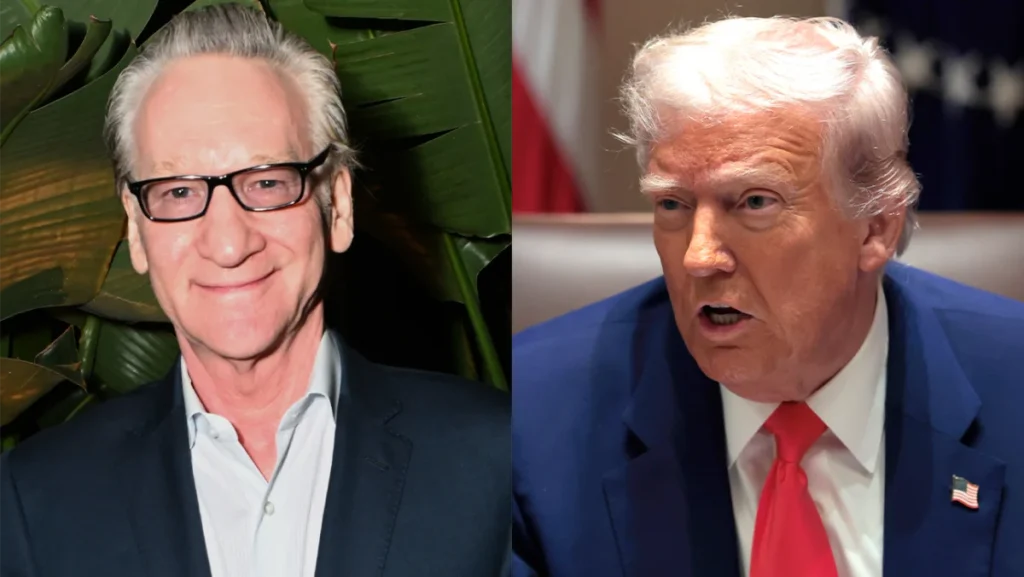

The ambitious "Freedom 250" concert series, envisioned as a grand celebration backed by the Trump administration, has faced significant challenges, with a growing list of musical acts withdrawing their participation. What was initially presented as a unifying patriotic event has quickly become embroiled in controversy, highlighting the volatile intersection of politics and entertainment in contemporary America. Comedian Bill Maher notably lampooned the unfolding situation on his HBO program Real Time, drawing attention to the unexpected struggles faced by organizers in securing and retaining talent for the event.
The concert series, scheduled to take place from June 25 to July 10 on the National Mall in Washington, D.C., was conceived as a public-private partnership, with explicit backing from the then-President Donald Trump’s administration. Its branding, "Freedom 250," hinted at a thematic connection to a significant American anniversary, though the nation’s semiquincentennial is officially in 2026. Regardless of the precise commemorative intent, the series aimed to draw large crowds and feature a diverse lineup of musical artists. However, the initial announcements and subsequent withdrawals have cast a long shadow over the event’s viability and public reception.
High-Profile Departures Undermine Event Credibility
Among the most prominent artists to distance themselves from the Freedom 250 series were rock icon Bret Michaels, frontman of Poison, and the legendary R&B group The Commodores. Their decisions followed earlier withdrawals by other notable acts, creating a palpable sense of disarray around the event’s organization and public image.
Bret Michaels issued a comprehensive statement on his website, articulating his reasons for stepping away. He expressed profound disappointment that what had been initially framed as "a celebration of our country has evolved into something much more divisive than what I agreed to be a part of." This sentiment echoed a broader discomfort among artists with events perceived as overtly political or polarizing. Michaels further elaborated on grave concerns regarding the safety of his entourage, including "my fans, band, crew, family and myself, including threats that are completely unfounded and unforgivable." He emphasized that these safety risks, rather than political alignment, were the primary drivers behind his "difficult decision to step away from this performance." Michaels stressed his belief that "Everyone is entitled to their own opinions. That’s one of the freedoms our veterans fought for and something I’ve always respected. But as a father, friend and bandmate, I have to take threats and safety concerns seriously." His statement underscored a desire to remain apolitical while prioritizing the well-being of those associated with his performances, a common tightrope walk for public figures in a polarized environment.
The Commodores, an iconic group with a career spanning decades and known for hits like "Brick House" and "Easy," also announced their withdrawal. While their specific statement may not have been detailed in the initial reports, their decision aligns with a clear trend of artists seeking to avoid association with events that carry significant political baggage or generate public backlash. For established acts, preserving their brand and fan base often takes precedence over participating in potentially controversial events, especially when the perceived benefits do not outweigh the risks of alienating a segment of their audience.
A Litany of Last-Minute Cancellations and Denials
The challenges for the Freedom 250 organizers were not limited to Michaels and The Commodores. Several other artists who were initially announced as participants swiftly clarified their non-involvement or formally withdrew. Young MC, known for his hit "Bust a Move," and Morris Day, the charismatic frontman of The Time, both exited the lineup. Country music star Martina McBride also reportedly dropped out, further thinning the ranks of announced performers.
Perhaps one of the most striking instances of disorganization involved the legendary pop duo Milli Vanilli. Despite being listed on promotional materials, Jodie Rocco, identified as a member of the group, expressed her "shocked" reaction to the Associated Press upon seeing the Milli Vanilli name on the roster. This public denial suggested a severe disconnect between the event organizers and the artists they claimed to have secured, raising questions about the vetting process and the accuracy of the lineup announcements. Such discrepancies not only embarrass the organizers but also foster skepticism among the public and potential future participants.
Bill Maher’s Incisive Commentary
The unfolding drama surrounding the Freedom 250 concert series did not escape the attention of late-night television. Bill Maher, during his Real Time monologue, offered a characteristically sharp critique of the situation. He initially quipped about the announced lineup, which included acts like Vanilla Ice, Milli Vanilli, Morris Day, and Bret Michaels, stating, "I think this is very admirable about the president, it shows he’s concerned for the unemployed." This sarcastic jab highlighted the public perception that the event was struggling to attract top-tier talent, potentially relying on artists whose mainstream popularity had peaked decades prior.
Maher then honed in on the subsequent withdrawals, delivering a particularly biting punchline: "And then, after they announced this all-star lineup, a lot of them said, ‘No, what are you talking about? We’re not playing.’ That’s got to hurt a lot when you can’t close the deal with Milli Vanilli." This commentary resonated with many, underscoring the perceived desperation of the organizers and the awkwardness of artists publicly disavowing their supposed participation. Maher’s observations, while comedic, reflected a broader media narrative that portrayed the concert series as a logistical and public relations misstep for the administration.
Background and Context: The Political Landscape of Public Events
The "Freedom 250" concert series emerged in a deeply polarized political climate, particularly during the Trump presidency. Large-scale public events, especially those directly associated with a presidential administration, often become litmus tests for celebrity endorsement or dissent. Artists performing at such events are frequently scrutinized by their fan bases, media, and fellow industry professionals.
The challenges in securing talent for politically charged events were not new to the Trump administration. His 2017 presidential inauguration, for instance, famously struggled to attract A-list performers, ultimately featuring a lineup that was notably less star-studded than previous inaugurations. This precedent established a clear pattern: many artists, concerned about alienating their diverse fan bases or being perceived as endorsing specific political ideologies, opt to steer clear of events that could be seen as partisan. The decision often boils down to a risk-reward calculation, where the potential for backlash and damage to one’s brand outweighs the perceived prestige or financial incentives of performing.
The National Mall, the intended venue for Freedom 250, is a historically significant site for national celebrations and protests alike. Hosting a major concert series there carries symbolic weight, making the choice of performers and the tenor of the event particularly sensitive. Any event linked to a sitting president, especially one as divisive as Donald Trump, inherently takes on a political dimension, regardless of its stated intent to be a unifying "celebration of our country."
Implications and Analysis of Artist Withdrawals
The wave of withdrawals from the Freedom 250 concert series carries several significant implications for event organizers, the administration, and the entertainment industry at large.
Reputational Damage: For the event organizers and the Trump administration, the public disavowals and withdrawals caused considerable reputational damage. It suggested a lack of effective communication, poor planning, or an underestimation of the political sensitivities involved. The negative press and comedic lampooning further cemented an image of an event struggling to gain legitimacy.
Logistical Headaches: Last-minute cancellations create immense logistical challenges. Organizers face the daunting task of finding replacement acts, renegotiating contracts, revising promotional materials, and managing public expectations. This can lead to increased costs, reduced attendance, and a diminished overall experience for attendees.
Artist Autonomy and Public Pressure: The incidents underscore the increasing pressure artists face from their audiences and social media. In an era where public opinion can be mobilized rapidly online, artists are often compelled to take stances, or at least avoid taking perceived stances, on political issues. Bret Michaels’ explicit mention of "threats and safety concerns" highlights the very real, often aggressive, pushback artists can encounter when their involvement in a controversial event becomes public. This puts artists in a difficult position, forcing them to balance creative freedom with personal safety and professional longevity.
The Future of Politically Affiliated Entertainment: The Freedom 250 saga serves as a case study in the complexities of staging entertainment events with governmental or partisan affiliations. It reinforces the notion that in a deeply fractured society, what one segment views as a patriotic celebration, another may perceive as a political rally. This dynamic makes it increasingly challenging for administrations to leverage popular culture for national events without encountering significant resistance from the entertainment community itself.
Supporting Data: Trends in Event Participation
While specific financial figures for the Freedom 250 series were not disclosed in the original report, the general trend for large-scale public events is clear: artist fees, production costs, security, and logistical overheads are substantial. Withdrawals often incur penalty clauses or require costly legal negotiations. Beyond the financial, the "cost" to an artist’s brand can be immeasurable. Data from other politically sensitive events, such as presidential inaugurations or benefit concerts for specific causes, consistently show that artists weigh the potential for fan backlash, boycotts, and negative media attention against the opportunity for exposure or financial gain. Social media analytics further confirm that announcements of artist participation in controversial events often trigger immediate and intense reactions, ranging from enthusiastic support to vehement calls for boycotts and even personal attacks. This digital landscape significantly amplifies the pressure on artists to make choices that align with their public image and the values of their fan base.
Conclusion: A Reflection of National Divides
The saga of the Freedom 250 concert series is more than just a story of celebrity cancellations; it is a microcosm of the broader political and cultural divides prevalent in the United States. The difficulty in assembling a non-controversial lineup for a seemingly unifying national celebration reflects the deep polarization that permeates even seemingly innocuous public events. Artists, as public figures and cultural influencers, find themselves navigating an increasingly treacherous landscape where neutrality is often perceived as complicity, and participation can be interpreted as endorsement.
As organizers scrambled to salvage the event and replace departed acts, the Freedom 250 series stood as a poignant reminder that in a politically charged era, even the most well-intentioned national celebrations can become battlegrounds for ideological contention, making the simple act of performing a profound political statement for many. The enduring legacy of this episode will likely be its illustration of the persistent challenges in fostering unity through entertainment when the underlying political currents are so deeply fragmented.