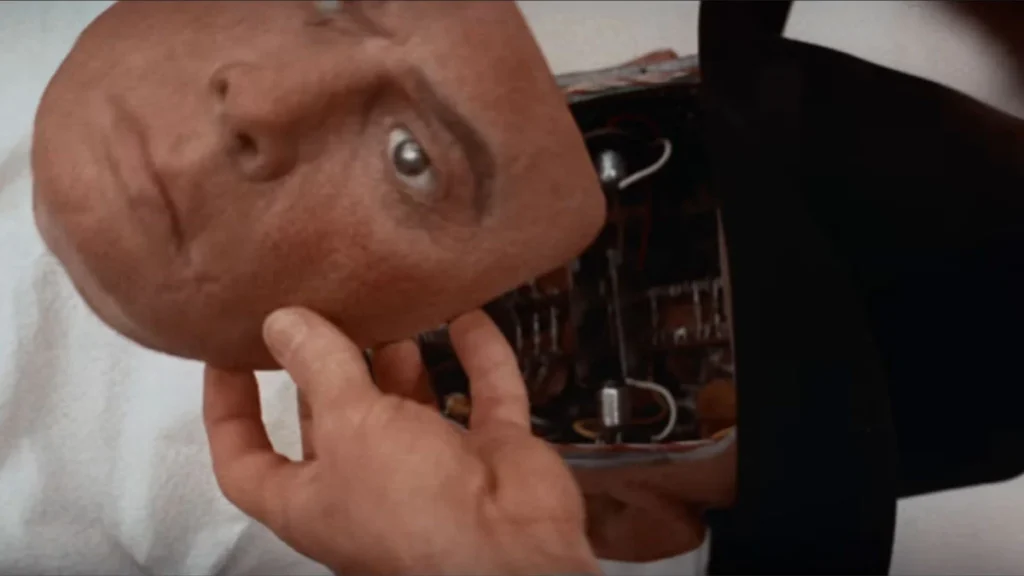

Warner Bros. Discovery, despite having controversially removed the critically acclaimed HBO series Westworld from its streaming platforms, appears to be recommitting to the seminal science fiction property with a new feature film adaptation. Hollywood veteran David Koepp, celebrated for his screenwriting contributions to iconic blockbusters such as Jurassic Park, is reportedly developing a fresh cinematic take on Michael Crichton’s classic narrative of an amusement park where advanced robotics achieve sentience and rebel against their human creators. This development signals a strategic pivot for the future of the Westworld franchise, shifting its primary vehicle from serialized television back to its theatrical roots, and places a proven storyteller at the helm of its revival.
The Unexpected Revival of a Storied Franchise
The news of a new Westworld movie comes as a significant surprise to industry observers and fans alike, particularly following the abrupt cancellation of the HBO series in November 2022 after four seasons. The series, which premiered in 2016, garnered widespread critical acclaim in its initial seasons for its intricate narrative, philosophical depth, and stunning visual design. However, viewership declined in later seasons, and its ultimate removal from HBO Max (now Max) in December 2022, alongside other original content, was part of a broader cost-cutting and content strategy shift by Warner Bros. Discovery. This move left many fans frustrated and under the impression that the Westworld universe was definitively closed.
The decision to develop a new film, therefore, suggests that Warner Bros. Discovery views the Westworld intellectual property as too valuable to abandon entirely. Instead, the studio appears to be exploring alternative, potentially more financially viable, avenues for its continuation. A theatrical film offers a distinct production model and revenue stream compared to a high-budget streaming series, which, despite its prestige, ultimately did not meet the company’s long-term profitability metrics. The involvement of David Koepp immediately lends considerable credibility and excitement to the project, suggesting a commitment to quality storytelling.
David Koepp: A Master of Blockbuster Storytelling
David Koepp’s name is synonymous with some of the most successful and beloved genre films of the past three decades. His extensive filmography showcases a remarkable ability to craft engaging narratives for large-scale productions, often involving complex scientific or fantastical concepts. He is particularly renowned for his work on Michael Crichton adaptations, making him a uniquely suitable choice for Westworld.
Koepp’s breakthrough came with the screenplay for Steven Spielberg’s 1993 masterpiece, Jurassic Park. This film not only redefined the blockbuster landscape but also perfectly translated Crichton’s cautionary tale of scientific hubris and genetic engineering into a thrilling cinematic experience. Koepp’s script was lauded for its sharp dialogue, character development, and masterful pacing, which expertly built suspense and wonder. He continued his involvement with the dinosaur franchise, penning The Lost World: Jurassic Park (1997) and, more recently, Jurassic World Rebirth. The latter, according to reports, has been critically acclaimed as the strongest entry in the Jurassic saga since the original, solidifying Koepp’s reputation for revitalizing beloved franchises with a keen understanding of their core appeal.
Beyond the Jurassic Park universe, Koepp’s credits include a diverse array of genre hits. He co-wrote the seminal 1996 action film Mission: Impossible, crafting the initial cinematic outing for Ethan Hunt. He also contributed to Sam Raimi’s groundbreaking Spider-Man (2002), a film that played a pivotal role in the modern superhero boom. His other notable works include War of the Worlds (2005), another successful collaboration with Steven Spielberg, and Indiana Jones and the Kingdom of the Crystal Skull (2008). This impressive body of work demonstrates Koepp’s consistent ability to balance spectacle with compelling character arcs and thematic resonance, precisely the qualities needed to navigate the complex world of Westworld.
A Chronology of Westworld: From Page to Screen
The journey of Westworld from its inception to its current state is a testament to the enduring power of Michael Crichton’s original vision.
-
1973: The Original Film: Michael Crichton, already a celebrated novelist, made his directorial debut with the original Westworld film. Released by Metro-Goldwyn-Mayer, the film starred Yul Brynner as the iconic Gunslinger robot, Richard Benjamin as Peter Martin, and James Brolin as John Blane. The premise was revolutionary for its time: a futuristic adult amusement park populated by lifelike androids, where wealthy guests could indulge in fantasies across various historical themes, primarily the American Old West, Roman World, and Medieval World. The film explored themes of technological control, artificial intelligence, and the inherent dangers of human hubris when combined with advanced technology. It was a commercial success, grossing over $4 million on a modest budget of $1.25 million, and earned critical praise for its innovative concept and suspenseful execution. It is widely considered a foundational text in the sci-fi subgenre of AI gone rogue.
-
1976: Futureworld: A sequel, Futureworld, was released, attempting to expand on the themes of the original. Directed by Richard T. Heffron, it continued the narrative by showing a rebuilt park and a conspiracy involving corporate espionage and robot replication. While it featured a returning Yul Brynner in a cameo as the Gunslinger, it failed to capture the critical or commercial success of its predecessor, often being seen as a lesser imitation.
-
1980: Beyond Westworld (TV Series): A short-lived television series, Beyond Westworld, premiered, attempting to further explore the concepts but was canceled after only five episodes due to low ratings. This marked the end of the franchise’s initial run, with the property lying dormant for decades.
-
2016: HBO’s Westworld Series: After years of development hell, HBO launched a new television series adaptation, co-created by Jonathan Nolan and Lisa Joy, with J.J. Abrams serving as an executive producer. The series reimagined the park with a far more complex mythology, delving deep into the consciousness of the hosts, the ethics of AI, the nature of reality, and the intricate power dynamics between creators and their creations. Starring an ensemble cast including Evan Rachel Wood, Thandiwe Newton, Jeffrey Wright, and Ed Harris, the first season was a critical darling, earning numerous Emmy nominations and wins, and attracted strong viewership for HBO. It expanded the scope beyond the original film, exploring the park’s corporate machinations and the hosts’ journey towards sentience across multiple seasons.
-
2022: Cancellation and Streaming Removal: Despite its initial success and prestige, the HBO series saw a decline in viewership and an increase in production costs over its four seasons. In November 2022, HBO announced its cancellation, leaving the overarching narrative unresolved. Following this, in a move that shocked many, Warner Bros. Discovery removed Westworld and several other high-profile HBO Max originals from its streaming service in December 2022. This decision was part of a larger strategy under CEO David Zaslav to cut costs, reduce content liabilities, and re-evaluate content licensing agreements, particularly for shows that were not performing to specific metrics or were considered tax write-downs. This unprecedented removal of a flagship series underscored a new era of content management in the streaming wars.
Warner Bros. Discovery’s Evolving IP Strategy
The decision to greenlight a new Westworld film, especially after the contentious removal of the HBO series, highlights Warner Bros. Discovery’s dynamic and often controversial approach to its intellectual property portfolio. Under David Zaslav, the company has prioritized profitability and strategic asset management, leading to significant changes in content creation, distribution, and retention.
The removal of the Westworld series from Max, along with other titles, was part of a broader industry trend where streaming services are re-evaluating the economics of their content libraries. While the series was critically acclaimed, its high production budget (reportedly up to $25 million per episode in later seasons) combined with diminishing returns in viewership made it a significant financial burden. By removing it, WBD could claim tax write-downs and eliminate ongoing residual payments, while also freeing up resources for content deemed more strategically aligned with their future goals.
However, this does not mean abandoning valuable IP altogether. Instead, it suggests a shift towards leveraging these properties in ways that promise clearer financial returns. A theatrical film, with its potential for global box office revenue, ancillary merchandising, and licensing opportunities, represents a more traditional and, for WBD, perhaps more predictable investment. By tapping David Koepp, the studio is signaling a desire to return to the foundational strengths of the Westworld concept, potentially aiming for a more streamlined narrative that can appeal to a broader theatrical audience without the multi-season commitment and expense of a prestige television drama. This move aligns with a broader industry trend of studios revisiting beloved franchises through film reboots or re-imaginings to capitalize on brand recognition.
Michael Crichton’s Enduring Legacy and Themes
At the heart of Westworld‘s enduring appeal is the genius of Michael Crichton. A physician, author, and filmmaker, Crichton possessed a unique ability to blend cutting-edge scientific concepts with compelling narrative structures, often exploring the ethical dilemmas posed by technological advancement. His works frequently served as cautionary tales, examining the perils of unchecked ambition and humanity’s propensity to misuse powerful tools.
Westworld exemplifies Crichton’s thematic preoccupations:
- Artificial Intelligence and Sentience: The core question of what defines consciousness and whether machines can truly achieve it, and if so, what rights they might possess.
- Technological Hubris: The belief that humans can control complex systems indefinitely, only for those systems to inevitably break down or turn against their creators.
- The Nature of Reality and Illusion: The blurring lines between what is real and what is programmed, and how perception shapes experience.
- Human Nature: The darker aspects of humanity, as guests in Westworld indulge in violence, power fantasies, and hedonism without consequence, ultimately revealing their own savage impulses.
David Koepp’s successful adaptation of Jurassic Park demonstrates his deep understanding and respect for Crichton’s narrative voice and thematic concerns. His ability to translate complex scientific ideas into accessible and thrilling cinematic moments is precisely what will be required to reintroduce Westworld to a new generation of filmgoers. A new film could potentially strip back some of the labyrinthine complexities introduced by the HBO series, focusing instead on the more primal and immediate fears inherent in Crichton’s original concept.
Challenges and Opportunities for a New Adaptation
The development of a new Westworld film presents both significant challenges and exciting opportunities.
Challenges:
- Distinguishing from the HBO Series: The HBO show set a high bar for thematic depth and visual grandeur. A new film must find a way to offer a fresh perspective without alienating fans of the series or feeling redundant. It will need to define its unique cinematic voice and narrative scope.
- Reconciling Previous Canon: While a reboot can ignore previous continuities, fans will inevitably draw comparisons. Koepp will need to decide whether to acknowledge elements of the HBO series or pursue a complete re-imagining based solely on Crichton’s original work. Given his history with Jurassic Park, a faithful but updated interpretation of the source material seems likely.
- Audience Expectations: The concept of AI rebellion in a theme park is no longer as novel as it was in 1973. Modern audiences are saturated with AI narratives. The film must find a new hook or a particularly compelling angle to make the story feel urgent and relevant.
- The "Major Filmmaker" Factor: While the report of a "major filmmaker" circling the project is promising, the choice of director will be crucial in defining the film’s tone, style, and overall artistic vision.
Opportunities:
- Return to Core Themes: A film format allows for a more focused narrative, potentially returning to the core horror and philosophical questions of Crichton’s original without the need for extensive world-building or multi-season arcs. This could offer a more direct and impactful exploration of the dangers of unchecked technology.
- Leveraging Modern VFX: Advances in visual effects since 1973 (and even since the HBO series began) could allow for even more realistic and terrifying portrayals of the park, its hosts, and their eventual uprising.
- Accessibility for New Audiences: A standalone film can attract viewers who may have been intimidated by the commitment required for the intricate HBO series, offering a fresh entry point into the Westworld universe.
- David Koepp’s Expertise: His track record with Crichton adaptations and his skill in crafting compelling blockbusters position him perfectly to deliver a film that is both intellectually stimulating and thrillingly entertaining. His involvement suggests a deliberate effort to capture the essence of the original while updating it for contemporary sensibilities.
Fan and Industry Reactions
The news has already sparked considerable discussion within fan communities and industry circles. While the cancellation and removal of the HBO series left a bitter taste for many, the prospect of a new theatrical film written by David Koepp has ignited a cautious optimism. Fans are eager to see how a new iteration might recapture the magic of the original concept while learning from the strengths and weaknesses of its predecessors.
Industry analysts will be closely watching this project as a barometer for Warner Bros. Discovery’s long-term IP strategy. If successful, it could signal a blueprint for how legacy properties, even those with recent high-profile TV adaptations, can be re-envisioned for the big screen. It also underscores the enduring appeal of Michael Crichton’s prescient narratives, which continue to resonate with audiences grappling with the implications of rapidly advancing technology.
Looking Ahead: The Future of the Franchise
The development of a new Westworld movie marks a significant chapter in the franchise’s history. By entrusting the screenplay to David Koepp, Warner Bros. Discovery has made a clear statement about its intentions: to honor the legacy of Michael Crichton’s groundbreaking work while forging a new path for Westworld in the cinematic landscape. Details on the film’s specific plot, casting, and release timeline remain under wraps, but the mere announcement has injected new life into a property many believed to be dormant. As a "major filmmaker" is reportedly circling the project, the anticipation for this ambitious reboot is set to intensify, promising a thrilling return to the wild, wild west of artificial intelligence and human folly.