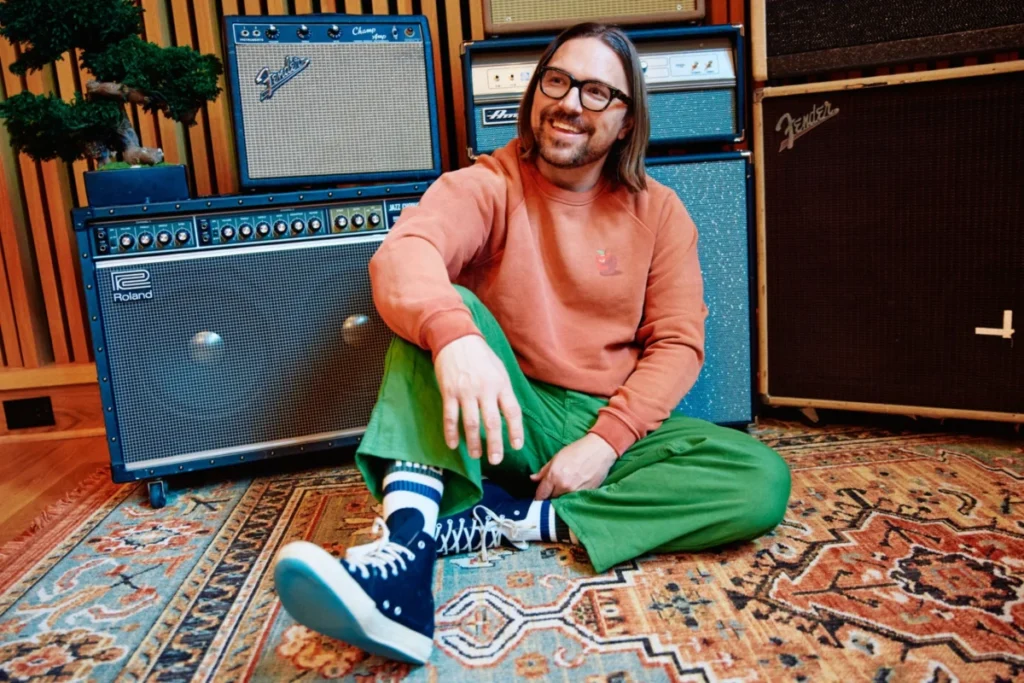

The album, produced by Kahan, Simon and Aaron Dessner, debuted at No. 1 on the Billboard 200.
May 3, 2026
Gabe Simon was enjoying a family outing at the Tennessee Renaissance Festival on Sunday, May 3rd, when he received news that would cap off a memorable day: Noah Kahan’s latest album, The Great Divide, had officially debuted at the coveted No. 1 position on the Billboard 200 all-genre chart for the week of May 9th. The folk-pop artist’s fourth full-length studio project marks his first chart-topping success in the United States, a significant milestone that underscores his rapidly growing influence in the music landscape.
"I had a turkey leg in my left hand. I was at the [Tennessee] Renaissance [Festival]," Simon recounted to Billboard, painting a vivid picture of the moment. "My kids are running around dressed up as fairies, and I get a text from manager Drew [Simmons] saying that we’re No. 1." This personal, almost idyllic setting for the monumental news highlights the contrast between the often intense creative process and the joyous culmination of artistic achievement.
The Great Divide achieved this impressive feat by accumulating 389,000 equivalent album units in its first week, according to data provided by Luminate. This figure not only propels Kahan to the top of the charts but also establishes the Mercury/Republic Records release as the largest rock album debut since the Billboard 200 began incorporating unit-based metrics in late 2014. The album’s commercial success is further amplified by its record-breaking performance in other key metrics. It achieved the largest streaming week of any album released so far in 2026, and notably, secured the biggest vinyl sales week for a rock album since Luminate commenced tracking these sales in 1991. The dual triumph in streaming and physical sales signifies a broad appeal across various consumption methods.
The momentum for The Great Divide did not cease with its chart-topping debut. The following day, Monday, May 4th, an astonishing 21 songs from both the standard and deluxe editions of the album simultaneously charted on the Billboard Hot 100. This remarkable achievement places Kahan in an elite group, making him only the sixth non-rap artist in history to have 21 or more songs appear on the Hot 100 chart concurrently. This demonstrates the album’s widespread listenership and the deep engagement fans have with its diverse tracklist.
The collaborative relationship between Gabe Simon and Noah Kahan has been a key ingredient in this recent success. Simon’s introduction to Kahan came through Drew Simmons, Kahan’s manager. Their professional partnership began to blossom with Kahan’s 2022 album, Stick Season. This critically acclaimed project peaked at No. 2 on the Billboard 200 and was instrumental in transforming Kahan from a rising indie artist into a bona fide star. For The Great Divide, Simon served as a primary architect, co-producing the album alongside Kahan and Aaron Dessner. Dessner, a highly respected figure in the music industry, is best known as the guitarist and composer for the acclaimed band The National, and for his significant production work with global superstar Taylor Swift. Simon also contributed to the songwriting process, co-penning 10 of the album’s 21 tracks, showcasing his integral role in shaping Kahan’s sonic and lyrical identity.
The Creative Crucible: Navigating Emotion and Collaboration
The thematic landscape of The Great Divide is characterized by its exploration of complex emotional terrain, often delving into the intricacies of relationships and the pervasive chasms in communication. This often dark and occasionally vitriolic subject matter meant that the creative environment during the album’s production could be intensely focused, mirroring the emotional weight of the songs.
Simon described the mood during the album’s creation as fluid and dynamic. "I couldn’t give you one particular vibe because it kept oscillating depending on where we were in the process," he explained. "Early on, it was angry and dark. I remember heading up to [Dessner’s] Long Pond [Studio in upstate New York] with Noah, and he goes, ‘I just want to write dark, angry sh-t.’ And I was just like, ‘Let’s do it.’" This direct and uninhibited approach led to the creation of some of the album’s most potent tracks, including "Downfall" and "Lighthouse." Interestingly, Simon noted that even within this intense period, not all songs bore the same somber tone, citing "A Few of Your Own" as an example that deviates from overtly sad or angry sentiments.
Despite the often melancholic lyrical content, the atmosphere at the farmhouse outside of Nashville where much of the album was recorded was surprisingly upbeat and convivial. "We’re riding dirt bikes and shooting shotguns and we’re cooking our dinners for each other," Simon elaborated, highlighting the blend of rural enjoyment and creative camaraderie. "We’re hanging out with cows and feeding chickens, fishing and just having fun." This juxtaposition of intense songwriting and relaxed, communal living created a unique environment. Simon added, "Despite writing and recording such songs as the gaslight-fueled ‘Deny, Deny, Deny,’ we were just in a spot of contentment." This suggests a mature creative process where artists can channel difficult emotions without being consumed by them, finding solace and joy in the shared experience of creation.
A Foundation of Trust and Artistic Synergy
The success of The Great Divide can also be attributed to the deep-seated trust and established rapport between Simon and Kahan. Over the past few years, they have cultivated a creative partnership that transcends the typical artist-producer dynamic. "We have an unspoken language that really does something beautiful, and I love it," Simon stated. This symbiotic relationship allows for a level of vulnerability and honesty crucial for artistic growth.
"I’m grateful for the trust, the companionship, that [Noah] lets me be critical of him and lets me push him," Simon continued. He emphasized the rarity of such a dynamic, particularly as an artist’s career ascends. "I mean, that’s not the case with everybody, especially as they get bigger. In this moment right now, we’re seeing the fruits of that labor." This mutual respect and willingness to challenge each other undoubtedly contribute to the authenticity and emotional resonance of Kahan’s music.
Behind the Scenes: Crafting the Hits
Simon offered a glimpse into the genesis of several key tracks from The Great Divide, providing further insight into the album’s creation.
"Downfall" and "Lighthouse": These tracks emerged during the early, "dark and angry" phase of the writing process, inspired by Kahan’s desire to explore raw, unfiltered emotions. The sessions at Dessner’s Long Pond Studio were pivotal in channeling this energy into powerful lyrical narratives. Simon described the collaborative spirit as one of immediate creative freedom, where Kahan’s raw impulses were met with a supportive environment to fully explore them. The resulting songs are characterized by their potent imagery and unflinching emotional honesty, resonating deeply with listeners navigating their own personal struggles.
"A Few of Your Own": While still part of the initial creative burst, this song represents a slight shift in tone, demonstrating the nuanced emotional palette of the album. Simon noted that it doesn’t necessarily align with the predominantly sad or angry themes, suggesting a more complex emotional undercurrent. The track’s creation likely involved a more reflective or introspective approach, allowing for a different facet of Kahan’s songwriting to emerge.
"Deny, Deny, Deny": This song, fueled by themes of gaslighting and relationship complexities, was born during the more relaxed, communal atmosphere at the farmhouse outside Nashville. The contrast between the song’s subject matter and the environment in which it was written is striking. Simon attributes this to the artists’ ability to find contentment and a sense of peace even while grappling with difficult emotional themes. This period of creative work, characterized by outdoor activities and shared meals, fostered a sense of grounding that allowed for the exploration of challenging topics without succumbing to negativity. The song’s sharp lyrical observations and driving melody are a testament to this ability to find clarity amidst emotional turmoil.
Broader Implications and Artistic Evolution
The unprecedented success of The Great Divide signifies a pivotal moment not only for Noah Kahan but also for the broader landscape of folk-influenced pop music. Kahan’s ability to connect with a massive audience through deeply personal and often melancholic storytelling sets him apart. His music speaks to a generation grappling with anxieties, heartbreaks, and the search for authenticity in an increasingly complex world.
The album’s multi-faceted success—topping the Billboard 200, dominating streaming charts, achieving significant vinyl sales, and flooding the Hot 100—demonstrates the power of authentic artistry to transcend genre boundaries and connect with a diverse listenership. It challenges traditional notions of what constitutes a "mainstream" artist and highlights the growing appetite for music that prioritizes emotional depth and lyrical substance.
The collaboration with producers like Gabe Simon and Aaron Dessner has clearly been instrumental in refining Kahan’s sound and amplifying his artistic vision. Their expertise in crafting compelling sonic landscapes and their ability to foster a supportive creative environment have allowed Kahan to push his boundaries and deliver a project that is both commercially successful and artistically significant.
The continued rise of artists like Noah Kahan, who blend raw emotional honesty with polished production and relatable narratives, suggests a shift in the music industry. Listeners are increasingly seeking out music that offers a genuine connection, and Kahan, with the invaluable support of collaborators like Gabe Simon, is proving to be a master of delivering just that. As The Great Divide continues to resonate with audiences worldwide, its impact is likely to inspire a new wave of artists to embrace their authentic voices and explore the depths of human experience through their music. The album’s journey to the summit of the Billboard 200 is more than just a chart statistic; it’s a testament to the enduring power of vulnerability, craftsmanship, and a well-told story.