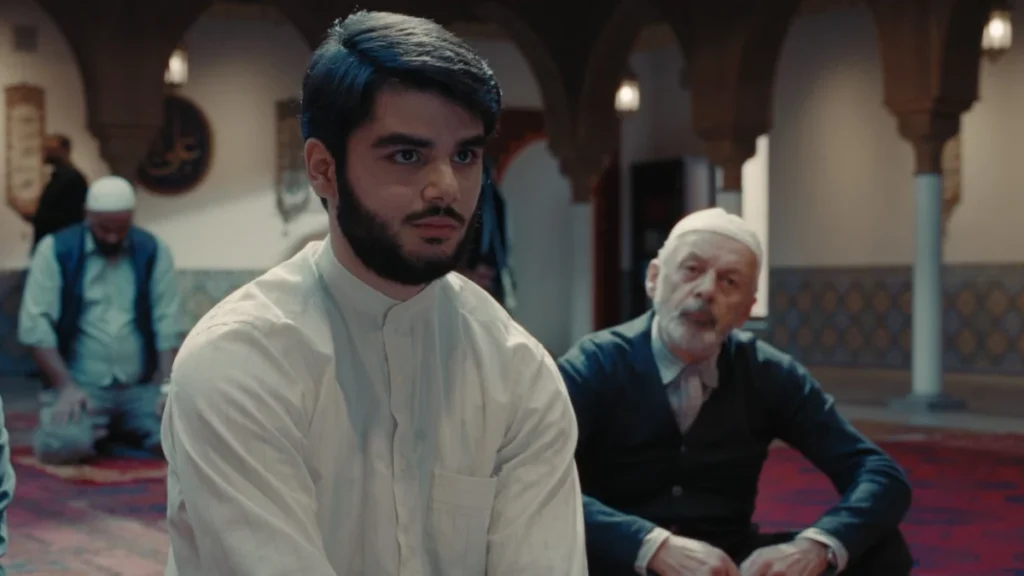

The 60th edition of the Karlovy Vary International Film Festival (KVIFF) is set to host the world premiere of the family drama Hijamat on Wednesday, July 8, marking a poignant moment for Iranian writer and director Nader Saeivar. While Saeivar, known for works like The Witness, No End, and Namo, will be present to unveil his latest feature in the prestigious Crystal Globe main competition, the occasion will be tinged with the stark absence of his long-time friend and creative partner, Jafar Panahi. Panahi, the acclaimed Iranian auteur who produced and edited Hijamat, and co-wrote the Cannes 2025 Palme d’Or winner It Was Just An Accident with Saeivar, is currently facing renewed legal battles and a travel ban in Iran, preventing him from attending the festival.
Panahi’s Enduring Ordeal: A Symbol of Artistic Repression
Jafar Panahi’s inability to travel to Karlovy Vary is the latest chapter in a protracted saga of judicial persecution that has shadowed his illustrious career for over a decade. A figure synonymous with resistance and artistic integrity in the face of state censorship, Panahi has repeatedly defied bans on filmmaking to create critically acclaimed works that resonate globally. His initial arrest in 2010, followed by a six-year prison sentence and a 20-year ban on directing, writing screenplays, traveling abroad, or speaking to the media, sent shockwaves through the international film community. Despite these severe restrictions, Panahi continued to make films, often employing clandestine methods, transforming his confinement into a canvas for profound artistic expression.
His previous works, such as This Is Not a Film (2011), famously smuggled out of Iran on a USB drive hidden inside a cake for the Cannes Film Festival, and Taxi (2015), which won the Golden Bear at the Berlin International Film Festival, became powerful testaments to his indomitable spirit. 3 Faces (2018) further cemented his status, earning the Best Screenplay award at Cannes. Each film, made under immense pressure and often within the confines of his own home or car, served as a defiant act against the authorities, highlighting the daily struggles and unspoken realities of Iranian society.
In a renewed crackdown, Iranian authorities recently confiscated Panahi’s passport, and he now faces another prison term, following a verdict that found him guilty of "propaganda against the regime." This charge, frequently leveraged against artists and intellectuals critical of the state, underscores the precarious position of creative voices within Iran. The international film community has consistently rallied in support of Panahi, viewing his case as a grave violation of artistic freedom and human rights. KVIFF itself had expressed hopes of welcoming Panahi as part of the delegation for Hijamat, a testament to his global standing, but his return to Iran after the Accident Oscar campaign unfortunately coincided with this latest legal setback.

Nader Saeivar’s Journey: From Tehran to Berlin and Beyond
Nader Saeivar’s personal and professional trajectory has taken a significant turn, mirroring the evolving themes in his filmmaking. Saeivar left Iran for Berlin in the midst of shooting It Was Just An Accident, the film he co-wrote with Panahi and which secured the Palme d’Or at Cannes in 2025 – a significant milestone for their collaborative partnership. This move marks a pivotal moment for Saeivar, as Hijamat is his first feature film fully conceived and produced outside of Iran.
His earlier works often delved into specific social issues within Iran, reflecting an "outside-focused activism." However, his relocation to Berlin spurred a profound introspection, shifting his artistic gaze inward. "My three previous films are about social issues and people’s objectives," Saeivar shared with The Hollywood Reporter. "But for this film, I stopped thinking about that and instead thought about the roots of these problems. And in fact, this film is like my story in the present time." This shift is not merely geographical but philosophical, representing a deep personal reckoning that directly informs the narrative and thematic core of Hijamat.
The Narrative Heart of Hijamat: Unearthing Buried Truths in Berlin
Hijamat plunges into the complexities of a deeply religious Muslim family grappling with internal conflict amidst their life in Berlin. The film stars the multihyphenate Kida Khodr Ramadan, widely recognized in Germany for his powerful performances, as Murad. Murad’s world is upended when he discovers his younger brother, Kerem (portrayed by Jael Cem Ilhan), is gay. This revelation unearths long-buried secrets, threatening to fracture the family’s foundations and tear their lives apart.
The cast is further bolstered by notable European talents, including Nicolette Krebitz, Aziz Capkurt, Moritz Bleibtreu, and the iconic Nastassja Kinski, adding significant depth and international appeal to the ensemble. The film’s setting within the Turkish community in Berlin provides a specific cultural lens through which universal themes of identity, tradition, faith, and acceptance are explored.

The film’s title, "Hijamat," refers to an ancient therapeutic practice also known as wet cupping. This traditional method involves drawing small amounts of blood from the body, historically believed to relieve pain and aid detoxification. This practice serves as a potent metaphor for the film’s central message: the necessity of confronting and purging deeply ingrained, often harmful, beliefs and prejudices.
Saeivar’s Vision: A Universal Call for Introspection and Change
Saeivar elaborated on the profound inspiration behind Hijamat during an interview with THR ahead of its premiere. His personal journey, particularly his relocation to Berlin after five decades in Iran, directly fueled the film’s thematic exploration. "Moving to Berlin helped me think about myself, my inner feelings… When I moved from Iran to Berlin after 50 years of my life, suddenly I realized that all those wrong beliefs I had — they broke down within one night. I suddenly realized that I was just wasting my energy on such wrong and rigid beliefs."
He draws a parallel between this personal epiphany and the film’s central metaphor. "I believe that we have to really tackle the issues that are like a wall that we have built around ourselves," Saeivar asserted. "Without that, we cannot change any political issues. It’s like the ‘dirty’ blood in the back of our bodies, as we see in Hijamat. If we don’t get rid of it, if we don’t tackle it, nothing changes!"
Saeivar’s reflections extend to deeply ingrained national narratives. He recalled his childhood in 1980s Iran, where he was indoctrinated with the belief in a righteous eight-year war with Iraq, aspiring to become a martyr. "Just imagine what it was like when I later realized that all that war was due to political gains for some?! Imagine how I felt. Where was God? Where was paradise?" This stark realization, a painful shedding of deeply held "truths," underscores the film’s urgent message about critical self-examination. He notes that fear often prevents people from questioning these beliefs, even when doubts arise. "There are still many people in Iran who believe in those things, and even if they know about it, they are afraid of putting them aside and changing their mind."
Crucially, Saeivar intends Hijamat‘s message to transcend its specific setting. While rooted in the Turkish community in Berlin, the film aims to address a "global" issue: the "rigid beliefs that we have in our minds that we have built like a wall around ourselves." He distinguishes between Eastern and Western societal burdens: "In the East, we can say that this wall around us is formed by religion and religious beliefs, but in the West, the wall is built by memories of the past. The Eastern person is broken under the weight of religion and rigid beliefs, but the Western person is broken or strangled by remembering the glorious past. Until you take this load off your shoulders, you will never reach real freedom. That’s why I believe that everybody needs hijamat." This universal call for mental and emotional "detoxification" positions Hijamat as a deeply resonant cinematic experience. A scene depicting Murad being led into a cellar symbolizes this journey of introspection, of digging deep within oneself to confront hidden truths.

Casting and Collaboration: The Power of Authenticity
The choice of Kida Khodr Ramadan for the lead role of Murad was strategic and inspired. Saeivar explained, "He is very well known in Germany and in the Arab and Turkish community in Berlin. We have a saying in Persian: ‘If you want to conquer a village, you have to see the mayor first.’ And Kida is like that mayor. I thought if I want to reach this community, it’s better if he talks, not me. And he was like a brother by my side. I believe that he’s an actor not only by skills but also by heart. He reminds me of the best of Jean Reno, the French actor." The impact of Ramadan’s performance was not lost on Jafar Panahi either; Saeivar recalled Panahi’s reaction during the editing process in Berlin: "he was amazed by his work… And he said, ‘Wow, what a good choice! This guy is really amazing.’" This endorsement from such a revered filmmaker speaks volumes about Ramadan’s talent and Saeivar’s astute casting.
The Enduring Bond Amidst Adversity
Despite the physical distance and Panahi’s severe restrictions, the creative and personal bond between Saeivar and Panahi remains remarkably strong. Saeivar revealed the extent of their daily connection: "I speak to him every day. We speak at least one hour per day because he’s just getting bored in Iran. He can’t do anything. He’s very busy with the judiciary, going to court and seeing a lawyer every day etc. Instead of spending his time on a new project, he has to spend all his time and energy on these issues."
This daily communication underscores not only their deep friendship but also the profound impact of Panahi’s forced idleness and legal battles on his artistic output and personal well-being. Even amidst his own success, such as Saeivar’s acceptance into the Academy alongside other It Was Just an Accident colleagues, Panahi’s unwavering support shines through. "He called me to congratulate me," Saeivar fondly remembered. "And every time I have a new idea, Jafar Panahi is the first person I speak with." This unwavering connection is a powerful testament to their mutual respect and shared artistic journey, a beacon of resilience in the face of political oppression.
Implications and Broader Context

The premiere of Hijamat at KVIFF, while a moment of triumph for Nader Saeivar, simultaneously serves as a stark reminder of the challenges faced by Iranian filmmakers. Panahi’s absence is not just personal; it symbolizes the ongoing struggle for artistic freedom in Iran, where directors are often forced to choose between exile, silence, or clandestine creation. The international film festival circuit has become a crucial platform for these voices, offering visibility and recognition that might be denied at home.
The film itself, created by an Iranian director in diaspora, yet grappling with universal themes through a specific cultural lens, exemplifies the evolving landscape of global cinema. It highlights how artists, even when displaced, continue to engage with their heritage and personal experiences to create narratives that resonate across borders. Hijamat‘s exploration of rigid beliefs and the need for internal cleansing offers a timely and potent message, particularly relevant in a world grappling with ideological divides and societal introspection. The film, much like the practice it is named after, seeks to draw out the "dirty blood" of antiquated ideas, paving the way for a healthier, more liberated collective consciousness. The Karlovy Vary International Film Festival, by showcasing such a film, reinforces its role not only as a celebration of cinema but also as a vital forum for critical discourse and human expression.