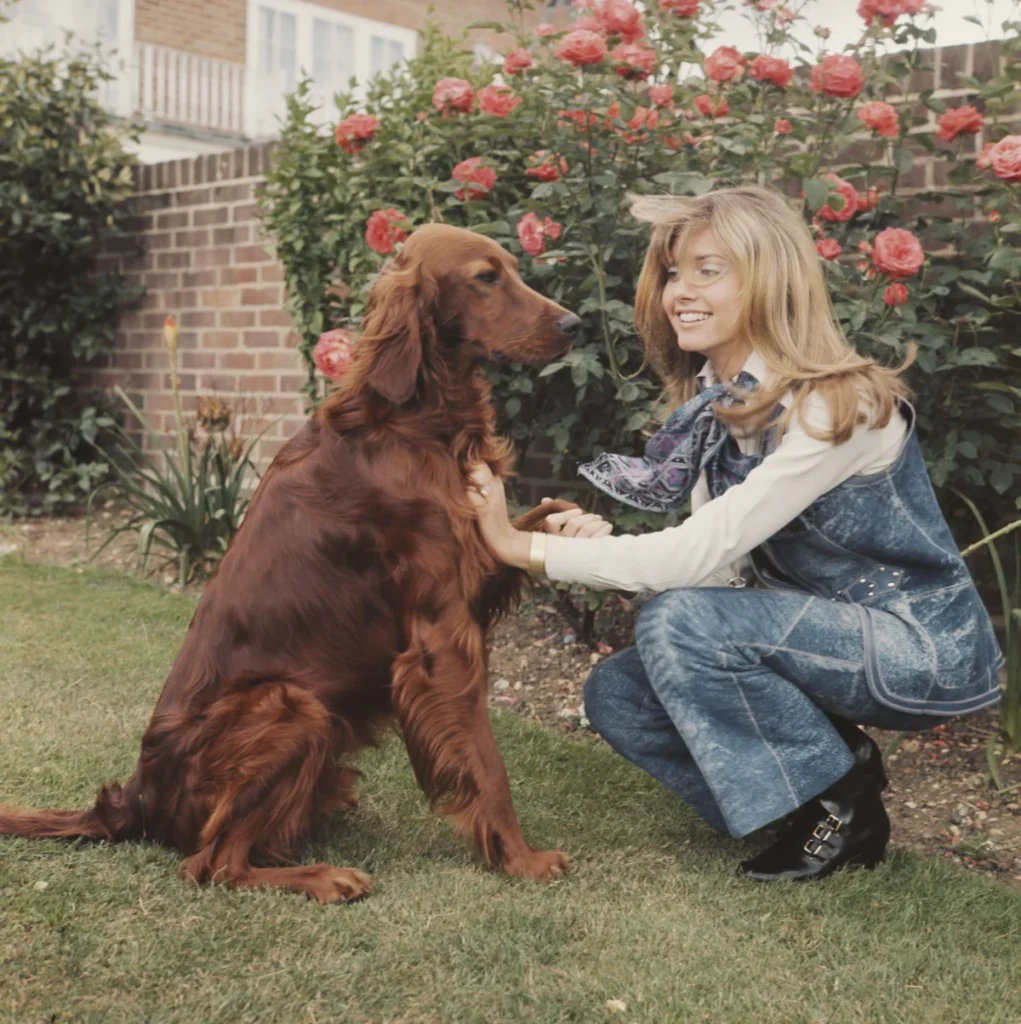

For all the time Dame Olivia Newton-John spent in the global spotlight, she seemed happiest escaping it, finding her true equilibrium not on a stage, but in the quietude of the natural world. Throughout a career that spanned over five decades, the English-born, Australian-raised singer, actress, and activist cultivated a private life defined by a deep-seated reverence for animals and a penchant for expansive, green landscapes. While her public image was meticulously crafted by the demands of the entertainment industry—from her breakout as a "toothpaste-ad" beauty in the 1960s to the global superstardom of Grease in 1978—her personal narrative was rooted in the grounding influence of the homes she built and the creatures she cherished.

The Early Years and the Path to Stardom
Olivia Newton-John’s journey began in Cambridge, England, before her family migrated to Melbourne, Australia, when she was six years old. By age 17, she had won a televised talent contest that granted her a trip to London, marking the beginning of her ascent in the music industry. Her initial years in the United Kingdom were characterized by modest beginnings. In 1966, she resided in a Hampstead mews apartment with her mother and her close friend and fellow performer, Pat Carroll.
The duo, performing under the name "Pat and Carroll," navigated the London nightclub scene with the tenacity of aspiring artists. Reflecting on those formative years, Newton-John often recounted the simplicity of their living arrangements, which included sleeping on blow-up mattresses in a cramped flat. This period was crucial for her development, as she gained exposure to the industry’s inner workings and the challenges of carving out a niche in a competitive market. Her collaboration with Carroll ended only when visa restrictions necessitated Carroll’s return to Australia, though the two remained lifelong friends.

Chronology of a Career and Its Residences
Newton-John’s professional trajectory is inseparable from the properties she called home. In the late 1960s and early 1970s, while living in Hertfordshire with her then-fiancé, Bruce Welch of The Shadows, she maintained a residence that provided a reprieve from her burgeoning fame. Her early 20s were defined by a desire to balance the high-pressure environment of the music world with the rural tranquility of Hadley Common.
Following her monumental success in the 1978 film adaptation of Grease, which produced chart-topping hits such as "You’re the One That I Want" and "Hopelessly Devoted to You," Newton-John moved toward a more secluded lifestyle. Between 1975 and 1976, she acquired a three-acre ranch in Malibu, California. This property, which she occupied for nearly 18 years, served as a primary sanctuary. It featured a pool, tennis courts, and ample space for her growing menagerie of animals, which included horses, dogs, and cats.

In 1981, looking to maintain a connection to her roots, Newton-John purchased 187 acres of land near Byron Bay in New South Wales, Australia. This estate would remain in her possession for nearly four decades. It was a place of profound transformation, where she transitioned from a pop icon to a dedicated environmental and wellness advocate.
Advocacy and the Healing Power of Nature
The defining challenge of Newton-John’s life occurred in 1992 when she received her first diagnosis of breast cancer. This event marked a pivot point in her public and private life. Over the subsequent 30 years, she battled the disease on and off, utilizing her celebrity platform to raise awareness for cancer research and wellness advocacy. Her approach to the illness was characterized by a resolute refusal to adopt the label of "victim."

Her homes played a central role in this journey. She often spoke of the therapeutic benefits of her properties, particularly her Australian farm. The land provided a space for reflection, physical recovery, and connection to the earth. Her commitment to the environment led her to plant over 5,000 trees on her New South Wales estate, integrating her home into the local ecosystem. By 2005, she channeled her passion for wellness into the establishment of the Gaia Retreat & Spa near Byron Bay, which became a globally recognized center for holistic health.
The Intersection of Passion and Architecture
Newton-John’s aesthetic sensibilities were deeply intertwined with her values. At her Byron Bay residence, she took on the role of interior designer, opting for a rustic, French-inspired motif. She famously salvaged gothic church doors to frame the entrance of the main house and the primary suite, creating an atmosphere of historic reverence and natural warmth. The use of pine flooring, wood-beam ceilings, and stonework sourced from local beaches underscored her desire for a home that felt like an extension of the surrounding nature.

Her dedication to animals was equally significant. During her time in Malibu, she cared for a wide array of pets, including Tennessee walkers, Appaloosas, and numerous dogs, such as her Irish Setter, Geordie. Her childhood ambition to become a veterinarian, though ultimately eclipsed by her musical talent, remained a core component of her identity. She once noted that her largest personal expenses were consistently directed toward the care and welfare of her animals.
Broader Impact and Legacy
The death of Olivia Newton-John in August 2022 at her Southern California ranch prompted an outpouring of global tributes, highlighting not just her musical achievements, but her enduring grace under the pressure of chronic health struggles. Analysts have observed that Newton-John’s legacy is twofold: she was a trailblazer for female pop stars in the 1970s, and she was a pioneering voice in the integration of traditional and alternative medicine.

Her properties, particularly the Gaia Retreat, stand as a testament to her vision of a balanced life. By creating spaces that prioritized health, environmental sustainability, and animal welfare, she provided a blueprint for how public figures could manage the stresses of fame. Her insistence that her illness happened "for a purpose" served as a source of inspiration for millions of cancer survivors worldwide.
Data and Financial Context
The real estate transactions associated with Newton-John offer insight into her long-term stability and priorities. The sale of her Byron Bay property in 2019 marked the end of an era, reflecting her shifting needs as her health required more specialized care. The property, valued for its proximity to the Victoria Park Nature Reserve and its extensive infrastructure, underscored the premium she placed on biodiversity and land conservation.

Throughout her career, Newton-John’s ability to remain a commercially viable artist—selling over 100 million records worldwide—provided the financial independence necessary to invest in such significant landholdings. Her decision to maintain these retreats for decades suggests a deliberate choice to prioritize long-term stability over the transient nature of luxury urban living.
Conclusion
The narrative of Olivia Newton-John is a study in contrasts: the global superstar who sought the anonymity of the countryside, and the woman who faced a thirty-year medical battle with an unwavering, signature positivity. Her homes were not merely investments; they were the scaffolding upon which she built her life, her recovery, and her advocacy. As the world continues to celebrate her discography and filmography, the quiet, green spaces she called home remain a vital part of her story—a reflection of a life lived with intentionality, compassion, and an abiding love for the natural world. Her influence, both in the arts and in the realm of health advocacy, remains a profound element of her enduring cultural footprint.