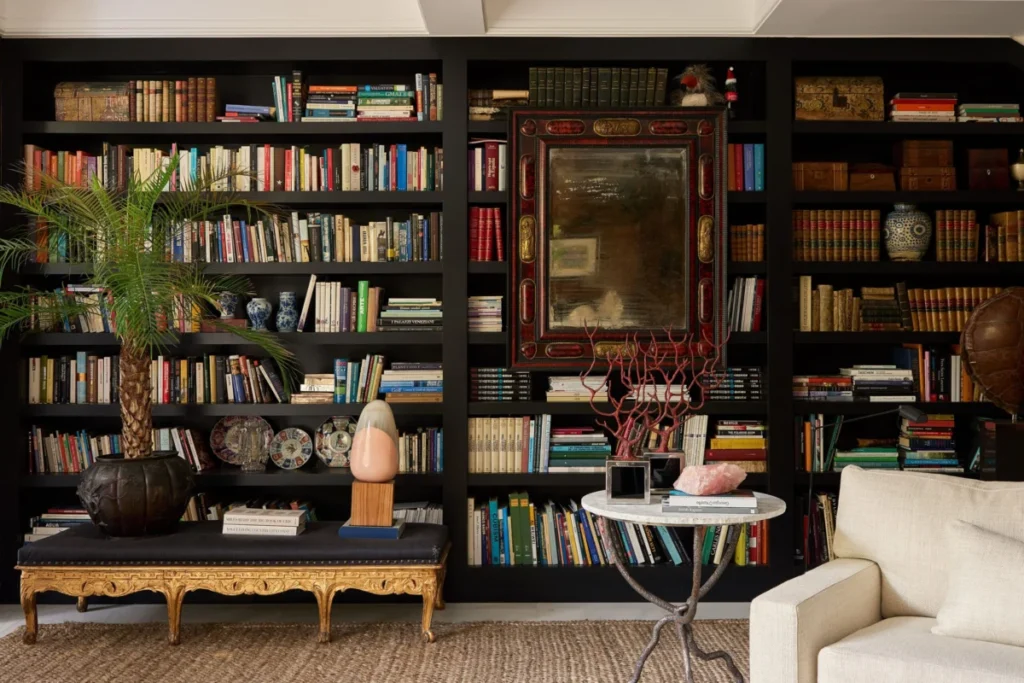

The strategic selection of furniture legs is emerging as a critical technique in the optimization of small-scale residential interiors, particularly in dense urban environments like New York City. For residents of one-bedroom apartments and studios, the challenge of maintaining a sense of openness while furnishing a living space has led to a refined "science" of interior design that prioritizes sight lines and floor visibility. By elevating sofas, consoles, and chairs off the ground, designers are able to manipulate the perception of square footage, creating an illusion of spaciousness that flat-to-the-floor furniture often obstructs.
The Mechanics of Visual Perception in Interior Design
The primary principle behind the "leggy" furniture trend is the preservation of the floor sight line. In interior design theory, the more floor space a human eye can perceive, the larger a room is judged to be. When furniture sits flush against the floor, it acts as a visual barricade, effectively "chopping up" the room and reducing the perceived area.
Leah Alexander, the founder and principal of the Atlanta-based interior design firm Beauty Is Abundant, notes that furniture without elevation blocks the natural flow of light and sight. "Furniture that sits flat on the floor blocks your view across the room and obstructs pleasant dappled light that may shine onto the floor throughout the day," Alexander explains. She emphasizes that when the eye cannot travel under a piece of furniture, the space feels "cut short," leading to a cramped atmosphere.
Conversely, pieces with slender, tapered, or "jewelry-like" legs allow light to permeate the space beneath the furniture. This transparency prevents the "heavy" feeling associated with traditional, bulky upholstery. The presence of just a few inches of clearance can fundamentally shift the "read" of a room, transforming a cluttered environment into one that feels airy and intentional.
Historical Context: The Evolution of the "Leggy" Aesthetic
The preference for elevated furniture is not a new phenomenon but rather a contemporary resurgence of Mid-Century Modern (MCM) principles. Following World War II, as urban populations grew and living spaces began to shrink, designers like Ray and Charles Eames, Hans Wegner, and George Nelson popularized furniture with thin, often splayed legs. This aesthetic was driven by both material shortages and a desire for a "lighter" look that contrasted with the heavy, skirted furniture of the Victorian and Edwardian eras.
In the 21st century, this style has seen a significant revival, particularly among Millennial and Gen Z apartment dwellers. Brands like Sabai, which produces recycled velvet love seats, and CB2, known for its modern media consoles, have capitalized on this need for "visual lightness." The current trend integrates these historical MCM silhouettes with modern sustainability and textile technology, making "leggy" furniture a staple of the "moody, mid-century-modern-inspired" interior style prevalent in boroughs like Brooklyn.
Expert Insights on Balance and Grounding
While elevating furniture is a proven method for expanding a room’s feel, design experts warn against over-application. A room filled entirely with "leggy" pieces can lack a sense of stability, a phenomenon designers refer to as feeling "unmoored."
Samantha Tannehill, founder of the New York City-based Tannehill Interiors, advocates for a balanced approach. "I almost never do a room that’s all legs and no grounding," Tannehill states. She recommends pairing raised sofas with more substantial, lower-profile coffee tables or placing a spindle-leg accent chair next to a solid linen ottoman. This contrast is essential; the "grounded" pieces provide a visual anchor, while the "leggy" pieces provide the necessary airiness.
Furthermore, the "tidiness" factor plays a psychological role in the perception of space. Tannehill points out that the ability to see under a sofa or chair inherently makes a room feel cleaner. In the psychology of design, cleanliness and order are frequently equated with spaciousness. A clear floor suggests that the room is well-maintained and not overcrowded, even if the actual square footage is limited.

Strategic Placement: The "Floating" Technique
The impact of elevated furniture is amplified by its placement within a room. Molly Torres Portnof of Date Interiors in Long Beach, New York, suggests that whenever possible, furniture should be "floated" in the center of a space rather than pushed against the walls. This is exemplified in high-end projects, such as those in Upper West Side townhouses, where curved sofas with delicate legs are positioned to allow movement and light to circulate around them.
Portnof highlights the importance of mixing textures and "chunkiness." For instance, a curved sofa with jewelry-like legs can be balanced with "chunkier" armchairs to create a harmonious environment. Tannehill adds that even moving a piece of furniture 18 inches away from a wall can signal design intention. "It completely changes the energy," she says. "The space starts to look like it was designed, not just arranged."
Supporting Data: The Rise of Small-Space Living
The demand for furniture that optimizes small spaces is backed by shifting demographic and economic data. According to recent urban planning reports, the average size of new apartments in major U.S. cities has decreased by approximately 5% to 10% over the last decade. In New York City, the "micro-unit" movement has gained traction, with developers creating living spaces as small as 250 to 350 square feet.
Market research from the furniture industry indicates a corresponding rise in the "small-space" category. E-commerce platforms and furniture retailers have reported a 20% year-over-year increase in searches for "apartment-sized" or "small-scale" furniture. Within this category, pieces featuring exposed legs—particularly those in metal or light-toned woods—are among the top-performing SKUs. This data suggests that consumers are becoming more sophisticated in their understanding of how furniture geometry affects their daily living experience.
Technical Analysis: The Role of Rugs as Anchors
A critical component in the "leggy furniture" strategy is the use of area rugs. Designers argue that while legs provide height, a rug provides the necessary "zone definition." A rug acts as a low-profile anchor that pulls disparate pieces of furniture into a cohesive unit without adding visual bulk.
From a technical standpoint, the rug serves to:
- Define the Perimeter: It creates a "room within a room," which is essential in open-concept studios.
- Provide Texture: It adds a layer of warmth that offsets the potentially "cold" or "clinical" look of metal or wooden furniture legs.
- Absorb Sound: In small apartments with hard flooring, rugs are essential for acoustic management, preventing the "echo" effect that can make a small room feel empty or cavernous.
Broader Implications for the Furniture Industry
The shift toward leggy, space-saving furniture is influencing manufacturing and retail strategies globally. Manufacturers are increasingly moving away from "blocky" designs that are difficult to transport and assemble in tight city hallways. Modular designs and furniture that can be easily disassembled—often a requirement for "leggy" pieces—are becoming the industry standard.
Moreover, the "intentionality" mentioned by designers like Tannehill is driving a shift toward higher-quality, "investment" pieces. As consumers live in smaller spaces, they are opting for fewer, better-designed items. This has led to the growth of brands like Sabai and Joon Loloi, which focus on aesthetic longevity and sustainable materials.
Conclusion: A Shift in Urban Living Standards
The "science" of using little legs to make a tiny room feel expansive represents a broader trend in urban living: the transition from "maximum square footage" to "maximum visual efficiency." As urban density continues to increase, the ability to manipulate interior perception through design will become an essential skill for residents and professionals alike.
By understanding the relationship between sight lines, light, and visual weight, apartment dwellers can reclaim their living spaces. The "leggy" furniture movement proves that size is often a matter of perspective, and with the right clearance between the sofa and the floor, even a cramped Brooklyn one-bedroom can achieve the airy elegance of a much larger home. In the modern interior, the most important "game changer" is often the space that remains unoccupied.