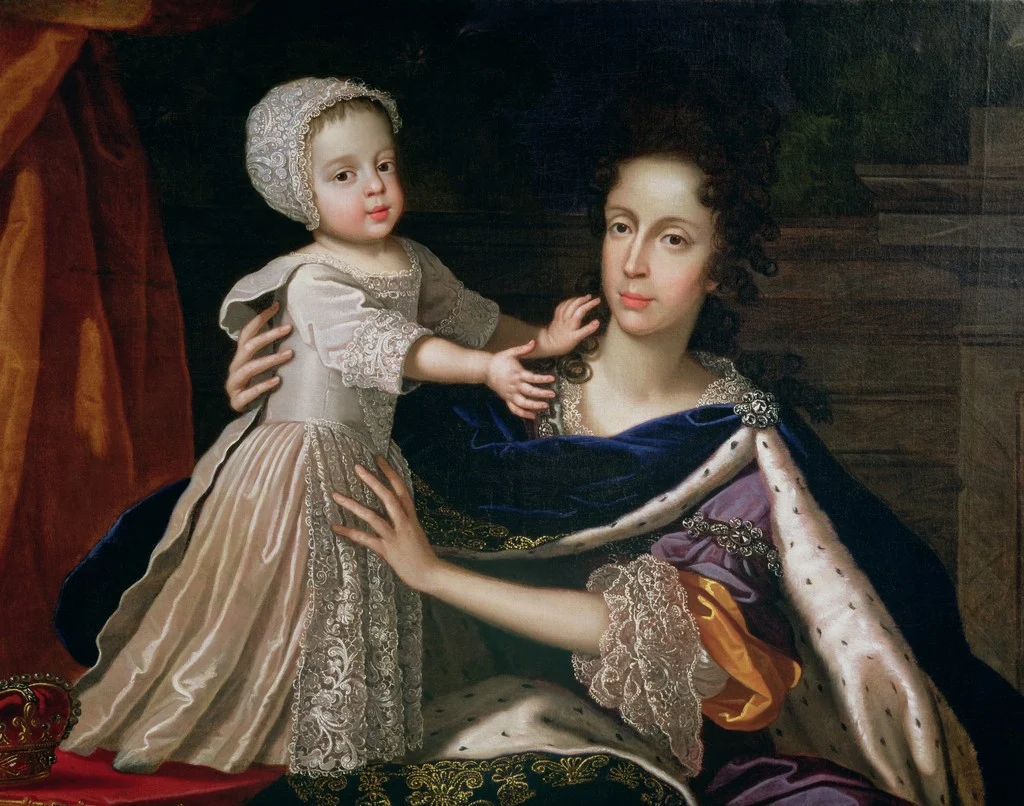

The historical narrative of European monarchy has traditionally prioritized the sovereign—the king who held the absolute reins of power. For centuries, queen consorts occupied a secondary tier in official documentation, their early lives frequently obscured by time, and their biographical details reshaped to suit the political exigencies of their royal spouses. While royal heirs had their every milestone meticulously recorded by court chroniclers, the women brought in from foreign courts or domestic noble families often left behind patchy historical records. Consequently, the exact birthdates of many English queen consorts remain lost to antiquity.
Despite these archival gaps, historians have successfully pieced together enough documentation to celebrate the birth anniversaries of three remarkable royal women who share an autumnal birth month. Katherine of Valois, Elizabeth Woodville, and Maria of Modena—collectively known to historians of the British monarchy as the October queens—each navigated tumultuous eras defined by civil conflict, political intrigue, and personal scandal. Their respective entries into the world during the tenth month of the year preceded lives that defied the passive expectations of their eras, ultimately leaving an indelible imprint on the trajectory of the English crown.
The Forgotten Beginnings and Political Realities of Medieval Consorts
To understand the historical weight of the October queens, one must examine the socio-political framework of medieval and early modern European monarchies. A queen consort was primarily valued for her dynastic utility: securing alliances, producing healthy heirs, and projecting cultural prestige through patronage. Yet, because these women were rarely destined to rule in their own right, their upbringing was frequently treated as a secondary concern by contemporary chroniclers.
Royal households were complex political arenas where a foreign princess or domestic bride could easily become a pawn in broader factional disputes. When these consorts asserted their own agency—whether through clandestine marriages, political patronage, or defending the rights of their children—they routinely provoked fierce backlash from contemporary elites. The three October consorts serve as prime examples of this phenomenon, each entering the historical record during a different century, yet all sharing a capacity to disrupt established political orders.
Katherine of Valois: French Princess, Lancastrian Queen, and Tudor Matriarch
The first of the October queens was born into the heart of a fractured France at the height of the Hundred Years’ War. Katherine of Valois entered the world on October 27, 1401, at the Hôtel de St. Pol in Paris. She was the youngest daughter of King Charles VI of France—widely known in historical texts as "Charles the Mad" due to his severe, incapacitating bouts of mental illness—and Queen Isabeau of Bavaria, a figure frequently vilified by contemporary chroniclers for her fierce maneuvering through French court politics.
Katherine’s early years were characterized by neglect and instability. With a father incapacitated by psychosis and a mother embroiled in cutthroat power struggles with the Burgundian and Armagnac factions, the young princess received little parental guidance. However, her high dynastic value remained intact. In 1420, against the backdrop of the Treaty of Troyes—which temporarily disinherited the French Dauphin in favor of the English monarch—Katherine was married to King Henry V of England.
The union was designed to cement an Anglo-French dual monarchy. Henry V’s sudden death in 1422, however, upended these geopolitical calculations. Katherine was left a young widow with an infant son, Henry VI, who inherited the crowns of both England and France before his first birthday.
As a dowager queen, Katherine’s personal life soon became a source of intense scandal at the English court. Excluded from direct political power and subject to strict parliamentary regulations regarding the remarriage of queen mothers, Katherine sought romance on her own terms. After reportedly setting her sights on Edmund Beaufort, 2nd Duke of Somerset, she ultimately entered into a clandestine relationship—and subsequent secret marriage—with Owen Tudor, a Welsh courtier and servant in her household.
This union, finalized without royal permission, produced a family that would eventually alter the course of English history. Their grandson, Henry Tudor, defeated Richard III at the Battle of Bosworth Field in 1485, founding the Tudor dynasty. Thus, the marginalized French princess became the matriarch of England’s most famous royal house.
Elizabeth Woodville: The Lancastrian Widow Who Forged a Yorkist Dynasty
The second October queen emerged from the fractured landscape of the Wars of the Roses, a series of dynastic civil wars fought between the rival houses of Lancaster and York for control of the English throne. Elizabeth Woodville was born in Northamptonshire in 1437, with historians widely accepting an October birthdate, though precise parish records from the period are lost.
Elizabeth’s initial entry into high politics was unconventional. She was born to Sir Richard Woodville and Jacquetta of Luxembourg, a noblewoman of high continental birth. Initially married to Sir John Grey of Groby, a staunch Lancastrian who died fighting for his cause at the Second Battle of St Albans in 1461, Elizabeth found herself a widowed mother with two young sons and a confiscated estate.
Her life took a dramatic turn when she captured the attention of Edward IV, the triumphant leader of the House of York, who had deposed the Lancastrian King Henry VI in 1461. Rejecting the traditional path of a foreign dynastic alliance arranged by his chief advisor, Richard Neville, Earl of Warwick ("The Kingmaker"), Edward secretly married Elizabeth on May 1, 1464. When the marriage was publicly revealed, it sent shockwaves through the European courts and alienated Warwick, who had been actively negotiating a French match for the young king.
As queen consort, Elizabeth swiftly demonstrated a formidable political intellect. She leveraged her new position to secure advantageous marriages and high offices for her extensive network of impoverished relatives—a policy that earned her deep resentment among the older, established English peerage.
Elizabeth’s tenure was marked by extreme volatility. When Warwick briefly turned against Edward IV and restored Henry VI to the throne in 1470, a pregnant Elizabeth was forced to seek sanctuary at Westminster Abbey, where she gave birth to her son, Edward V. Following Edward IV’s restoration and subsequent death in 1483, Elizabeth’s fortunes plummeted once more. Her marriage was posthumously declared invalid by Parliament under the influence of Richard, Duke of Gloucester, rendering her children illegitimate and paving the way for Gloucester to seize the throne as Richard III.
Amid the mystery surrounding the disappearance of her sons—the famous "Princes in the Tower"—Elizabeth displayed remarkable resilience. She eventually reconciled with the new regime to a degree, and her eldest daughter, Elizabeth of York, married Henry Tudor. This union successfully united the warring houses of Lancaster and York, cementing the legacy of a second October queen within the Tudor bloodline.
Maria of Modena: The Baroque Consort Caught in the Glorious Revolution
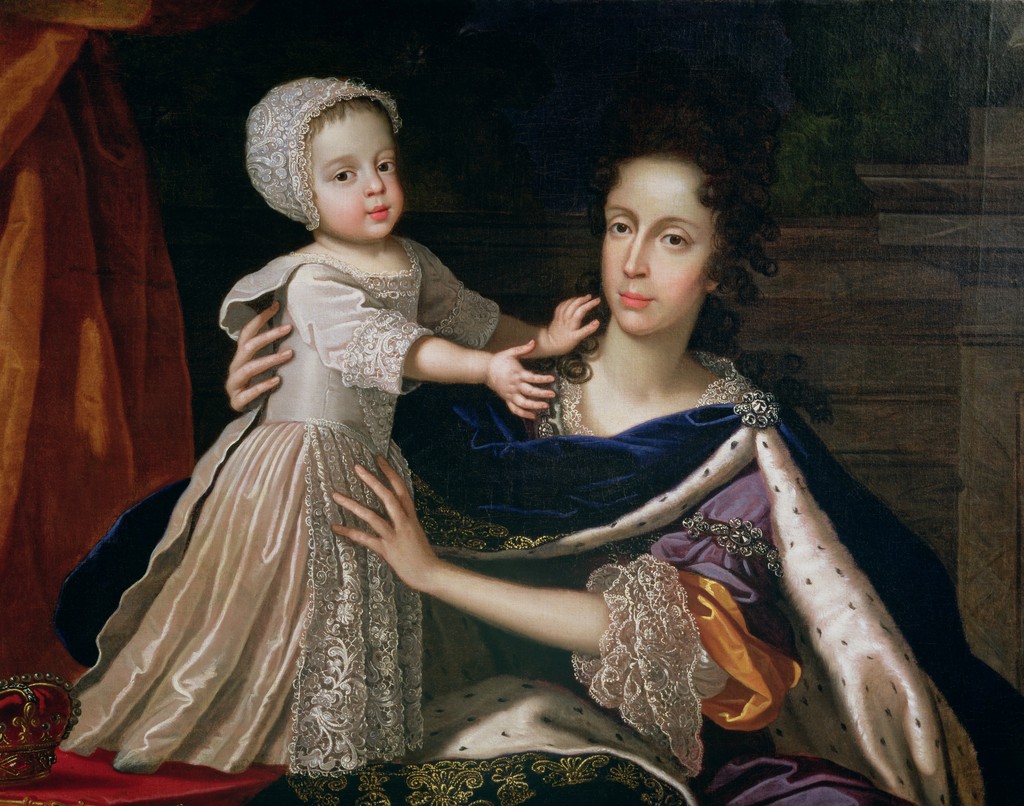
The final autumnal royal was born far from the English court during the height of the seventeenth century. Maria Beatrice Anna Margherita Isabella d’Este—universally known to history as Maria of Modena—was born on October 5, 1658. The daughter of Alfonso IV, Duke of Modena, and Laura Martinozzi, Maria was raised within the sophisticated and politically calculating sphere of the Italian nobility. Her grand-uncle was the powerful French statesman Cardinal Mazarin, whose influence helped orchestrate advantageous matches for his family.
Initially, ambitious plans were laid to marry the young Italian noblewoman to the future King of Spain. However, these diplomatic arrangements collapsed, paving the way for an unexpected match with the House of Stuart. In 1673, at the age of fifteen, Maria was married by proxy to James, Duke of York, the younger brother of King Charles II and the presumptive heir to the English, Scottish, and Irish thrones. James was forty years old at the time, and the cultural disparity between the teenage Italian princess and the English court was vast.
Maria’s arrival in London was met with immediate public hostility and suspicion. The English populace, deeply entrenched in anti-Catholic sentiment, viewed the devoutly Catholic Duke of York with intense alarm. The prospect of a Catholic royal dynasty taking root on the English throne terrified Protestant nobles, parliamentarians, and Anglican bishops alike. When James ascended the throne as James II in 1685, Maria was crowned queen consort alongside him.
Despite her efforts to maintain a dignified public profile, Maria’s role as queen was exceptionally brief and fraught with crisis. The defining moment of her tenure arrived in June 1688, when she gave birth to a healthy son, James Francis Edward Stuart. Prior to this birth, the succession was expected to pass to James II’s Protestant daughters from his first marriage, Mary and Anne. The birth of a Catholic male heir threatened to institutionalize a permanent Catholic monarchy, sparking an immediate and coordinated political crisis.
Within months, leading English politicians invited William of Orange—husband of James’s eldest daughter, Mary—to intervene. The ensuing Glorious Revolution forced James II, Maria, and their infant son to flee into exile in France in the winter of 1688. Welcomed by King Louis XIV, Maria established a Jacobite court-in-exile at the Château de Saint-Germain-en-Laye. For the remainder of her life, she tirelessly lobbied European powers to restore her son to the British throne, though she ultimately lived out her final decades in relative financial strain near Paris, passing away in 1718.
Chronological Overview of the October Queens
- October 27, 1401: Katherine of Valois is born in Paris to King Charles VI of France and Isabeau of Bavaria.
- June 2, 1420: Katherine marries King Henry V of England, temporarily uniting the crowns of England and France.
- 1437: Elizabeth Woodville is born in Northamptonshire.
- May 1, 1464: Elizabeth secretly marries King Edward IV, sparking political outrage from the Earl of Warwick.
- October 5, 1658: Maria of Modena is born in Italy to the Duke of Modena and Laura Martinozzi.
- November 21, 1673: Fifteen-year-old Maria marries James, Duke of York, by proxy.
- February 6, 1685: James II ascends the English throne, making Maria queen consort.
- June 10, 1688: The birth of James Francis Edward Stuart triggers the Glorious Revolution.
- December 1688: Maria, James II, and their infant son flee into exile in France.
Historical Implications and Legacy
The convergence of birth anniversaries among Katherine of Valois, Elizabeth Woodville, and Maria of Modena highlights a fascinating intersection of demography and dynastic history. While their shared birth month is ultimately a historical coincidence, their life trajectories share striking parallels that offer valuable insight into the mechanics of the English monarchy.
All three women operated at the epicenter of existential political crises: Katherine during the Hundred Years’ War, Elizabeth amid the Wars of the Roses, and Maria at the threshold of the Glorious Revolution. Each consort was utilized as a diplomatic instrument by male rulers, yet each transcended the passive expectations of their status through calculated personal choices, strategic alliances, and public resilience. Furthermore, the genetic and political legacies of the first two October queens directly birthed the Tudor dynasty, permanently altering the national identity and governance of England.
Ultimately, while official contemporary records frequently marginalized the early lives and personal agency of queen consorts, the October queens stand as enduring testaments to the complex, turbulent realities of women who sat beside—and occasionally challenged—the monarchs of England.