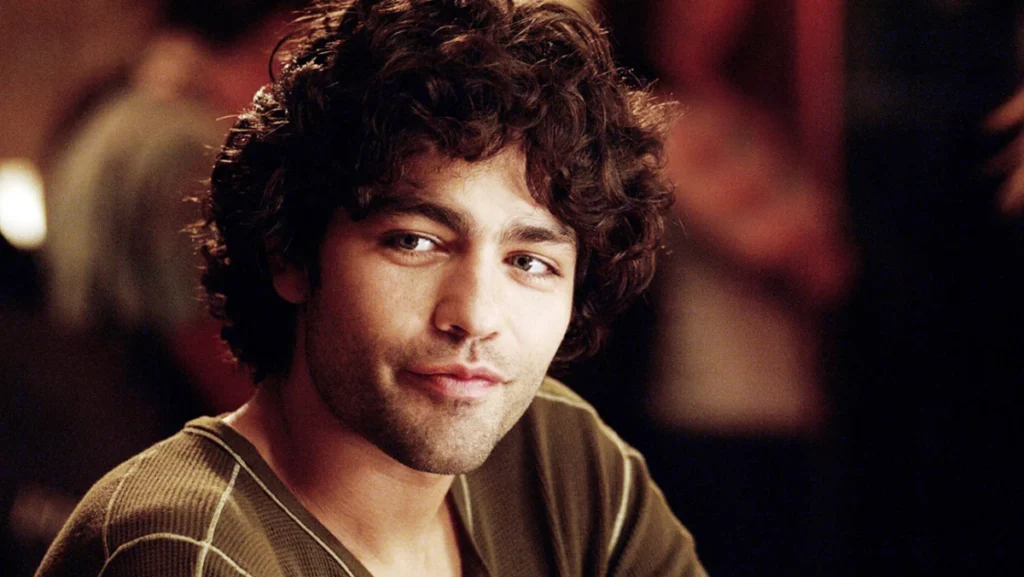

While the original stars of The Devil Wears Prada, including the formidable trio of Anne Hathaway, Meryl Streep, and Emily Blunt, along with Stanley Tucci, have all enthusiastically returned for the highly anticipated sequel, The Devil Wears Prada 2, the director David Frankel, who helmed the critically acclaimed 2006 original, has offered clarity regarding the notable absence of Adrian Grenier. Grenier, who portrayed Nate, the long-suffering boyfriend of Hathaway’s character Andy Sachs, will not be reprising his role in the upcoming film, a decision Frankel attributes primarily to production scheduling constraints, though Grenier himself has hinted at another underlying factor. The sequel, set to captivate audiences on May 1, arrives nearly two decades after its predecessor, promising a fresh chapter for the beloved characters of the high-stakes fashion world.
The Genesis of a Cultural Phenomenon: Revisiting the Original The Devil Wears Prada
To fully grasp the significance of Grenier’s exclusion, it is imperative to revisit the profound cultural impact and narrative threads of the original The Devil Wears Prada. Released in 2006, the film, an adaptation of Lauren Weisberger’s best-selling novel, transcended its "chick flick" categorization to become a cinematic touchstone. It offered a sharp, often biting, look into the cutthroat world of high fashion, particularly through the lens of Runway magazine and its tyrannical editor-in-chief, Miranda Priestly, brought to life with an iconic performance by Meryl Streep, which earned her an Academy Award nomination.
The film followed Andrea "Andy" Sachs (Anne Hathaway), an aspiring journalist who inadvertently lands a job as Priestly’s junior assistant. Her journey from a sartorial skeptic to a fashion-savvy professional, albeit at the cost of her personal life and integrity, resonated deeply with audiences. The supporting cast, including Emily Blunt as the perpetually stressed senior assistant Emily Charlton and Stanley Tucci as the supportive art director Nigel, further solidified the film’s ensemble strength.
Adrian Grenier’s character, Nate Cooper, represented Andy’s grounding reality, a chef struggling to make ends meet, and her anchor to a life outside the glamorous, yet demanding, fashion industry. Initially portrayed as the supportive boyfriend, Nate’s character has, over the years, become a subject of considerable debate and re-evaluation among viewers. Many modern interpretations label him as "the real villain" of the film, criticizing his lack of understanding, his resentment of Andy’s career ambitions, and his eventual ultimatum that forces her to choose between her job and their relationship. This shift in public perception, fueled by widespread social media discourse and contemporary analyses of relationship dynamics in cinema, adds a complex layer to Grenier’s recent statements about his character’s absence.
The original film was a commercial success, grossing over $326 million worldwide against a production budget of $41 million. Its critical reception was largely positive, with Rotten Tomatoes reporting an approval rating of 75% based on 196 reviews, and Metacritic assigning a weighted average score of 62 out of 100, indicating "generally favorable reviews." Beyond the numbers, The Devil Wears Prada became a quotable classic, influencing fashion trends and solidifying its place in pop culture lexicon.
The Long Road to a Sequel: Development and Renewed Interest
Discussions and rumors of a sequel have circulated almost since the original film’s release. However, for years, the primary cast members and director expressed varying degrees of skepticism or disinterest, often citing the perfect closure of the first film’s narrative. Meryl Streep, in particular, had previously stated that she would only consider a sequel if it offered a compelling new story that didn’t simply rehash old themes.
The tide began to turn in recent years, fueled by the enduring popularity of the original film, its continued relevance in fashion and career discussions, and the cast’s own nostalgia. The concept of revisiting these iconic characters in a changed world, nearly two decades later, proved increasingly appealing. The official greenlight for The Devil Wears Prada 2 sparked immense excitement among fans, eager to see where Andy Sachs’s career had taken her, how Miranda Priestly continued to dominate the industry, and what new challenges awaited Emily Charlton.
The confirmation of Anne Hathaway, Meryl Streep, Emily Blunt, and Stanley Tucci’s return underscored the project’s commitment to maintaining the original’s acclaimed ensemble. This reunion of core talent signaled to fans that the sequel aimed to deliver an authentic continuation, rather than a diluted reboot. The absence of even a single prominent character from the original, therefore, naturally drew attention and prompted questions, particularly concerning a character as central to Andy’s personal arc as Nate.
Adrian Grenier’s Exclusion: Competing Explanations and Public Reaction
The first official confirmation of Adrian Grenier’s non-involvement in The Devil Wears Prada 2 emerged in July, with The Hollywood Reporter breaking the news. This report quickly ignited speculation among fans regarding the reasons behind his exclusion.
Director David Frankel, in a recent interview with Entertainment Weekly, provided his perspective on the matter. He revealed that he had initially entertained the idea of incorporating Grenier into the sequel, even considering a brief cameo appearance for Nate. "I had an idea about sneaking him into a cameo," Frankel told the publication. However, he explained that the ambitious production schedule ultimately rendered this impossible. "In the end, it was just too late in our production schedule to make it happen," he stated, further noting the tight turnaround between filming completion and the slated release date. "The film completed filming less than a month before its slated release date, so there wasn’t time." This explanation frames Grenier’s absence as a logistical challenge rather than a creative decision related to the character’s narrative arc or public perception.
However, Grenier himself has offered a somewhat different, or at least supplementary, interpretation. Months after The Hollywood Reporter‘s initial confirmation, the Entourage star publicly addressed his exclusion, expressing a degree of disappointment. Speaking to Page Six, Grenier stated, "We’re all fans of the movie, whether or not we were in it. Obviously, it was a disappointment that I didn’t get the call to be in the sequel." He then ventured into the territory of fan sentiment, adding, "But I also understand there was some backlash with Nate, the character, so that might have something to do with it."
This statement directly taps into the contemporary re-evaluation of Nate’s character, acknowledging the widespread public discourse that has often painted him as unsupportive, self-centered, and an impediment to Andy’s career growth. While Frankel’s explanation focuses on production practicalities, Grenier’s comments suggest that the creative team might have also been influenced, implicitly or explicitly, by the evolving public perception of Nate. Whether this played a direct role in the initial decision not to write Nate into the sequel, or simply provided a convenient justification for his absence once scheduling conflicts arose, remains a subject of interpretation.
Nate’s Legacy and Grenier’s Humorous Acceptance
The online discourse surrounding Nate’s character has been robust for years. Memes, analytical essays, and social media threads consistently debate whether Nate was genuinely a loving boyfriend or an unsupportive partner who failed to understand Andy’s ambitions and the demands of her demanding career. The "villain Nate" narrative gained significant traction, contrasting his seemingly mundane complaints with Andy’s extraordinary professional opportunities. This cultural phenomenon meant that Grenier’s character, despite his relatively limited screen time, held a disproportionately large space in the collective memory of the film’s fanbase.
Adrian Grenier has demonstrated a good-humored acceptance of both his exclusion and the public’s perception of his character. Earlier this month, he cleverly poked fun at the situation in a Starbucks advertisement, leveraging the headlines about his non-return for a witty commercial. In the ad, Grenier quipped, "You might have seen the headlines – I wasn’t asked to be part of a certain sequel. But I’m good. Really. It’s all good energy." He then offered a mock toast to his character: "So a toast to Nate. He made a mean sandwich. He loved his girlfriend, to a point. He wasn’t perfect. So let’s leave Nate in 2006 and keep this good energy going." This self-effacing humor was well-received, showcasing Grenier’s ability to engage with the public discourse surrounding his character with grace and levity.
Director David Frankel, when asked by Entertainment Weekly about Grenier’s Starbucks ad, responded positively. "No, I probably shouldn’t say [what Nate would have done in the sequel]. But, I think I’m thrilled that he did a Starbucks commercial, which was really funny and so self-effacing. I love the humility and the comedy of it!" Frankel’s appreciation for Grenier’s humorous take underscores a likely amicable separation, at least from the director’s perspective, despite the character’s absence.
Broader Implications and the Sequel’s Narrative Trajectory
The absence of Nate from The Devil Wears Prada 2 carries significant implications for the sequel’s narrative. In the original film, Nate served as a crucial counterpoint to Andy’s increasingly fashion-centric life. His presence highlighted the sacrifices she was making for her career and the struggle to maintain a semblance of normalcy amidst the chaos of Runway magazine. With Nate out of the picture, the sequel is free to explore Andy’s personal life in new directions.
Will Andy Sachs be single and thriving in her career, having learned valuable lessons about balancing personal aspirations with professional demands? Will she have found a new romantic interest, perhaps one who is more understanding of her ambitions or equally immersed in a demanding career? Or will her journey focus entirely on her professional ascent, perhaps showcasing her as an independent woman who no longer needs a romantic partner to define her happiness? The removal of Nate opens up possibilities for Andy’s character development that could reflect contemporary narratives of female empowerment and career fulfillment.
The decision also reflects a broader trend in Hollywood of re-evaluating past films and characters through a modern lens. What was once accepted or overlooked in earlier decades is now scrutinized by a more socially conscious audience. The "villain Nate" discourse is a prime example of this phenomenon, where characters once perceived as supportive or well-meaning are now seen as embodying problematic traits. While Frankel’s stated reason is logistical, the cultural context surrounding Nate’s character cannot be entirely dismissed as an influencing factor in the broader creative landscape of the sequel.
The challenge for The Devil Wears Prada 2 will be to craft a compelling narrative that resonates with both long-time fans and new audiences, without feeling like a mere nostalgic retread. The return of the core cast is a massive asset, ensuring continuity and familiarity. However, the world of fashion, media, and career aspirations has evolved dramatically since 2006. The sequel will need to address these changes, offering a story that feels relevant to contemporary issues while staying true to the spirit of the original.
The film’s swift production schedule, culminating in a release less than a month after filming wrapped, speaks to the intense anticipation and the studio’s desire to deliver the sequel promptly. This compressed timeline undoubtedly placed immense pressure on all aspects of production, lending credence to Frankel’s explanation regarding the difficulty of fitting in a cameo for Grenier.
Anticipation Builds for May 1 Release
As the release date of May 1 approaches, anticipation for The Devil Wears Prada 2 continues to mount. The New York City premiere, which saw the triumphant return of Miranda Priestly, Andy Sachs, Emily Charlton, and Nigel on the red carpet, served as a powerful reminder of the enduring legacy of the original film and the excitement surrounding its continuation. The sequel promises to offer a fresh perspective on these beloved characters, exploring their lives and careers in a world that has undoubtedly changed since Andy Sachs first walked away from Runway magazine. While Adrian Grenier’s Nate may not be part of this new chapter, his absence itself has become a talking point, subtly shaping the narrative expectations and inviting audiences to ponder the future of Andy Sachs, unburdened by past romantic entanglements. The film stands poised to captivate audiences once again, proving that fashion, ambition, and the indelible mark of Miranda Priestly remain as potent as ever.