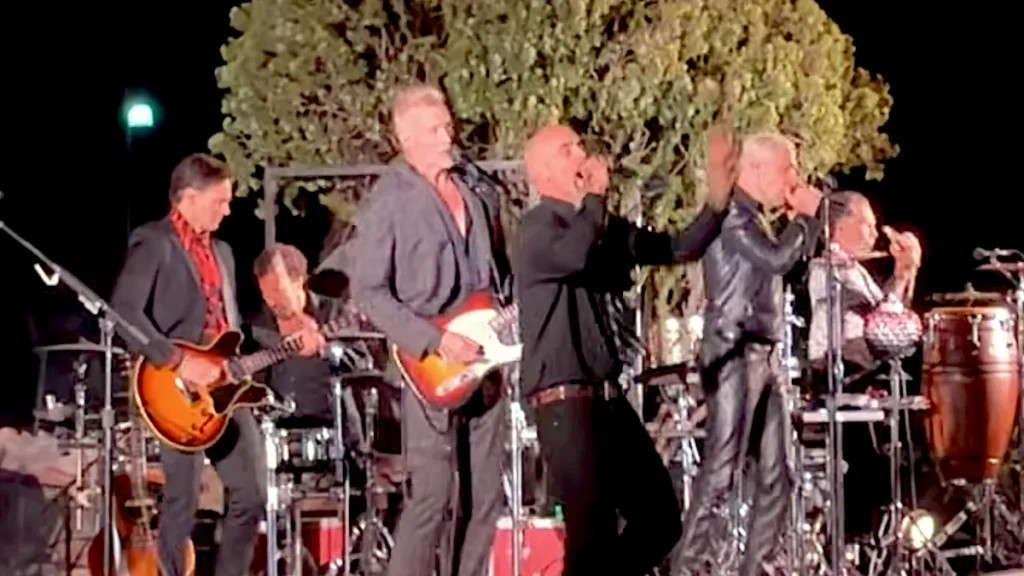

In a moment that reverberated through the desert rock community, Queens of the Stone Age (QOTSA) reunited with former bassist and vocalist Nick Oliveri for a live performance on Friday, April 24th, 2026, at the iconic Joshua Tree Retreat Center in Joshua Tree, California. The impromptu collaboration marked Oliveri’s first full performance with the band in a dozen years, igniting a wave of excitement and speculation among longtime fans and industry observers alike. The highly anticipated appearance occurred during a stop on QOTSA’s ongoing “Catacombs Tour,” a series of performances celebrating their extensive and influential discography.
A Moment of Reconciliation and Musical Synergy
The atmosphere at the Joshua Tree Retreat Center was charged with anticipation as frontman Josh Homme, the singular driving force behind Queens of the Stone Age, introduced Oliveri to the stage with warm words, describing him as "one of the people that I love dearly." This public declaration of affection, following years of a complex and at times tumultuous relationship, set the tone for a performance imbued with both nostalgia and a sense of shared history. Oliveri joined Homme and the current QOTSA lineup—Troy Van Leeuwen (guitar, keyboards), Michael Shuman (bass), Dean Fertita (keyboards, guitar), and Jon Theodore (drums)—to perform "Auto Pilot," a fan-favorite track from the band’s seminal 2000 album, Rated R.
Notably, Oliveri contributed vocals only for this particular rendition, sharing the microphone with Homme and current bassist Michael Shuman. This specific arrangement allowed Oliveri to re-engage with the band’s live sound without fully stepping back into his former instrumental role, a nuanced approach that acknowledged both his past contributions and the band’s established current configuration. During the performance, Oliveri visibly relished the moment, at one point stepping down into the photo pit to directly interact with enthusiastic fans, a gesture that underscored the deep connection he still holds with the band’s audience. The energy of the reunion was palpable, captured in fan-shot videos that quickly circulated online, showcasing a band and a returning member fully immersed in the raw power of their music.
The Desert Rock Lineage: From Kyuss to Queens
To fully appreciate the significance of this reunion, one must delve into the intertwined histories of Josh Homme and Nick Oliveri, a partnership forged in the crucible of the early 1990s Southern California desert rock scene. Both musicians were foundational members of Kyuss, a band widely credited with pioneering the stoner rock genre. Kyuss’s heavy, psychedelic sound, characterized by downtuned guitars, hypnotic grooves, and often lengthy, improvisational passages, laid much of the groundwork for the sonic landscape that QOTSA would later inhabit and expand upon. Albums like Blues for the Red Sun (1992) and Welcome to Sky Valley (1994) are considered touchstones of the genre, cementing Kyuss’s legacy despite their relatively short lifespan.
Following Kyuss’s dissolution in 1995, Homme embarked on a new musical journey, forming Queens of the Stone Age in 1996. Oliveri officially joined QOTSA in 1998, bringing with him a potent blend of aggressive basslines and a distinctive, often screamed, vocal style that became a hallmark of the band’s early sound. His contributions were instrumental in shaping the identity of QOTSA during a period of immense creative growth.
Oliveri’s Pivotal Role in QOTSA’s Formative Years
Oliveri’s tenure with Queens of the Stone Age, though punctuated by eventual controversy, yielded some of the band’s most celebrated and commercially successful work. His distinctive presence is deeply etched into two of QOTSA’s most iconic albums: Rated R (2000) and Songs for the Deaf (2002).
Rated R (initially titled R for Restricted) marked a significant evolution for QOTSA, moving beyond the more minimalist, Kyuss-esque sound of their debut. Oliveri’s raw vocal contributions on tracks like "Tension Head" and "Quick and to the Pointless" provided a visceral counterpoint to Homme’s more melodic, hypnotic delivery. The album was a critical darling, praised for its eclectic blend of hard rock, psychedelic elements, and pop sensibilities, and it significantly broadened the band’s audience. "Auto Pilot," the song performed at Joshua Tree, is a testament to the album’s enduring quality and Oliveri’s integral vocal presence on it.
Songs for the Deaf, released in 2002, elevated QOTSA to global rock superstardom. Featuring Dave Grohl on drums and Oliveri’s searing bass and vocal work, the album was a conceptual masterpiece designed to be listened to as if driving through the desert, tuning into various radio stations. Oliveri’s contributions on tracks like "Millionaire" and "Six Shooter" are legendary, showcasing his unbridled energy and distinctive punk-inflected snarl. The album garnered widespread critical acclaim, earned multiple Grammy nominations, and remains a fan favorite, often cited as one of the definitive rock albums of the early 21st century. Oliveri’s aggressive stage presence during this era also cemented his image as a vital, if volatile, component of the band’s live experience.
The Rift and Subsequent Interactions
The creative synergy between Homme and Oliveri, however, was not without its challenges. In 2004, Oliveri was famously ousted from Queens of the Stone Age. The departure was attributed to various factors, prominently domestic abuse allegations against Oliveri and what Homme cited as escalating behavioral issues that had become untenable for the band’s environment. This split was a significant blow to fans, who had come to cherish the unique dynamic Oliveri brought to the group. The acrimony surrounding his departure led to a prolonged period of estrangement between the two musicians, seemingly closing the door on future collaborations.
Despite the highly publicized split, complete severance was never fully achieved. A decade after his departure, Oliveri contributed backing vocals to the track "If I Had a Tail" on QOTSA’s critically acclaimed 2013 album, …Like Clockwork. This marked a tentative re-engagement, a subtle acknowledgment of their shared past. The following year, in 2014, Oliveri made a brief, one-song appearance with QOTSA at a show in Portland, Oregon, performing "You Think I Ain’t Worth a Dollar, But I Feel Like a Millionaire." While these were significant gestures, they remained isolated incidents, leaving fans to wonder if a more substantial reconciliation would ever materialize. The Joshua Tree performance, therefore, represents a marked escalation in the level of public and musical interaction between the two former bandmates.
The "Catacombs Tour" and the Spirit of Joshua Tree
The "Catacombs Tour," which provided the backdrop for this historic reunion, has seen Queens of the Stone Age traversing various venues, showcasing their powerful live act. The choice of the Joshua Tree Retreat Center for this particular performance adds another layer of profound significance. Joshua Tree itself is more than just a location; it’s a spiritual home for desert rock, a landscape that has inspired countless musicians, including Kyuss and QOTSA. The stark beauty, isolation, and unique sonic qualities of the high desert have shaped the very sound of these bands. Performing at a "retreat center" in such a hallowed locale lent the reunion an almost ceremonial quality, a homecoming of sorts for a sound born of the region.
Oliveri’s role in the performance of "Auto Pilot" was carefully defined. While Michael Shuman competently handles bass duties for the current QOTSA lineup, Oliveri’s focus on vocals for this specific track allowed his distinctive voice to shine, harmonizing with Homme’s and adding a layer of authenticity that only his presence could provide. This strategic integration avoided any potential awkwardness regarding instrumental roles, instead focusing on the vocal chemistry that was so crucial to Rated R.
Josh Homme’s Reflections and Future Possibilities
The seeds for this recent reunion might have been sown much earlier. In an interview conducted approximately a year prior, in June 2025, Josh Homme addressed the possibility of a Kyuss reunion, a topic that has long been a subject of fervent fan discussion. His statement at the time offered a glimpse into his evolving perspective on past relationships and unresolved issues. Homme remarked, "It always left me with a strange feeling, because it’s, like, you wanna set things right… I don’t have negative feelings about anybody. None of that stuff matters. So, yeah, it’s possible.”
This quote, delivered a year before the Joshua Tree reunion, takes on new weight in light of Oliveri’s appearance. It suggests a deliberate effort by Homme to mend fences and perhaps revisit musical collaborations with former bandmates, driven by a desire for resolution and a focus on the shared artistic legacy rather than past grievances. The reunion with Oliveri at Joshua Tree can be seen as a tangible manifestation of this sentiment, a step towards "setting things right" within the broader context of their shared musical journey. While a full-fledged Kyuss reunion remains speculative, the QOTSA performance with Oliveri certainly opens the door to such possibilities being more seriously considered by the musicians involved.
Broader Implications and Fan Reception
The reunion has been met with overwhelmingly positive reactions from the QOTSA fanbase. Social media platforms were abuzz with shared videos, photos, and enthusiastic comments. For many, it represented a moment of profound nostalgia, a callback to a golden era of the band’s history. The sight of Homme and Oliveri sharing a stage again, particularly after years of public estrangement, offered a sense of closure and hope for reconciliation.
Beyond the emotional aspect, the reunion carries several broader implications. For QOTSA, it reinforces their deep connection to their roots and acknowledges the integral role Oliveri played in their formative years. It also showcases Homme’s willingness to embrace the band’s full history, even its more complicated chapters. For Oliveri, it offers a high-profile return to a stage he once commanded, reminding the music world of his powerful contributions.
While it is crucial to temper expectations, this event undeniably sparks questions about future collaborations. Could this lead to more guest appearances on the current tour or even in future recordings? The careful framing of Oliveri’s role as a vocalist for a single song suggests a cautious approach, but the warmth of the reception from both the band and the audience could certainly encourage further interactions. The reunion also subtly reignites the perennial discussion around a Kyuss reunion, given Homme’s previous remarks. If Homme is truly committed to "setting things right," the groundwork for revisiting that legendary band’s legacy may slowly be forming.
Queens of the Stone Age: Continuing Their Legacy
The Nick Oliveri reunion serves as a poignant interlude in what is already a busy and successful period for Queens of the Stone Age. The "Catacombs Tour" is set to conclude on May 1st in Lincoln, California, before the band embarks on an extensive UK/European tour beginning in late June. This international leg will be followed by a significant North American stadium tour starting in early August, where QOTSA will join rock titans Foo Fighters. This packed schedule underscores QOTSA’s enduring relevance and their status as one of the premier live rock acts in the world.
The unexpected performance with Nick Oliveri at Joshua Tree is more than just a reunion; it is a powerful narrative of shared history, reconciliation, and the enduring power of music. It offered fans a rare glimpse into the complex dynamics that shape legendary bands and left a lasting impression that transcends the confines of a single concert. The desert, once again, provided the perfect backdrop for a moment of rock and roll alchemy.