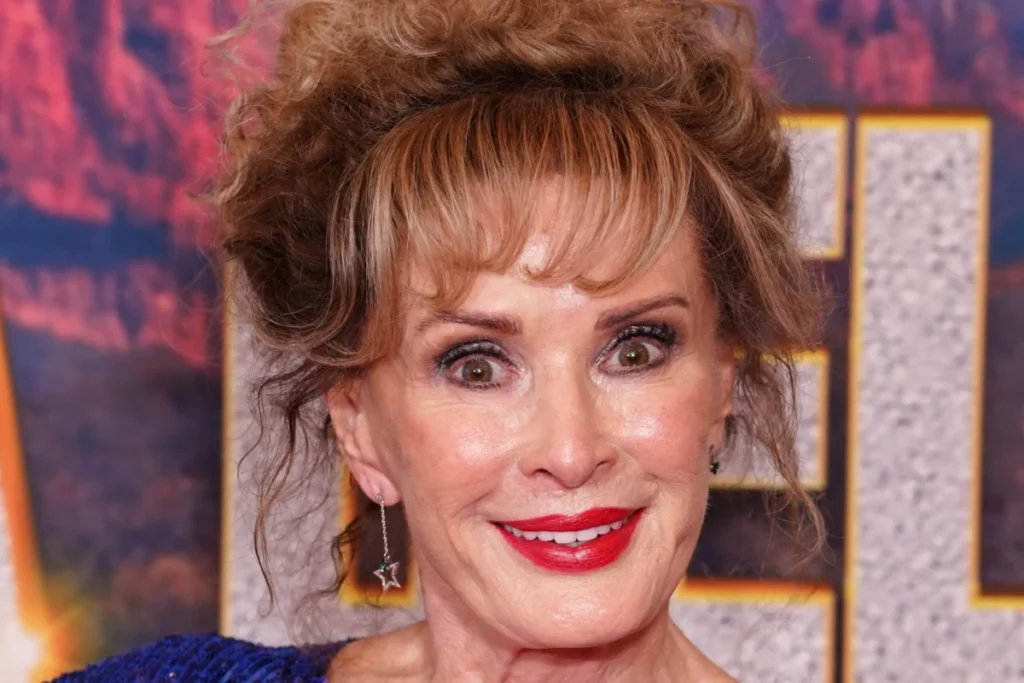

Veteran Coronation Street actress Beverley Callard has offered an unexpected and staunch defence of former boxing world champion David Haye, describing him as a "great big teddy bear" despite his highly controversial tenure on the recent "I’m A Celebrity… South Africa" series. Appearing via video call on the spin-off show "I’m A Celebrity… South Africa Unpacked," Callard acknowledged Haye’s propensity for being "controversial" but commended his candour, stating he simply "speaks his mind." Her remarks come in the wake of several headline-grabbing incidents involving Haye during the "All-Stars" edition of the popular reality survival programme, most notably a heated confrontation in the series finale and earlier contentious comments about women.
Callard, who was unable to attend the live "Unpacked" event due to being abroad, provided a contrasting perspective to the prevailing public sentiment surrounding the former WBA heavyweight champion. Her defence highlights the often-complex nature of celebrity portrayals within the edited confines of reality television, suggesting that the public’s perception may not always align with the private experiences of fellow contestants.
Unpacking the "Teddy Bear" Revelation
Beverley Callard’s insights into David Haye’s character represent a significant departure from the image cultivated by his on-screen interactions. "I am going to tell you what the real David Haye is like," Callard declared on "Unpacked," anticipating potential disagreement from viewers. "He is gonna hate me for saying this, but he is a great big teddy bear." This sentiment stands in stark contrast to the aggressive and confrontational persona that many viewers associated with Haye during the series.
Callard elaborated on her initial scepticism and how her opinion evolved over time in the demanding environment of the South African bush. "The first day I met him, I just thought, ‘Come on mate, bring it on. I’m not having this’, ‘How dare you judge me, and why do I have to feed you?’" she recounted, alluding to their early clashes. However, she quickly added, "But once you get talking to him, and you get to know him, he is actually a great, forward, very direct person. We got to know each other more and more."
Her testimony suggests a depth to Haye’s character that perhaps the intense, edited format of reality television struggled to convey fully. Callard’s willingness to defend Haye, despite his widely publicised contentious behaviour, provides a rare insider’s view that challenges the one-dimensional narratives often constructed for reality TV personalities. She further underscored her connection with Haye by revealing a personal gesture: "On the last day before we flew back, I don’t know if you’ve noticed, but David wears a pendant and his girlfriend made it for him. They made me one and gave it to me on the last day." This small detail paints a picture of camaraderie and genuine connection that would be surprising to many who followed the series.

Background: "I’m A Celebrity… South Africa" – The All-Stars Format
"I’m A Celebrity… South Africa" was a unique iteration of the hugely popular ITV reality show, diverging from its traditional format by featuring an "All-Stars" cast of memorable contestants from past series. Filmed in advance in the rugged terrain of Kruger National Park, rather than the live Australian jungle, this version eliminated the public vote for campmates, placing the power of elimination directly into the hands of the contestants themselves through various trials and challenges. This structural change inherently altered the social dynamics, potentially fostering more direct confrontations and strategic alliances without the immediate pressure of public favour.
Beverley Callard, aged 66 at the time of filming, is a beloved figure in British television, best known for her long-standing role as Liz McDonald in "Coronation Street." She first appeared on "I’m A Celebrity… Get Me Out of Here!" in 2020, endearing herself to viewers with her humour and resilience. David Haye, 43, is a former two-weight world boxing champion, holding titles at cruiserweight and heavyweight. Known for his charismatic yet often outspoken personality, he first entered the jungle in 2012, finishing third. Both celebrities brought significant public recognition and pre-existing fanbases to the South African camp, setting the stage for potentially explosive interactions given their distinct personalities and previous reality TV experiences.
A Chronology of Controversy: David Haye’s Stint in the Jungle
David Haye’s participation in "I’m A Celebrity… South Africa" was punctuated by a series of incidents that consistently placed him at the centre of debate and public scrutiny. His outspoken nature and direct approach, while praised by Callard, often led to friction with his fellow campmates and a significant backlash from viewers.
Early Clashes and the Savannah Scrub: Callard’s initial friction with Haye began early in the series. Upon entering the camp, Haye was tasked with making a decision that sent certain campmates, including Callard, to "Savannah Scrub," a more basic and arduous version of the main camp. This act of perceived authority or strategic decision-making immediately created tension. Callard humorously recalled threatening to "chin" him, a testament to her feisty personality and her immediate reaction to what she might have seen as an unfair or challenging decision. This early interaction set the tone for Haye’s often-polarising presence, showcasing his willingness to make unpopular choices.
The Adam Thomas Feud: Perhaps the most enduring and intense of Haye’s conflicts was his ongoing feud with actor Adam Thomas. Thomas, known for his affable personality, found himself repeatedly at odds with Haye. The former Emmerdale star later revealed the profound impact of these interactions, stating that Haye "broke" him and "pushed him to his limits." This sentiment resonated with many viewers who observed what they perceived as an imbalance in their dynamic, with Haye often appearing to dominate or provoke Thomas. The tension between them became a central narrative thread, illustrating the psychological toll that the confined and competitive reality TV environment can take on individuals.
"Ugly Birds" Remarks and Public Outcry: One of the most significant controversies that engulfed Haye during his time on the show stemmed from remarks he made about women, specifically in reference to his girlfriend, Sian Osborne. While discussing his relationship and women in general with his campmates, Haye asserted that he believes "most super-pretty girls are idiots" because "they don’t have to have a personality." He further elaborated on what he termed "ugly birds," implying a correlation between physical attractiveness and the necessity of developing personality traits. These comments sparked an immediate and widespread uproar among viewers and media commentators alike. Social media platforms were flooded with condemnations, with many labelling his remarks as misogynistic, outdated, and deeply offensive. The incident became a significant talking point, overshadowing much of the other camp activities and solidifying an image of Haye as insensitive and out of touch.

The Contentious Finale: A Confrontation Unravels: The climax of Haye’s controversial stint arrived during the series finale. In a highly charged exchange, Haye, alongside former footballer Jimmy Bullard, initiated a group discussion that quickly spiralled into chaos. They directly challenged their fellow contestants, asking them to agree with the assertion that Adam Thomas had been "abusive, intimidating and aggressive" during a previous argument he had with Bullard on the show. This confrontational tactic, seemingly an attempt to force a consensus and perhaps vindicate Bullard, backfired spectacularly.
The interaction escalated rapidly, with pop star Sinitta and reality TV personality Gemma Collins, both attempting to defend Adam Thomas, becoming visibly distressed by the line of questioning. Their protest culminated in a dramatic walk-off from the set, an unprecedented moment that underscored the deep divisions and raw emotions Haye’s actions had ignited. The incident highlighted the intensity of the relationships forged (and broken) in the camp and the difficulty of resolving deeply personal conflicts under public scrutiny. The walk-off was widely reported and discussed, cementing Haye’s reputation for causing significant friction and dramatic confrontations within the show’s narrative.
Supporting Data and Public Perception
Reality television thrives on compelling personalities and conflict, and "I’m A Celebrity… Get Me Out of Here!" has consistently been one of ITV’s flagship programmes, regularly drawing millions of viewers. The "All-Stars" format was particularly anticipated, promising a potent mix of established characters. While specific audience figures for "I’m A Celebrity… South Africa" were strong, it’s the qualitative public reaction that often defines a celebrity’s tenure.
Online sentiment during Haye’s controversial moments was predominantly negative. Social media platforms, particularly X (formerly Twitter), became a barometer for viewer outrage following his comments on women and the dramatic finale confrontation. Hashtags related to the show often featured strong criticism of Haye’s behaviour, leading to widespread calls for apologies or further accountability. This stark public reaction makes Callard’s "teddy bear" assessment all the more striking, suggesting a significant disconnect between the edited portrayal, the audience’s interpretation, and the lived experience within the camp. The "Unpacked" show, designed for post-show reflection, often serves as a crucial platform for contestants to offer nuance or counter-narratives to the main series’ storyline, and Callard’s intervention is a prime example of this function.
Broader Implications: Celebrity Personas and Reality Television
Beverley Callard’s surprising defence of David Haye opens a broader discussion about the construction of celebrity personas within reality television and the often-vast chasm between public perception and personal experience. Her comments highlight several key implications:
The Nuance of Reality TV Editing: Callard’s perspective strongly suggests that the intense editing process inherent in reality television can significantly shape, and sometimes distort, a contestant’s public image. While Haye’s controversial statements and actions were undeniably captured on camera, Callard implies that these moments might have been presented without the full context of his broader character or the evolving relationships within the camp. A "great big teddy bear" and a "forward, very direct person" are not mutually exclusive, but the former is rarely foregrounded when conflict drives viewership.

Public vs. Private Selves: For celebrities, participating in a show like "I’m A Celebrity…" is a high-stakes gamble. It exposes their private selves to public scrutiny in an unprecedented way. Callard’s account hints at the pressures and vulnerabilities that can lead to missteps or misunderstandings, and how difficult it is for contestants to manage their authentic selves against the narrative demands of a television production. Her loyalty to Haye, even in the face of widespread criticism, speaks to a bond formed under extreme conditions that transcends public opinion.
The Role of Controversy in Entertainment: Shows like "I’m A Celebrity…" undeniably benefit from controversial figures. They generate headlines, drive social media engagement, and spark water-cooler conversations, all of which contribute to ratings and cultural relevance. Haye’s presence ensured continuous discussion, fulfilling the entertainment mandate, regardless of the nature of the controversy. This raises ethical questions about the balance between entertainment value and the potential for misrepresentation or harm to a celebrity’s reputation.
Impact on Haye’s Image: The fallout from "I’m A Celebrity… South Africa" will undoubtedly have an impact on David Haye’s public image. While Callard’s comments offer a counter-narrative, it remains to be seen whether this more nuanced perspective can significantly alter the widespread negative sentiment generated by his on-screen behaviour. For a public figure, managing the aftermath of such an appearance is crucial for their brand and future opportunities.
Callard’s Counter-Narrative: Beverley Callard’s decision to publicly defend Haye, knowing it might contradict popular opinion, underscores her own integrity and loyalty. It also adds a layer of complexity to the overall narrative of the season, reminding audiences that behind the drama are real people with multifaceted personalities. Her willingness to offer a different lens through which to view Haye’s character challenges viewers to consider the limitations of their own perceptions, formed largely by curated media.
In conclusion, Beverley Callard’s surprising characterisation of David Haye as a "great big teddy bear" offers a compelling alternative perspective to the highly controversial image he cultivated during "I’m A Celebrity… South Africa." Her insider account, delivered with conviction, invites reflection on the inherent complexities of reality television, where edited narratives, intense pressures, and individual personalities collide to create public personas that may or may not fully reflect the individual. While Haye’s contentious remarks and actions remain undeniable parts of the show’s history, Callard’s defence adds an important dimension to the ongoing public discourse surrounding his time in the jungle, highlighting the enduring debate about authenticity, perception, and the nature of celebrity in the modern media landscape.