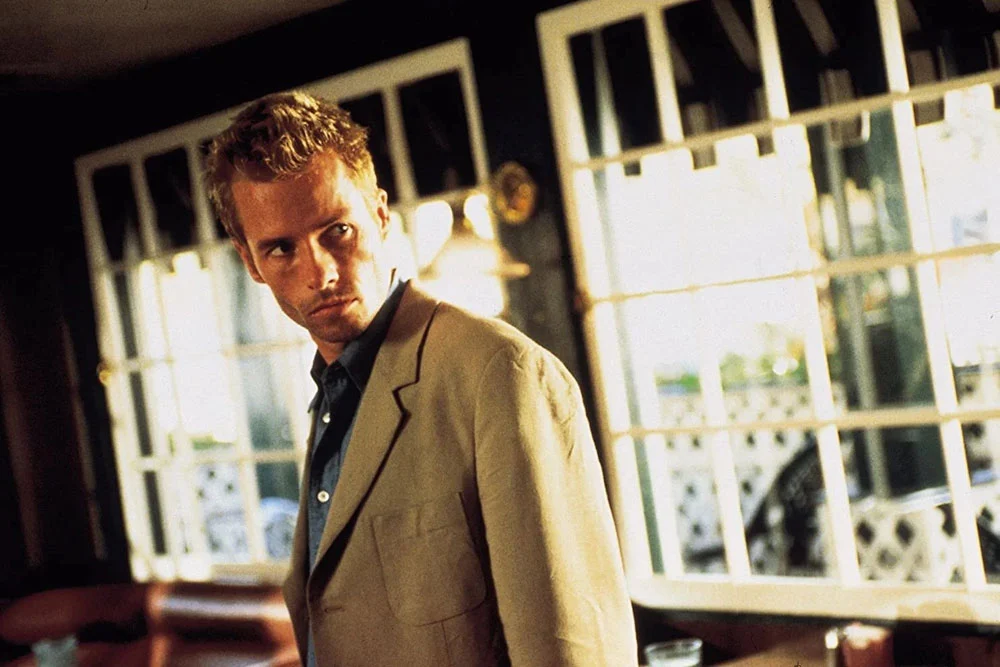

Released at the dawn of the 21st century, Christopher Nolan’s Memento stands as a definitive milestone in independent cinema and a foundational text for the neo-noir genre. The film, which follows a man suffering from anterograde amnesia as he attempts to track down his wife’s killer, challenged contemporary audiences with its radical non-linear structure and psychological depth. Decades after its debut, Memento remains a subject of intense academic and critical scrutiny, serving as the professional springboard for Nolan, who would eventually become one of the most influential directors of the modern era.
The Production Landscape and Casting of a Psychological Thriller
In the late 1990s, the Hollywood landscape was increasingly receptive to "puzzle-box" narratives, following the success of films like The Usual Suspects (1995) and The Sixth Sense (1999). It was within this environment that Christopher Nolan, along with his brother Jonathan Nolan (who wrote the short story "Mementos Mori" upon which the film is based), sought to produce a feature that would visually represent the fractured mental state of its protagonist.
The casting of Memento captured three actors at pivotal moments in their respective careers. Guy Pearce had recently transitioned from Australian television to international acclaim following his performance in L.A. Confidential (1997). His portrayal of Leonard Shelby required a disciplined, almost monotone delivery to reflect a character who exists in a permanent present, devoid of the emotional context provided by long-term memory.
Joining Pearce were Carrie-Anne Moss and Joe Pantoliano, both of whom were experiencing a surge in popularity following the 1999 release of The Matrix. Historical accounts of the production indicate that Pantoliano was cast largely at the suggestion of Moss. While established stars like Brad Pitt were initially considered for the lead role, the final trio of Pearce, Moss, and Pantoliano provided the film with a gritty, character-driven authenticity that benefited its $9 million budget. The film eventually grossed nearly $40 million worldwide, a significant achievement for an independent production of its complexity.
Structural Innovation: The Mechanics of Memory
The defining characteristic of Memento is its dual-narrative structure, a technical feat that earned the film Academy Award nominations for Best Film Editing and Best Original Screenplay. The film utilizes two distinct sequences to mirror Leonard’s condition for the audience:
- The Color Sequences: These scenes move in reverse chronological order. Each scene ends where the previous one (in viewing order) began. This forces the viewer to experience the same disorientation as Leonard, entering a situation with no knowledge of how they arrived there or what the immediate stakes are.
- The Black-and-White Sequences: These scenes move in forward chronological order. They primarily feature Leonard in a motel room, speaking on the phone and recounting the story of Sammy Jankis, a man who supposedly suffered from the same condition.
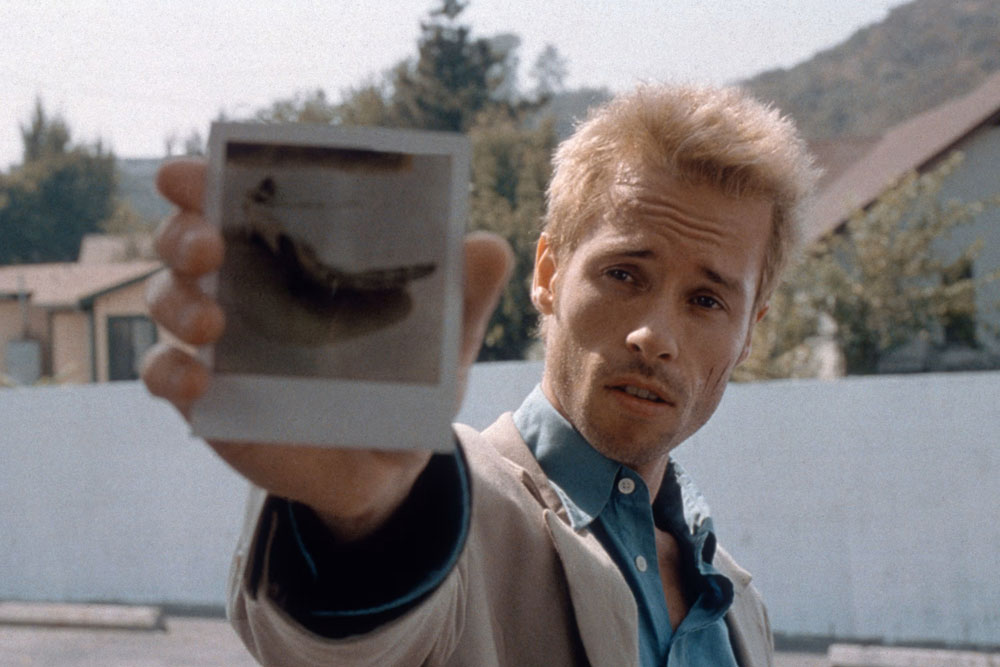
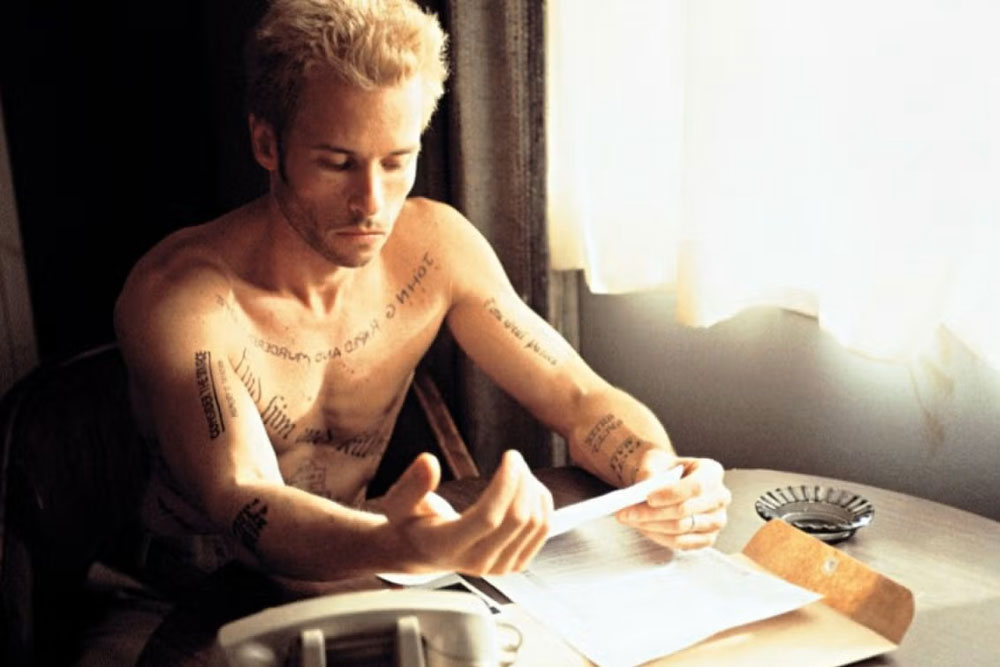
The two timelines eventually converge at the film’s climax, which serves as the chronological midpoint of the story. This structure is not merely a gimmick; it is a narrative tool designed to strip the audience of their "narrative memory," forcing them to rely on the same unreliable cues—Polaroids, tattoos, and notes—that Leonard uses to navigate his life.
Thematic Analysis: The Unreliable Narrator and the Femme Fatale
At its core, Memento is an exploration of the subjectivity of truth. Leonard Shelby famously asserts in the film that "memory can change the shape of a room; it can change the color of a car. And memories can be distorted. They’re just an interpretation, they’re not a record." This philosophical stance is the engine of the plot. Leonard believes that his system of objective notes and tattoos makes him more reliable than those with functioning memories, yet the film systematically deconstructs this belief.
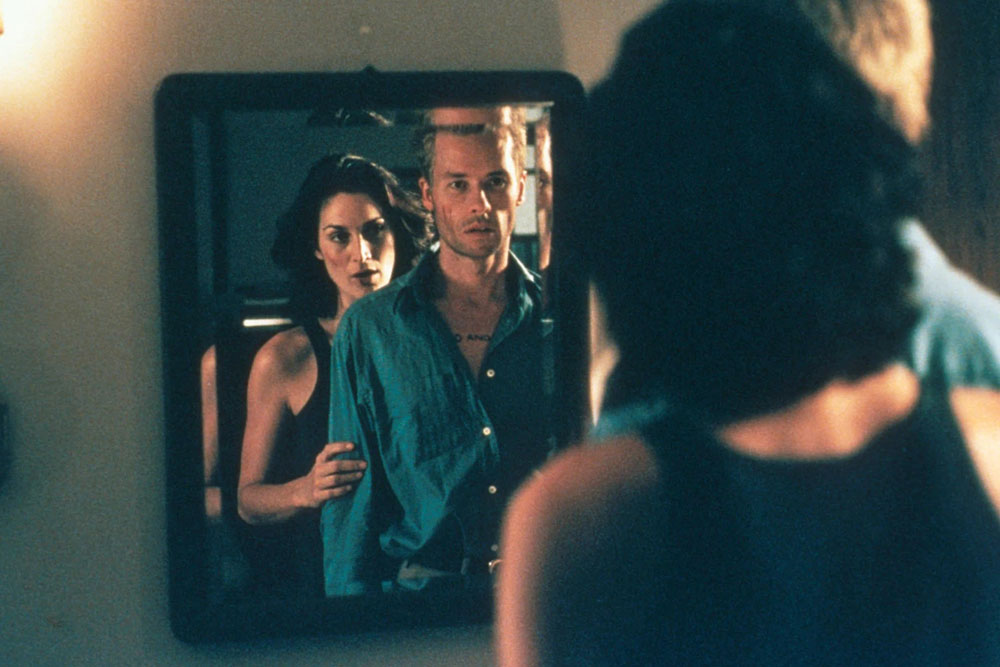
The character of Natalie, played by Carrie-Anne Moss, serves as a modern subversion of the femme fatale archetype found in classic 1940s film noir. In one of the film’s most pivotal scenes, Natalie openly goads and insults Leonard, knowing he will forget her words within minutes. She then uses his condition to manipulate him into committing acts of violence on her behalf. This sequence serves as a turning point for the audience, shifting the perspective from Leonard as a sympathetic victim to Leonard as a dangerous, easily weaponized tool.
Furthermore, the film raises haunting questions about Leonard’s own agency. By the conclusion, it is suggested that Leonard may be intentionally trapped in a cycle of vengeance to give his life purpose, choosing to forget certain truths so he can continue his "quest." This ambiguity has fueled decades of fan theories regarding Leonard’s true history and whether the character of Sammy Jankis is a real person or a psychological projection of Leonard’s own trauma.
Visual Language and the Symbolism of the Body
Christopher Nolan and cinematographer Wally Pfister utilized a stark, high-contrast visual style to define the world of Memento. The film is notably focused on the physical body of the protagonist. Leonard’s tattoos are not merely plot devices; they are a physical manifestation of his obsession. Guy Pearce’s physicality—described as gaunt and shredded—suggests a man who has neglected all aspects of his humanity in favor of a singular, destructive goal.
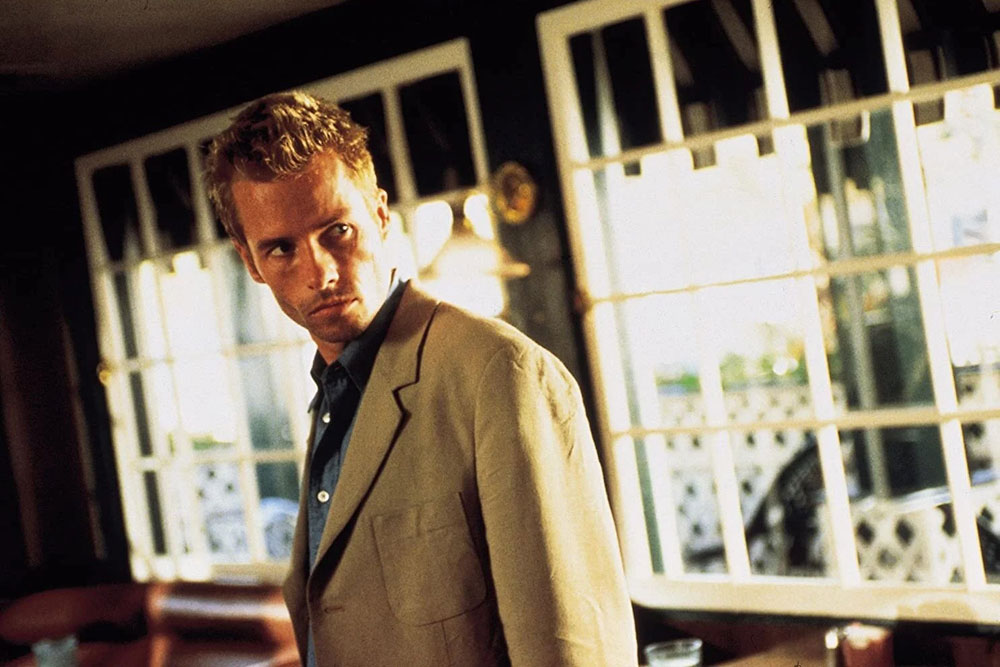
The costume design, led by Cindy Evans, further reinforces this sense of a borrowed identity. Leonard spends the majority of the film wearing a high-end tan suit and driving a Jaguar, both of which belong to Jimmy Grantz, a man Leonard killed prior to the film’s opening scenes. The suit is slightly oversized on Pearce, emphasizing his diminishing physical presence and the fact that he is inhabiting a life that is not his own. The recurring use of blue in the production design—found in the motel rooms, the Jaguar, and Natalie’s clothing—creates a cold, clinical atmosphere that contrasts with the scorched, sun-bleached landscapes of the San Fernando Valley.
Chronology of the Memento Release and Legacy
The trajectory of Memento from a small independent project to a cultural touchstone followed a specific timeline:
- September 2000: The film premiered at the 57th Venice International Film Festival, receiving immediate critical acclaim for its innovative structure.
- March 2001: After struggling to find a distributor who believed audiences could follow the plot, the film was released in the United States by Newmarket Films.
- 2002: The film received two Academy Award nominations (Screenplay and Editing) and won numerous Independent Spirit Awards, including Best Feature and Best Director.
- 2017: The Library of Congress selected Memento for preservation in the United States National Film Registry, citing it as "culturally, historically, or aesthetically significant."
Fact-Based Analysis of Implications
The success of Memento had profound implications for the film industry. It proved that "difficult" or non-linear narratives could achieve commercial success if grounded in strong genre tropes. For Christopher Nolan, the film established the "puzzle-box" style that would define his later blockbusters, such as Inception (2010), Interstellar (2014), and Tenet (2020). Each of these films explores the elasticity of time and the fallibility of human perception, themes that were first fully realized in Memento.
Moreover, the film contributed to a broader cinematic trend of the early 2000s that prioritized the "active viewer." Audiences were encouraged to watch the film multiple times to catch hidden details, such as the blink-and-you-miss-it frame of Leonard sitting in a mental institution, which flashes for a fraction of a second during a transition. This level of detail-oriented filmmaking paved the way for the "Easter egg" culture that dominates modern franchise cinema.
In conclusion, Memento remains a masterclass in narrative economy and psychological tension. By aligning the viewer’s perspective so closely with a protagonist who cannot form new memories, Nolan created an experience that is both intellectually taxing and emotionally resonant. The film’s enduring relevance lies in its refusal to provide easy answers, instead leaving the audience to grapple with the same question that haunts Leonard Shelby: "Do I lie to myself to be happy? In your case, Leonard… yes, I will."