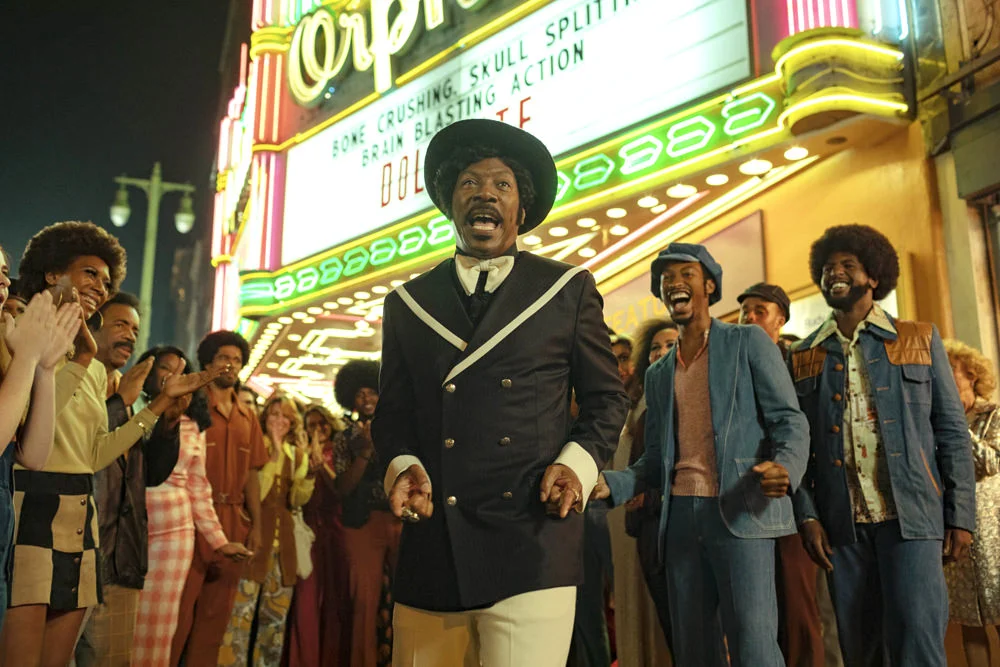

The Genesis and Development of a Passion Project
The journey to bring Rudy Ray Moore’s story to the screen spanned more than a decade. Eddie Murphy had long expressed a deep-seated admiration for Moore, whom he met in 2003 to discuss a potential biopic. Moore, known as the "Godfather of Rap" for his rhythmic delivery of raunchy, rhyming toasts, had built an underground empire through self-produced comedy albums and the 1975 cult classic film Dolemite.
The screenplay was penned by Alexander and Karaszewski, who had previously found success with biopics of unconventional figures such as Ed Wood and Larry Flynt. Their approach to Dolemite Is My Name mirrors the empathetic lens used in their 1994 film Ed Wood, focusing not on the technical shortcomings of the subject’s work, but on the infectious passion and DIY spirit that fueled it. Production finally commenced in June 2018, with Netflix securing the distribution rights, signaling a shift in the platform’s strategy toward prestige, star-driven biographical content.
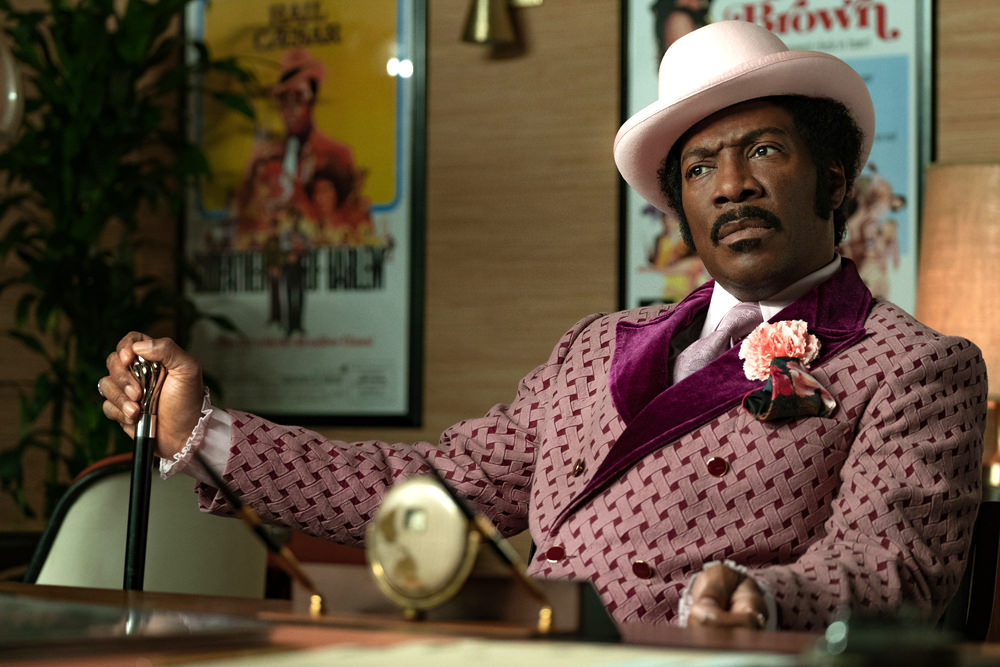
Plot Overview and Historical Context
The film’s narrative begins in 1970s Los Angeles, where Rudy Ray Moore (Murphy) is working as an assistant manager at a record store while struggling to find success as a singer and comedian. The turning point occurs when Moore encounters a local unhoused man whose rhythmic, rhyming stories about a mythic figure named Dolemite captivate him. Moore begins recording these "toasts"—a form of African-American oral tradition—and incorporates them into a new stage persona.
The film meticulously tracks Moore’s rise through the "Chitlin’ Circuit," his successful self-distribution of comedy records that were deemed too obscene for mainstream retail, and his eventual pivot to filmmaking. Lacking studio backing, Moore financed Dolemite using his own earnings and a makeshift crew composed of friends and acting students. The film captures the specific cultural zeitgeist of the Blaxploitation era, a period when independent Black filmmakers sought to reclaim the screen from Hollywood’s exclusionary practices, even if it meant working with shoestring budgets and repurposed locations.
Technical Excellence: Costume Design and Art Direction
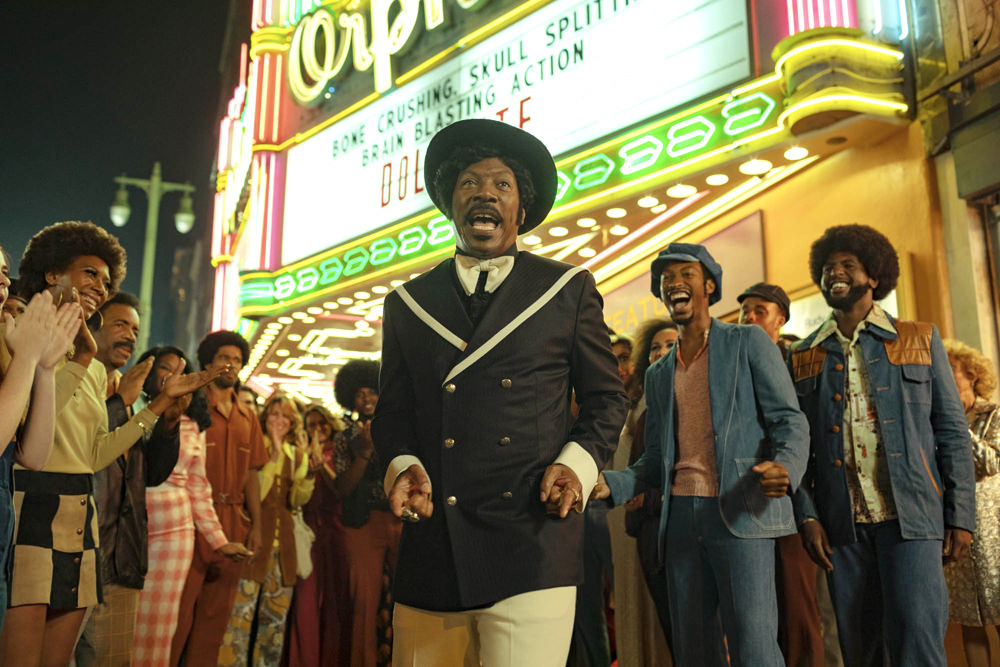
A central element of the film’s critical acclaim is its visual authenticity, spearheaded by Academy Award-winning costume designer Ruth E. Carter. Carter, whose credits include Black Panther and Malcolm X, utilized her expertise to elevate the characters while maintaining historical accuracy. Rather than treating 1970s fashion as a caricature, Carter approached the wardrobe with a sense of dignity and reverence.
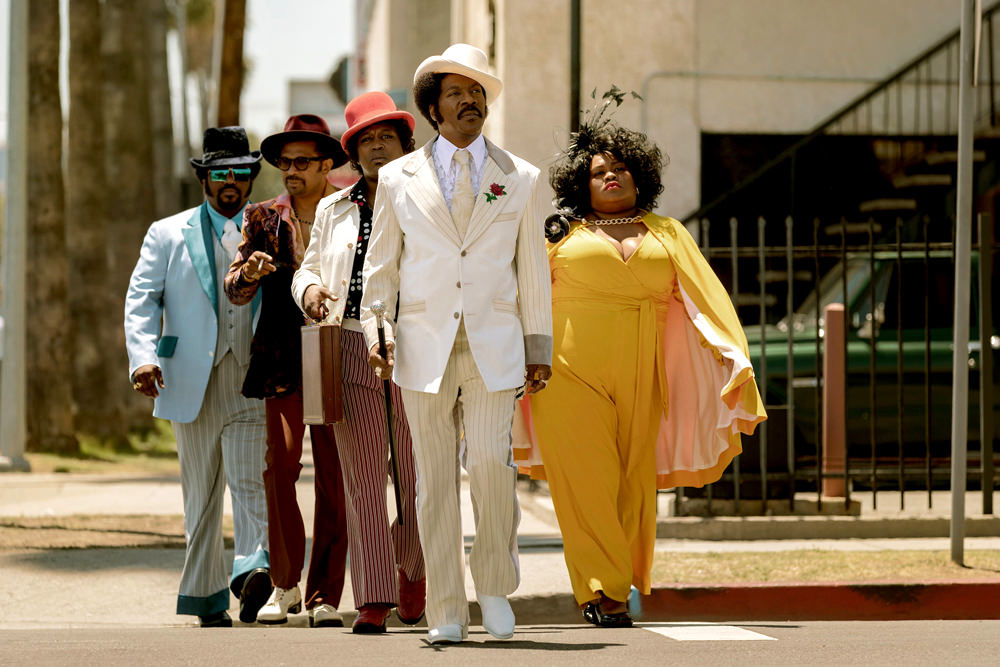
Carter reportedly sourced vintage polyester fabrics to recreate the flamboyant suits worn by Moore and his entourage. Her work underscores the film’s theme of self-creation; for Moore, his wardrobe was a suit of armor that transformed a struggling musician into the larger-than-life Dolemite. The production design further supports this, recreating the gritty yet vibrant atmosphere of 1970s Los Angeles, from the iconic Dunbar Hotel to the makeshift soundstages in abandoned apartment buildings.
Performance Analysis and Supporting Cast
Eddie Murphy’s portrayal of Rudy Ray Moore was widely cited by critics as one of the finest performances of his career. Moving beyond his well-known comedic persona, Murphy imbued Moore with a sense of vulnerability and "just-under-the-surface" desperation. This performance earned him a Golden Globe nomination for Best Actor in a Motion Picture – Musical or Comedy.
The supporting cast provided essential depth to the production:
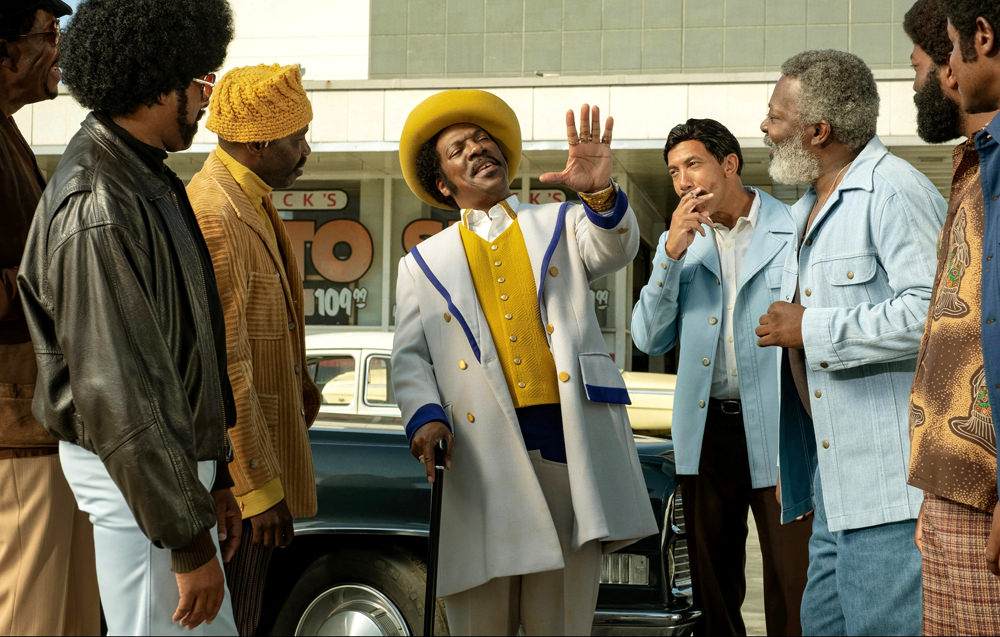
- Wesley Snipes: Portraying D’Urville Martin, a classically trained actor who reluctantly directs Moore’s first film, Snipes offered a performance characterized by stylized mannerisms and comedic timing that contrasted sharply with Murphy’s earnestness.
- Da’Vine Joy Randolph: As Lady Reed, Randolph provided the film’s emotional core. Her character highlights Moore’s role as a mentor and the importance of representation, as she portrays a woman who finds her voice and confidence through Moore’s troupe.
- Keegan-Michael Key: Playing Jerry Jones, the socially conscious playwright tasked with writing the Dolemite script, Key represented the tension between "prestige" Black art and the populist entertainment Moore championed.
- Supporting Roles: The film featured appearances by Mike Epps, Craig Robinson, Titus Burgess, Chris Rock, and Snoop Dogg, creating an ensemble that felt like a genuine community of performers.
Critical Reception and Statistical Impact
Dolemite Is My Name received near-universal acclaim upon its release. On the review aggregator site Rotten Tomatoes, the film holds an approval rating of 97% based on over 230 reviews, with a critical consensus praising Murphy’s "undeniable charm." On Metacritic, the film achieved a weighted average score of 80 out of 100, indicating "generally favorable reviews."
Despite its critical success, the film’s performance at the 92nd Academy Awards became a point of contention among industry analysts. While it received numerous nominations from the Critics’ Choice Movie Awards and the Golden Globes, it was notably absent from the Oscar nominations, leading to discussions regarding the Academy’s historical tendency to overlook comedic performances and films centered on Black popular culture.
Historical Accuracy and Omissions
While the film is largely faithful to the timeline of Moore’s career, it adopts a celebratory tone that some historians suggest may overlook the more complex aspects of his personal life. In the years following the film’s release, researchers and biographers have discussed Moore’s rumored status as a closeted queer man. The film chooses to focus almost exclusively on his professional drive and his platonic bond with Lady Reed, omitting his private life.
From a journalistic perspective, this choice aligns the film with the tradition of the "myth-making" biopic, which prioritizes the subject’s cultural impact and the spirit of their achievement over a comprehensive psychological or sexual history. The film’s focus remains on Moore as a "community storyteller," framing his success not just in financial terms, but in his ability to codify African-American oral traditions for a mass audience.
Broader Impact on the Film Industry and Representation
The success of Dolemite Is My Name had several lasting implications for the film industry:
- The "Comeback" Narrative: The film proved that veteran stars like Eddie Murphy and Wesley Snipes remained significant draws for streaming audiences, leading to subsequent collaborations such as Coming 2 America.
- Validation of the DIY Ethos: By highlighting the struggles of independent filmmaking, the movie resonated with modern content creators who utilize social media and self-distribution to bypass traditional gatekeepers, much as Moore used his trunk-sold records.
- Preservation of Black Cultural History: The film introduced a younger generation to the origins of rap and the Blaxploitation genre, ensuring that the contributions of figures like Moore and Lady Reed are not lost to history.
- Costume Design as Narrative: Ruth E. Carter’s work on the film solidified her status as a premiere historian of Black fashion, demonstrating how clothing can communicate class, ambition, and identity.
Conclusion
Dolemite Is My Name (2019) is more than a standard biographical comedy; it is a meticulously researched tribute to the power of self-belief and the importance of serving one’s own community. Through its high production values, award-caliber performances, and a screenplay that balances humor with genuine pathos, the film contextualizes Rudy Ray Moore not merely as a purveyor of "low-brow" humor, but as a visionary who saw value where the mainstream did not. Its legacy continues to influence how the stories of Black pioneers are told in Hollywood, emphasizing that the path to success often requires one to create their own opportunities when none are provided.