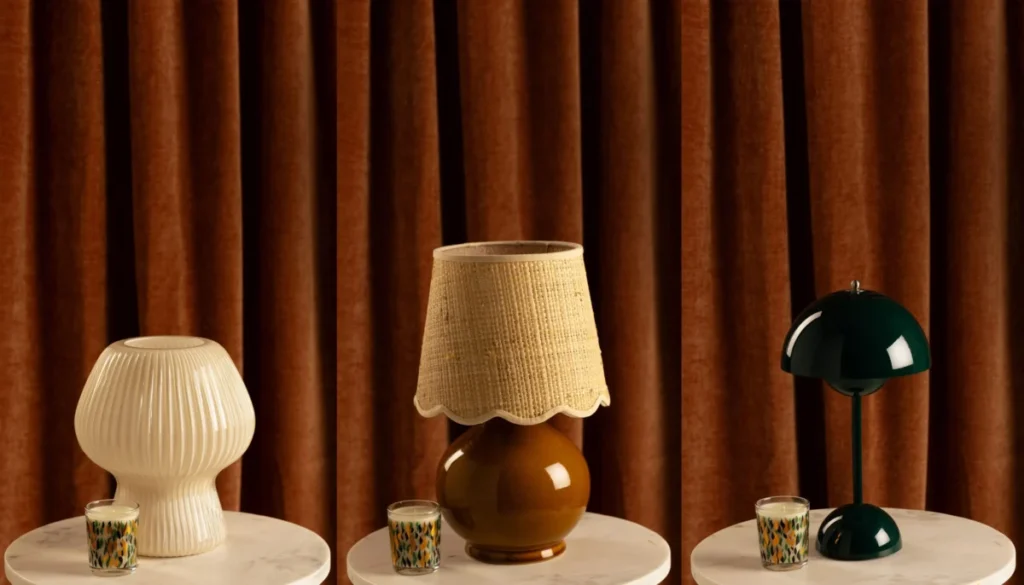

The modern residential interior is undergoing a significant shift in its approach to illumination, moving away from harsh, centralized overhead fixtures toward a more nuanced, layered lighting scheme. This evolution, often popularized on social media platforms like TikTok and Instagram under the "anti-Big Light" movement, emphasizes the psychological and aesthetic benefits of ambient lighting. Interior designers and industry experts increasingly advocate for the table lamp—and specifically the bedside lamp—as a critical tool for transforming the atmosphere of a home. Beyond their functional utility for nighttime readers, these fixtures serve as sculptural elements that define the character of a room. Architectural Digest editors recently conducted a comprehensive assessment of the market’s leading options, evaluating them based on design integrity, build quality, and ease of assembly.
The Cultural Shift Toward Ambient Illumination
The rise of ambient lighting as a primary home decor priority is supported by both consumer trends and psychological research. According to market data, the global decorative lighting market is projected to reach approximately $45 billion by 2030, driven by an increased consumer focus on home aesthetics and the integration of energy-efficient LED technology. The shift away from "Big Light"—a colloquial term for bright, cold overhead fluorescent or LED panels—is rooted in the desire for a "sanctuary" environment. Warm-toned accent lighting, typically ranging from 2,700K to 3,000K on the Kelvin scale, has been shown to support the body’s natural circadian rhythms by promoting melatonin production, making bedside lamps essential for sleep hygiene.
The demand for these fixtures is also a reaction to the "corporate" feel of modern construction. While built-in fixtures offer high visibility, they often lack the warmth and texture required to make a living space feel inhabited. As a result, table lamps have moved from being secondary accessories to primary focal points in entryways, kitchens, and living rooms.

A Chronology of Lighting Design Legacies
To understand the current market, one must look at the historical movements that continue to influence contemporary silhouettes. Many of the lamps featured in recent high-design edits are modern reinterpretations of 20th-century classics.
- Italian Modernism: This movement, peaking in the mid-20th century, focused on geometric simplicity and high-quality materials like glass and polished metal. The mushroom-shaped silhouettes seen in current bestsellers, such as the Rejuvenation Roland, trace their lineage back to Italian masters like Vico Magistretti.
- The Space Age (1960s-1970s): Characterized by the use of plastics, bold colors, and futuristic forms, this era produced icons like Verner Panton’s Panthella lamp (1971). The recent release of portable, rechargeable versions of these silhouettes demonstrates the enduring appeal of "retro-futurism."
- Postmodernism and Brutalism: Designers like Jeremiah Brent are currently reviving the heavy, hand-cast textures and transparent glass forms of the 1940s and the Brutalist movement, prioritizing "honest" materials and visible internal components.
Evaluations of Top-Tier Lighting Solutions
Through a curated selection process, editors tested several fixtures that represent the pinnacle of current design trends, ranging from petite task lights to bold designer statements.
Precision Engineering: The Flos Bilboquet
Designed by Philippe Malouin, the Flos Bilboquet represents a marriage of technical innovation and sustainable manufacturing. The fixture features a magnetized head that allows for nearly 360 degrees of rotation, making it a versatile tool for workspace illumination. Notably, the body is crafted from a byproduct of paper production and assembled without adhesives, ensuring that the components are fully recyclable at the end of their lifecycle. Testers noted that its "sexy glow" provides a necessary reprieve from standard office lighting.
Texture and Tone: The Serena & Lily Como
For those adhering to the "coastal" or "organic modern" aesthetic, the Serena & Lily Como Petite Table Lamp offers a study in material contrast. The fixture pairs a sleek ceramic base with a raffia wave shade. Visual experts highlight that the built-in dimmer switch allows for a customizable ambiance, though the substantial turn required for the switch may make it less ideal for high-traffic task areas. It is best utilized in nooks or on kitchen counters where a "pop of style" is required.
The Icon Reimagined: Louis Poulsen Panthella Portable
Verner Panton’s Panthella remains a cornerstone of 1970s space-age design. The 2024 portable mini version allows this classic silhouette to be utilized in contemporary configurations without the constraints of power cords. The built-in LED provides a warm white light, controlled by a chrome topper that doubles as a touch-sensitive dimmer. This fixture is frequently cited in high-end home tours as a "quintessential" design element.
Sustainable Innovation: Gantri Analog Task Light
Gantri has carved a niche in the industry by utilizing 3D printing and sustainable materials. The Analog Task Light, designed by Chris Granneberg, is constructed from GPP—Gantri’s proprietary sugarcane polymer blend. The lamp is highly functional, featuring a head that rotates 230 degrees and a long cord for flexible placement. However, editors noted that the excess cable may require additional management tools for those seeking a minimalist aesthetic.
Architecture in Glass: The Braque Cube by Jeremiah Brent
Honored in the 2025 "Best in Show" edit, the Braque Cube draws inspiration from 1940s architectural forms. Hand-cast in glass with pewter accents, the fixture is a heavy, solid piece that leans into the Brutalist aesthetic. Its transparency makes the choice of lightbulb a critical design decision; testers suggest using an Edison bulb or a large globe to turn the internal wiring into a visual statement.
Technical Data and Safety: The Risks of Overlamping
A critical finding in the evaluation of home lighting is the frequent misunderstanding of bulb wattage. While consumers may be tempted to install higher-wattage bulbs to increase brightness, this leads to a dangerous phenomenon known as "overlamping."
.jpeg)
Wattage is a measure of power consumption, and every light fixture is designed with a specific thermal limit. Using a bulb that exceeds the recommended wattage can cause the fixture to run excessively hot, potentially melting the socket and wiring. In extreme cases, this is a leading cause of residential electrical fires. Furthermore, overlamping is energy-inefficient and reduces the lifespan of the bulb. Experts recommend adhering strictly to manufacturer specifications or switching to LED bulbs, which provide higher lumen output (brightness) while consuming significantly lower wattage and producing less heat.
The Market for "Designer" Comfort
The influence of high-profile interior designers on the retail market cannot be overstated. Shea McGee of McGee & Co. has successfully bridged the gap between luxury interiors and accessible retail. Her Vedruna Table Lamp, described by some as a "design-forward avocado" due to its sculptural green base, exemplifies the trend toward eclectic, character-driven lighting. These pieces are often favored for their ability to blend into diverse design schemes, from reserved coastal interiors to postmodern apartments.
Similarly, the "affordable luxury" segment is dominated by brands like West Elm and IKEA. The West Elm Ribbed Glass Table Lamp, inspired by Japanese lanterns, provides a soothing, diffused light that editors found ideal for winding down at the end of the day. Meanwhile, IKEA’s FADO lamp has become a viral sensation on social media, praised for its versatility and its ability to be transformed through the use of smart, color-changing bulbs.
Methodology: How Fixtures are Vetted
The vetting process for these recommendations involved a 10-day testing window during which editors assessed several key metrics:

- Logistics and Assembly: Evaluation of delivery timelines and the clarity of instruction manuals.
- Material Integrity: Inspection of ceramic, glass, and polymer components for durability and finish quality.
- Proportionality: To solve the common consumer issue of "scale shock," each lamp was photographed alongside a 2.4-ounce candle to provide a standardized reference point for size.
- Maintenance: Assessing how easily a fixture can be cleaned and whether the design attracts excessive dust or fingerprints.
Broader Implications for Interior Design
The enrichment of the home lighting market reflects a broader societal trend toward "intentional living." As remote and hybrid work models persist, the home has become a multi-functional space that requires adaptable lighting solutions. The transition from task-oriented "Big Light" to layered, ambient "Small Light" represents a move toward prioritizing mental well-being and personal expression within the domestic sphere.
In conclusion, the best bedside and table lamps are more than mere utilities; they are the "jewelry" of a room. Whether through the sustainable polymers of Gantri, the historical echoes of Louis Poulsen, or the organic textures of Serena & Lily, these fixtures provide the essential warmth that turns a house into a home. As technology continues to advance—particularly in the realm of portable, rechargeable LEDs—the boundaries between indoor and outdoor, and between functional and decorative lighting, will continue to blur, offering homeowners unprecedented flexibility in how they light their lives.