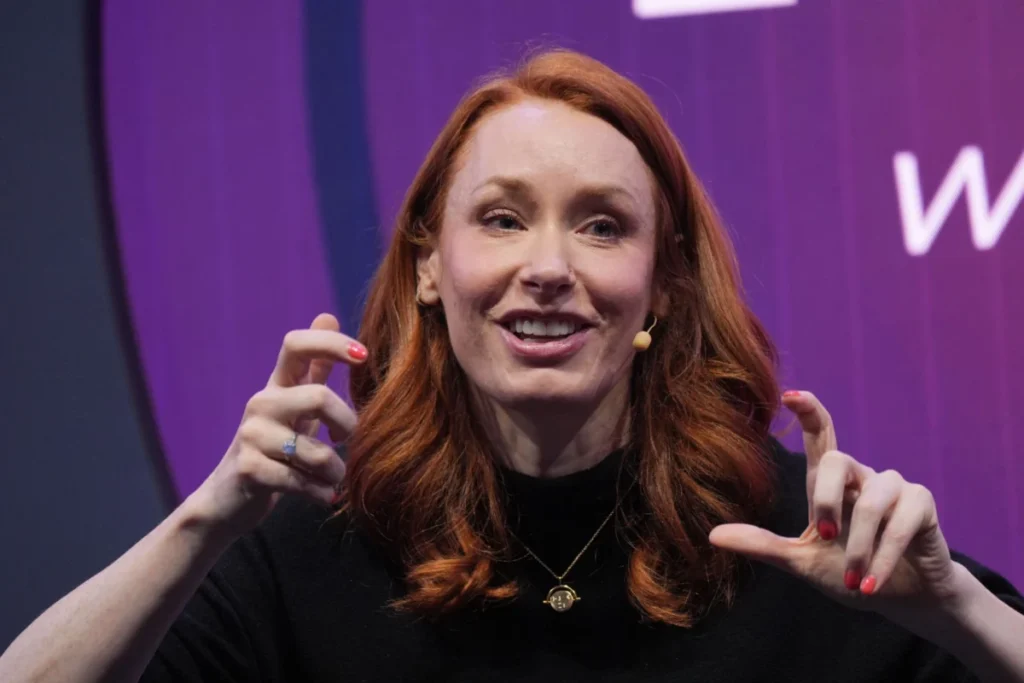

The high-stakes psychological game of The Traitors has long been defined by intuition, deception, and the volatile social dynamics of its participants. However, as the latest season approaches, a new paradigm of gameplay is emerging, characterized by a rigorous, data-driven methodology. One contestant has publicly declared an intent to leverage statistical analysis and historical pattern recognition to identify traitors, effectively applying the principles of cryptanalysis to reality television. This approach marks a significant departure from the traditional "gut-feeling" strategies that have historically dominated the series, raising questions about whether quantitative analysis can truly unmask hidden adversaries in an environment defined by human unpredictability.
The Methodology: Quantitative Analysis in a Social Game
The contestant in question has opted for a systematic approach, viewing the game not merely as a test of social charisma, but as a complex dataset. By meticulously reviewing footage and voting records from previous seasons, she has begun to identify behavioral anomalies that may indicate deceptive intent. Central to her strategy is the study of "burn votes"—a phenomenon where traitors cast early-round ballots for low-profile candidates to deflect suspicion or simulate engagement with the game’s mechanics.
According to her assessment, the difficulty in utilizing such patterns lies in the inherent chaos of the "Faithful" contingent. In her own words, the erratic nature of the majority group often generates enough "noise" to obscure the "signal" of a traitor’s calculated movements. To combat this, she has reportedly adapted mathematical frameworks historically associated with the Bletchley Park codebreakers. By applying these statistical models to the frequency and timing of votes, she aims to isolate variables that differentiate the behavior of those with secret agendas from those operating under the duress of the game’s high-pressure environment.
The Evolution of The Traitors
Since its inception, The Traitors has functioned as a masterclass in social engineering. Based on the Dutch series De Verraders, the format places a group of "Faithfuls" in a secluded setting, tasked with identifying and banishing a small cadre of "Traitors" before the game concludes. The Traitors are granted the power to "murder" one Faithful per night, creating a constant state of paranoia.
Historically, the show has favored players who possess high levels of emotional intelligence and the ability to manipulate interpersonal narratives. In the inaugural seasons, success was often attributed to those who could maintain a convincing facade or those who were adept at reading subtle micro-expressions. The shift toward a data-centric strategy represents a transition from qualitative social observation to quantitative behavioral analysis. This evolution mirrors trends in modern professional sports and political polling, where aggregate data is increasingly used to predict human behavior in competitive scenarios.
Statistical Challenges and the "Noise" Problem
For any analytical model to succeed in the context of The Traitors, it must account for a high degree of variability. Data scientists often define this as the "signal-to-noise ratio." In a game where participants are explicitly incentivized to lie, the "noise"—intentional misinformation, irrational behavior, and social bias—is significant.
The contestant’s reliance on spreadsheets and pattern recognition is a calculated gamble. While historical data can identify that a specific voting pattern was used by a past contestant, it does not guarantee that current contestants will adhere to those same precedents. If a traitor is aware that their behavior is being scrutinized through a statistical lens, they may actively alter their patterns, thereby creating a "poisoned dataset." This creates a secondary layer of strategy: the contestant must determine whether her data-backed assumptions are being used by others to lead her into a trap.

Chronology of Competitive Strategy
The development of advanced gameplay in reality television can be categorized into three distinct eras:
- The Intuition Era (Early 2000s): Gameplay was defined by interpersonal rapport and direct confrontation. Social hierarchy was the primary driver of elimination.
- The Strategic Era (2010s): Participants began treating social games as a series of distinct phases, utilizing alliances and voting blocks to control the outcome.
- The Data Era (Present): With the proliferation of social media and access to vast archives of past seasons, contestants are now arriving with pre-game research, spreadsheet models, and predictive algorithms.
The current season sits firmly in this third category, where the "nerd quota"—as the contestant described her role—is no longer a peripheral archetype but a core competitive advantage.
Implications for Future Gameplay
If the analytical approach proves successful, the implications for the future of the franchise are profound. Should data modeling become a standard requirement for success, the casting process for future seasons may shift toward individuals with backgrounds in mathematics, computer science, and psychology. Furthermore, the game’s producers may find themselves needing to increase the complexity of the challenges to prevent players from "solving" the social dynamics of the show.
However, there is also the risk of diminishing returns. If players become too focused on their spreadsheets and the mechanics of the game, they may lose the authentic social interaction that drives audience engagement. The tension between the "nerd" approach and the traditional social approach provides a compelling narrative arc, but it also creates a divide in the house. Those who do not participate in the analytical process may view the data-driven contestant with suspicion, ironically making her a target for elimination simply because she stands out as a "calculated" player.
Professional Analysis of Game Theory
From a game theory perspective, the contestant’s strategy is essentially an attempt to reach a Nash Equilibrium—a state where no player can benefit by changing their strategy while the other players keep theirs unchanged. By applying a rigid, analytical framework, she is attempting to remove the "human element" from her decision-making process, which theoretically shields her from emotional manipulation.
Yet, as any seasoned strategist knows, the most effective way to beat a computer is to act in a way that is mathematically impossible to predict. If the Traitors realize that she is basing her votes on historical patterns, they can purposefully deviate from their established norms to ensure her data becomes obsolete. The success of her strategy ultimately depends not on the math itself, but on the ability of the other contestants to remain predictable.
Conclusion
As the season progresses, the efficacy of the "Enigma-inspired" strategy will be tested in the crucible of the boardroom. Whether or not her spreadsheets and data points lead to the identification of the Traitors, her presence in the game highlights a broader shift in how we perceive competition in the digital age. We are entering an era where reality television is no longer just about the drama of human conflict; it is about the cold, hard logic of systems and the attempt to quantify the unquantifiable. Whether this results in a victory for the analytical mind or a triumph for the unpredictable heart remains to be seen, but one thing is certain: the rules of the game have fundamentally changed.