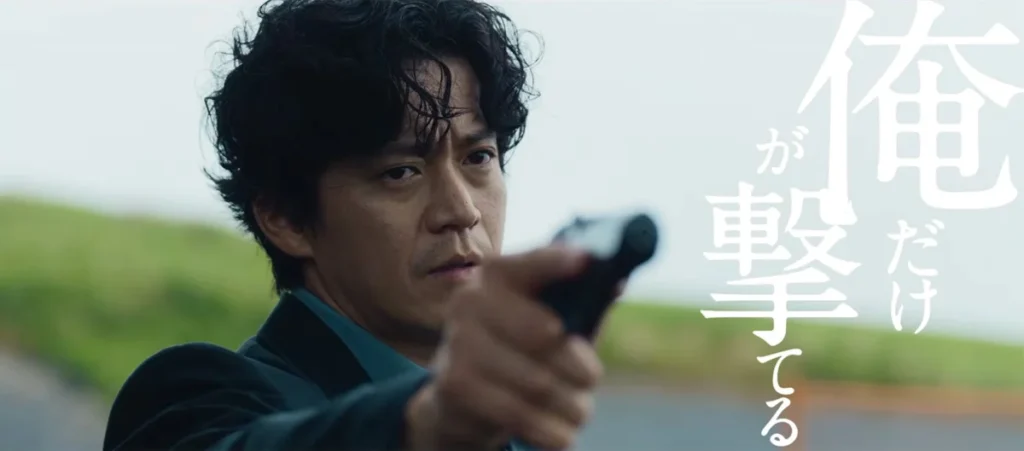

Neon has officially unveiled the full Japanese trailer for Takashi Miike’s highly anticipated crime thriller, Bad Lieutenant: Tokyo, setting the stage for its high-profile premiere at the 2026 Toronto International Film Festival (TIFF). Serving as the third installment in the iconic Bad Lieutenant franchise—and a standalone successor to Werner Herzog’s critically acclaimed 2009 feature Bad Lieutenant: Port of Call New Orleans—the film transports the gritty, morally bankrupt procedural formula into the neon-drenched underbelly of Japan’s capital.
Driven by an explosive, high-energy promotional campaign featuring a bespoke theme song and a series of signature, boundary-pushing visuals, the project has already generated substantial critical chatter. As the film prepares for its festival debut this September, industry analysts and cinephiles alike are closely monitoring how Miike—known for his relentless, prolific output—reinterprets an American cult classic through a distinctively transgressive, transnational lens.
Main Facts and Plot Dynamics
Bad Lieutenant: Tokyo stars acclaimed Japanese actor Shun Oguri as a deeply flawed, gambling-addicted Tokyo detective spiraling rapidly into an abyss of corruption, chemical dependency, and escalating violence. The narrative kicks into high gear when a powerful American political family’s daughter goes missing in Tokyo, prompting an uneasy alliance between the disgraced detective and an enigmatic, relentless FBI agent portrayed by Hollywood star Lily James.

As the investigation deepens, the duo finds themselves caught in a multifaceted crossfire involving a vengeful ex-Yakuza faction and a mysterious, shadowy killer lurking in the criminal underworld, tracking their every move. The stellar international and domestic ensemble cast further features WWE superstar Liv Morgan in a cross-over performance, alongside seasoned Japanese talents Shotaro Mamiya, Jun Kunimura, Hiroshi Tachi, and Nanase Nishino.
Described by TIFF programmers as "a sensational ride through the darkest crevasses of the criminal underworld," the film synthesizes the classical American neo-noir archetype with the hyper-kinetic, stylized violence and dark absurdism that have defined Takashi Miike’s illustrious multi-decade career.
Historical Chronology and Franchise Evolution
The lineage of the Bad Lieutenant property is one of the most unique in modern cinema history, evolving from an indie character study into an international anthology brand:
- 1992: Abel Ferrara directs the original Bad Lieutenant, starring Harvey Keitel as a morally bankrupt, drug-addicted New York City police detective. Co-written by Ferrara and Zoë Lund, the film becomes a polarizing, critically revered masterpiece of psychological despair and Catholic guilt.
- 2009: Director Werner Herzog and star Nicolas Cage reinvent the concept with Bad Lieutenant: Port of Call New Orleans. Though sharing thematic DNA and the title structure with Ferrara’s film, Herzog’s version operates as a loose, hallucinatory standalone narrative set against post-Hurricane Katrina Louisiana, earning widespread critical acclaim.
- 2010–2025: Prolific Japanese filmmaker Takashi Miike maintains an astonishingly fast-paced production schedule, helming dozens of diverse features ranging from historical epics (13 Assassins, Hara-Kiri: Death of a Samurai) and manga adaptations (Blade of the Immortal, Ace Attorney, Terra Formars) to genre experiments (First Love, Lumberjack the Monster, and the Nyaight of the Living Cat series).
- September 2026: Bad Lieutenant: Tokyo is selected as a high-profile Special Presentation at the Toronto International Film Festival, marking Miike’s official entry into the storied American franchise.
Production Background and Creative Team
The genesis of Bad Lieutenant: Tokyo lies in an ambitious international co-production strategy designed to bridge American studio IP with Japanese genre filmmaking expertise. The screenplay was penned by Daisuke Tengan, a frequent Miike collaborator recognized for his work on landmark Japanese extreme cinema. Production duties are shared by Naoaki Kitajima, Sam Pressman, Misako Saka, and veteran producer Jeremy Thomas, whose long-standing collaboration with international auteurs ensures that the film retains its gritty, uncompromising aesthetic integrity.

The roots of the project trace back to the foundational rights held by Ed Pressman Film, which guided both the 1992 original and the 2009 spiritual sequel. By partnering with Japanese studios and securing international distribution via Neon in the United States, the production team has positioned the film as a major crossover event capable of capturing both arthouse festival crowds and mainstream genre enthusiasts.
Official Responses and Festival Positioning
While traditional press junkets and wide-scale reviews will roll out following the TIFF premiere, early festival positioning indicates immense confidence from distributors. Neon, renowned for platforming bold, director-driven cinema (including past festival powerhouses and Oscar contenders), acquired the North American rights with the intent of capitalizing on Miike’s fervent cult following and the star power of Lily James paired with Shun Oguri.
TIFF’s inclusion of the film in its prestigious Special Presentation program underscores the festival’s ongoing commitment to high-profile international genre cinema. Festival programmers have privately and publicly emphasized that Miike’s latest effort avoids the fatigue typically associated with legacy sequels, instead utilizing the recognizable IP as a blank canvas for a uniquely Japanese exploration of systemic corruption and individual moral collapse.
Broader Impact and Industry Implications
The release and impending distribution of Bad Lieutenant: Tokyo carry several significant implications for the contemporary film landscape:

- Transnational IP Adaptation: The film tests the viability of taking distinctly American, auteur-driven source material and transplanting it into entirely different cultural and cinematic frameworks. If successful, it could pave the way for other classic Western crime properties to be reinterpreted by prominent international directors.
- Streaming and Theatrical Windows for Neon: For Neon, positioning a high-octane genre film as a major festival player allows the distributor to balance prestige awards contenders with commercially viable, high-concept thrillers that appeal directly to younger, digitally engaged audiences—exemplified by the viral traction of the film’s theatrical trailer and custom theme song.
- Takashi Miike’s Global Footprint: Already celebrated as one of the most industrious and daring filmmakers alive, a successful North American rollout via Neon could introduce Miike to a broader mainstream American audience that has previously only known his work through midnight movie circuits or specialized streaming platforms.
As audiences and critics descend upon Toronto this September, Bad Lieutenant: Tokyo stands ready to prove whether the chaotic, unpredictable alchemy of Takashi Miike can successfully breathe new life into one of cinema’s most notorious anti-heroes. Following its festival launch, the film is expected to secure a theatrical release in Japan later in 2026, with Neon slated to roll out the North American distribution soon after.