
San Francisco remains a cornerstone of the global tourism and technology sectors, balancing a storied architectural heritage with the demands of a modern, high-net-worth traveling demographic. As the city continues its post-pandemic economic recovery, the short-term rental market has evolved from simple lodging to a curated experience-based industry. This shift is characterized by a demand for properties that offer more than just proximity to the Financial District or Silicon Valley; travelers are increasingly seeking out homes that reflect the city’s complex history, from its post-1906 earthquake recovery to the mid-century modern Case Study House program. By integrating high-end design with the distinct cultural fabric of neighborhoods like the Sunset District, Telegraph Hill, and the Mission, the city’s premium rental inventory serves as a microcosm of San Francisco’s broader urban evolution.
The current landscape of San Francisco’s luxury accommodations is defined by a blend of Victorian preservation and contemporary innovation. Data from the San Francisco Travel Association indicates a steady resurgence in visitor spending, with a projected 23.2 million visitors in 2024. This influx has placed a premium on well-designed, reputable spaces that allow guests to engage with the city’s legendary music scene in Haight-Ashbury, the sprawling greenery of Golden Gate Park, and the nearby viticultural hubs of Napa and Sonoma. The following analysis explores the specific properties and neighborhoods that define this high-end market, contextualized by their historical and economic significance.
Historical Chronology and Architectural Evolution
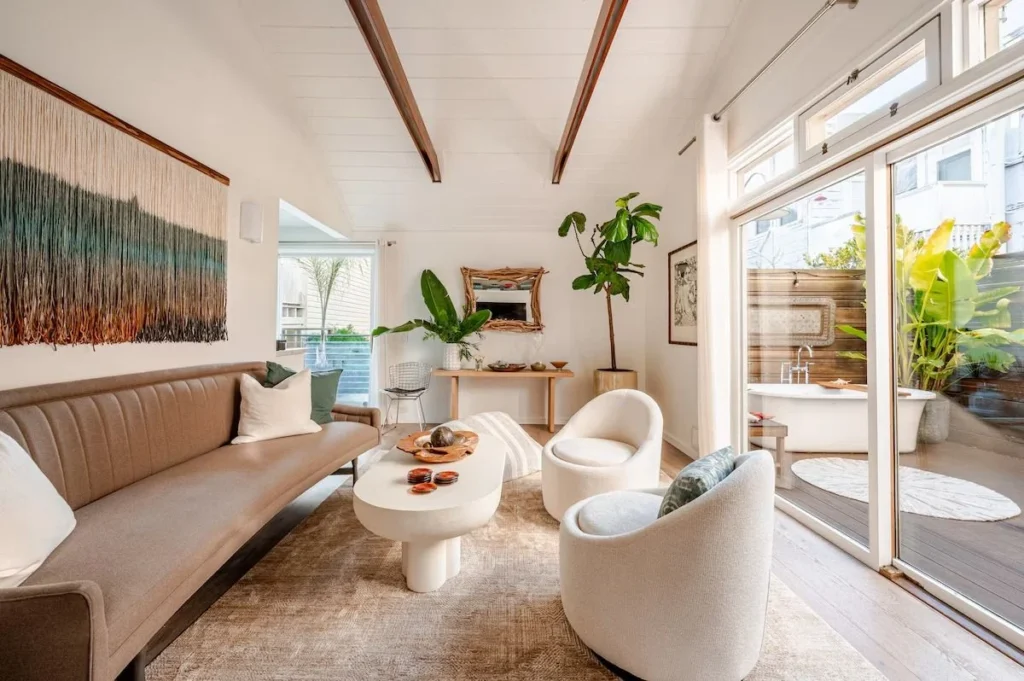
To understand the value of San Francisco’s premier rentals, one must examine the city’s developmental timeline. The architectural identity of the region was fundamentally reshaped by the 1906 earthquake and subsequent fires, which destroyed nearly 80% of the city. In the immediate aftermath, "quake shacks" were constructed to house displaced residents. One such historic structure survives in Telegraph Hill, now converted into a high-end rental. This property, known as the Outdoor Cottage, represents a rare link to the city’s resilience, featuring three private outdoor spaces, a soaking tub, and proximity to the Filbert Steps. The preservation of these shacks, alongside the city’s iconic "Painted Lady" Victorians, provides a stark contrast to the sleek, glass-fronted condos of the contemporary downtown skyline.
Following the World War II era, California became a laboratory for residential experimentation. Between 1945 and 1966, the Case Study House program, commissioned by Arts & Architecture magazine, sought to create efficient, inexpensive model homes. Architects such as Richard Neutra and Charles and Ray Eames participated in this movement. Case Study House #26, located in San Rafael—less than an hour north of San Francisco—remains a pinnacle of this era. Designed by Beverley David Thorne in 1963, the home utilizes steel-frame construction to navigate its hillside location, offering panoramic views of the San Rafael Valley. This property is currently available for short- and long-term stays, illustrating the intersection of historic preservation and modern hospitality.
Regional Analysis: Neighborhood Dynamics and Property Highlights
The diversity of San Francisco’s neighborhoods allows for a wide range of specialized rental offerings, each catering to different socio-economic and aesthetic preferences.
The Sunset District: Coastal Luxury
In the Sunset District, the Dreamy Beach House offers a three-bedroom retreat that emphasizes San Francisco’s coastal geography. At a rate of approximately $1,161 per night, the property features a primary bedroom with a private terrace and a kitchen designed with sapphire cabinetry. The Sunset has historically been a residential stronghold for families, but its proximity to Ocean Beach and the burgeoning culinary scene—headlined by establishments like Arizmendi Bakery and the popular San Tung—has made it a destination for travelers seeking a slower pace than the city center.
NoPa and the Victorian Legacy
The North of the Panhandle (NoPa) neighborhood has undergone a significant transformation over the last two decades. Once a quiet residential pocket, it is now a hub for "curious travelers" who value central access. A featured Airy Apartment in a Victorian corner building exemplifies this trend. The space is noted for its sun-drenched interiors and a collection of contemporary art, including Togo seating. This property reflects the broader gentrification of NoPa, where tree-lined streets now host high-end cafes and boutique retail.
The Mission and Dolores Heights
The Mission District remains the city’s cultural heart, known for its Latino heritage and, more recently, its status as a tech-industry residential hub. The Tree House Condo in Dolores Heights and various garden flats near the Mission provide access to some of the city’s most lauded dining. The proximity to Dolores Park is a primary draw, with guests often frequenting Yamo for Burmese cuisine or Pabu Izakaya for sushi. The Luxe Hilltop Villa, priced at $3,765 per night, represents the pinnacle of this area’s market, featuring 2,500 square feet of space and views of Mount Sutro.
Economic and Tourism Data Supporting the Rental Market
The viability of high-end rentals is supported by robust economic data. According to recent hospitality reports, San Francisco’s average daily rate (ADR) for luxury rentals remains among the highest in the United States. This is driven by several factors:
- Limited Inventory: San Francisco’s strict zoning laws and the Office of Short-Term Rentals’ rigorous registration process limit the supply of legal rentals, thereby maintaining high price points.
- Corporate Demand: The presence of Salesforce, Uber, and Airbnb’s own headquarters ensures a steady stream of corporate travelers who prefer residential-style accommodations over traditional hotels.
- Culinary Integration: San Francisco has more Michelin-starred restaurants per capita than almost any other American city. Properties located near dining hubs like Michael Mina’s Bourbon Steak or Melissa Perfit’s Popi’s Oysterette command a significant premium.
Industry analysts suggest that the integration of "work-from-home" amenities—such as high-speed Wi-Fi and dedicated desk spaces—has become a non-negotiable requirement for properties like the Telegraph Hill cottage or the garden flats near Golden Gate Park. This reflects a permanent shift in traveler behavior where the line between business and leisure (often termed "bleisure") is increasingly blurred.
Official Responses and Regulatory Context
The growth of the luxury rental market has not been without controversy. The San Francisco Board of Supervisors has frequently debated the impact of short-term rentals on the city’s housing crisis. In response, the city implemented one of the nation’s strictest regulatory frameworks, requiring hosts to be permanent residents and limiting the number of days a property can be rented if the host is not present.
Spokespeople for the San Francisco Office of Short-Term Rentals have emphasized that these regulations are designed to protect the housing stock while allowing for the economic benefits of tourism. "Our goal is to ensure that the city remains a world-class destination while maintaining the integrity of our residential neighborhoods," a departmental representative stated in a recent public forum. This regulatory environment has inadvertently benefited the luxury segment, as high-end owners are more likely to have the resources to comply with the city’s complex permitting process, resulting in a "flight to quality" within the available inventory.
Broader Impact and Market Implications
The concentration of high-design rentals in San Francisco has broader implications for the global travel industry. It sets a standard for "architectural tourism," where the accommodation itself is the primary draw. Properties like the Case Study House #26 or the modern villas near the Presidio serve as live-in galleries, educating guests on California’s design history.
Furthermore, the success of these rentals highlights the importance of neighborhood-centric tourism. By encouraging visitors to stay in the Sunset or Dolores Heights rather than the traditional hotel clusters of Union Square or Moscone Center, the city distributes tourism revenue more equitably across local businesses. This "hyper-local" approach is evidenced by the curated recommendations provided by hosts, which often steer guests toward independent retailers and worker-owned cooperatives like Arizmendi Bakery.
In conclusion, the luxury Airbnb market in San Francisco is a reflection of the city’s multifaceted identity. It is a sector built on the foundations of historic resilience—as seen in the repurposed quake shacks—and propelled by the avant-garde spirit of the mid-century modernists. As the city navigates its future as a global tech hub and a cultural sanctuary, these properties will continue to play a vital role in defining the San Francisco experience for an international audience. The synergy between architectural heritage, culinary excellence, and strategic urban planning ensures that San Francisco remains at the forefront of the global luxury travel market.