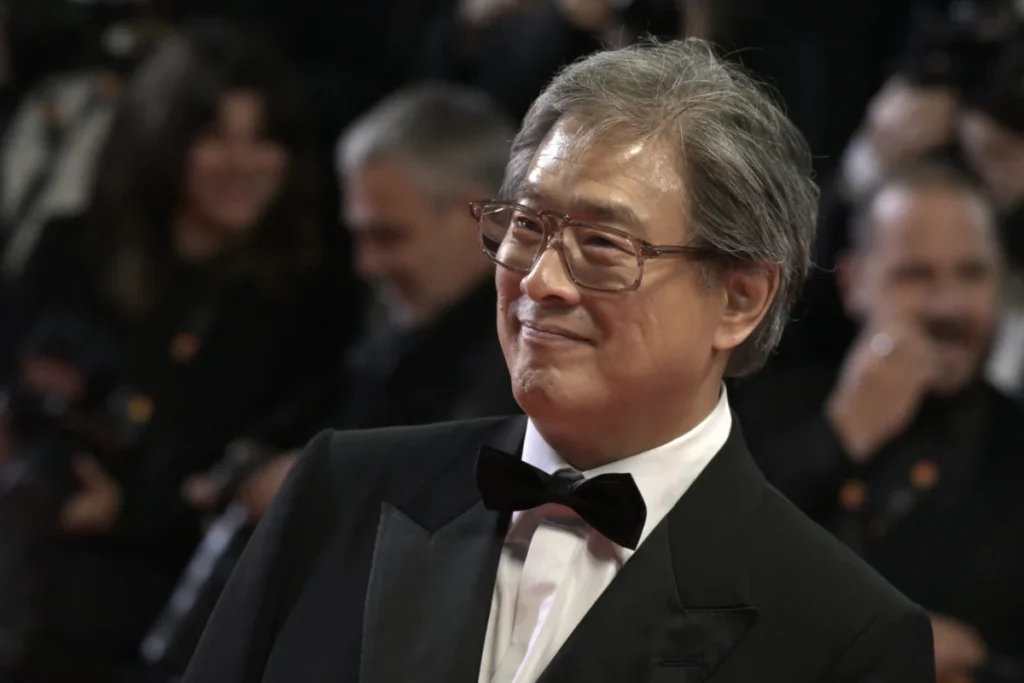

The 79th Cannes Film Festival has reached its highly anticipated crescendo, with the closing ceremony officially commencing in the illustrious Grand Théâtre Lumière. All eyes are now fixed on the esteemed jury, led by South Korean directorial maestro Park Chan-wook, as they prepare to unveil the recipients of this year’s most coveted accolades, including the prestigious Palme d’Or, the festival’s ultimate prize for best film. The atmosphere in Cannes is charged with a mixture of excitement and solemnity, marking the culmination of a ten-day cinematic journey that has showcased a vibrant tapestry of global storytelling.
A Legacy of Cinematic Excellence: The Cannes Film Festival
For nearly eight decades, the Cannes Film Festival has stood as an undisputed titan in the global film industry, a beacon of artistic innovation and a crucial marketplace for cinematic endeavors. Established in 1946, in the aftermath of World War II, as a counterpoint to the Venice Film Festival (which at the time was perceived as being under fascist influence), Cannes quickly cemented its reputation as a champion of artistic freedom and international collaboration. Over the years, it has evolved from a simple showcase into a sophisticated platform that not only celebrates established auteurs but also launches the careers of emerging talents. Its impact extends beyond mere awards; Cannes is where deals are struck, reputations are forged, and the future trajectory of global cinema is often hinted at. The festival’s significance is multifaceted: it serves as a critical launchpad for films seeking international distribution, a barometer for critical reception that often precedes the broader awards season, and a grand spectacle that draws the world’s media, celebrities, and film enthusiasts to the French Riviera. The Grand Théâtre Lumière itself, the main screening venue, is steeped in history, having hosted countless premieres and award presentations that have shaped cinematic history.
The Palme d’Or: A Symbol of Artistic Achievement
At the heart of the Cannes Film Festival’s prestige lies the Palme d’Or (Golden Palm), an award whose history is as rich and celebrated as the festival itself. First introduced in 1955, replacing the "Grand Prix du Festival International du Film" (though the Grand Prix title was later reinstated for the runner-up), the Palme d’Or instantly became one of the most recognizable and respected symbols in the world of cinema. Its unique design, featuring a golden palm frond – a nod to the coat of arms of the city of Cannes – elevates it beyond a mere trophy, making it a tangible representation of artistic excellence and daring vision. Winning the Palme d’Or can catapult a film, and its director, into global prominence, guaranteeing critical attention, enhanced box office performance, and often, a strong position in subsequent awards circuits like the Academy Awards. Past winners read like a who’s who of cinematic legends, from Federico Fellini and Francis Ford Coppola to Quentin Tarantino and Bong Joon-ho, each film leaving an indelible mark on the art form. The anticipation surrounding its announcement each year underscores its unparalleled significance in the cinematic firmament.
The Esteemed Jury and Guiding Voices
The responsibility of selecting the Palme d’Or winner and other main competition laureates rests upon the shoulders of an international jury, carefully curated to represent a diverse array of perspectives and expertise within the film industry. This year, the nine-member jury is presided over by the acclaimed South Korean director Park Chan-wook, known globally for his distinctive visual style and gripping narratives in films such as Oldboy, The Handmaiden, and Decision to Leave. His leadership signals a commitment to bold, artistically challenging cinema. Joining him in this weighty task are an impressive cohort of international talent: screenwriter Paul Laverty (a frequent collaborator with Ken Loach, known for socially conscious cinema), Belgian director Laura Wandel (Playground), Chilean director Diego Céspedes, and Oscar-winning Chinese-American director Chloé Zhao (Nomadland, Eternals). The acting world is equally well-represented by Hollywood icon Demi Moore, Irish-Ethiopian talent Ruth Negga, French-Congolese actor Isaach de Bankolé, and Swedish veteran Stellan Skarsgård. This diverse composition ensures a robust and multifaceted deliberation process, reflecting the global nature of the festival itself and the varied artistic sensibilities present in contemporary filmmaking.
The Host and Star-Studded Presenters
Guiding the evening’s proceedings with grace and charm is French actress Eye Haïdara, whose presence adds a touch of local elegance to the international event. The presentation of awards, a series of eagerly awaited moments, will feature a constellation of cinematic stars and celebrated filmmakers. Among the distinguished presenters are American actress Geena Davis, known for her powerful roles and advocacy for gender equality in media; Italian actor Pierfrancesco Favino, a staple of European cinema; Mexican actor Gael García Bernal, celebrated for his versatile performances; and American actress Zoe Saldaña, a global box office powerhouse. Directors Xavier Dolan, the Canadian wunderkind, and Nadine Labaki, the Lebanese auteur, will also lend their prestige to the ceremony. The most pivotal moment of the night, the presentation of the Palme d’Or, will be handled by the inimitable Scottish Oscar winner Tilda Swinton, an actress revered for her daring choices and chameleon-like ability to inhabit diverse roles, adding another layer of gravitas to the ultimate award. For those unable to attend the exclusive event, the ceremony is being broadcast live, accessible globally via TikTok Brut, a modern approach to expanding the festival’s reach, and domestically in France on the public channel France 2, ensuring broad viewership.
A Timeless Tribute: Barbra Streisand Honored
A particularly poignant moment of the evening will be the presentation of a lifetime achievement Palme d’Or to the legendary American artist Barbra Streisand. Her career, spanning over six decades, is a testament to unparalleled talent across music, film, and theater. Streisand is one rare EGOT winner, having achieved Emmy, Grammy, Oscar, and Tony Awards, a testament to her extraordinary versatility as a singer, actress, director, and producer. Her directorial efforts, particularly Yentl (1983) and The Prince of Tides (1991), broke significant barriers for women in Hollywood and earned critical acclaim, demonstrating her profound impact behind the camera as well as in front of it. While the festival community and her legions of fans regret her absence due to a knee injury, the honor remains deeply significant. In a gesture of profound respect and friendship, French cinematic icon Isabelle Huppert, herself a two-time Best Actress winner at Cannes and a pillar of international arthouse cinema, will accept the award on Streisand’s behalf. Huppert is expected to deliver a heartfelt tribute, reflecting on Streisand’s immense contributions to the arts and her enduring legacy, ensuring that the spirit of the legendary artist is powerfully felt within the Grand Théâtre Lumière.
The Race for the Palme d’Or: Contenders and Critical Acclaim
This year’s competition for the Palme d’Or has been characterized by its intense quality and the absence of an obvious, runaway frontrunner, making the jury’s decision all the more anticipated. Pundits and industry critics have engaged in lively debates throughout the festival, pointing to several strong candidates that have garnered significant buzz.
Diverse Narratives and Acclaimed Auteurs
Among the most talked-about films is Minotaur, marking the long-awaited return of Russian director Andrey Zvyagintsev. Known for his incisive critiques of contemporary society and his masterful, often bleak, cinematic landscapes in films like Leviathan (Cannes Best Screenplay winner) and Loveless (Oscar nominee), Zvyagintsev’s latest promises a powerful and thought-provoking experience, with many anticipating it to be a strong contender for the top prize given his consistent critical acclaim.
Another film that has generated immense excitement and a remarkable 20-minute standing ovation at its Cannes premiere is Calvo and Ambrossi’s Spanish musical drama La Bola Negra (The Black Ball). Described as a queer epic, the film captivated audiences with its vibrant storytelling and stellar performances, notably featuring cinematic luminaries Penélope Cruz and Glenn Close. Its enthusiastic reception underscores a growing appetite for diverse narratives that push boundaries both thematically and stylistically within mainstream cinema.
Belgian director Lukas Dhont, whose previous film Close earned the Grand Prix at Cannes, returns with Coward, a WWI drama. Dhont’s ability to craft emotionally resonant stories with a delicate touch, often exploring themes of identity and vulnerability, positions Coward as a significant work that could impress the jury with its historical scope and intimate character study.
Finally, Emmanuel Marre’s A Man of His Time, a French wartime drama set in Vichy France, has also drawn critical attention. Starring Swann Arlaud, an actor who gained international recognition for his role in the Palme d’Or and Oscar-winning Anatomy of a Fall, the film explores a tumultuous period of French history through a compelling personal lens. Marre’s nuanced direction and Arlaud’s powerful performance could make this a dark horse contender for the Palme d’Or, reflecting the festival’s appreciation for historically resonant and character-driven narratives. The sheer diversity in genre, origin, and theme among these leading films highlights the festival’s commitment to showcasing the breadth and depth of contemporary global cinema.
Cannes as an Awards Season Harbinger: The Neon Phenomenon
Beyond its immediate accolades, the Cannes Film Festival holds a crucial position as an early predictor for the broader international awards season, particularly the Academy Awards. Films that gain significant traction, critical acclaim, or win major prizes at Cannes often find themselves on a trajectory towards Oscar nominations and wins. This trend was evident last year, where several Cannes winners and selections, including Jafar Panahi’s It Was Just an Accident, Joachim Trier’s Sentimental Value, Kleber Mendonça Filho’s The Secret Agent, and Oliver Laxe’s Sirat, went on to receive Oscar nominations. Notably, Trier’s Sentimental Value ultimately secured the Academy Award for Best International Feature, solidifying Cannes’ role as a powerful launching pad for awards season success.
Neon’s Strategic Acumen and This Year’s Prospects
In this landscape, independent distributor Neon has carved out a remarkable niche, becoming a key player whose choices are closely watched by industry observers. Led by Tom Quinn, Neon has demonstrated an uncanny ability to identify and acquire future Palme d’Or winners, successfully picking the last six Cannes champions, a streak that includes last year’s It Was Just an Accident. This consistent success highlights Neon’s strategic acumen and its profound understanding of artistic quality aligned with critical and commercial appeal in the arthouse space. Their business model often involves acquiring distribution rights for films ahead of their festival premieres, a high-stakes gamble that has consistently paid off.
Going into this year’s ceremony, Neon once again holds a strong hand, having six hopefuls among the official selections. These include:
- Hope by Na Hong-jin, a South Korean monster movie from the acclaimed director of The Chaser and The Wailing, promising a genre-bending cinematic experience.
- Paper Tiger by James Gray, a star-studded drama featuring Scarlett Johansson and Adam Driver, showcasing Gray’s signature blend of intimate character studies and grand narratives.
- Sheep In The Box by Koreeda Hirokazu, an AI-inspired drama from the Palme d’Or-winning Japanese director of Shoplifters, known for his poignant explorations of family and societal issues.
- The Unknown by Arthur Harari, a psychological fantasy starring Léa Seydoux, from the director whose previous work, Onoda: 10,000 Nights in the Jungle, earned critical praise.
- All of a Sudden, a nursing-home drama from Hamaguchi Ryusuke, the director of the Oscar-winning Drive My Car, whose meticulous storytelling and profound human insights are highly regarded.
- Fjord, Cristian Mungiu’s English-language debut, starring Renate Reinsve (The Worst Person in the World) and Sebastian Stan, from the Palme d’Or-winning Romanian director known for his stark realism and moral complexities.
Neon’s track record and the quality of their acquisitions this year mean that a win for any of these films would not only extend their unparalleled streak but also significantly boost the film’s profile, market value, and prospects for further awards recognition globally, underscoring the commercial and artistic power of a Cannes victory.
Recognizing Emerging Voices: The Un Certain Regard Awards
While the Palme d’Or dominates headlines, the festival also shines a crucial spotlight on emerging talents and unique cinematic visions through its Un Certain Regard section. This parallel competition, established in 1978, focuses on films with unusual styles and non-traditional narratives, often serving as a launching pad for directors who later achieve mainstream recognition. The awards for this section are presented separately, often earlier in the festival’s closing days, highlighting a distinct set of cinematic achievements. This year, the Un Certain Regard Prize for Best Film was awarded to Sandra Wollner for Everytime, a recognition of its distinctive artistic merit. The Un Certain Regard Jury Prize went to Abinash Bikram Shah for Elephants in the Fog, a significant acknowledgment for a debut feature. The Special Jury Prize in this section was presented to Louis Clichy for Iron Boy. Individual acting talents were also celebrated, with Bradley Fiomona Dembeasset earning Best Actor for his role in Rafiki Fariala’s Congo Boy, and Marina de Tavira, Daniela Marín Navarro, and Mariangel Villegas collectively winning Best Actress for their performances in Valentina Maurel’s Siempre Soy Tu Animal Materno. These awards underscore Cannes’ dual mission: celebrating established masters while nurturing the future of global cinema.
The Moment of Truth: Awaiting the Verdicts
As the lights dim in the Grand Théâtre Lumière, a sense of collective anticipation fills the air. The long journey of the 79th Cannes Film Festival, from its glamorous opening ceremony to its intense days of screenings, press conferences, and industry dealings, culminates in this single evening. The jury’s decisions, born from weeks of intense viewing and deliberation, are about to be revealed, sealing the fate of the films and directors who have vied for cinema’s highest honors. The impact of these awards will ripple across the global film landscape, influencing critical discourse, shaping distribution strategies, and inspiring future generations of filmmakers. The world watches, eager to discover which cinematic works will forever be etched into the illustrious history of Cannes.
Full List of Winners (Updating Live):
Palme d’Or
Grand Prix
Jury Prize
Best Director
Best Screenplay
Best Actress
Best Actor
Special Prize
Camera d’Or for Best First Film
Palme d’Or for Best Short Film
Un Certain Regard Prize for Best Film
Everytime, Sandra Wollner
Un Certain Regard Jury Prize
Elephants in the Fog, Abinash Bikram Shah (first film)
Un Certain Regard Special Jury Prize
Iron Boy, Louis Clichy
Un Certain Regard Best Actor
Bradley Fiomona Dembeasset, Congo Boy, dir. Rafiki Fariala
Un Certain Regard Best Actress
Marina de Tavira, Daniela Marín Navarro, Mariangel Villegas, Siempre Soy Tu Animal Materno, dir. Valentina Maurel