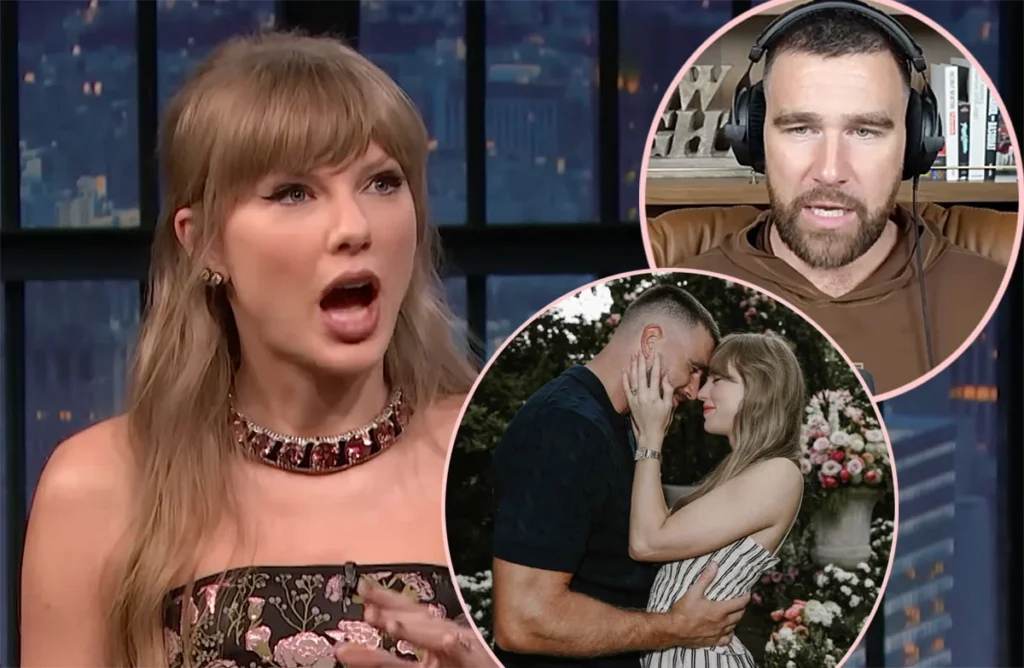

A close confidante of global music icon Taylor Swift is reportedly contemplating a boycott of her highly anticipated wedding to NFL superstar Travis Kelce, citing dissatisfaction with the strict guest invitation policies, specifically the absence of a plus-one option. The revelation, emerging from sources close to the pop star, casts a spotlight on the unique challenges and stringent protocols often associated with high-profile celebrity nuptials, sparking a debate on guest etiquette versus host privacy and security.
The Disputed Invitation: A Friend’s Dilemma
The core of the burgeoning controversy revolves around an invitation received by a member of Swift’s inner circle for what is widely expected to be one of the most significant social events of the decade. This individual, who wishes to remain anonymous to protect their relationship with Swift, conveyed their dismay to DailyMail.com, stating, "My invite did not let me bring a plus one. I mean, what am I supposed to do? Go alone? That is so awkward. I don’t think I am going to attend because I don’t want to go by myself and I am not sure I will know too many people there. I mean, sorry, I am not friends with Gigi and Bella Hadid!" This sentiment underscores a common social anxiety, where attending a large, unfamiliar gathering without a companion can be daunting, even when the hosts are world-renowned figures.
Further deepening their disappointment, the source explicitly linked the restriction to their single status, noting, "I know Selena Gomez is bringing her husband Benny Blanco, so she has a plus one, but I am not allowed to have a plus one because I am a single woman. I get it, the venue can probably allow for only so many people, but it’s not the best feeling." The perceived disparity in treatment has evidently created a sense of exclusion, prompting the friend to consider abstaining from the celebration entirely due to shyness and discomfort. "It’s the wedding of the year, but I may sit this one out because I am shy," they confessed, highlighting the personal cost of navigating such an exclusive event.
The Unprecedented Scrutiny of a ‘Tayvis’ Wedding
The union of Taylor Swift and Travis Kelce represents a convergence of two global phenomena: the reigning queen of pop and a Super Bowl-winning tight end whose charisma transcends the gridiron. Their relationship, which captivated millions since its public emergence in late 2023, has been a constant subject of media fascination, fan speculation, and intense public scrutiny. From Swift’s appearances at Kelce’s Kansas City Chiefs games to their high-profile public outings, every interaction has been dissected, analyzed, and celebrated by their colossal fan bases.
This unprecedented level of public interest naturally translates into immense pressure and logistical complexities for any event they host, particularly their wedding. The term "wedding of the year" barely scratches the surface of the global anticipation surrounding their nuptials. Given Swift’s unparalleled influence and Kelce’s widespread popularity, their wedding is not merely a private celebration but an event with significant cultural resonance, attracting the attention of paparazzi, media outlets, and a global audience eager for every detail. The decision-making process for such an event is thus fraught with considerations far beyond those of a typical wedding, encompassing everything from security and privacy to managing public perception and protecting personal brand integrity.
Navigating the Guest List: The Plus-One Predicament
The debate over plus-ones at weddings is a perennial one, but it takes on an entirely different dimension when applied to a celebrity wedding of this magnitude. Traditionally, wedding etiquette dictates that married couples, engaged couples, and those in established long-term relationships should be invited as a couple. For single guests, the inclusion of a plus-one is often a courtesy extended by the hosts, particularly if the guest is traveling or might not know many other attendees. However, this courtesy is not an absolute right and is frequently subject to various constraints.
In the context of a high-profile event like Swift and Kelce’s wedding, several factors likely influence a no-plus-one policy for certain guests. Venue capacity is a primary concern; exclusive locations often have strict limits on the number of attendees. Each additional guest not only adds to the headcount but also to the overall cost, which for a celebrity wedding can be astronomical. More critically, for an event where security and privacy are paramount, every individual present must be meticulously vetted. An unknown plus-one introduces a significant variable, potentially compromising the carefully constructed security perimeter. There’s an inherent risk of an unvetted guest filming sensitive moments, leaking details to the press, or even attempting to exploit their presence for personal gain.
Furthermore, a celebrity couple might prioritize intimacy and a desire to share their special day exclusively with their nearest and dearest. Inviting a large number of unknown individuals could detract from this goal, transforming the event into a more generalized social gathering rather than a deeply personal celebration. The friend’s observation that Selena Gomez is permitted a plus-one for her husband, Benny Blanco, while they are not, highlights this distinction. Spouses and established partners are often considered integral to the primary guest’s social unit, whereas a casual date or a friend of a friend falls into a different category, especially when the hosts have not personally met them.
The Imperatives of Security and Secrecy
Another point of contention raised by the disgruntled friend is the couple’s decision to withhold the wedding venue’s location until the last possible moment. "I get that too, she doesn’t want everyone knowing where she is getting married until the last minute for security reasons. Now it is one big guessing game, everyone is wondering where it will be. Probably a massive hotel like the Waldorf Astoria that has amazing security and access," the source acknowledged. This practice, far from being an arbitrary inconvenience, is a standard operating procedure for celebrity events of this scale, driven by urgent security imperatives.
The immediate disclosure of a wedding venue for a couple like Swift and Kelce would inevitably lead to an overwhelming influx of media, paparazzi, and eager fans, creating a security nightmare. Such crowds can pose significant risks, from traffic congestion and unauthorized access attempts to potential safety hazards for guests and staff. By delaying the announcement, the couple and their security team aim to minimize the window of opportunity for such disruptions, ensuring a more controlled and secure environment for their celebration.
Security measures for a wedding of this caliber would likely involve layers of protection, including extensive background checks for all staff and vendors, non-disclosure agreements (NDAs) for guests and service providers, and strict policies regarding mobile phone usage and photography. High-profile celebrity weddings often employ private security firms specializing in VIP protection, utilizing advanced surveillance technology, controlled access points, and a significant on-site presence. Past celebrity events have faced challenges ranging from drone photography to gatecrashers, underscoring the necessity of these extreme precautions. The guessing game surrounding the venue, while perhaps frustrating for guests, is a calculated move to safeguard the privacy and sanctity of the event.
Expert Insights on High-Profile Events
Industry experts widely affirm the stringent measures being employed by Swift and Kelce as not only reasonable but essential for a wedding of their profile. "Planning a celebrity wedding is less about traditional etiquette and more about crisis management and logistics," explains Eleanor Vance, a veteran luxury event planner. "Every decision, from the menu to the guest list, is scrutinized through the lens of security, privacy, and brand protection. A no-plus-one policy for certain guests is common when you need to maintain a strict headcount for security clearances or to ensure a truly intimate atmosphere."
Security consultants echo this sentiment. "For public figures like Taylor Swift and Travis Kelce, their wedding is a potential target for various forms of intrusion," states Marcus Thorne, a security analyst specializing in VIP events. "Delaying venue disclosure, implementing rigorous guest vetting, and restricting plus-ones are not just preferences; they are critical components of a comprehensive security strategy designed to mitigate risks ranging from paparazzi intrusion to potential threats from obsessed fans or opportunists. Every individual on the premises needs to be accounted for and trusted."
Even etiquette experts, while generally advocating for hospitality, acknowledge the unique circumstances. "While it’s always ideal for hosts to make guests feel comfortable, the rules bend significantly for events of this magnitude," comments Dr. Evelyn Reed, an authority on modern social graces. "The host’s primary responsibility shifts to ensuring the safety and privacy of all attendees, including themselves. A single guest’s desire for a companion, while understandable, often takes a backseat to the overarching security and logistical demands. It’s a reality of celebrity life that personal events are rarely truly private."
Broader Implications: Friendship, Fame, and Wedding Norms
The situation surrounding Swift’s wedding invitation underscores a broader tension between the demands of global superstardom and the dynamics of personal friendships. While the anonymous friend expresses genuine affection for Taylor and wishes the couple well, their public complaint highlights the unique pressures placed on individuals within a celebrity’s orbit. It raises questions about whether friendships can truly thrive under the constant glare of public attention and the necessity of such rigorous controls.
For the celebrity couple, the challenge lies in balancing their desire for a joyous, personal celebration with the realities of their fame. Every decision, from who receives an invitation to the level of access granted, is a delicate negotiation between personal connection and public safety. The friend’s feeling of being "not the best feeling" is valid from a personal standpoint, yet the celebrity’s need for control is equally compelling given the potential for chaos.
This incident also reflects the evolving landscape of privacy in the digital age. With smartphones capable of instantly capturing and disseminating information globally, the stakes for maintaining privacy at high-profile events have never been higher. Celebrity weddings, once chronicled by exclusive magazine spreads, are now vulnerable to instantaneous leaks and unauthorized social media broadcasts, further necessitating the strict measures that might inconvenience even close friends.
Ultimately, the dilemma faced by Taylor Swift’s friend is a microcosm of the larger challenges faced by public figures in maintaining personal boundaries. While the friend acknowledges the validity of the security concerns, their personal discomfort highlights the human element often overshadowed by the spectacle of celebrity. As the wedding date approaches, the question remains whether the friend will overcome their shyness and attend what is sure to be an unforgettable event, or if the perceived slight will keep them from celebrating with one of the world’s most famous couples. The incident serves as a poignant reminder that even for the most glittering affairs, the intricate dance between personal relationships and public demands can be complex and, at times, fraught with tension.