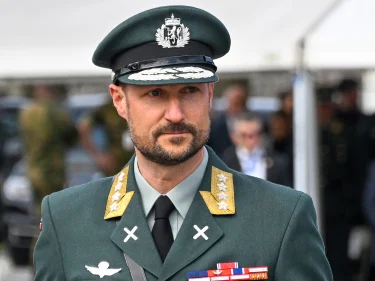

The Norwegian Royal House has officially announced the resumption of public engagements following an extensive period of national mourning and internal reorganization triggered by the death of King Harald V. The sovereign passed away on August 28 at the age of 89, plunging the Scandinavian nation into deep grief and prompting the immediate suspension of all official royal calendars. As the monarchy prepares to step back into the public eye, it does so under a profoundly altered operational landscape, marked by a significantly diminished core of working royals, ongoing health leaves of absence, and international academic commitments among the younger generation of heirs.
According to statements released by the Royal Court in Oslo, King Haakon—who ascended to the throne immediately upon his father’s passing—will officially resume his grueling schedule of public duties on October 9. He will be joined by his mother, Queen Sonja, who at 89 years of age will also return to active public service. However, the royal family’s return to normalcy is heavily constrained by logistical and medical realities. The heavy burden of statecraft will fall primarily upon the newly minted monarch, who must navigate the early days of his reign with a skeleton crew of active participants.
Medical Leave and Academic Commitments Shape the New Era
The capacity of the Norwegian monarchy to project a robust public presence has been severely impacted by medical circumstances and educational obligations within the immediate royal family. Foremost among these limitations is the continued absence of Queen Mette-Marit, who will remain on indefinite medical leave following a major medical intervention earlier this year. Queen Mette-Marit underwent a successful lung transplant in June and has since been recuperating in strict privacy at home. Medical advisors and the Royal Court have confirmed that her recovery timeline precludes any return to public life until at least the summer of next year, meaning the institution will lack one of its most visible and active senior representatives for the foreseeable future.
Compounding the shortage of working royals are the educational pursuits of the next generation in direct line of succession. Crown Princess Ingrid Alexandra, who stepped into the national spotlight as the new heir to the throne, had temporarily relocated her university studies to Oslo following her mother’s hospitalization. However, the Royal Court has confirmed that the young royal will resume her academic program abroad, traveling to Sydney, Australia, in February to continue her higher education. Similarly, the second in line to the throne, 20-year-old Prince Sverre Magnus, is currently based in Lisbon, Portugal, where he is pursuing his own academic endeavors.
The geographic dispersion of the younger royals leaves a stark generational void in Oslo. With King Haakon handling the vast majority of state obligations independently, or alongside the venerable Queen Sonja, the daily management of the monarchy requires careful prioritization. Further complicating the transition was the recent passing of Princess Astrid. The 94-year-old sister of the late King Harald and a dedicated working royal throughout her long life passed away in September, just two days after her brother’s state funeral. Her death marked the end of an era and removed another vital pillar of support from the royal working roster.
A Timeline of Transition: From the Passing of King Harald to the Resumption of Duties
The sequence of events defining the Norwegian monarchy over the late summer and autumn of this year highlights a rapid and momentous period of historical change for the Scandinavian nation:
- August 28: King Harald V passes away peacefully at the age of 89. His son immediately ascends the throne as King Haakon, and the royal household enters a strict period of national mourning, suspending all public engagements, patronages, and scheduled appearances.
- Late August to Early September: King Haakon formally swears his constitutional oath before the Storting (Norway’s parliament), setting the legal foundation for his reign ahead of a future formal enthronement and blessing service.
- September: Princess Astrid, the 94-year-old sister of the late King Harald, passes away just 48 hours after attending her brother’s state funeral, further reducing the number of active senior royals.
- October 9: King Haakon and Queen Sonja officially break the period of suspended duties, returning to active public service and recommencing the handling of domestic state affairs.
- February (Upcoming): Crown Princess Ingrid Alexandra prepares to return to Sydney, Australia, to resume her university studies after a domestic hiatus following her mother’s medical crisis.
- Summer 2027 (Projected): The earliest anticipated window for Queen Mette-Marit to reconsider a gradual return to public engagements, contingent upon her ongoing recovery from June’s lung transplant surgery.
Scaling Back the Royal Agenda: Suspension of State Visits
In response to the drastically reduced availability of working family members, the Royal Court has instituted sweeping changes to the royal calendar. Most notably, officials have confirmed that all incoming and outgoing State Visits are canceled or postponed for the foreseeable future. Traditionally a cornerstone of soft diplomacy and international relations, state visits require extensive travel, high-level receptions, and multi-day commitments that are currently unfeasible for a monarch operating without a full cadre of supporting family members.
Instead, King Haakon’s immediate mandate will focus heavily on domestic constitutional duties. The King is tasked with overseeing regular Councils of State, maintaining dialogue with government ministers, and managing vital civic functions within Norway’s borders. International travel will not feature in his immediate itinerary, reflecting a deliberate strategy to consolidate the monarchy’s focus on national stability and internal continuity during the transitional phase of his reign.
Constitutional Duties and the Path Forward
The ascension of King Haakon marks the beginning of a modern chapter for the Norwegian monarchy, an institution historically praised for its accessibility, egalitarian ethos, and close bond with the public. Having already fulfilled the constitutional requirement of swearing his oath before the Norwegian parliament, the monarch stands firmly at the helm of the state, awaiting a future date for an official enthronement service and ecclesiastical blessing.
Constitutional experts have noted that while the king possesses the legal authority to execute all executive and ceremonial functions independently, the physical demands of modern monarchy are substantial. The reliance on an 89-year-old Queen Mother alongside a solitary monarch underscores a fragile operational balance. Yet, public opinion polling and historical precedent suggest that the Norwegian public remains deeply supportive of the royal house, particularly during times of shared grief and institutional adaptation.
As Norway adjusts to a smaller active royal family, the coming months will test the resilience and adaptability of the monarchy. By prioritizing domestic governance and scaling back ambitious international itineraries, King Haakon and Queen Sonja aim to preserve the stability of the crown while accommodating the legitimate medical and educational needs of their family. The transition period, though challenging, sets a pragmatic tone for a reign focused on steady leadership through a time of profound generational shift.