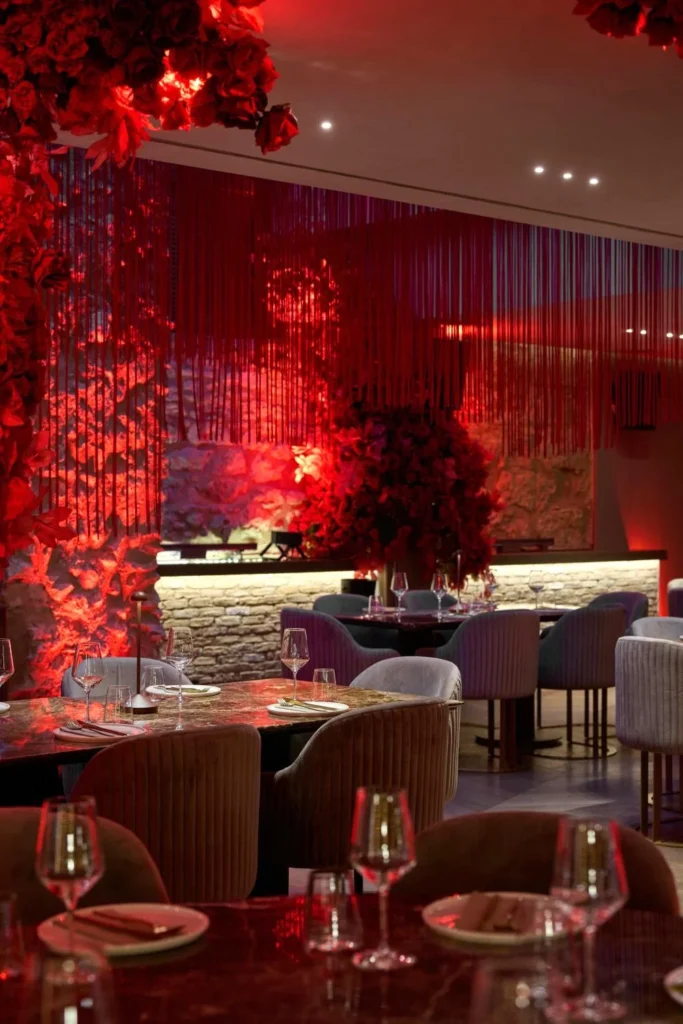

The cultural landscape of late July 2026 is defined by a sophisticated blend of moody aesthetics, significant shifts in celebrity family dynamics, and a renewed interest in mid-century cinematic icons. At the center of this week’s lifestyle discourse is the Geco Restaurant in Athens, Greece, an establishment that has come to epitomize the "moody" vibe currently trending in international interior design. As the global travel season reaches its peak, Geco serves as a prime example of the "cool and dark" escapism that high-end travelers are seeking to avoid the midsummer heat. This aesthetic preference for shadowed, atmospheric spaces marks a departure from the bright, minimalist "Scandi" trends of previous years, signaling a broader shift toward intimacy and mystery in hospitality design.
Legal and Personal Developments in the Jolie-Pitt Family
In a significant development within one of Hollywood’s most scrutinized families, Vivienne Jolie-Pitt has become the fourth child of Angelina Jolie and Brad Pitt to formally petition for a legal name change. The move, which seeks to remove "Pitt" from her surname, follows similar actions by her siblings Zahara, Maddox, and Shiloh. According to legal filings and sources close to the family, Vivienne’s petition aims to establish her professional and legal identity as Vivienne Marcheline Jolie.

The chronology of these name changes reveals a steady distancing from the paternal surname. Zahara Marley Jolie and Maddox Chivan Jolie were the first to initiate the transition in their public and private lives. In early 2024, Shiloh filed her own petition to become Shiloh Jolie. Sources close to Angelina Jolie indicate that the actress remains focused on the emotional well-being of her children. A representative stated that Jolie "just wants everyone to heal" and noted that the children’s decision to remain private about their reasons reflects a level of "decency and respect" for the family unit. Legal analysts suggest that these petitions, while personal, carry significant weight in terms of future estate planning and public branding for the next generation of the Jolie lineage.
The Audrey Hepburn Renaissance: Biopics and Filmography
The legacy of Audrey Hepburn is experiencing a major resurgence as two competing biopics move into production. The first, an untitled project starring Lily Collins, focuses on the high-stakes production of the 1961 classic Breakfast at Tiffany’s. The second, titled Dinner With Audrey, features Thomasin McKenzie as Hepburn and Ansel Elgort as her lifelong friend and couturier, Hubert de Givenchy.
This cinematic interest has prompted a re-evaluation of Hepburn’s extensive body of work. Critics and historians point to 11 essential films that define her career, ranging from the prim elegance of the 1950s to the more experimental roles of the 1960s. Key titles include Roman Holiday (1953), which earned her an Academy Award, Sabrina (1954), Funny Face (1957), and Charade (1963). Hepburn’s ability to blend a dancer’s grace with a magnetic screen presence remains the gold standard for "chic" in Hollywood. The upcoming films are expected to explore not only her style but her complex life as a Brussels-born survivor of World War II and her later years as a dedicated UNICEF ambassador.

Innovations in Culinary Arts and Travel Philosophy
In the culinary sector, the "local-first" philosophy championed by travel icon Rick Steves continues to influence global dining trends. Celebrating five decades of travel journalism, the 71-year-old Steves recently shared his updated formula for authentic European dining. His approach emphasizes four pillars: accessibility, cultural experience, affordability, and seasonal locality. Steves argues that a "good eater" should be able to identify both their geographic location and the current month simply by reading a menu. This philosophy has led to a rise in "micro-seasonal" dining, where restaurants change offerings weekly based on local harvests.
Parallel to this, the craft beer industry is seeing a renewed interest in wheat-based brews. Unlike traditional barley-based beers, wheat beers—including German Hefeweizens, Belgian Witbiers, and Berliner Weisses—utilize 30% to 70% malted or unmalted wheat. Because wheat lacks an outer husk and possesses a higher protein content, these beers are characterized by their signature haziness and rounder mouthfeel. Market data suggests that consumers are increasingly gravitating toward these "refreshingly tart" profiles during the summer months, favoring them over the heavy IPAs that dominated the previous decade.
In the United States, international influences are manifesting in niche markets such as Irish ice cream. Celtic Creamery, a North Carolina-based enterprise, has successfully imported traditional Irish recipes from Ballybunion, Ireland. The creamery’s success highlights a growing consumer demand for "definitive bites"—specific culinary experiences tied to vacation memories.

Fashion Shifts: From Minimalism to Vibrant Expression
The fashion industry is witnessing a decisive turn away from ’90s minimalism. While "quiet luxury" dominated 2024 and 2025, the Spring 2027 menswear collections and recent ready-to-wear shows in New York indicate that "color is back." Designers such as Marc Jacobs and Ralph Lauren are incorporating vibrant palettes, such as Barbie pink and schoolyard navy, into traditional preppy silhouettes.
Specific trends for the Summer 2026 season include:
- Granny Jeans and Kitten Heels: A sophisticated evolution of the "mom jean," these high-waisted, straight-leg trousers favor clean lines and traditional pleats. When paired with kitten heels, they create a silhouette that fashion editors describe as "the chicest formula of the season."
- The Art of Linen: Linen remains the quintessential summer fabric due to its breathability. Current trends emphasize the "naturally rumpled texture" as a sign of effortless, lived-in luxury.
- Minimalist Nail Art: In the beauty sector, the "maximalist" 3D designs of recent years are being replaced by delicate, low-key "quiet luxury" manicures. Simple French tips and dinky details like initials or single dots are now preferred by those seeking a sophisticated, relaxed aesthetic.
Media and Entertainment: Streaming and Celebrity Ventures
Netflix has announced its August 2026 lineup, which includes a mix of nostalgia and new adaptations. Subscribers can expect the return of cult classics like Clueless, Marie Antoinette, and Party Girl. New content highlights include the premiere of Love is Blind: UK and a fresh adaptation of the Australian classic My Brilliant Career.

In a major industry move, rapper Travis Scott has signed a significant deal with Paramount, signaling his transition into serious acting. Scott is set to appear in a Christopher Nolan project inspired by Homer’s The Odyssey. In a recent interview, Scott revealed a personal connection to the source material, noting that his grandmother, an English professor, required him to read the epic poem as a child. This move into prestige cinema follows a growing trend of musicians seeking "EGOT" (Emmy, Grammy, Oscar, Tony) status by diversifying their portfolios into film and television production.
The Science of Hair Care and the Art of Thrifting
Scientific discourse in the beauty industry this week has focused on debunking the myth that cutting hair makes it grow faster. Dermatologists and trichologists clarify that while regular trims are essential for removing split ends and preventing breakage—thereby maintaining length—they do not affect the hair follicle’s growth rate at the scalp. Experts recommend trims every 6 to 12 weeks depending on hair type to maintain optimal health.
Simultaneously, the vintage jewelry market is seeing record growth as consumers turn to thrift stores for "one-of-a-kind" pieces. Jewelers suggest that the thrill of the "steal" is secondary to the "history and character" found in vintage items. Market analysts attribute this trend to a broader consumer desire for sustainability and individuality in an era of mass-produced fast fashion.

Broader Impact and Social Implications
The convergence of these trends—from the legal independence of the Jolie-Pitt children to the revival of 1950s icons and the shift toward vibrant fashion—points to a culture in transition. There is a visible move toward personal agency and historical appreciation. Whether through the lens of a "moody" Greek restaurant or the pages of a Rick Steves guidebook, the theme of July 2026 is one of intentionality. Consumers and celebrities alike are moving away from the sterile minimalism of the early 2020s in favor of deeper textures, richer colors, and more complex personal narratives. As the world navigates the mid-2020s, these lifestyle shifts reflect a collective desire for authenticity and a "taste of place" in an increasingly digital world.