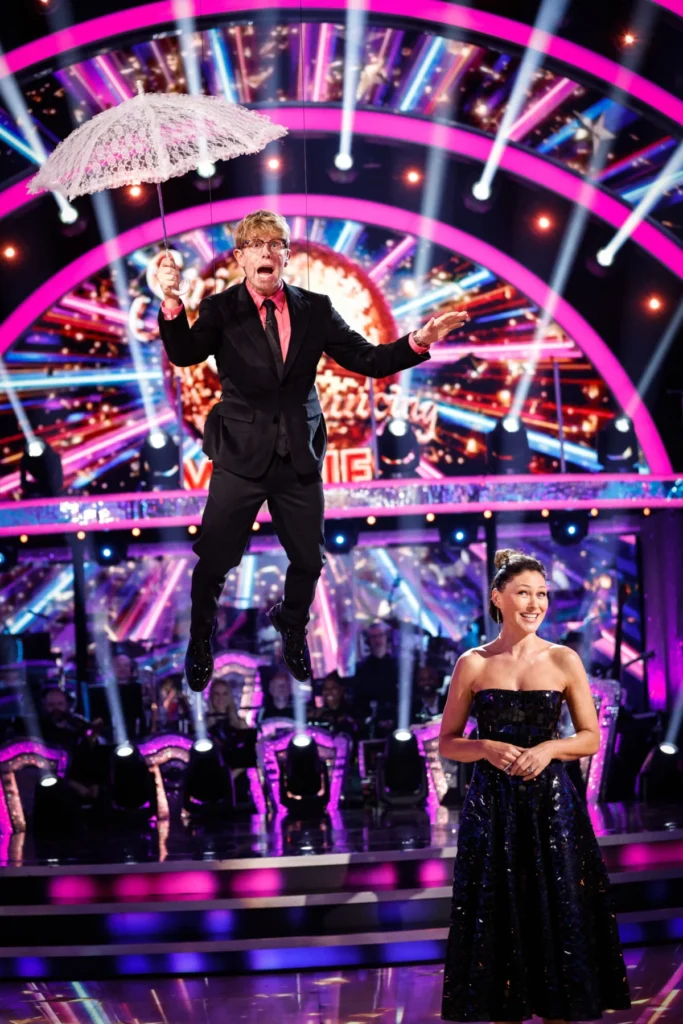

The ballroom of Strictly Come Dancing, typically a bastion of escapist joy and high-octane performance, has become the unlikely site of a significant cultural friction point this weekend. As the BBC’s flagship entertainment juggernaut aired its second live show of the 2026 series, the spotlight remained firmly fixed not only on the celebrities and their professional partners, but on the program’s radical new presenting lineup. Comedian Josh Widdicombe, who joined the show alongside Emma Willis and professional dancer-turned-host Johannes Radebe, found himself the subject of intense social media scrutiny for the second consecutive week. The transition to a three-person hosting team, intended to refresh the format following the departure of long-standing stalwarts Tess Daly and Claudia Winkleman, has sparked a polarized debate among the show’s millions of loyal viewers.
A High-Stakes Transition in British Television
The decision to overhaul the presenting team was one of the most significant gambles in the BBC’s recent programming history. For nearly two decades, the chemistry between Daly and Winkleman had defined the "Strictly" experience, establishing a rhythm that balanced glamour, warmth, and gentle humor. When the network announced that Widdicombe, Willis, and Radebe would assume control, the move was framed by producers as a necessary evolution to keep the format competitive in an increasingly fragmented digital media landscape.
However, the second live show demonstrated that the audience’s appetite for this new dynamic is far from settled. While the choreography, musical performances, and costume design remained to the high standard expected of the BBC, the hosting segments became a focal point for discontent. Viewers took to platforms like X (formerly Twitter) to voice their frustrations, with many drawing direct comparisons to the perceived sterility of the new interaction style. Comments ranged from critique of the pacing of the show to more pointed remarks about Widdicombe’s specific delivery, with some users going as far as to suggest that the comedic tone of the presenter was at odds with the traditional ballroom aesthetic.
Chronology of the Backlash
The tension began in earnest during the series premiere, which saw a peak viewership of five million—a strong figure that underscores the show’s continued cultural dominance despite the controversy. During that inaugural broadcast, the primary complaint was that Widdicombe appeared as a "spare part," struggling to find his footing within the rapid-fire, high-pressure environment of live Saturday night television.

Following that debut, there was widespread speculation in the media—including reports from outlets such as The Sun—that producers might adjust the roles of the trio to mitigate the negative feedback. Suggestions included reallocating responsibilities so that Radebe, whose rapport with the dancers is well-documented, might take a more central role in the script-heavy portions of the show. Despite these rumors, the second live episode proceeded with the same structural configuration: Willis and Widdicombe on the main floor, and Radebe positioned on the balcony. By maintaining this structure, the production team signaled a commitment to their original vision, effectively betting that the audience’s discomfort is a temporary symptom of a major transition rather than a fundamental flaw in the new casting.
The Debate Over Creative Liberty and Scripting
While the chorus of criticism has been loud, it is not monolithic. A segment of the audience has emerged to defend Widdicombe, arguing that the comedian is being stifled by a rigid, over-produced script that fails to leverage his greatest strength: the ability to improvise.
"Anyone who knows Josh Widdicombe from his work on The Last Leg knows what a great, quick-witted comedian he is when allowed to ad-lib," one supporter noted. "Sadly, his lines on Strictly are far too scripted and are not doing him any favors." This perspective suggests a deeper issue regarding how the BBC manages its talent. By forcing a comedian known for naturalistic, observational humor into the tightly structured, highly polished role of a traditional presenter, the show may be inadvertently highlighting the contrast between Widdicombe’s natural style and the required formality of the Strictly format.
Tensions on the Judging Panel
Adding another layer of complexity to the weekend’s broadcast was the perceived dynamic between Widdicombe and judge Motsi Mabuse. During the live commentary, several viewers remarked on a perceived lack of warmth or "tension" during the transitions between the host’s questions and the judge’s feedback. While such observations are inherently subjective and often amplified by social media commentary, they have contributed to a narrative that the new team is struggling to achieve the fluid, effortless chemistry that viewers have come to expect.
It is worth noting that Mabuse had previously spoken out in support of the new presenting team, urging patience as the trio finds their collective voice. Nevertheless, the persistent perception of friction on screen has provided fodder for critics who argue that the new team lacks the established shorthand that Daly and Winkleman had honed over years of partnership.
Fact-Based Analysis: The Risks of Format Changes
The challenge faced by Strictly Come Dancing is a classic case study in legacy media management. When a program is as deeply ingrained in the public consciousness as Strictly, audience attachment to the "old way" of doing things is immense. Research into audience behavior suggests that "change fatigue" often manifests in the first few weeks of a new season, particularly when core components like the hosting team are altered.
The BBC’s strategy appears to be one of "staying the course." By refusing to make reactionary changes based on early-series social media trends, the network is likely attempting to avoid a sense of instability. However, this strategy carries its own risks. If the audience perception does not shift in the coming weeks, the cumulative impact could lead to a decline in retention rates. The challenge for the production team is to determine whether the criticism is a result of the presenters needing time to settle into their roles, or if there is a fundamental mismatch between the talent and the tone of the show.
Looking Ahead
As the competition progresses, the stakes will only grow higher. The pressure on the presenters to maintain the pacing of the show will increase as the number of contestants dwindles and the technical difficulty of the routines rises. For Widdicombe, the upcoming weeks represent a critical juncture. Whether the production team decides to loosen the scripts to allow for more personality-driven segments, or whether the presenters simply need more time to establish a rhythm, the eyes of the British public remain firmly locked on the ballroom.
Despite the noise on social media, the show remains a cornerstone of the BBC’s autumn schedule. The high viewership numbers from the first week indicate that the core audience is still tuning in, even if they are vocal about their preferences regarding the hosting. Widdicombe has yet to issue a formal response to the commentary, a move that is likely a deliberate strategy to keep the focus on the contestants and the dancing rather than on the mechanics of the broadcast itself.
Ultimately, the longevity of this new era of Strictly Come Dancing will be determined by whether the program can successfully marry its traditional, comforting format with the new energy the producers clearly sought to inject. For now, the show finds itself in a transitional period, one that highlights the precarious nature of updating a national institution in the era of real-time audience feedback. Whether the current presenting trio survives the series will likely depend on their ability to turn the tide of public opinion through the strength of their performance in the coming weeks.