
For decades, Anh Duong maintained a stoic, impenetrable silence regarding his turbulent upbringing in war-torn Vietnam and his subsequent years as a refugee during the Iranian Revolution. Known to his family simply as "Ba," he buried the psychological scars of survival deep beneath the surface, navigating political upheavals that required absolute emotional suppression to ensure basic safety. That lifelong restraint, however, fractured in 2024 with the publication of his memoir, Dear Da-Le: A Father’s Memoir of the Vietnam War and the Iranian Revolution. Structured as an intimate series of letters addressed to his daughter, the book offered Montreal-based documentary filmmaker Ashley Duong a rare and profound window into her father’s generational trauma.
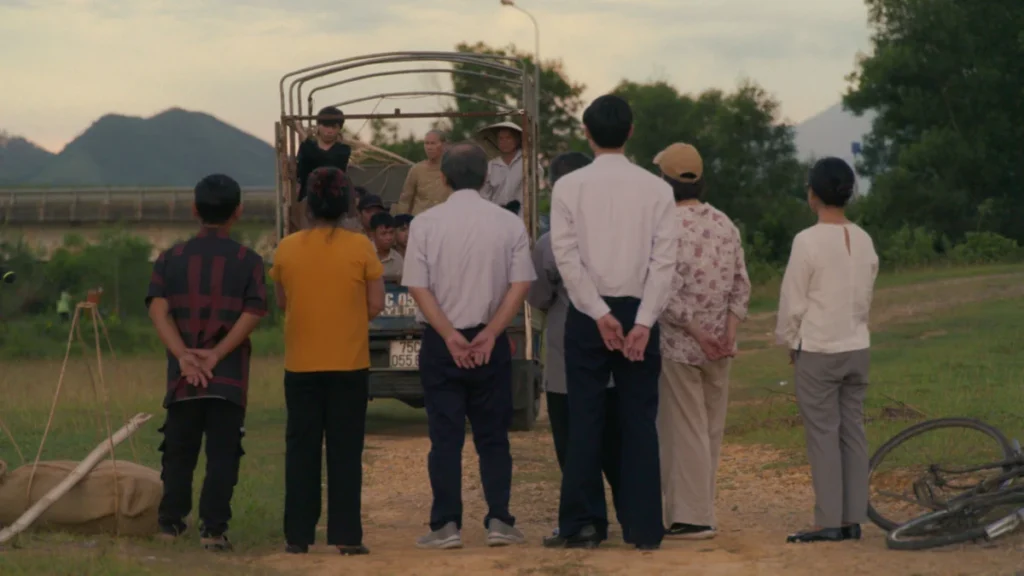
Rather than responding solely through written words, Duong chose to process this newfound familial vulnerability through her native medium: cinema. The result is Ba’s Book, an inventive, genre-bending hybrid feature that blurs the definitive boundaries between documentary non-fiction and narrative drama. The film, which recently screened at the Vancouver International Film Festival following stops on the festival circuit, captures a deeply personal multi-continental odyssey. It retraces Ba’s harrowing trajectory through the civil war in Vietnam, his precarious displacement in revolutionary Iran during the late 1970s, and his ultimate migration to Canada in 1980 to build a permanent new life. Yet, while the memoir provided a literary blueprint, the cinematic adaptation unlocked raw, unscripted dialogues that had remained unspoken for half a century.
Bridging Generations Through Cinematic Hybridity
At its core, Ba’s Book transcends a conventional biographical documentary by turning the filmmaking process itself into an instrument of reconciliation. While the memoir detailed Ba’s public and political survival tactics, it glossed over the profound emotional fallout of his departure from his ancestral Vietnamese village—specifically, the wrenching separation from his mother, Nguyen Thị Bay (affectionately known as grandmother Ba Noi), and his siblings.
To bridge the gap between past silence and present disclosure, Duong implemented a daring production model. Rather than relying on a traditional single-camera setup observing events from a distance, Duong deployed a multi-camera apparatus. On any given day of shooting, three distinct lenses rolled simultaneously: one capturing unfiltered documentary observations, another utilizing a narrative-driven perspective with dynamic zooms and reverse angles, and a dedicated fiction crew following a loose script co-penned by Duong and Steven Sych.

The production physically reconstructed the past on a purpose-built set in Vietnam: an exact replica of the modest family home where Ba and his siblings grew up. However, true to the film’s theatrical nature, the set was deliberately constructed with only three walls instead of four. This open-air architectural choice transformed the physical space into a stage, allowing real-life relatives and professional actors—hired to play younger iterations of the family members—to co-exist, interact, and confront historical memories head-on.
"Not everybody is going to stage recreations with sets and actors and everything," Duong reflected during interviews surrounding the film’s festival run. "Pero it’s just our family trying to figure out how to finally talk about things that they’d never spoken about."
A Chronology of Displacement and Survival
To fully grasp the emotional weight of Ba’s Book, critics and audiences must view the narrative through the expansive lens of 20th-century geopolitical upheaval. The chronology captured in the film spans three distinct and violent eras:
- The Vietnam War Era (1950s–1970s): An epoch defined by intense civil conflict, shifting allegiances, and widespread devastation, during which a young Anh Duong fought to secure an education amidst severe economic and social strain.
- The Iranian Revolution (Late 1970s): Following his departure from Southeast Asia, Ba found himself navigating yet another volatile political landscape in Iran during the tumultuous overthrow of the Pahlavi dynasty, forcing him once more into the precarious existence of a stateless transient.
- The Canadian Diaspora (1980–Present): Establishing roots in Canada in 1980, Ba successfully integrated into a new society while compartmentalizing his past, inadvertently passing down an unspoken legacy of displacement to his Canadian-born daughter.
- The Literary Breakthrough and Cinematic Reckoning (2024–Present): The publication of Dear Da-Le acts as the catalyst, prompting the multi-year production of Ba’s Book and leading to its prominent film festival premieres.
This sweeping timeline underscores why the director’s relatives initially approached the cameras with hesitation. Decades of survival had taught them that speaking out carried inherent risks. However, once production commenced in Vietnam, the family invested their collective energy into the project, assisting with set design, casting proxy actors, and ultimately stepping in front of the lens to interrogate Ba about his coming-of-age years.
Unearthing Patriarchal Burdens and Sibling Resentment
One of the most emotionally resonant arcs in Ba’s Book focuses on Đặng Thị Hạnh, the director’s Aunt Hanh. Initially reluctant to participate, Aunt Hạnh eventually confronts her older brother regarding the rigid patriarchal structures of wartime Vietnam that dictated their youth. Hạnh was forced to shoulder the domestic burdens of the household—ultimately abandoning her own formal education at the age of nine—specifically so that Anh Duong could be freed from domestic labor to study and complete an education.

For decades, that sacrifice bred a quiet, residual indignation. By bringing these tensions to the surface on camera, Duong effectively lances an emotional boil that had infected the family dynamic for fifty years.
"There’s a point in the film where I want to say thanks to Aunt Hanh because I’m thinking if she didn’t free my dad up from domestic labor, he wouldn’t have been able to study as he did," Duong explains. "My life would have been totally different. I owe this woman so much. Somebody, and I never knew who, but she had sacrificed this way, having to stop school when she was nine."
This generational reckoning is further mirrored by the casting of Duy Nguyen, a Montreal-based actor originally born in Vietnam, who portrays a youthful iteration of Ba. Duy brought a profound personal resonance to the role; as the eldest son in his own family, the only member currently residing in Canada, he deeply understood the survivor’s guilt and lingering familial separation etched into his character’s backstory.
The Broader Implications for Diaspora Communities
Industry analysts and documentary purists have praised Ba’s Book for redefining how personal trauma can be translated to the screen. By refusing to let the documentary adhere to sterile observational boundaries, Duong demonstrates how performance, re-enactment, and collective catharsis can yield a deeper emotional truth than archival footage alone.
Furthermore, the film’s linguistic and cultural dynamics highlight the inherent hurdles of cross-cultural reconciliation. Because Ba’s siblings in Vietnam do not speak or read English, they were entirely unable to read his published memoir. Through the staging of the film—where Ba read excerpts aloud in Vietnamese and his siblings interrogated the actors portraying their past selves—the narrative barrier was permanently dismantled.

As Ba’s Book continues its journey through major film festivals, its resonance extends far beyond the specific contours of the Duong family history. In an era marked by mass global migrations, refugee crises, and fractured familial lineages, the film offers a powerful blueprint for diaspora communities seeking to mend historical divides.
"A lot of this film is us realizing the way we show up for each other is by being each other’s narrative devices," Duong notes. Fifty years after the conclusion of the Vietnam War, Ba’s Book argues that historical wounds cannot be healed through silence or isolation, but through the deliberate, sometimes uncomfortable collective labor of confronting the past together.