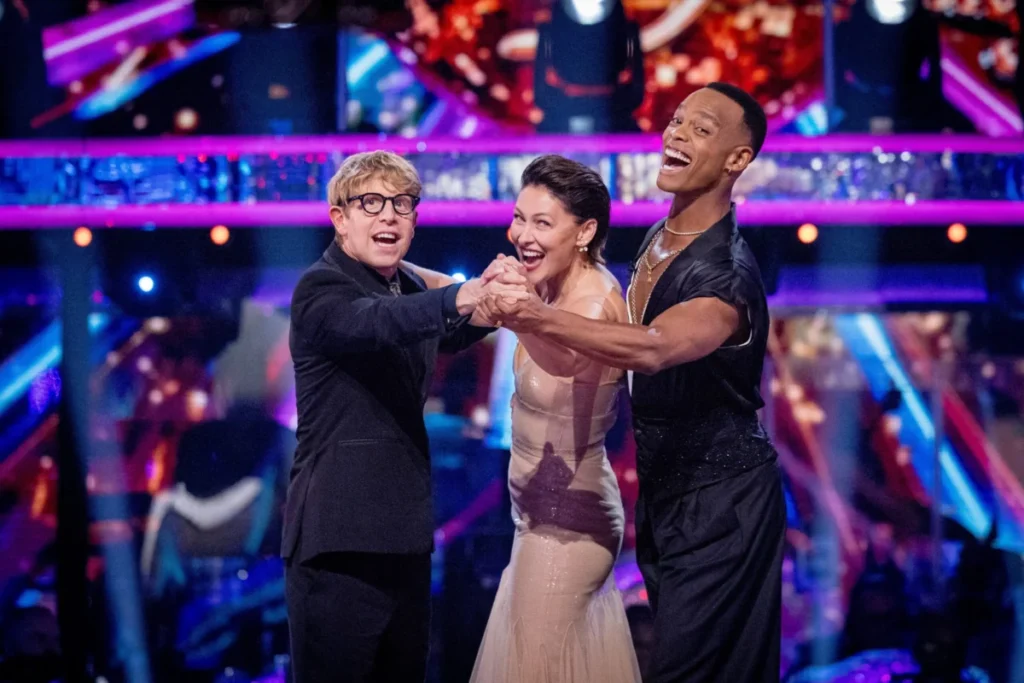

The bright lights of the BBC One flagship series Strictly Come Dancing illuminated the nation’s screens once again on Saturday evening, marking the official commencement of the 2026 competition. After weeks of anticipation and a highly publicized launch event, the ballroom was transformed into a theater of high-stakes performance as the celebrity contestants and their professional partners took to the floor for the first live broadcast of the series. This year’s installment brings with it a revamped presenting line-up, a fresh cohort of celebrity talent, and the high-octane atmosphere that has cemented the show’s status as a cornerstone of British television entertainment.
A New Era for the Ballroom
The evening commenced with an expansive opening production number featuring the show’s ensemble of professional dancers. The troupe performed an intricate, high-energy routine set to an orchestral arrangement of RAYE’s "Joy," signaling a return to the polished, theatrical standards viewers have come to expect. As the music reached its crescendo, the new presenting trio—Emma Willis, Josh Widdicombe, and Johannes Radebe—made their debut entrance.
The inclusion of Radebe, a fan-favorite professional dancer turned presenter, marks a significant shift in the show’s dynamic. By placing a veteran of the ballroom in a hosting capacity alongside television mainstays Willis and Widdicombe, the production team appears to be bridging the gap between performance expertise and lighthearted broadcast commentary. The judges—Shirley Ballas, Craig Revel Horwood, Motsi Mabuse, and Anton Du Beke—returned to their familiar perches, ready to provide the technical critiques that drive the competitive narrative of the series.
Chronology of the Live Opener
The live show followed a tightly choreographed schedule, designed to introduce the audience to the competitive capabilities of the contestants without the immediate pressure of an elimination. Josh Widdicombe opened the proceedings with the formal announcement that the competition had officially begun, while Johannes Radebe offered a reminder to the contestants and the viewing public alike: because the broadcast is live, the element of unpredictability remains the show’s most potent draw.

Emma Willis, maintaining the evening’s momentum, emphasized the significance of the moment, noting that the "class of 2026" had reached the culmination of their training period. The schedule for the night prioritized establishing the baseline scoring for each couple.
The competitive floor was inaugurated by Big Brother presenter Will Best and professional dancer Dianne Buswell. Their performance was particularly noteworthy as it marked Buswell’s return to the series following a maternity leave. The pair delivered a Samba to Robbie Williams’ "Rock DJ," earning a respectable 18 points from the judges. This score serves as the initial benchmark for the season, establishing the standard against which future performances will be weighed.
The second couple to grace the floor were skeleton racer Tabby Stoecker and newcomer professional Mark Karmalita. Their high-energy Jive to "Animal" by Katseye resonated with the panel, resulting in a score of 22 points. This performance demonstrated the technical potential of the newer professional arrivals, highlighting the show’s commitment to refreshing its talent pool alongside the celebrity roster.
Contextualizing the 2026 Cast
One of the most anticipated narratives of this series involves the return of Love Island winner Dani Dyer. In a display of continuity and resilience, Dyer was reunited with professional dancer Nikita Kuzmin. The pairing is particularly poignant as it follows a previous attempt at the competition in which Dyer was forced to withdraw due to injury. The emotional weight of this reunion was acknowledged on air, with Widdicombe lightheartedly addressing the elephant in the room by inquiring about her physical readiness, a nod to the intense physical demands of the Strictly training regime.
The cast of 2026 represents a diverse cross-section of British public life, ranging from reality television icons to elite athletes. The inclusion of figures like Tabby Stoecker, a representative of the British skeleton racing circuit, highlights the show’s ongoing strategy of integrating high-performance athletes who bring a unique discipline and physical conditioning to the ballroom.

Data and Scoring Dynamics
The scoring system for the 2026 series continues to rely on the subjective evaluation of the four judges. Each judge holds a paddle numbered 1 through 10, with the cumulative total out of 40 forming the basis of the leaderboard. In this opening week, the absence of a public vote or an elimination round is a strategic choice by the producers. By removing the threat of immediate departure, the production allows the contestants to acclimate to the pressures of a live audience and the unforgiving nature of the ballroom floor.
Historically, this "no-elimination" week is vital for the psychological development of the contestants. It provides a "free" performance where the focus is purely on technical improvement and confidence-building. Statistical analysis of previous seasons suggests that early high scorers do not always translate to finalists, but the initial scores set the tone for the growth arcs that viewers find most compelling.
Professional and Institutional Impact
The logistical shift in presenting duties—with Willis and Widdicombe stationed at the judges’ table to facilitate post-performance analysis, while Radebe provides a supportive presence on the balcony—reflects a move toward a more integrated, multi-zone hosting style. This spatial arrangement allows for a more rapid transition between the performance space and the reaction area, maintaining a brisk pace that is essential for a live, multi-hour broadcast.
From a production standpoint, the return of Strictly Come Dancing is a major driver of engagement for the BBC. The show consistently performs well in the ratings, often serving as a lead-in for other weekend programming. The professional dancers, now more than ever, are elevated to the status of national celebrities, with their personal milestones—such as Dianne Buswell’s return—becoming central threads in the show’s narrative fabric.
Broader Implications and Future Outlook
The implications of the 2026 series extend beyond mere entertainment. Strictly Come Dancing acts as a barometer for public sentiment regarding the BBC’s ability to modernize a legacy format. The transition to a three-person hosting team is a clear attempt to evolve the show’s identity, ensuring it remains relevant in an increasingly crowded market of reality-competition programming.

Furthermore, the physical demands of the show remain a subject of discussion. The injury that sidelined Dani Dyer in the previous cycle serves as a reminder of the inherent risks involved in the professional training process. The show’s medical and support staff play a critical role behind the scenes, ensuring that contestants are equipped to manage the grueling rehearsal schedules, which often exceed 40 hours per week.
As the series progresses, the absence of an elimination in the first week will be replaced by the inevitable "dance-off" format, which has historically been the source of the show’s most dramatic moments. The scoring gaps established in the first week will likely widen as the complexity of the choreography increases, moving from the foundational steps displayed in the opening show to the more intricate Latin and Ballroom techniques required in the later stages.
The BBC has confirmed that the competition will continue in the coming weeks, with the pressure expected to intensify as the public vote is introduced. For the "class of 2026," the journey has only just begun. The combination of technical scrutiny, public perception, and the physical test of the ballroom will dictate which of these couples will eventually lift the Glitterball Trophy.
In conclusion, the opening night of Strictly Come Dancing 2026 successfully revitalized the brand while respecting the traditions that have made it a national institution. With a blend of new presenting talent, returning favorites, and a diverse range of celebrity contestants, the stage is set for a season defined by both personal growth and the relentless pursuit of ballroom perfection. As the dancers retreat to the rehearsal studios to refine their craft for the second week, the focus remains on the primary objective: surviving the cut and earning the favor of both the judges and the voting public in the weeks to come.