
Nearly 30 years after its theatrical debut, director Barry Levinson revisits his acclaimed 1996 drama Sleepers, asserting that public and critical discourse surrounding the film largely "lost the plot" by focusing on tangential issues rather than its core message. This reflection comes as the film receives a brand-new 4K/Blu-ray release, offering a fresh opportunity to examine its themes and impact in a contemporary context. Levinson also utilized the opportunity to lament the significant decline of mid-budget films, a category that once served as the backbone of Hollywood and a fertile ground for emerging talent, but which has increasingly been sidelined in favor of blockbuster franchises.
The Enduring Legacy of Sleepers: A Gripping Narrative of Trauma and Vengeance
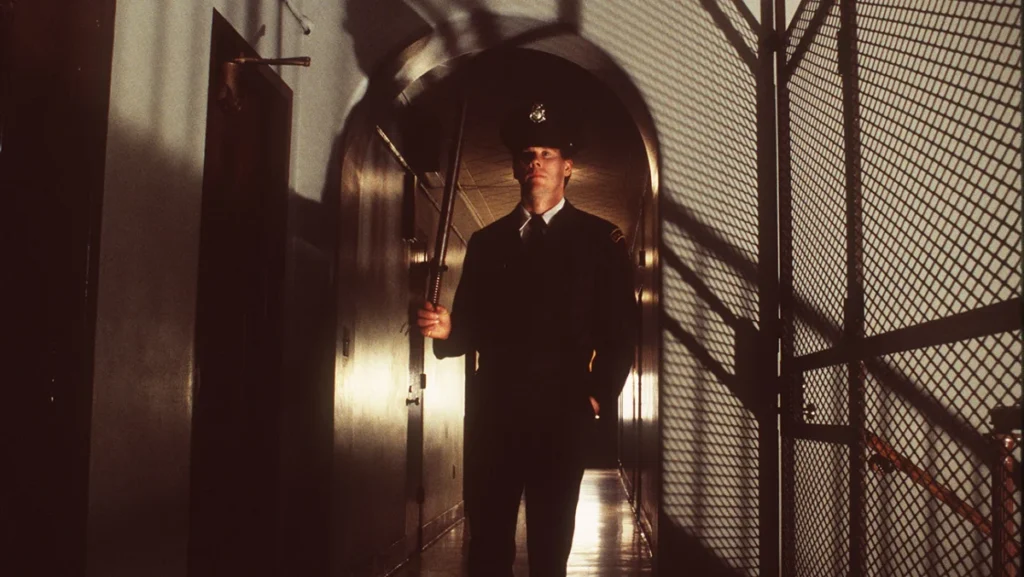
Sleepers unfolds as a powerful, albeit dark, tale of four childhood friends from Hell’s Kitchen, New York. The narrative begins in the late 1960s, depicting the idyllic yet mischievous lives of young Lorenzo "Shakes" Carcaterra, Michael Sullivan, John Riley, and Tommy Marcano. Their youthful exuberance takes a catastrophic turn when a prank involving a hot dog vendor goes terribly awry, resulting in a severe injury to an innocent bystander. This incident leads to their incarceration in the Wilkinson Home for Boys, a state-run reformatory where their innocence is brutally shattered. During their 6 to 18-month sentence, the boys endure horrific physical and sexual abuse at the hands of four sadistic guards, led by the menacing Sean Nokes. This period of profound trauma forms the emotional scar that defines their adult lives and fuels a complex quest for justice.
The film then fast-forwards to 1981, where the narrative takes a dramatic turn. Two of the former friends, John Riley (Ron Eldard) and Tommy Marcano (Billy Crudup), now hardened adults, unexpectedly encounter their primary abuser, Sean Nokes (Kevin Bacon), in a local restaurant. Consumed by rage and the unhealed wounds of their past, they impulsively gun him down. This act of vigilante justice sets the stage for the film’s central conflict: the efforts of their remaining childhood friends, Lorenzo "Shakes" Carcaterra (Jason Patric), now a low-level clerk at The New York Times, and Michael Sullivan (Brad Pitt), a rising Assistant District Attorney, to exonerate their imprisoned compatriots and expose the systemic corruption and abuse within the Wilkinson Home. The ensuing courtroom drama becomes a high-stakes battle against a deeply entrenched and complicit institution.
Upon its release in October 1996, Sleepers generated considerable buzz, not only for its compelling story and star-studded cast but also for the intense subject matter of child abuse and its aftermath. The film garnered a box office total of over $165 million worldwide against a budget of approximately $44 million, indicating a significant commercial success. Critics were largely divided, with many praising the powerful performances, particularly from the younger cast and Kevin Bacon, while some found the narrative’s manipulation of events problematic. However, as Levinson points out, much of the discourse gravitated towards controversies that, in his view, overshadowed the film’s broader thematic intent.
The "True Story" Controversy: Artistic License Versus Authenticity
One of the most significant controversies surrounding Sleepers stemmed from author Lorenzo Carcaterra’s assertion that his source material, the book Sleepers, was a "true story." The book, published in 1995, claimed to be a memoir, recounting Carcaterra’s own experiences and those of his childhood friends. This claim was prominently featured in the book’s marketing and subsequently in the film’s promotion, generating immense public interest. However, shortly after the book’s release, journalists and investigators began scrutinizing Carcaterra’s claims, finding inconsistencies in names, dates, and verifiable records. No official police or court records could be found to corroborate the specific events described, particularly the murder trial and the elaborate conspiracy to free the protagonists.

The media inquiry led to a fierce debate about journalistic integrity, the boundaries of memoir, and artistic license. Carcaterra steadfastly maintained that the "core" of the tale was authentic, arguing that he had fictionalized names, dates, and certain details to protect the identities of those involved and to avoid legal repercussions for the acts of vigilantism depicted. Levinson echoed this sentiment in his recent interview with The Hollywood Reporter, expressing frustration with the emphasis placed on literal authentication. "Why does film get caught in this cycle of whether something happened or didn’t happen? It’s a story," Levinson remarked. He further elaborated, "It wasn’t the craziest, weirdest thing you’ve ever imagined. I never quite got that noise that was made at that time. It, in some ways, took away from what the piece was. It doesn’t need to be authenticated in that regard for us to pay attention."
This debate highlighted a recurring tension in storytelling: the public’s desire for factual truth, especially when presented as "based on a true story," versus a creator’s prerogative to adapt and dramatize events for thematic impact. While the literal truth of Carcaterra’s account remained unconfirmed, the underlying theme of institutional child abuse resonated deeply. In the mid-1990s, public awareness and reporting of child abuse cases, particularly within institutions, were increasing, making the film’s depiction feel tragically plausible, regardless of its specific factual basis. Levinson argues that focusing on the minutiae of factual verification detracted from the film’s larger point about systemic injustice and the profound, long-lasting impact of trauma on victims. The film, he contends, aimed to explore the psychological and moral complexities faced by individuals scarred by such experiences, and the extreme lengths they might go to seek retribution or closure.
Father Bobby’s Dilemma: Morality, Justice, and Institutional Abuse
Another point of contention in the film’s initial reception revolved around the character of Father Bobby, portrayed with gravitas by Robert De Niro. In a pivotal moment of the trial, Father Bobby provides a false alibi on the witness stand, committing perjury to aid his childhood friends. This act drew criticism from some reviewers and religious commentators who found it inconceivable that a Catholic priest, bound by sacred vows and moral principles, would intentionally lie under oath, especially after placing his hand on a Bible.
Levinson, however, asserts that this critique also "missed the overall thematic design to the whole film." A crucial, often overlooked detail within the narrative provides a deeper motivation for Father Bobby’s actions. The film subtly reveals that Father Bobby himself, along with his best friend, had spent time at the Wilkinson Home for Boys in their youth. While the extent of Bobby’s personal victimization is not explicitly detailed, the profound trauma inflicted upon his friend, and by extension, the corrosive atmosphere of the institution, is implicitly understood. Therefore, Father Bobby’s decision to perjure himself was not merely about aiding two men in escaping a murder charge; it was a desperate act driven by a desire to dismantle the corrupt institution that had ruined countless lives, including those he loved. It represented a painful choice between strict adherence to legal and religious doctrines and a higher moral imperative to expose and rectify a profound injustice.
"The discourse got caught up in whether or not a priest would ever lie on the stand. You can certainly have that, but that’s not the point of the movie," Levinson explained. "It was a much broader piece than that… It’s not a film that was trying to advocate this or that. It’s an overall story that you get involved in, and you can discuss the pluses and negative aspects of what took place." This perspective underscores Levinson’s belief that Sleepers was designed to provoke thought and discussion about complex moral dilemmas and the devastating consequences of unchecked power and abuse, rather than to serve as a literal endorsement of specific actions. The film, in this light, explores the grey areas of justice, revenge, and redemption, challenging audiences to grapple with difficult ethical questions.
A Star-Studded Ensemble and Creative Collaborations
Beyond the controversies, Sleepers was notable for its exceptional ensemble cast, featuring some of Hollywood’s most prominent actors at the height of their careers. The film’s adult cast included Brad Pitt, Robert De Niro, Dustin Hoffman, Jason Patric, Ron Eldard, Billy Crudup, and Kevin Bacon, complemented by a talented group of young actors portraying their childhood counterparts.

Brad Pitt, fresh off critical successes in 12 Monkeys (1995) and David Fincher’s Seven (1995), brought a nuanced intensity to his role as Assistant District Attorney Michael Sullivan, torn between his professional duty and his deep-seated loyalty to his childhood friends. Levinson recalls Pitt’s involvement, though without specific details about how he landed the in-demand actor, noting it was likely unrelated to Fincher’s co-founding of Propaganda Films, which was involved in the project.
The film also marked the first of five collaborations between Levinson and screen legend Robert De Niro. De Niro’s portrayal of Father Bobby was a critical element, adding moral weight and complexity to the narrative. Levinson admitted he didn’t foresee the long-term working relationship with De Niro, stating, "It was somewhat by chance that we started to connect." Their subsequent collaborations would include Wag the Dog (1997), Analyze That (2002), and What Just Happened (2008).
Dustin Hoffman, another frequent collaborator, reunited with Levinson for Sleepers following their highly successful Oscar-winning partnership on Rain Man (1988). Hoffman’s portrayal of the alcoholic defense attorney Danny Snyder, tasked with defending Riley and Marcano, provided a contrasting energy to Pitt’s stoic prosecutor. His fidgety, restless physicality in the courtroom, constantly flipping pages and moving, subtly conveyed his character’s internal struggles and discomfort with the orchestrated legal proceedings, a detail Levinson credits to Hoffman’s performance choices to depict the character’s "issues" without explicit dialogue.
Kevin Bacon delivered a chilling performance as Sean Nokes, the primary abuser. His portrayal solidified his reputation for taking on darker, complex roles. Levinson’s decision to stage Nokes’s killing early in the second act, rather than saving the villain’s comeuppance for the climax, was a deliberate narrative choice. He explained, "When I wrote it, it somehow just seemed appropriate… That cycle [of revenge] wasn’t the point of it all." This choice subverted typical revenge thriller tropes, shifting the focus from individual retribution to the broader legal and moral battle against institutional corruption.
Adding to the film’s atmospheric depth was the score by the legendary John Williams. Levinson chose Williams not just for his undeniable talent but for a specific quality he sought: "I felt it needed a touch of [Leonard] Bernstein in a way. It needed just a little hint of it in the air, thinking of New York." Williams’s evocative compositions underscored the film’s somber themes while occasionally providing a glimmer of hope, proving his versatility beyond his more epic, triumphant scores.
The Decline of the Mid-Budget Film: A Director’s Lament
Beyond the specific debates surrounding Sleepers, Levinson’s interview delved into a broader, more systemic issue plaguing the film industry: the gradual disappearance of the mid-budget film. Sleepers, with its $44 million budget, falls squarely into this category—films that are not tentpole blockbusters but also not micro-budget independents. These films, often character-driven dramas or intelligent thrillers, once formed a crucial segment of Hollywood’s output, attracting diverse audiences and providing platforms for both established and emerging talent.

Levinson expressed a palpable frustration with this shift. "In general, taking me out of the mix, what’s happening right now is that there’s too much emphasis on the blockbuster, as opposed to, This [smaller] movie can make some money for us, and we can keep moving along," he observed. He argues that studios’ current strategy of chasing extravagant pieces costing $150 million or more is fundamentally flawed. While blockbusters can yield massive profits, Levinson believes that a healthy film ecosystem requires a diversified portfolio. "That zone of movies around $40 million can ultimately succeed. It can also expand your audience rather than sharpening the audience to a smaller number," he stated.
This trend has significant implications for both filmmakers and audiences. For directors like Levinson, whose filmography includes numerous critically acclaimed mid-budget successes like Rain Man and Diner, the avenues for making such films have dramatically narrowed. This forces many creatives to either scale up their projects to blockbuster proportions or drastically scale down to independent levels, often for streaming platforms rather than theatrical release.
The decline of mid-budget films is also widely cited as a contributing factor to the perceived scarcity of new movie stars. In the past, films like Sleepers provided a crucial proving ground for actors like Brad Pitt, allowing them to showcase their dramatic range in complex roles that weren’t reliant on established intellectual property (IP) or special effects. As Levinson articulates, "Where’s a breakout movie star? There are not many compared to what there used to be, that’s for certain." Today, the IP or the high concept itself often becomes the "star," overshadowing individual actors and limiting opportunities for fresh faces to build a diverse body of work that could launch them into superstardom.
Levinson also acknowledged the broader competitive landscape facing the film industry, citing the pervasive influence of streaming services and the internet. These platforms offer an endless array of entertainment options, fragmenting audience attention. He notes a troubling societal trend where individuals are "texting for hours at a time" or engaging with content on multiple devices simultaneously, suggesting a decline in focused engagement with storytelling. "You’re not going to get storytelling if you’re texting for hours at a time," he mused, highlighting a fundamental challenge to the immersive experience that cinema traditionally offers. Despite these challenges, he firmly believes that Hollywood cannot "survive by just working in one area predominantly."
Levinson’s Vision for the Future of Filmmaking
Despite the shifting tides of the industry, Barry Levinson, a veteran director with a career spanning over five decades, remains committed to storytelling. He confirmed that he has "two or three projects" currently in development, with budgets ranging from $15 million to $20 million. These figures align with the very mid-budget range he champions, underscoring his belief in the viability and artistic value of such productions.
Levinson’s adaptability is evident in his past work, having directed critically acclaimed films like The Humbling (2014) with Al Pacino for a mere $2 million, shot primarily in his own home, and the found-footage eco-horror film The Bay (2012) for a similar budget. "I have no problem working in all ways as long as I know the story that I want to tell," he asserted. This philosophy underscores a director driven by narrative integrity rather than the scale of production.

Challenging the notion that "filmmaking is a younger man’s game," Levinson emphatically rejected the idea that age is a barrier to creativity. "I don’t think age is the issue. It’s the ideas. What ideas do you want to do? Are they completely out of fashion?" he stated. For Levinson, the essence of filmmaking lies in the relevance and power of the stories one chooses to tell, regardless of the director’s age. As Hollywood navigates a "radical shift" marked by corporate takeovers and evolving consumption habits, Levinson’s steadfast dedication to compelling narratives, irrespective of budget, serves as a testament to the enduring power of cinema.
Sleepers, now available on 4K/Blu-ray, continues to spark discussion, not just about its contentious details, but about the broader implications of its themes and the evolving landscape of an industry that, for directors like Barry Levinson, still holds the promise of impactful storytelling, provided it remembers the value of stories beyond the blockbuster.