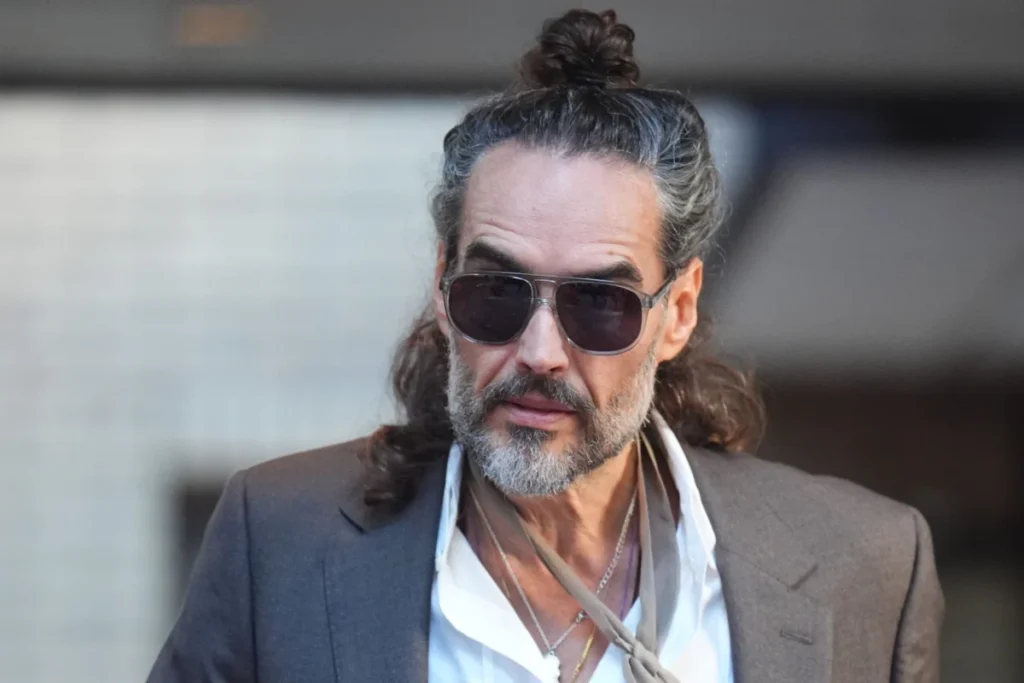

The conviction of Russell Brand on charges of rape and three counts of sexual assault marks a seismic conclusion to a high-profile criminal trial that has gripped the public consciousness. Presiding judge Mr. Justice Joel Bennathan delivered the verdict at Southwark Crown Court, signaling a stark transition from the defendant’s career as a celebrated media personality to the reality of the British penal system. As legal proceedings move toward the final sentencing hearing, the judiciary has made it clear that Brand should anticipate a substantial custodial term, reflecting the severity of the offenses and the harm inflicted upon his victims.
The courtroom atmosphere was reported to be somber as the guilty verdicts were read. Brand, who had been supported throughout the duration of the trial by his wife, Laura Gallacher, was immediately remanded into custody. His application for bail, which was predicated on a desire to spend a final weekend with his children before incarceration, was firmly denied by Mr. Justice Bennathan. The court cited a tangible risk of flight, determining that the gravity of the potential sentence provided sufficient incentive for the defendant to attempt to abscond.

A Chronology of the Legal Proceedings
The legal jeopardy surrounding Russell Brand did not manifest overnight; it is the culmination of a protracted investigation that gathered momentum over the preceding years. Following a series of allegations that emerged regarding his conduct during his tenure as a high-profile broadcaster and comedian, a formal criminal investigation was launched. The Metropolitan Police conducted a thorough inquiry, leading to the charges for which he has now been convicted.
Throughout the trial, the prosecution presented a narrative of systematic abuse of power, detailing how Brand allegedly utilized his celebrity status to isolate and victimize individuals. The four specific counts—one of rape and three of sexual assault—were treated with extreme gravity by the court. The defense attempted to contest the veracity of the claims, but the jury reached a unanimous verdict after deliberating on the evidence provided by the Crown Prosecution Service (CPS). The conclusion of the trial brings to a close a period of immense scrutiny for the defendant, who had largely retreated from the mainstream spotlight in recent years to pursue an independent media career.
The Sentencing Framework and Judicial Considerations
As the legal system prepares for the sentencing phase, the focus shifts to the sentencing guidelines for sexual offenses in the United Kingdom. Legal analysts suggest that Brand could face a prison sentence ranging from four to 19 years, depending on the judge’s assessment of the “culpability” and “harm” factors inherent in the Sentencing Council’s guidelines.

The sentencing hearing will involve a multi-layered analysis. First, the court will hear victim impact statements, providing those affected by Brand’s actions the opportunity to articulate the psychological, emotional, and physical consequences of his conduct. These statements are instrumental in helping the judge understand the long-term ramifications of the crimes.
Second, the court must weigh aggravating factors—such as the abuse of a position of trust or the exploitation of vulnerable individuals—against potential mitigating factors. Given the high-profile nature of the defendant, the court will operate with strict adherence to legal impartiality, ensuring that the sentence is proportionate to the offenses and consistent with precedents for similar crimes in the UK jurisdiction. The judge must also determine whether the sentences for the four individual charges will run concurrently or consecutively, a decision that will significantly alter the total time served.
Prison Logistics and Custodial Management
Following his removal from the dock, Brand was transported to a custodial facility via a security van, a sight that drew significant media attention outside Southwark Crown Court. While the Ministry of Justice maintains strict confidentiality regarding the placement of high-profile inmates for security reasons, it is widely understood that Brand was initially processed at HMP Wandsworth.

The UK Prison Service employs a rigorous assessment process for all new arrivals, particularly those who have been convicted of sexual offenses. This involves a comprehensive evaluation of the inmate’s risk to themselves and others. For high-profile sex offenders, standard prison protocol usually mandates that they be kept separate from the general prison population to prevent retaliatory violence or harassment.
There are specialized units within the prison estate designed for such cases, such as Vulnerable Prisoner Units (VPUs). Furthermore, the UK operates specific prisons, including HMP Whatton and HMP Stafford, that are dedicated to housing sex offenders. The decision on where Brand will serve his sentence will be finalized by the Prison Service’s intake team, with the primary objective being the preservation of order and the safety of all parties within the facility.
Broader Societal and Industry Implications
The conviction of a figure as prominent as Russell Brand sends a profound message across the entertainment and media landscape. Historically, individuals in positions of immense cultural influence have often operated with a degree of impunity, protected by layers of management, non-disclosure agreements, and the power dynamics of fame.

This trial serves as a landmark moment in the post-“Me Too” era, demonstrating that the justice system is increasingly capable of addressing historic allegations regardless of the defendant’s public stature. The implications for the media industry are significant; it prompts a necessary introspection regarding the vetting processes for talent and the responsibility of production companies and networks to ensure the safety of fans and staff alike.
Furthermore, the case underscores the importance of the “victim-centric” approach currently favored by the CPS. By prioritizing the collection of evidence and the support of survivors, the prosecution was able to build a case that withstood the intense scrutiny of a high-profile defense. This will likely set a precedent for future prosecutions involving celebrities, potentially encouraging more survivors to come forward with the expectation that they will be heard and that the law will be applied consistently.
Reaction and Public Discourse
The response to the verdict has been widespread, encompassing advocacy groups, media commentators, and the general public. While many have lauded the courage of the survivors who testified, others have reflected on the shock of seeing a man who was once a fixture of national television held accountable for such serious crimes.

Laura Gallacher, Brand’s wife, has remained a visible presence, her visible distress in the courtroom highlighting the personal toll such a trial takes on the families involved. The public gallery, often filled with legal observers and press, witnessed the stark reality of a public figure’s downfall. The contrast between the image Brand cultivated—that of an anti-establishment truth-seeker—and the findings of the court has fueled intense debate across social media and news platforms.
Conclusion
As the sentencing hearing approaches, the focus remains on the administration of justice. The legal process has concluded its primary phase, and the judiciary is now tasked with determining the appropriate punishment. For the victims, the verdict represents a measure of closure and validation of their experiences. For the public, it marks the end of a chapter in British media history, characterized by the collapse of a celebrity icon under the weight of his own criminal actions.
The coming weeks will likely see further analysis regarding the specifics of the sentence and the conditions under which Brand will serve his time. However, the foundational facts remain clear: the law has been applied, the evidence has been weighed, and a conviction has been secured. The case of Russell Brand will undoubtedly be studied in legal circles for years to come as an example of how the criminal justice system addresses complex, high-stakes allegations of sexual violence in the modern era.