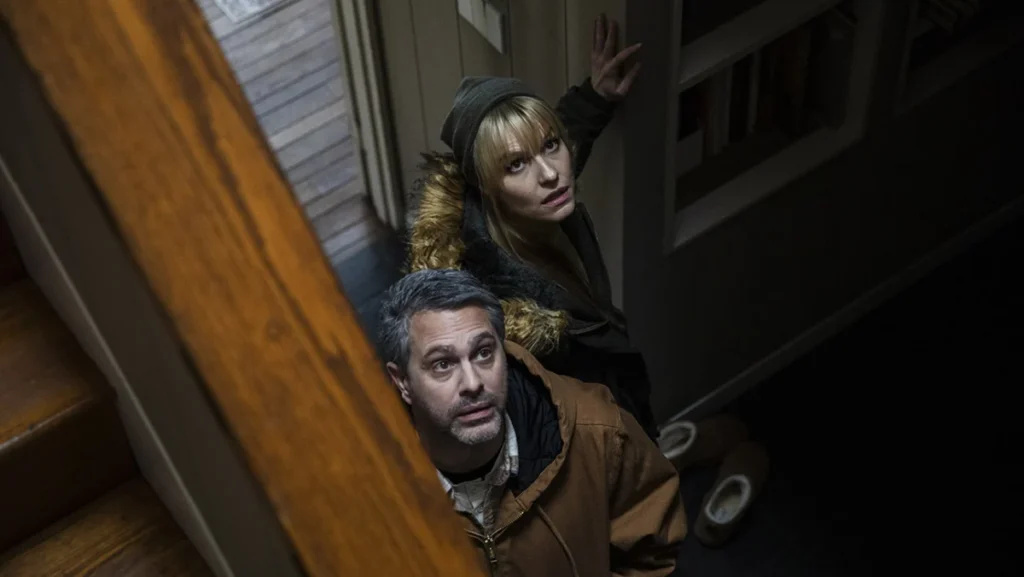

The cinematic tradition of exploring the dark underbelly of creative theft and intellectual property disputes has found a new, albeit familiar, entry in Neil LaBute’s latest feature film, Murderous. Making its world premiere at the prestigious Oldenburg International Film Festival, the 107-minute psychological thriller adds to a lineage of dramatic works that examine the perilous consequences of stealing another creator’s vision. From bestselling literature such as Jean Hanff Korelitz’s The Plot to classic stage thrillers like Ira Levin’s Deathtrap, the theme of artistic plagiarism has long captivated audiences. However, LaBute’s newest cinematic endeavor attempts to modernize this trope within the confines of a single-location, three-person chamber piece, inviting comparisons to classic cinematic precedents that critics note it ultimately struggles to sustain.
Principal Production and Narrative Overview
Written and directed by Neil LaBute—whose diverse career features critically acclaimed independent dramas such as In the Company of Men as well as mainstream fare like Nurse Betty—Murderous unfolds almost entirely within a single, isolated setting. The production relies on a lean, three-person principal cast featuring frequent LaBute collaborator Gia Crovatin, Thomas Sadoski, and Jordan Baker.
The narrative is structured into distinct chapters, opening with a section titled “Him.” The story centers on Marian, portrayed by Crovatin, a filmmaker who has achieved sudden critical and commercial success following the release of her breakout directorial debut: a female-oriented horror movie appropriately titled Murderous. Marian’s newfound financial prosperity is visually telegraphed through her picturesque living environment—a gorgeously rustic former mill—and the vintage red Porsche parked prominently in her driveway.
This tranquility is abruptly disrupted by the unannounced arrival of Norman, played by Sadoski. Having driven all the way from Iowa, Norman insists on having a conversation with the successful director. Despite her visible discomfort and the unexpected nature of the intrusion, Marian ultimately relents and invites him inside.
As the dialogue unfolds, it is revealed that Marian and Norman share a past, having been academic contemporaries during a period when Norman served as a teaching assistant and the two maintained a brief romantic relationship. During a tour of her expensive, meticulously decorated home, Norman observes the absence of personal items or family photographs. Instead, the residence is adorned with valuable literary artifacts and knick-knacks formerly owned by celebrated authors such as Truman Capote and Willa Cather, alongside Shirley Jackson’s personal letter opener—details that underscore the thematic weight of writing, ownership, and creation within the film’s universe.
The Conflict of Stolen Identity and Creative Authorship
After initial pleasantries establish Norman’s current struggles—he candidly admits to being unemployed and single—the narrative pivots to the core conflict. Norman confronts Marian directly regarding her award-winning film, demanding to know how she assumed he would not recognize the work.
Norman alleges that the foundational premise of the movie was originally his conception. According to his account, the two collaborated extensively on the foundational ideas and even produced physical flipbooks detailing individual sequences during their shared past—items he claims remain stored away in his possession. Consequently, Norman asserts that he is entitled to a formal agreement regarding financial compensation for his uncredited contributions.
True to LaBute’s signature exploration of transactional human behavior and power dynamics, the high-stakes confrontation soon adopts sexual undertones. When Norman brings up past infidelities from their romantic history, Marian seizes upon the memory to navigate the volatile social dynamic. The interaction tests the boundaries of consent, manipulation, and desperation, ending in an abrupt transition that sets the stage for the film’s second act.
The Second Act: Enter Lila and Industry Meta-Commentary
Transitioning to its second chapter, titled “Her,” the narrative introduces a second unexpected visitor to Marian’s rural sanctuary. Lila, portrayed by Jordan Baker, arrives as an ostensibly fervent admirer of Marian’s work, requesting autographed copies of the film on DVD, including one intended for her son.
Much like the encounter with Norman, Marian reluctantly admits the stranger into her home. Their subsequent dialogue shifts away from personal betrayal and toward broader observations regarding the contemporary film industry, distribution practices, and marketing hurdles. Through Marian’s extended monologue venting her frustrations with clueless movie distributors and commercial marketers, LaBute injects a layer of overt meta-commentary. Industry observers have noted that this sequence serves as the most resonant, personal, and unvarnished moment in the entire picture, echoing real-world tensions frequently experienced by independent filmmakers navigating the modern studio and distribution ecosystem.
Stylistic Influences and Critical Reception at Oldenburg
In crafting Murderous, LaBute has openly cited classic theatrical and cinematic thrillers as primary inspirations, most notably Joseph L. Mankiewicz’s 1972 chess-match film Sleuth and Alfred Hitchcock’s landmark single-take experiment Rope. Both historical predecessors relied heavily on confined spaces, sharp dialogue, and psychological chess games between a minimal number of characters to generate tension.
However, reviews following the world premiere at the Oldenburg International Film Festival suggest that Murderous falls short of these towering cinematic standards. Critics have pointed out that the plot machinations feel overly transparent and forced, lacking the organic escalation required to sustain a feature-length thriller. Furthermore, while the performances of Crovatin, Sadoski, and Baker have been commended for their commitment, the production at large has been described as an "actors’ exercise" rather than a fully realized narrative feature.
Particular attention has been drawn to the film’s pacing. Critics argue that the narrative hints intended to foreshadow later revelations—such as Lila’s true identity or Marian’s perception of her—are deployed with excessive heavy-handedness, undermining the suspense. At 107 minutes, the picture has been characterized as running significantly longer than its thin premise warrants, leading to calls for more rigorous editing to tighten the psychological claustrophobia of the piece.
Broader Implications for Neil LaBute’s Contemporary Filmography
The debut of Murderous at Oldenburg highlights a continuing phase in Neil LaBute’s prolific career, which has increasingly gravitated toward micro-budget, highly focused independent projects. Known historically for his biting theatrical dialogues and unflinching explorations of human cruelty and social hypocrisy, LaBute has frequently transitioned between stage and screen.
Projects like Murderous underscore the director’s ongoing interest in testing the limits of narrative minimalism—relying on dialogue-heavy confrontations and tightly restricted locations to explore themes of ownership, ambition, and exploitation. While the critical reception in Oldenburg indicates that this particular experiment faced hurdles in execution and pacing, the film nonetheless contributes to ongoing industry discussions surrounding independent filmmaking, the economics of creative distribution, and the eternal cinematic fascination with intellectual property theft.
As Murderous continues its festival run and seeks broader distribution avenues, its ultimate commercial and critical legacy will likely depend on how contemporary audiences respond to its theatrical framing and psychological confrontations. For now, LaBute’s latest venture stands as a stark reminder of the enduring anxieties surrounding artistic creation and the heavy price of claiming ownership over another person’s imagination.