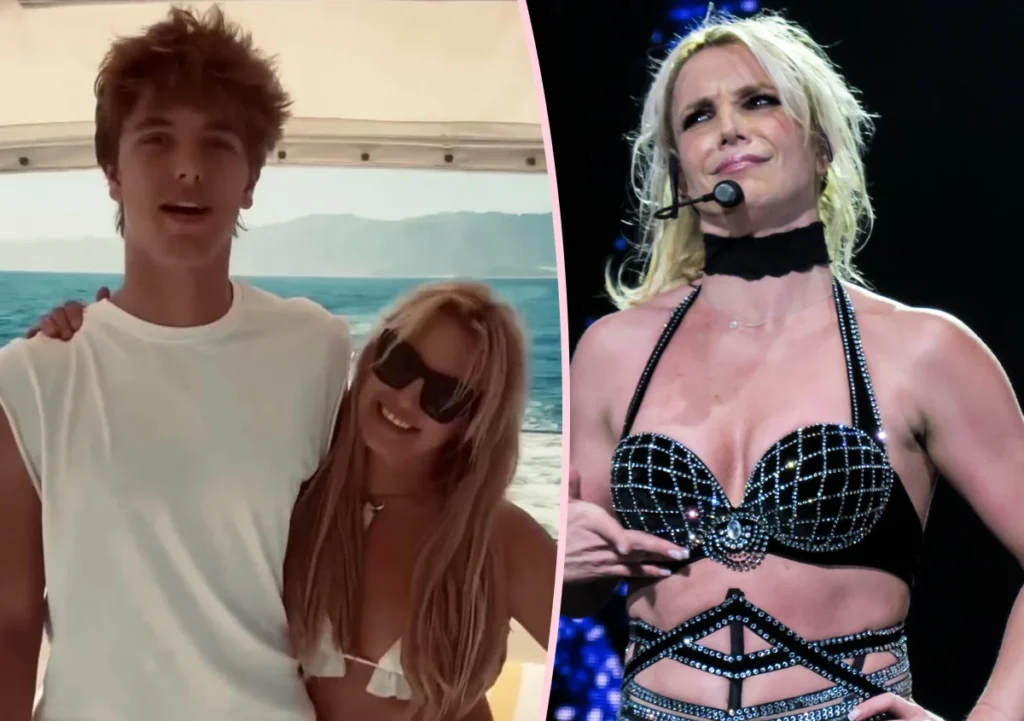

Jayden James Federline, the 19-year-old son of pop icon Britney Spears, has unequivocally dismissed a long-standing and widely circulated online conspiracy theory alleging that his mother has been cloned. During a live stream with a friend, reportedly held recently, Federline expressed profound frustration with the pervasive speculation, labeling the entire premise as "ridiculous" and a clear example of unchecked misinformation in the digital age. His candid remarks provide a rare direct rebuttal from within Spears’ immediate family, shedding light on the personal impact of relentless public scrutiny and the virality of unfounded claims.
The Genesis and Spread of the Clone Theory
The conspiracy theory concerning Britney Spears’ alleged cloning has been a fixture in certain online communities for several years, gaining traction particularly in the aftermath of heightened public interest surrounding her conservatorship battle. Proponents of the theory often point to perceived changes in Spears’ appearance, mannerisms, or vocalizations in recent years as "evidence" that the individual currently presented to the public is not the original pop star but rather a genetic replica or a body double. These claims frequently cite inconsistencies in her social media posts, perceived shifts in her public persona, or even subtle differences in her eyes or facial structure, which are then meticulously dissected and amplified across platforms like TikTok, YouTube, and various conspiracy forums.
The theory taps into a broader cultural fascination with celebrity doppelgängers and the idea that powerful, shadowy figures might replace public icons for nefarious purposes. Similar "clone" narratives have historically plagued other celebrities, such as the decades-old "Paul is dead" theory concerning Paul McCartney or more recent claims about Avril Lavigne. For Britney Spears, the theory found fertile ground amidst the emotional and often confusing narrative of her legal struggles, as fans, driven by a desire to understand her situation, sometimes turned to extreme explanations when conventional information felt insufficient or untrustworthy.
Jayden Federline’s Candid Rebuttal
Federline’s direct address to the theory occurred during a live social media broadcast. When questioned by a fan about whether the various rumors surrounding his family, including the clone theory, bothered him, he did not hesitate to offer a forceful dismissal. "I hop on TikTok and I see this one video that has 1.2 million likes, and the caption is like, ‘The biggest theory ever: Is Britney Spears still alive?’ Like, bro, you can go to her page and see her right now. Are you guys tweaking?" he stated, conveying a mix of disbelief and exasperation. His reference to a specific TikTok video underscores the widespread nature of the theory and its remarkable reach, evidenced by the millions of engagements it garnered.
His comments highlighted the stark disconnect between easily verifiable facts and the elaborate narratives constructed online. Federline emphasized the accessibility of his mother’s current presence through her official social media channels, suggesting that a basic level of critical thinking would quickly debunk the claims. This direct challenge from a family member provides a grounded perspective, contrasting sharply with the often-abstract and speculative nature of online conspiracy discussions.
The Broader Landscape of Celebrity Misinformation
Federline’s remarks extend beyond a simple debunking; they offer a commentary on the pervasive nature of misinformation in the digital age. He articulated a clear understanding of how online content can be manipulated and how susceptible large audiences are to sensationalized or unverified information. "It makes me know that a lot of the stuff on media is exaggerated and fake. People know how gullible people are, and they use that to their advantage. Anyone that sees it on media, they just see it, and if it has a lot of likes, they [believe] it. They don’t even research it. They’re just, ‘Wow, yeah, it’s crazy. I believe it,’" he observed.
This statement encapsulates a critical challenge facing modern information consumption: the tendency for viral engagement to be conflated with veracity. In an ecosystem where algorithms prioritize attention-grabbing content, even outlandish theories can achieve widespread visibility and, consequently, perceived legitimacy among segments of the audience who do not engage in fact-checking or critical analysis. The psychological underpinnings of believing conspiracy theories are complex, often involving a distrust of official narratives, a desire for simple explanations for complex events, and a sense of belonging to an exclusive group that possesses "hidden" knowledge. For celebrities, this environment can be particularly challenging, as their public lives are constantly dissected and interpreted through myriad lenses, some of which distort reality into bizarre and unfounded narratives.
The Context of Britney Spears’ Public Life and the #FreeBritney Movement
To fully appreciate the context of the clone theory and Federline’s reaction, it is crucial to understand the intense public scrutiny that has enveloped Britney Spears for decades. From her meteoric rise to fame as a teenager to her highly publicized personal struggles and the controversial 13-year conservatorship that governed nearly every aspect of her life, Spears has been a perpetual subject of media fascination. The #FreeBritney movement, which gained significant momentum in the late 2010s, mobilized millions of fans and activists who advocated for her liberation from the conservatorship, believing she was being exploited and controlled.
While the movement successfully brought unprecedented attention to the legal complexities and ethical questions surrounding conservatorships, it also inadvertently fueled an environment of intense speculation about Spears’ well-being, her true feelings, and the actions of those around her. In this climate, even innocuous social media posts could be interpreted as coded messages, and any perceived deviation from her "original" persona could be seen as evidence of manipulation or, in extreme cases, replacement. The clone theory, therefore, emerged not in a vacuum, but as an offshoot of a broader narrative of distrust and concern for the pop star’s autonomy and authenticity.
The Role of Other Public Figures in Amplifying Theories
The original article briefly references Kristin Cavallari’s past podcast comments, where she suggested Kanye West and Britney Spears were clones and later "doubled down" on the claims after reportedly texting Spears. While Cavallari’s comments may have been made in a lighthearted or speculative manner, they highlight how even public figures, intentionally or unintentionally, can contribute to the dissemination of such theories. When individuals with a public platform engage with or lend credence to these narratives, it can grant them a veneer of credibility for audiences who admire or follow them, further blurring the lines between entertainment and factual reporting. This dynamic underscores the responsibility that comes with having a platform and the potential for even casual remarks to contribute to the spread of misinformation.
The Emotional Toll on Family Members
Jayden Federline admitted that while a part of him finds the whole situation "funny," he ultimately feels "bad" about the pervasive nature of the speculation. "I get it though because everyone is a really huge fan of my mom and everything and all that stuff. I kind of get it, but it’s just like you gotta think of stuff on media – it’s never as overthinking as they make it seem. Don’t overthink it. It’s not as complicated as it seems. It’s literally right there in front of you," he articulated. This perspective offers a poignant glimpse into the emotional burden placed on the children of highly famous individuals. Jayden, like his brother Preston, has grown up under the relentless gaze of the public eye, navigating his adolescence amidst constant media attention surrounding his mother’s career and personal life.
His frustration stems not just from the absurdity of the theory itself, but from the realization that millions of people are willing to believe such an elaborate falsehood without critical examination. For a child, witnessing their parent become the subject of such invasive and bizarre theories can be deeply unsettling, forcing them to confront a distorted public image that bears little resemblance to their lived reality. It underscores the unique challenges faced by celebrity families, where personal boundaries are constantly eroded by public curiosity and speculative narratives.
Implications for Digital Literacy and Media Consumption
Jayden Federline’s experience serves as a microcosm for a much larger societal challenge: the need for enhanced digital literacy and critical media consumption skills. In an era where information—and misinformation—travels at lightning speed across interconnected networks, the ability to discern fact from fiction is paramount. His simple advice to "not overthink it" and to look at what is "literally right there in front of you" is a call for a return to basic skepticism and verification.
The incident highlights several critical implications:
- The Persistence of Conspiracy Theories: Even in the face of direct debunking from a primary source, conspiracy theories often prove remarkably resilient, deeply entrenched in communities that find comfort or meaning in their narratives.
- The Responsibility of Platforms: Social media companies face ongoing pressure to address the proliferation of misinformation, balancing freedom of expression with the need to protect users from harmful or deceptive content. The virality of the TikTok video Jayden referenced underscores the systemic challenges in curbing such spread.
- The Human Cost of Online Speculation: While seemingly harmless to some, these theories can have a profound psychological and emotional impact on the individuals and families targeted, contributing to feelings of paranoia, anxiety, and a loss of privacy.
- The Evolution of Fan Culture: What begins as passionate fan engagement can, in some instances, morph into obsessive speculation, blurring the lines between supportive fandom and intrusive, unverified claims.
In conclusion, Jayden James Federline’s forceful dismissal of the Britney Spears clone theory is more than just a personal statement; it is a resonant commentary on the current state of celebrity culture, digital misinformation, and the profound challenges of navigating truth in an increasingly complex media landscape. His message is a poignant reminder for audiences to exercise critical judgment and for the public discourse to prioritize verifiable facts over sensationalized and unfounded speculation, especially when it impacts the lives of real individuals.