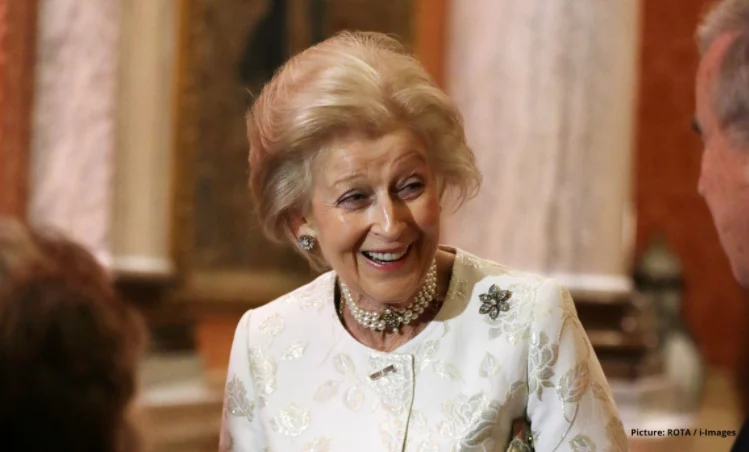

The absence of Princess Alexandra from a high-profile musical tribute held over the weekend in memory of her late sister-in-law, Katharine, the Duchess of Kent, has sparked fresh concerns regarding the health and well-being of the veteran British royal. Princess Alexandra, who is set to celebrate her milestone 90th birthday this coming December, was formally scheduled to be present at the commemorative event and was even listed in the official Court Circular as having attended the gathering.
However, it was subsequently confirmed that the princess was ultimately unable to make the appearance. This sudden and unannounced absence has brought renewed attention to her increasingly reclusive schedule and advanced age. The princess, a stalwart of the British monarchy for nearly three quarters of a century, was last seen in public in an official capacity back in April, when she joined senior members of the royal family for a poignant tribute to her first cousin, the late Queen Elizabeth II.
The weekend concert, which served as a musical celebration of the life and legacy of the Duchess of Kent—who passed away in September 2025 at the age of 92—brought together close family members, patrons, and admirers. While other senior members of the House of Kent were able to fulfill their engagements, Alexandra’s empty seat underscored the growing fragility of the older generation of the royal family. As queries mount regarding her current physical condition, palace aides have maintained a standard posture of discretion, leaving royal watchers and commentators to reflect on an extraordinary life of public service that is quietly drawing to a close.
A Life of Dedicated Public Service
To understand the weight of Princess Alexandra’s absence from public life, one must examine a career that spans decades of unwavering dedication to the British Crown. Born Princess Alexandra of Kent on December 25, 1936, she is the second child and only daughter of Prince George, Duke of Kent, and Princess Marina of Greece and Denmark. Through both her mother and father, she holds deep dynastic ties to the major royal houses of Europe. As a granddaughter of King George V, she was a first cousin to Queen Elizabeth II, a generational peer with whom she maintained a lifelong bond of friendship and mutual respect.
Princess Alexandra entered the sphere of public duties during the 1950s, a time of profound transition for the United Kingdom following the Second World War and the accession of a young Queen Elizabeth II. In an era long before modern media management and heavily curated public relations, Alexandra emerged as one of the most visible, hardworking, and universally admired faces of the monarchy. During the peak of her working life, she routinely undertook hundreds of official engagements annually, traveling the length and breadth of the United Kingdom and across the globe to represent the sovereign.
Her portfolio of patronages and presidencies grew to encompass well over 100 charitable, educational, medical, and artistic organizations. This vast array of interests reflected her personal passions, most notably healthcare, nursing, the visual arts, and classical music. She served for many years as the patron of the Royal Alexandra Hospital in Paisley, Scotland, and held leadership roles within numerous nursing and medical institutions, lending her active support and considerable platform to causes that often struggled for public visibility. Even as she entered her eighth and ninth decades of life, Princess Alexandra continued to maintain a select handful of patronages, quietly offering her backing from behind the scenes long after scaling back her physical travel.
The Memorial Context: Remembering the Duchess of Kent
The event that Princess Alexandra missed was designed as a deeply personal and artistic tribute to Katharine, the Duchess of Kent, who passed away in September 2025 at the age of 92. The Duchess was a fascinating figure within modern British royal history, known both for her traditional royal duties in the early decades of her marriage and her eventual, pioneering step away from official royal life to pursue a quiet career as a grassroots music teacher in Hull.
The memorial concert itself was organized by Future Talent, a prominent national charity of which the late Duchess had served as a dedicated patron. Future Talent was established to support exceptionally talented children from low-income backgrounds, helping them to overcome financial and social barriers to pursue their musical dreams—a cause that resonated deeply with the Duchess, who herself was a skilled pianist and passionate advocate for music education.
Despite her withdrawal from the daily frontline of royal duties several decades prior to her passing, the Duchess of Kent remained a beloved matriarch within the extended family. The memorial gathering was structured as a celebration of her life through the medium she loved most: music. It drew a select gathering of family members, cultural figures, and supporters of the charities she championed, making the initial expectation of Princess Alexandra’s attendance entirely natural given their decades-long bond as sisters-in-law, royal peers, and close personal friends.
Chronology of the House of Kent
The House of Kent occupies a unique and historic position within the lineage of the British royal family. The children of Prince George and Princess Marina—Prince Edward (the current Duke of Kent), Princess Alexandra, and Prince Michael of Kent—represent a living bridge to an earlier era of twentieth-century royalty.
The timeline of the siblings and their participation in public life highlights the rapid passage of time for this senior generation:
- December 1934: Prince Edward is born, later succeeding his father as the Duke of Kent following the tragic wartime death of Prince George in 1942.
- December 1936: Princess Alexandra is born on Christmas Day at 3 Belgrave Square, London.
- July 1942: Prince Michael of Kent is born, just weeks before his father’s death in a Royal Air Force crash in Scotland.
- June 1961: Princess Alexandra marries the Honorable Angus Ogilvy, a prominent businessman and philanthropist, in a grand ceremony at Westminster Abbey broadcast to millions worldwide.
- 1950s–2010s: All three siblings undertake extensive public duties in support of Queen Elizabeth II, traveling globally and patronizing hundreds of civic and military organizations.
- June 2020: Princess Alexandra is predeceased by her husband, Sir Angus Ogilvy, with whom she shared two children, James and Marina.
- April 2024: Princess Alexandra makes one of her final major public appearances, joining senior royals for a family tribute to Queen Elizabeth II.
- September 2025: Katharine, the Duchess of Kent, passes away at the age of 92, prompting tributes from across the nation and within the royal family.
- October 2025: The Duke of Kent prepares to celebrate his 91st birthday, remaining active in select public engagements.
- Recent Weekend: A memorial concert hosted by Future Talent is held for the late Duchess of Kent, an event marked by the notable and concerning absence of Princess Alexandra.
Family Representation at the Tribute
While Princess Alexandra’s absence was keenly felt, the extended family turned out in strong support to honor the memory of the Duchess of Kent. The concert was attended by her devoted widower, the Duke of Kent, who at nearly 91 years of age continues to demonstrate remarkable resilience and dedication to his remaining public responsibilities.
Also present was the siblings’ younger brother, Prince Michael of Kent, alongside several members of the younger generations. Notably, two of the late Duchess’s children—Lady Helen Taylor and Lord Nicholas Windsor—joined their father for the poignant evening. Several grandchildren, including the high-profile fashion figure and model Lady Amelia Windsor, were also in attendance to pay their respects to their grandmother.
The presence of multiple generations underscored the enduring legacy of the Kent branch of the family. Yet, the vacant seat designated for Princess Alexandra served as a stark reminder of the advancing years of the Queen’s first cousins, a generation that once shouldered the vast majority of the monarchy’s domestic and international engagements during the mid-to-late twentieth century.
Broader Implications and Public Reaction
The revelation that Princess Alexandra missed the musical tribute due to health considerations has prompted a wave of sympathetic reactions from royal observers, historians, and the general public. For decades, Alexandra was viewed as the embodiment of quiet reliability within the royal fold—never courting controversy, avoiding the tabloid spotlight, and consistently delivering steady, dignified service to the Crown.
The implications of her withdrawal from public engagements reflect a broader institutional reality for the modern British monarchy under King Charles III. With a slimmed-down working royal family currently navigating health challenges across multiple senior members—including the King himself and the Princess of Wales during the earlier part of the year—the reliance on older royals for ceremonial duties has shifted. While younger generations have stepped forward to absorb the workload, the physical absence of figures from Queen Elizabeth II’s generation marks the definitive closing chapter of an era.
As Princess Alexandra approaches her 90th birthday in December, public well-wishes have begun to circulate across social media and through royal correspondence channels. While official statements from Buckingham Palace regarding her day-to-day health remain strictly guarded in accordance with her private status, the collective sentiment remains one of deep gratitude. Her lifelong dedication to healthcare, the arts, and charitable endeavors has left an indelible mark on British society, ensuring that her legacy extends far beyond the palace gates, even as she spends her later years away from the public eye.