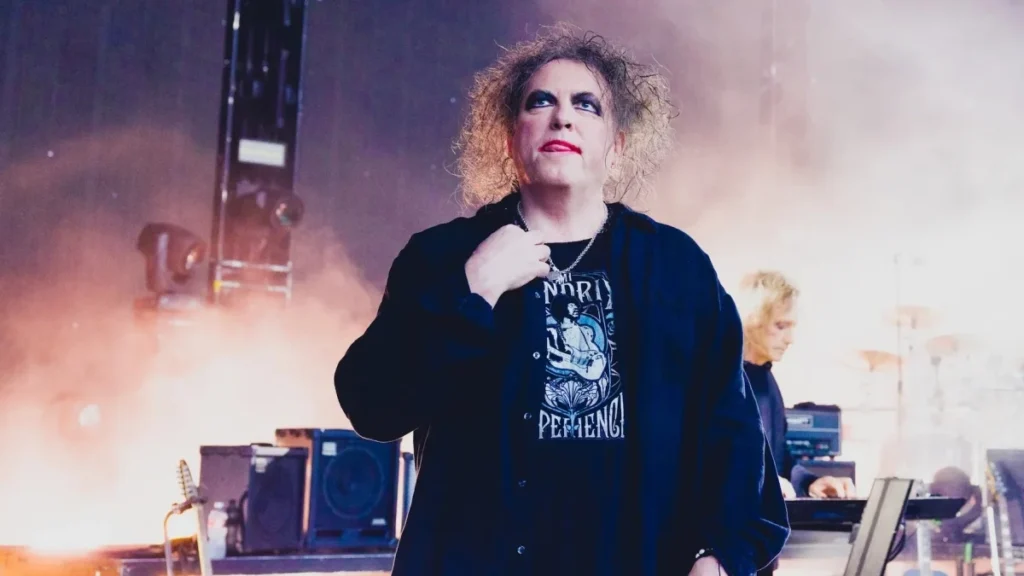

The Cure’s enigmatic frontman, Robert Smith, has voiced profound disapproval regarding FIFA President Gianni Infantino’s decision to introduce a first-ever halftime show for the FIFA World Cup Final. Smith, a vocal figure known for his candid opinions, particularly on matters he deems to compromise artistic or cultural integrity, aligned himself with a significant segment of football purists who view the initiative as an unwelcome commercialization of the sport’s most prestigious event. His condemnation, delivered through a series of acerbic social media posts, ignited a broader discussion about the evolving identity of global football and the increasing confluence of sport, entertainment, and commerce.
The Genesis of Controversy: A New Halftime Spectacle
The announcement of a star-studded halftime show for the World Cup Final marked a significant departure from decades of tradition. FIFA, under President Gianni Infantino, unveiled plans for a "groundbreaking spectacle" curated by Coldplay’s Chris Martin, featuring global music icons Madonna, Justin Bieber, Shakira, and K-pop sensation BTS. Infantino lauded the event as a celebration that would "celebrate football, music and our shared values, ensuring a legacy that transcends the final whistle." This move, however, was immediately met with skepticism and outright opposition from various quarters, including prominent cultural figures like Smith.
Historically, the FIFA World Cup Final’s halftime interval has been a period dedicated primarily to tactical discussions, player rest, and brief, often localized, cultural displays. Unlike American sporting events such as the Super Bowl, which have long embraced elaborate musical extravaganzas as a central part of their appeal, international football has largely maintained a focus on the purity of the game itself. The decision to integrate a full-scale musical performance, therefore, represents a strategic pivot by FIFA, aiming to broaden the World Cup’s appeal beyond traditional football audiences and tap into the lucrative global entertainment market.
Robert Smith’s Vehement Opposition
Smith’s initial reaction was swift and unequivocally negative. In an Instagram post that quickly garnered widespread attention, he directly quoted Infantino’s celebratory remarks about the halftime show before unleashing a visceral, expletive-laden critique. "AAAAAAAAAAAAAAAAAAGH… #Breadandcircuses #MUGWANK #pleasejustfuckoff," Smith wrote, encapsulating a sentiment of exasperation and disgust. The hashtags, particularly "Breadandcircuses," invoked a classical Roman concept referring to public entertainment and food provided by the powerful to keep the populace content, implying that the halftime show was a distraction from more fundamental issues or a cheap ploy for popularity. The term "MUGWANK," a distinctly British colloquialism often used to denote something foolish or contemptible, further underscored his disdain.
Following his initial outburst, Smith felt compelled to clarify his position, emphasizing that his criticism was not directed at Chris Martin, the curator, or the performing artists themselves. Instead, his ire was reserved for the fundamental "idea of a football World Cup Final Half Time Show." In a subsequent post, he reiterated, "THE POINT IS NOT R E A L L Y ABOUT W H O IS CURATING OR PERFORMING, IT IS ABOUT THE #MUGWANK I D E A OF A FOOTBALL WORLD CUP FINAL HALF TIME SHOW." This clarification was crucial, distinguishing his critique as one rooted in principle rather than personal taste or animosity towards specific musicians. He asserted that those who failed to grasp his core argument were likely proponents of a commercialized, money-driven vision of football, sarcastically suggesting they "adjust your red cap, your ‘I ❤️ JANNY + DONNY + $$$’ TSHIRT AND… KNOCK YOURSELF OUT?" This pointed jab also revealed another layer of his discontent: the involvement of controversial figures like then-US President Donald Trump in the trophy presentation, which Smith also vehemently opposed, using the portmanteau "Trumpton" and lamenting the lack of "A’s left for the ‘ARGH’ that should follow." His final hashtags, "#breadandcircuses #pleasejustfuckoff #fuckfifa #justlookup lostworld," powerfully summarized his deep-seated disillusionment with the direction FIFA was taking the global sport.
The Purist’s Lament: Tradition vs. Commercialism
Robert Smith’s strong reaction resonates with a significant segment of football fans and purists globally who lament the increasing commercialization and perceived "Americanization" of the sport. For many, the World Cup Final is the pinnacle of sporting achievement, a moment steeped in history, national pride, and the raw drama of athletic competition. The introduction of an elaborate halftime show, complete with pop stars and corporate sponsors, is seen as an intrusion that detracts from the sanctity of the game itself.
Critics argue that these spectacles dilute the sporting experience, transforming a revered athletic contest into a broader entertainment product. They fear that the focus will shift from the ninety minutes of football to the peripheral glamour and commercial opportunities. This sentiment is part of a larger debate within the football community concerning changes like "hydration breaks" – a controversial addition to the 2026 World Cup which, while ostensibly for player welfare in demanding climates, also conveniently provides additional slots for broadcasters to air commercials, further integrating advertising into the game’s flow. Such innovations are often perceived as prioritizing revenue generation over the intrinsic values of the sport.
The term "Americanization" frequently arises in these discussions, drawing parallels with American sports leagues like the NFL, where the Super Bowl halftime show has evolved into a global cultural phenomenon, often overshadowing the game itself in terms of media buzz and viewership. While highly successful in generating massive audiences and advertising revenue, this model is viewed by purists as fundamentally incompatible with the traditions and ethos of football, which emphasizes continuous play, fan chants, and an atmosphere built around the match itself.
A Historical Context: Halftime Shows in Sports
To understand the depth of this debate, it’s essential to consider the historical context of halftime shows in major sports. The Super Bowl Halftime Show, for instance, began modestly in the 1960s with marching bands and local performers. It evolved dramatically in the early 1990s when major pop acts like Michael Jackson transformed it into a global spectacle. Today, it commands audiences of over 100 million viewers in the United States alone and features some of the world’s biggest musical artists, costing millions to produce but generating hundreds of millions in advertising and brand exposure. This model has proven incredibly effective for the NFL in broadening its appeal beyond traditional football fans.
For FIFA, the motivation to emulate this success is clear. The World Cup is already the most-watched sporting event globally, with billions tuning in. By adding a Super Bowl-esque halftime show, FIFA aims to further elevate its entertainment value, attract non-football audiences, particularly younger demographics, and create new revenue streams through sponsorships and media rights. This strategy aligns with a broader trend in global sports where major events are increasingly packaged as comprehensive entertainment experiences rather than purely athletic contests.
However, football’s unique cultural fabric makes this transition more contentious. Unlike American football, where play stops frequently, soccer is characterized by its fluid, continuous nature. The rhythm of the game, the ebb and flow of supporter chants, and the relatively short, unadorned halftime are integral to the matchday experience for many. Introducing a lavish production risks disrupting this established rhythm and alienating a core fanbase that values authenticity and tradition.
FIFA’s Vision and Global Ambitions
Gianni Infantino’s tenure as FIFA President has been marked by a drive for expansion, modernization, and increased revenue. Coming to power in the wake of significant corruption scandals that tarnished FIFA’s image, Infantino has sought to rebrand the organization and expand its global reach. His initiatives have included expanding the World Cup to 48 teams, exploring new tournament formats, and, evidently, enhancing the entertainment aspect of its flagship event.
Infantino’s statement describing the halftime show as "groundbreaking spectacle" that will "celebrate football, music and our shared values" reflects a strategic intent to position FIFA not just as a governing body of a sport, but as a major player in the global entertainment industry. The choice of performers—Madonna, a timeless pop icon; Justin Bieber, a massive draw for younger audiences; Shakira, a global superstar with strong ties to previous World Cups; and BTS, a K-pop phenomenon with an unprecedented global fanbase—underscores this ambition. These artists represent diverse genres and geographies, ensuring maximum appeal across different demographics and continents. Coldplay’s Chris Martin as curator further adds a layer of credibility and artistic direction, aiming to craft a show that is both spectacular and culturally relevant.
This vision, however, often clashes with the deeply ingrained traditions and cultural sensitivities of football fans worldwide. While FIFA emphasizes unity and celebration, critics perceive these changes as an erosion of the sport’s soul, driven primarily by commercial imperatives.
Broader Criticisms of the 2026 World Cup
The controversy surrounding the halftime show is not an isolated incident but part of a larger pattern of criticism directed at the 2026 FIFA World Cup. Beyond the halftime show, the implementation of mandatory "hydration breaks" during each game has drawn significant backlash. While FIFA argues these breaks are necessary for player safety, particularly in potentially hot climates, their immediate effect is to create more commercial opportunities for broadcasters. This directly impacts the viewing experience, breaking up the flow of the game for advertising, a practice long common in American sports but generally resisted in football.
Furthermore, Robert Smith’s specific disdain for the presence of US President Donald Trump alongside Infantino during the trophy presentation highlighted another aspect of politicization and commercialization that irks purists. The optics of political leaders, especially controversial ones, being central to a sporting ceremony rather than focusing solely on the athletes and the game itself, is seen as a further distraction and a blurring of lines that many wish to keep distinct. Smith’s sardonic mention of "Infantosser" and "Trumpton" underscores his view of these figures as emblematic of the forces he believes are corrupting the sport.
The Road to the Final: The Sporting Context
Amidst these debates, the sporting drama of the World Cup continued its relentless march towards its climax. The final match, scheduled for Sunday, July 19th, pitted two footballing giants, Spain and Argentina, against each other in a battle for ultimate glory. The preceding day, England and France competed for the third-place honors, providing another high-stakes encounter. These matches, representing the culmination of years of training, strategy, and passion, were the primary focus for millions of fans, underscoring the enduring appeal of the sport itself, regardless of the surrounding entertainment spectacles.
Analysis: The Shifting Landscape of Global Football
Robert Smith’s outspoken criticism of the World Cup Final halftime show serves as a powerful microcosm of a broader ideological struggle within global football. On one side are the traditionalists and purists who champion the sport’s historical integrity, its organic culture, and its resistance to excessive commercialization. They view changes like the halftime show and hydration breaks as cynical attempts to commodify a beloved pastime, sacrificing authenticity for profit. On the other side are FIFA and its proponents, who argue for modernization, expanded global reach, and the integration of entertainment elements to attract new audiences and secure the sport’s financial future in an increasingly competitive global media landscape.
The implications of this shift are far-reaching. If successful, FIFA’s strategy could usher in an era where the World Cup becomes an even larger cultural juggernaut, rivaling events like the Olympics and the Super Bowl in its ability to draw mass, non-sports-specific audiences. This could lead to unprecedented revenue, which FIFA argues can be reinvested in football development globally. However, the risk is alienating the sport’s most devoted fans, eroding the unique identity that has made football the world’s most popular sport, and creating a homogenized entertainment product that loses its distinctive soul.
The World Cup Final halftime show, therefore, is more than just a musical interlude; it is a symbol of this ongoing tension. It represents a critical juncture where the custodians of football must navigate between preserving its cherished traditions and adapting to the demands of a globalized, commercialized entertainment market. The intensity of reactions, from Robert Smith’s impassioned "AAAAAAAGH" to Infantino’s "groundbreaking spectacle" rhetoric, underscores the profound significance of this debate for the future of the beautiful game. The ultimate legacy of these changes will be determined by how well FIFA manages to balance these competing visions, and whether the essence of football can truly transcend the final whistle, amidst the growing crescendo of commercial enterprise.
In related news, Robert Smith recently collaborated with Olivia Rodrigo on the duet “what’s wrong with me” from her most recent album, you seem pretty sad for a girl so in love, demonstrating his continued engagement with contemporary music despite his strong views on other cultural phenomena.