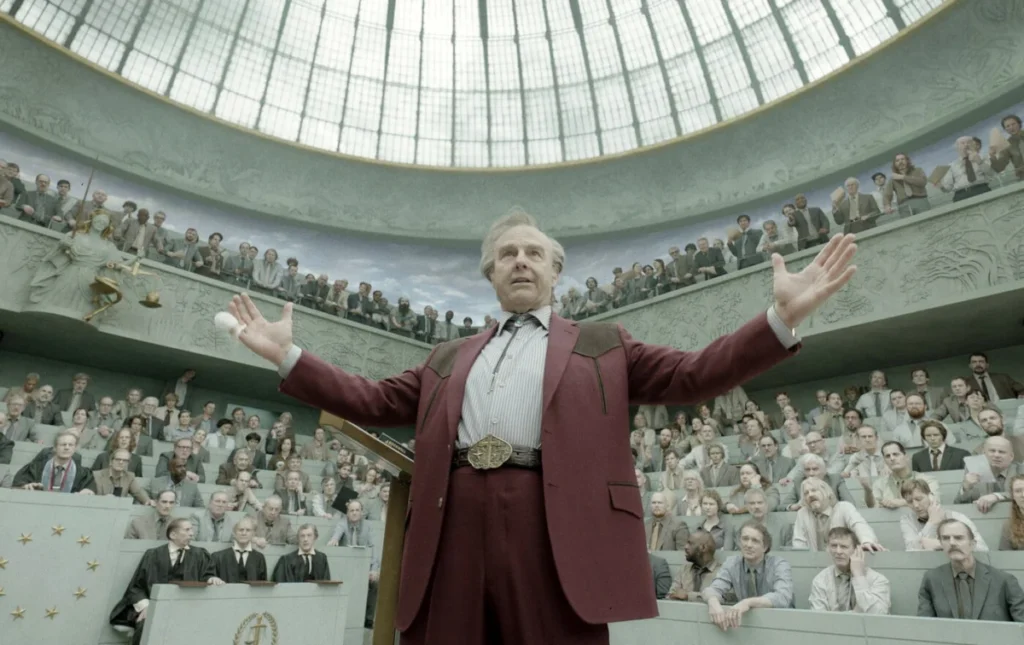

The release of Alejandro G. Iñárritu’s eighth feature film, Digger, has reignited critical discourse surrounding cinema’s capacity to address the existential threat of climate change. Starring Tom Cruise as the unapologetic Texas oil baron Digger Rockwell, the film debuted following an unconventional, tightly guarded marketing campaign that initially masked its true thematic identity. Billed as a high-concept satire, Iñárritu’s latest project functions less as a traditional comedy and more as a bleak, theatrical examination of systemic inertia, corporate manipulation, and public complacency. Co-written by Iñárritu alongside Alexander Dinelaris, Nicolás Giacobone, and Sabina Berman, the production reunites the director with three-time Academy Award-winning cinematographer Emmanuel Lubezki, marking their first major collaboration since 2014’s Birdman.
Narrative Premise and Character Dynamics
Digger centers on a catastrophic man-made disaster: the reckless, profit-driven oil drilling operations led by Digger Rockwell in Greenland result in the structural failure of a massive ice shelf. The detached ice mass drifts into European waters, triggering catastrophic coastal impacts and mass casualties. Rather than accepting culpability, Rockwell employs a calculated public relations campaign to shift the narrative, transforming himself in the public eye from an environmental antagonist to a necessary savior.
The film features an ensemble cast portraying the architects of corporate and political self-interest. John Goodman delivers an unhinged performance as U.S. President Compson, whose sycophantic alignment with corporate interests is highlighted by his proclamation that "Digger’s gonna dig us out again." Sandra Hüller co-stars as Emma Rockwell, Digger’s half-sister and business associate, alongside Michael Stuhlbarg as the Vice President. Riz Ahmed rounds out the principal cast as Ganesh, a climate scientist brought in by the administration to evaluate and legitimize the unfolding crisis.
Stylistic Choices and Production Design
Initial reactions to promotional materials criticized the film’s monochromatic and stark visual palette. However, upon full viewing, these aesthetic choices become integral to the film’s metanarrative structure. Lubezki’s cinematography deliberately mimics the artificiality of a stage production—specifically referencing the stylized deadpan realism of Swedish auteur Roy Andersson.

The visual presentation reflects the fictional "Fossil Fools" theatrical production embedded within the narrative. By framing the events primarily within the confines of a stage and backstage theatrical rooms, Iñárritu underscores the artificiality of how society consumes crisis management. Rather than utilizing the sweeping, natural grandeur seen in their previous collaboration, The Revenant, Lubezki and Iñárritu opted for constrained, ornately framed compositions designed to evoke the claustrophobia of institutional denial.
Chronology of Production and Release
The development of Digger follows a turbulent period for Iñárritu, whose previous feature, the semi-autobiographical Bardo, False Chronicle of a Handful of Truths, experienced a challenging theatrical rollout following its 2022 premiere. Seeking a return to socially critical allegory, Iñárritu spent the intervening years developing the screenplay for Digger, focusing on the intersection of late-stage capitalism and ecological collapse.
The film’s promotional rollout relied heavily on ambiguity. Early teasers showcased gritty, stylized footage that led to widespread online speculation regarding the film’s genre. Upon its festival circuit premiere and subsequent press screenings, critics were divided. While polarising reviews emerged—with some outlets labeling the picture a punishing exercise in self-sabotage—supporters praised its unflinching willingness to implicate both institutional leadership and audience passivity in the ongoing climate crisis.
Thematic Analysis: Satire Versus Tragedy
Industry analysts and film critics have categorized Digger as a philosophical successor to Stanley Kubrick’s Dr. Strangelove and Adam McKay’s Don’t Look Up. However, Iñárritu’s film departs from conventional satirical frameworks by rejecting the promise of narrative catharsis.
A central set-piece of the film involves a prolonged monologue delivered by Cruise’s character. The speech begins with factual, unvarnished assessments of global ecological vulnerabilities, only to pivot mid-oration into a sophisticated rhetorical maneuver that deflects blame and rehabilitates Rockwell’s public image. This sequence serves as a structural critique of how corporate entities manipulate media narratives to neutralize public outrage.

The film’s ultimate thesis posits that consumption of art and media concerning climate change provides audiences with a false sense of moral absolution. By experiencing catharsis through fictional depictions of corporate downfall, viewers may develop a psychological complacency that inhibits genuine, real-world political action.
Broader Implications and Industry Reception
Digger enters a crowded cinematic landscape of contemporary climate anxiety films, yet it stands apart through its reflexive critique of the medium itself. By directly questioning whether artistic representation has any tangible impact on real-world policy, Iñárritu challenges the utility of issue-driven cinema.
While debate persists regarding the film’s entertainment value—with some mainstream reviewers finding its relentless cynicism difficult to digest—supporters argue that its historical value lies in its refusal to offer comforting resolutions. As global temperatures continue to rise and international climate agreements face implementation hurdles, films like Digger reflect a growing cultural anxiety: the recognition that systemic ecological failure is sustained not by ignorance, but by deliberate, narrative-driven complicity.