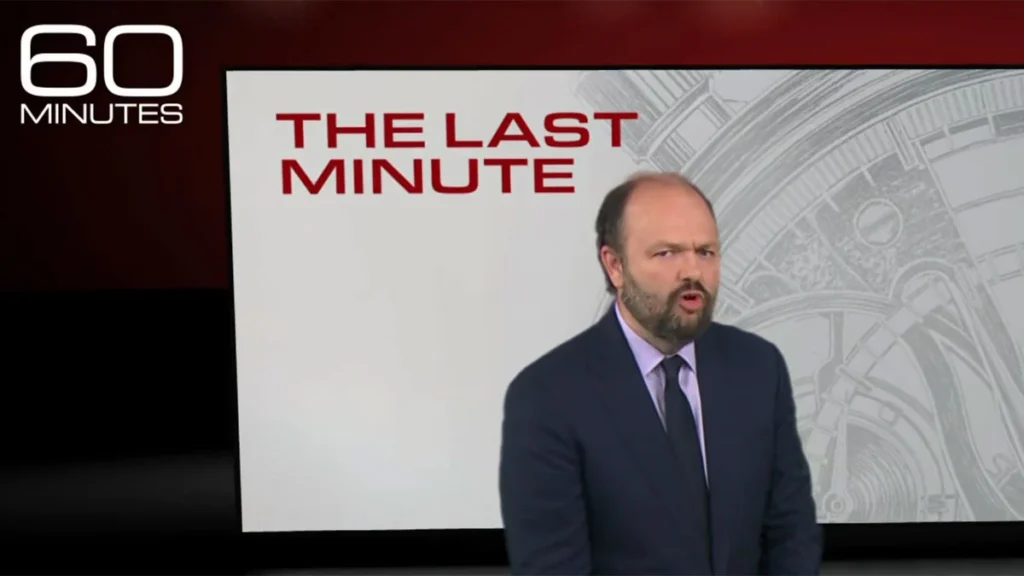

The long-standing dominance of CBS’s flagship investigative program, 60 Minutes, faced a significant test this past Sunday as the show returned for its 59th season. Nielsen data released following the broadcast indicates a substantial erosion of the program’s traditional audience base. The premiere, which served as the launchpad for a controversial and highly anticipated editorial overhaul, averaged 7.94 million viewers. This figure represents a 21% decline from the 10.02 million viewers who tuned in for the season premiere last year. Perhaps more concerning for advertisers and network executives is the performance within the key 25-to-54 demographic, which saw a 33% drop, falling to 1.58 million viewers.
This ratings dip arrives at a precarious time for CBS News, which has been navigating a period of internal transition and public scrutiny since the appointment of Bari Weiss as editor-in-chief and the arrival of executive producer Nick Bilton. The mission to "retool" the venerable institution, which first premiered on September 24, 1968, has been marked by personnel turnover and questions regarding the editorial direction of the newsmagazine.
The NFL Lead-In Context
In television programming, the strength of the lead-in audience is often the primary predictor of a show’s success. 60 Minutes historically benefits from the massive audiences drawn by CBS’s Sunday NFL coverage. This season, however, the lead-in provided by the Green Bay Packers-Minnesota Vikings game drew 18.6 million viewers. While an impressive figure by any standard, it represented a lower peak than the NFL game that preceded last year’s season premiere.
Industry analysts point out that the NFL’s decision to schedule simultaneous doubleheaders across both CBS and Fox networks has effectively diluted the "captive audience" effect that CBS previously enjoyed. Despite this, the loss of over 10 million viewers during the transition from the football broadcast to the newsmagazine highlights a significant churn rate. Even when adjusting for the slightly smaller NFL audience, the retention rate for 60 Minutes failed to meet internal network projections, signaling a potential disconnect between the program’s new identity and its long-term loyalists.
Chronology of a Revamp
The current state of 60 Minutes is the result of a deliberate, multi-stage strategy initiated over the past eighteen months. Following the leadership transition at CBS News, Weiss and Bilton signaled their intent to modernize the show’s format and editorial focus.
- Early 2025: The network began internal assessments of its news programming, leading to discussions about the "aging" appeal of 60 Minutes.
- Mid-2025: Tensions surfaced regarding the show’s editorial staff. The decision to move on from long-time correspondent Scott Pelley became a focal point of industry discourse. Pelley’s departure, following a public disagreement with Weiss regarding the show’s editorial trajectory, became symbolic of the broader shift in power and priorities at the network.
- Late 2025: CBS News finalized a settlement regarding a lawsuit brought by Donald Trump concerning a 2025 interview segment. The settlement, reportedly valued at $16 million, served as a lightning rod for criticism from media watchdogs who argued the network was compromising its journalistic independence.
- September 2026: The official launch of the 59th season, featuring a hybrid of traditional reporting and a new, faster-paced narrative style favored by the current leadership.
Editorial Shifts and Content Analysis
Under the guidance of Nick Bilton, the premiere attempted to balance the traditional "ticking clock" format with a more aggressive approach to contemporary issues. The episode featured a report on a U.S. airman downed in Iranian airspace, a high-stakes segment that echoed the show’s historical roots in global investigative reporting. However, the inclusion of a hidden-camera segment investigating alleged brokers for presidential pardons involving Donald Trump underscored the program’s move toward more politically charged content.
Furthermore, the network has signaled that future episodes will dedicate significant airtime to artificial intelligence—a thematic shift that reflects Bilton’s focus on tech-centric reporting. While these subjects are designed to capture a younger, more digital-native audience, the initial data suggests that these topics have not yet succeeded in offsetting the attrition of the show’s traditional, older demographic.
The Impact of Internal and External Pressures
The allegations of political bias against Bari Weiss have cast a long shadow over the show’s production. While both Weiss and the CBS corporate suite have consistently denied these claims, the perception of bias has had tangible effects on the network’s public standing. Critics, including several prominent media columnists, have suggested that the "retooling" of 60 Minutes is not merely a stylistic change but an ideological pivot.
This environment of suspicion was exacerbated by the 2025 legal settlement. For a program that has spent over half a century positioning itself as the gold standard of American broadcast journalism, the perception that it has become a battleground for political influence is a significant liability. When the audience feels that the news is filtered through a partisan lens, the traditional trust factor—a primary driver for 60 Minutes’ longevity—begins to weaken.
Market Implications and Future Outlook
The sharp decline in the 25-to-54 age demographic is perhaps the most concerning metric for CBS. Advertisers pay a premium for this segment, and a one-third decrease in this group indicates that the show is losing its relevance to the very audience that advertisers most desire to reach.
If the ratings do not stabilize in the coming weeks, the network will be forced to reconsider its strategy. The options available to leadership are limited: they can continue to press forward with the current editorial vision, hoping that the audience eventually adjusts to the "new" 60 Minutes, or they can pivot back to the more traditional, balanced approach that defined the program for decades.
From a business perspective, the sustainability of 60 Minutes is critical to the financial health of the CBS news division. The show remains one of the most profitable hours of television in history, but its value is inextricably linked to its viewership. A sustained decline could lead to a renegotiation of advertising rates and potentially put pressure on the current leadership team to produce results that align more closely with historical performance levels.
A Legacy at a Crossroads
As 60 Minutes moves forward into the remainder of its 59th season, it remains an institution in transition. The challenge for Bari Weiss and Nick Bilton is not just to capture headlines or engage in high-profile investigations, but to retain an audience that has shown a clear reluctance to embrace the recent changes.
The success of the next several weeks will determine whether the premiere’s ratings drop was a temporary anomaly caused by the specific scheduling of the NFL games or the beginning of a long-term trend. For now, the numbers are clear: the audience is not yet sold on the new direction of a show that has, for generations, been the primary Sunday night destination for millions of Americans. Whether the program can reclaim its stature as the undisputed leader in investigative journalism while undergoing such a radical transformation remains the most pressing question for CBS News as it navigates the remainder of the 2026-2027 broadcast season.