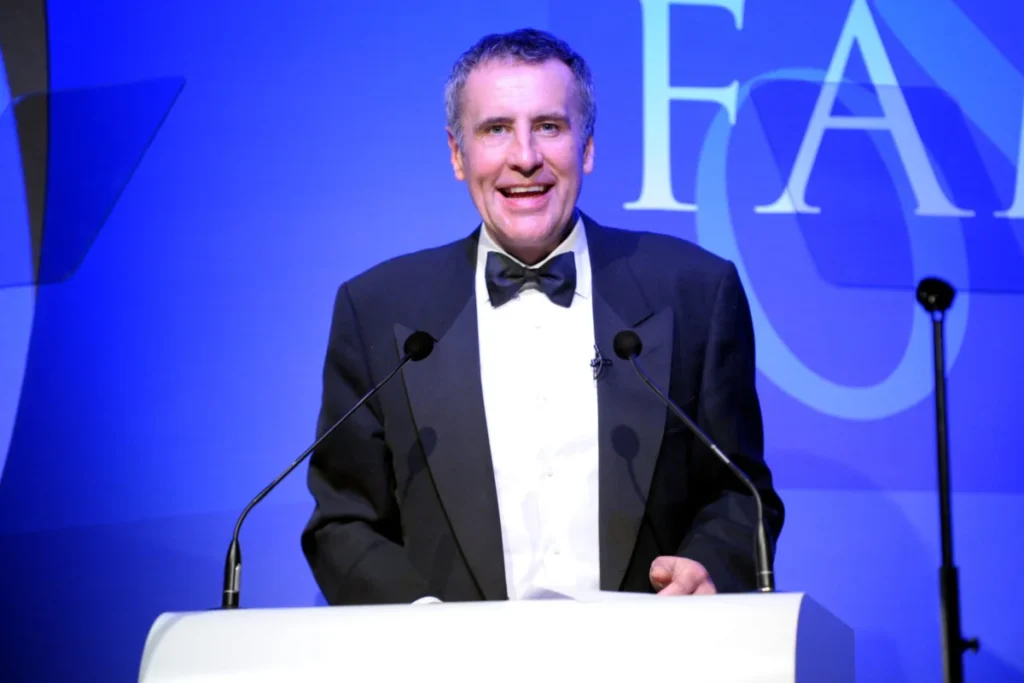

Veteran television presenter and former Sky News anchor Dermot Murnaghan, a towering figure in British journalism for five decades, has passed away at the age of 68. His family announced on Saturday that he died peacefully at his home in North London on July 11th, following a period of illness with stage four prostate cancer, a diagnosis he had bravely shared publicly and used as a platform for vital awareness campaigning. Murnaghan’s distinguished career saw him grace the screens of every major UK news broadcaster, delivering critical news and guiding millions through moments of national and international significance with his characteristic gravitas, incisive questioning, and reassuring presence. His passing marks the end of an era for many who grew up watching his calm authority and sharp intellect illuminate the day’s headlines, leaving behind a profound legacy not only in broadcasting but also in public health advocacy.
A statement released by his family on his official X account confirmed the sad news, detailing that he passed away "peacefully with his family at his side." The statement expressed profound gratitude to the medical teams who provided "such sensitivity and extraordinary compassion throughout his illness." It also acknowledged the "many, many kind messages of goodwill" he received since his diagnosis of advanced prostate cancer last year, which prompted his subsequent dedication to raising awareness for screening programmes. The family has requested that, in accordance with his wishes, the funeral will be a small, private ceremony. However, a memorial service for friends and colleagues is planned for later this year at St Bride’s Church, Fleet Street, affectionately known as ‘The Journalists’ Church,’ a poignant choice reflecting his deep roots in the profession. In lieu of flowers, the family encouraged donations to Prostate Cancer UK, Prostate Cancer Research, and North London Hospice, honouring Murnaghan’s commitment to ensuring others benefit from the research and care he received.
A Distinguished Career: Five Decades in British Broadcasting
Dermot Murnaghan’s journey through the landscape of British news broadcasting was as extensive as it was impactful, spanning a period of significant transformation within the media industry. From the nascent days of breakfast television to the relentless demands of 24-hour news, he maintained a consistent presence, earning respect for his professionalism, versatility, and unflappable demeanour.
The Genesis: Early Years at Channel 4
Murnaghan began his presenting career in 1989, joining Channel 4 at a time when the channel was establishing itself as a distinct voice in British television. He initially fronted its innovative breakfast programme, a bold new format that offered an alternative to the more traditional offerings of the BBC and ITV. In this role, he was instrumental in shaping the tone and content of early morning news, combining hard news segments with business reports, demonstrating his early aptitude for handling diverse topics. His crisp delivery and authoritative yet approachable style quickly resonated with viewers, setting the stage for his subsequent ascent. Channel 4’s breakfast news programming aimed for a more analytical and in-depth approach, which suited Murnaghan’s intellectual curiosity and journalistic rigour.
Ascension to National Prominence: ITV and BBC
His talent soon caught the attention of other major broadcasters, leading him to ITV, where he became a key figure in their news division. He hosted flagship programmes such as the ITV Lunchtime News and the prestigious News at Ten, which for decades had been a cornerstone of British evening news. During his tenure at ITV, Murnaghan was at the forefront of covering some of the most profound national events. Notably, he led the coverage of the tragic death of Diana, Princess of Wales, in 1997. This event, which plunged the nation into an unprecedented period of mourning and reflection, demanded a presenter who could convey both the gravity of the situation and provide calm, steady guidance through a tumultuous news cycle. Murnaghan’s performance during this period cemented his reputation as a reliable and empathetic news anchor capable of handling immense pressure. From 1999, he moved to present the ITV Evening News and Nightly News shows, further solidifying his position as a prominent national newsreader.
In the early 2000s, Murnaghan transitioned to the BBC, the UK’s public service broadcaster, where he continued to broaden his reach and impact. He became a main presenter of BBC Breakfast, a role he held until 2007. The BBC Breakfast sofa is one of the most visible platforms in British television, and Murnaghan’s presence contributed significantly to its appeal, delivering news and interviews to millions each morning. He also presented the BBC News at Six and Ten, the corporation’s flagship evening bulletins, further underscoring his standing as a leading journalist. These roles placed him at the heart of the BBC’s news output, where his calm authority and ability to distil complex information for a national audience were highly valued.
Versatility Beyond the Newsdesk: Quiz Shows and Documentaries
Demonstrating a remarkable versatility beyond the hard news environment, Murnaghan also ventured into entertainment, hosting the popular quiz show "Eggheads" from 2003 until 2014. This shift showcased a different facet of his public persona – a quick wit and engaging warmth that endeared him to a wider audience. "Eggheads," a battle of wits between a team of general knowledge experts and a challenging public team, allowed him to display his intellectual prowess in a lighter setting, proving that his charisma extended beyond the gravitas of the news desk. His ability to seamlessly transition between serious journalism and popular entertainment was a testament to his broad appeal and adaptable presenting style.
Furthermore, Murnaghan explored his interest in factual programming through documentaries. He hosted "Crimes That Shook Britain" for Channel 5, delving into some of the UK’s most infamous criminal cases, and "Killer Britain" for the Crime + Investigation UK channel. These programmes allowed him to apply his journalistic skills to investigative storytelling, examining the social and psychological impacts of crime, further diversifying his portfolio and demonstrating his range as a broadcaster.

The Sky News Era: A Definitive Chapter
It was at Sky News, however, that Dermot Murnaghan spent perhaps his most defining period, serving as a lead anchor for 15 years. Joining the 24-hour news channel, he became a central pillar of its rolling coverage, known for his incisive interviews, comprehensive analysis, and steady hand during breaking news. He presented his own show, dedicated to in-depth discussions on politics and current affairs, allowing for a more expansive exploration of key issues.
His tenure at Sky News included anchoring some of the most significant national and international events. He was the face of Sky’s extensive coverage of the 2019 general election, guiding viewers through the intricacies of exit polls, results, and political analysis as the nation grappled with Brexit. His ability to maintain composure and clarity amidst the rapid-fire developments of election night coverage was exemplary. Just three years later, in 2022, he played a crucial role in Sky News’s monumental coverage of the death of Queen Elizabeth II, an event of profound historical magnitude. During this period, Murnaghan’s steady presence helped millions process the unfolding news, offering a sense of continuity and understanding during a moment of national transition. His departure from Sky News in 2023 marked the end of a remarkable chapter, concluding a career that spanned the evolution of British television news.
A Courageous Campaigner: Raising Awareness for Prostate Cancer
Beyond his unparalleled contributions to journalism, Dermot Murnaghan left an equally powerful mark through his courageous advocacy for prostate cancer awareness. His personal battle with the disease transformed him into a vocal and passionate campaigner, using his public platform to highlight the critical importance of early detection and screening.
The Diagnosis and Public Advocacy
Murnaghan announced his diagnosis of stage four prostate cancer last year, revealing it to be "incurable but it’s not untreatable." This nuanced phrasing offered a glimmer of hope while acknowledging the severity of his condition. Stage four prostate cancer means the cancer has spread beyond the prostate to other parts of the body, making a cure unlikely but treatment possible to manage the disease and prolong life. His decision to speak openly about his health struggles was a profoundly brave act, especially given the often private nature of such battles. For a public figure of his stature to share such personal news immediately amplified the message surrounding prostate cancer, bringing it into mainstream discourse.
Understanding Prostate Cancer: The Vital Need for Awareness
In a poignant interview on BBC Breakfast last November, Murnaghan urged men, particularly those in high-risk groups, to get themselves checked. He candidly admitted to delaying getting tested himself, explaining, "because I felt fine." This simple, yet powerful admission resonated deeply, striking at the heart of a major public health challenge. Prostate cancer often presents with no symptoms in its early stages, leading many men to believe they are healthy until the disease has progressed significantly.
Prostate cancer is the most common cancer in men in the UK, with one in eight men diagnosed in their lifetime. For men over 50, those with a family history of the disease, and particularly men of Black African or Black Caribbean descent (who have double the risk), the chances are even higher. Despite these statistics, awareness of screening and risk factors remains lower than for some other common cancers. The primary screening tool, the Prostate Specific Antigen (PSA) blood test, can detect elevated PSA levels which may indicate cancer, though it is not without its controversies regarding overdiagnosis and overtreatment. However, when combined with a digital rectal examination and informed discussion with a GP, it remains a crucial first step. Murnaghan’s personal anecdote highlighted the dangerous complacency that can arise from a lack of noticeable symptoms, underscoring the message that feeling fine does not equate to being free from risk, especially for those in higher-risk categories. His campaigning effort was therefore a vital contribution to public health, potentially prompting countless men to seek advice and testing earlier than they otherwise would have.
The Power of Personal Stories: A Call to Action
Murnaghan’s advocacy followed in the footsteps of other prominent figures like Stephen Fry and Bill Turnbull, both of whom publicly shared their prostate cancer diagnoses, significantly boosting awareness and leading to what is often termed the ‘Turnbull effect’ – a surge in men getting tested. By lending his voice to the cause, Murnaghan continued this crucial tradition, transforming his personal adversity into a powerful call to action. His campaign sought to demystify the disease, encourage open conversation, and dismantle the stigma often associated with men’s health issues. His death, coming after such dedicated campaigning, serves as a stark and tragic reminder of the disease’s devastating impact but also as an enduring testament to his commitment to making a difference.
A Wave of Tributes: Colleagues Reflect on a Broadcasting Icon
The news of Dermot Murnaghan’s passing sent shockwaves through the broadcasting industry, prompting a heartfelt outpouring of tributes from colleagues, friends, and admirers across the UK. His impact on those he worked with, and indeed on the wider journalistic community, was profound, painting a picture of a man admired for both his professional acumen and his personal qualities.
From the Newsroom: Beth Rigby’s Poignant Words
Among the first to pay tribute was Beth Rigby, the highly respected political editor for Sky News, who had worked alongside Murnaghan during critical events like the 2019 general election. Rigby expressed her deep sadness on X, writing, "Am deeply saddened to hear Dermot has died. He was peerless in the presenter chair, as sharp as a tack, and hugely charismatic – always with a ready smile and a twinkly eye." Her words encapsulate the essence of Murnaghan’s on-screen presence: an unparalleled talent whose professionalism was always tempered with a warm, engaging personality.

Rigby further elaborated on his remarkable ability to navigate high-pressure situations with apparent ease: "I loved being on set, or in Downing Street, with Dermot because he was always in absolute command but so cool too. He made handling the most high pressure moments look effortless." This insight speaks volumes about his skill as a live broadcaster, highlighting his composure and command under the intense scrutiny that comes with major news events. She also reflected on his later campaign work, stating she was "devastated" by his diagnosis but admired his advocacy, adding, "I was very fortunate to have worked with him and learnt from him." This sentiment underscores the mentorship and inspiration Murnaghan provided to many of his colleagues throughout his illustrious career.
Beyond the News: Liz Kershaw’s Personal Anecdote
Radio DJ Liz Kershaw, whose own brother Andy Kershaw tragically died of cancer in April, also shared a poignant tribute on X, urging her followers to get their prostate checked to "honour his memory." Her message offered a glimpse into Murnaghan’s character beyond the news desk: "This is so sad. Dermot was a lovely, friendly, funny, clever bloke and so generous of spirit whenever I had the pleasure of working with him over the decades." Kershaw’s words paint a picture of a man who was not only professionally brilliant but also genuinely kind, approachable, and possessing a generous spirit, making his loss felt deeply across different segments of the media industry.
Wider Industry Acclaim
The broadcasting community, known for its close-knit nature despite competitive rivalries, universally mourned the loss of one of its most respected figures. Tributes poured in from former colleagues across the BBC, ITV, and Channel 4, all echoing similar sentiments of admiration for his talent, professionalism, and integrity. Many spoke of his unflappable nature, his forensic interviewing style, and his ability to make complex stories accessible to a wide audience. His passing serves as a moment of collective reflection on his enduring contribution to British news, and his status as a true broadcasting legend.
Family’s Farewell and Enduring Legacy
The family’s statement, delivered with dignity and grace, not only confirmed Dermot Murnaghan’s passing but also articulated his final wishes, ensuring his legacy would continue to inspire and support causes close to his heart.
A Peaceful Passing and Grateful Thanks
The announcement highlighted that he died "peacefully with his family at his side" at his North London home on July 11th. This detail provides comfort, knowing he was surrounded by loved ones during his final moments. The family’s public acknowledgement of the "medical teams who cared for Dermot with such sensitivity and extraordinary compassion throughout his illness" speaks volumes about the quality of care he received and their gratitude. Furthermore, their appreciation for the "many, many kind messages of goodwill" he had received since his diagnosis underscores the public affection and respect he commanded, which undoubtedly provided strength and solace during his challenging illness.
Final Wishes: Memorial and Charitable Giving
In a testament to his grounded nature, Murnaghan requested a small, private family funeral, honouring his desire for intimacy during a personal time of grief. However, recognizing his extensive network and impact, a memorial service for friends and colleagues is planned for later in the year at St Bride’s Church, Fleet Street. This choice is deeply symbolic; St Bride’s has long been known as ‘The Journalists’ Church’ and has hosted memorial services for countless luminaries of British journalism. It is a fitting venue to honour a man who dedicated his professional life to the craft of news and broadcasting.
Crucially, the family’s request for donations to Prostate Cancer UK, Prostate Cancer Research, and North London Hospice serves as a powerful continuation of Murnaghan’s advocacy. By directing support to these organisations, his family ensures that his personal battle will contribute to broader efforts in research, patient care, and awareness. Prostate Cancer UK is a leading charity funding research and providing support, while Prostate Cancer Research focuses on innovative treatments. The inclusion of North London Hospice highlights the vital role of palliative care, offering comfort and support to patients and their families during difficult times. This final gesture ensures that Dermot Murnaghan’s legacy will extend beyond the screen, actively contributing to the fight against the disease he so bravely confronted.
The Lasting Impact: More Than Just a Newscaster
Dermot Murnaghan was more than just a news anchor; he was a constant, reassuring presence in the lives of millions of Britons for decades. His career spanned a transformative period in media, from the emergence of multi-channel television to the digital age, and he navigated these changes with unwavering professionalism. He possessed the rare ability to command authority without being intimidating, to inform without being didactic, and to engage without being sensationalist.
His legacy is multifaceted: as a pioneering figure in breakfast television, a steady hand during moments of national crisis, a versatile entertainer, and, in his final years, a courageous advocate for men’s health. His commitment to raising awareness about prostate cancer, spurred by his own diagnosis, will undoubtedly save lives, serving as a powerful, enduring reminder of the importance of vigilance and early detection. Dermot Murnaghan’s voice, intellect, and compassionate spirit will be deeply missed, but his profound impact on British broadcasting and public health will resonate for generations to come.