

The Broadway landscape saw a significant addition this week as the highly anticipated production of The Fear of 13 officially opened, marking a major milestone for both its lead actors and its production team. Held at a premier Manhattan theater, the opening night gala drew a diverse crowd of industry luminaries, criminal justice advocates, and cultural critics. The production, which arrived in New York following a critically acclaimed and award-nominated run in London, represents a high-stakes dramatic endeavor that bridges the gap between investigative journalism, social advocacy, and traditional theater. Starring Academy Award winner Adrien Brody in his Broadway debut and Emmy nominee Tessa Thompson, the play serves as a visceral exploration of the American carceral system, based on the harrowing true story of Nick Yarris.
Narrative Foundation and the Case of Nick Yarris
The Fear of 13 is not a work of fiction, but a dramatization of the life of Nick Yarris, a man who spent 22 years on death row for a crime he did not commit. The narrative structure of the play is built upon a series of interconnected stories told by Yarris, reflecting the fragmented and often surreal experience of long-term solitary confinement. The core of the drama revolves around a routine traffic stop in 1981 that escalated into a conviction for the kidnapping, rape, and murder of a woman in Pennsylvania.
For over two decades, Yarris maintained his innocence while navigating the complexities of the legal system. The play specifically highlights a pivotal moment in his journey: after years of failed appeals and the psychological toll of impending execution, Yarris took the extraordinary step of petitioning the court not for his freedom, but for his execution date to be set. This desperate plea served as a catalyst for a final review of his case, eventually leading to his exoneration through DNA evidence in 2003. He became the 13th person in Pennsylvania to be cleared by DNA evidence after being sentenced to death, a statistic that underscores the title’s numerical significance.
The Broadway Debut and Creative Leadership
The transition of the play from London’s Donmar Warehouse to the Broadway stage has been viewed as a strategic move to bring the story to a wider American audience, where the themes of judicial reform are particularly resonant. Adrien Brody, who received an Olivier Award nomination for his performance in the London production, reprises his role as Yarris. His portrayal has been noted for its intensity and physical transformation, requiring a departure from his previous cinematic roles to meet the demands of a live, monologue-heavy performance.
Joining Brody is Tessa Thompson, making a significant return to the stage amidst a prolific film career. Thompson’s involvement adds a layer of contemporary prestige to the production. The play is written by Lindsey Ferrentino, known for her ability to tackle sensitive social issues through intimate human portraits, and directed by Tony Award winner David Cromer. Cromer, who previously directed the acclaimed Good Night, and Good Luck and The Band’s Visit, brings a minimalist yet emotionally resonant aesthetic to the production, focusing on the power of the spoken word and the stark reality of the setting.
Red Carpet Fashion and Visual Identity
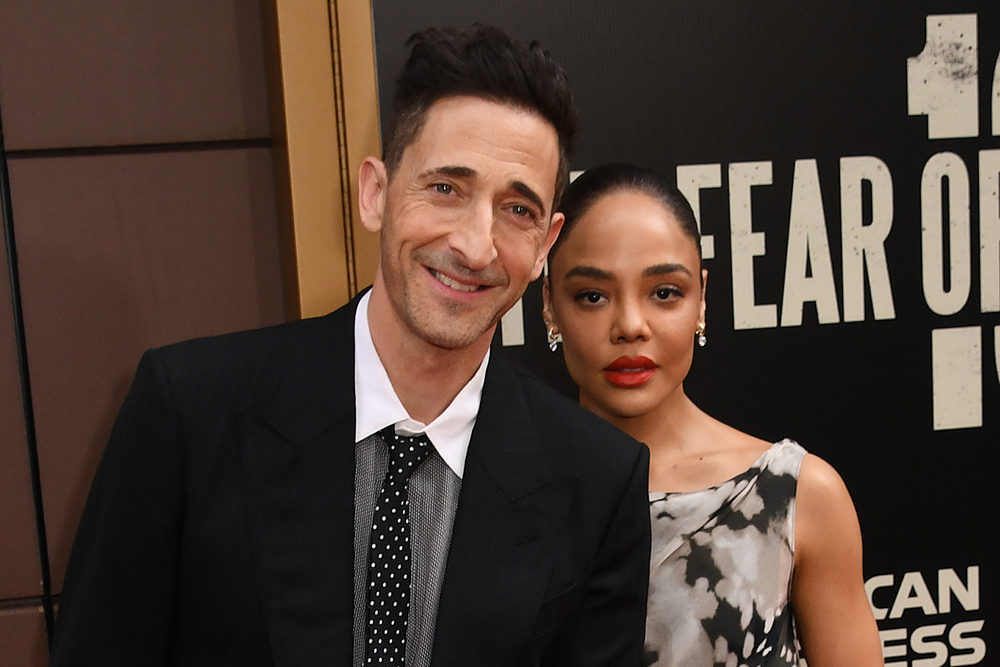
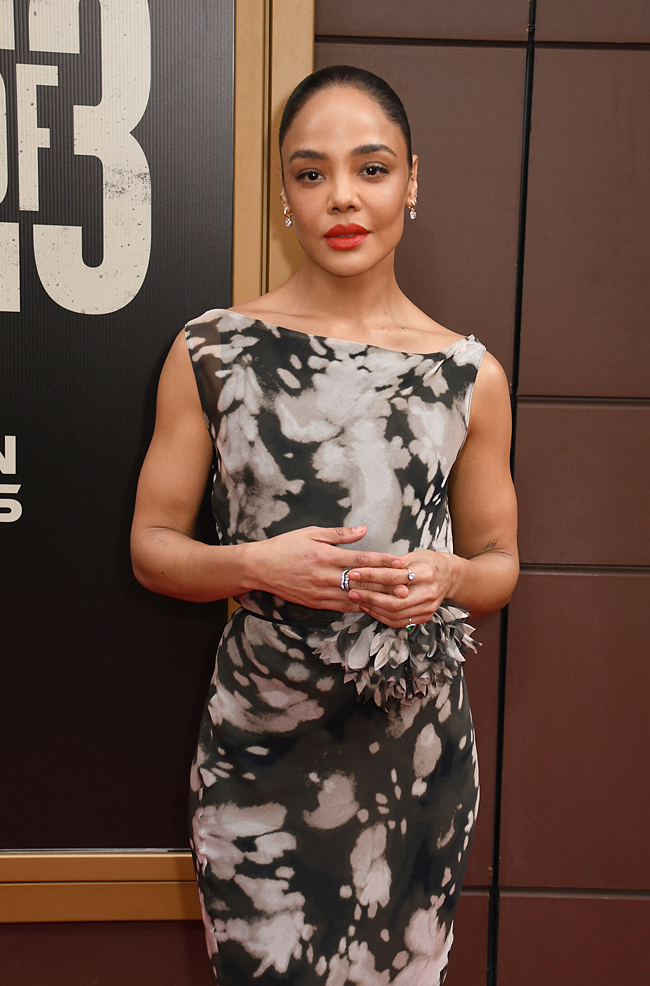
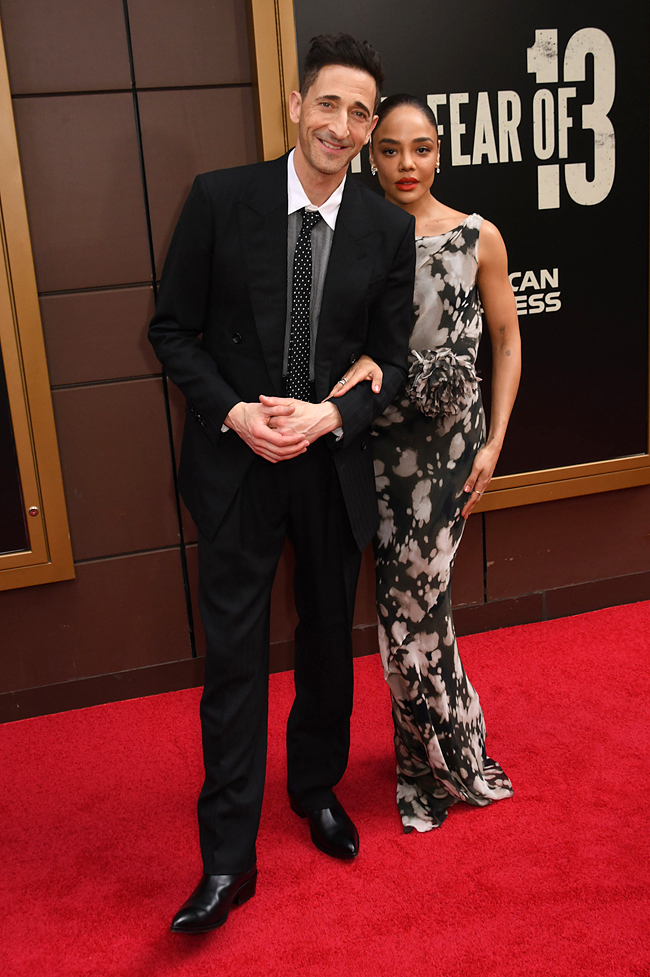
The opening night red carpet served as a visual prologue to the evening’s themes, with the lead actors opting for attire that balanced high-fashion sophistication with the gravity of the event. Tessa Thompson appeared in a striking ensemble from Christopher John Rogers’ Fall 2024 collection. The dress featured a complex, multi-tonal print that combined deep earthy hues with vibrant accents, managed by a structured silhouette that prevented the pattern from overwhelming the frame. Styled by Karla Welch, the look was completed with elegant jewelry and a sophisticated updo, emphasizing a polished, professional aesthetic.
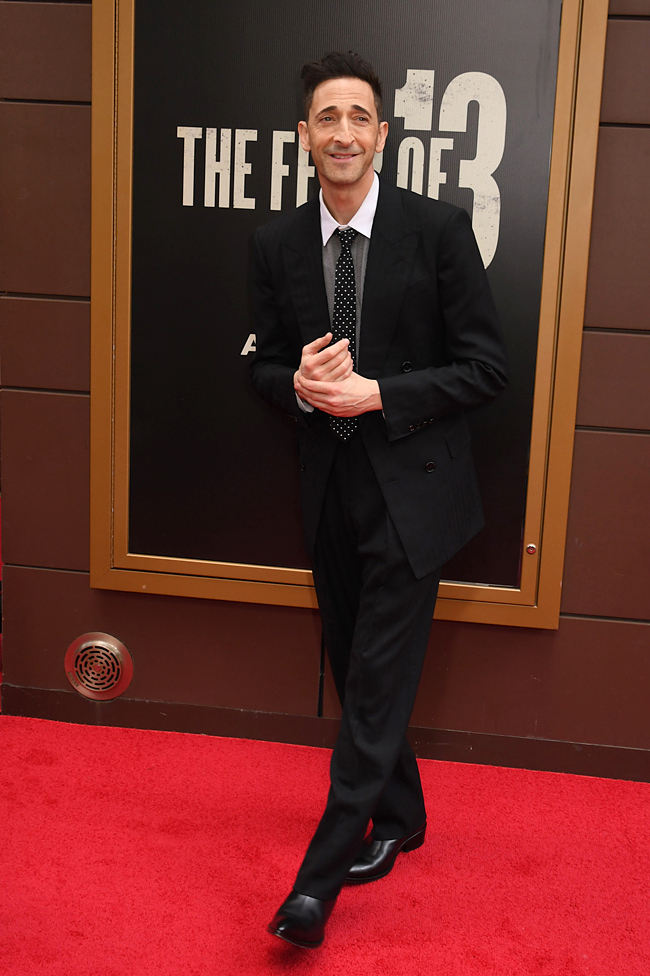
Adrien Brody’s appearance reflected a stylistic shift, likely influenced by his role in the production. Sporting a closely cropped haircut required for the character of Nick Yarris, Brody wore a tailored black suit paired with a patterned shirt and a coordinating tie. While maintaining the traditional formality of a Broadway opening, the choice of textures and patterns provided a modern update to the classic red carpet silhouette. The coordination between the two leads suggested a unified front for a production that relies heavily on the chemistry and mutual timing of its performers.
Production Advocacy: The Kardashian Factor
A significant development in the play’s journey to Broadway was the announcement that Kim Kardashian had joined the producing team. This marks Kardashian’s debut as a Broadway producer, a move that aligns with her multi-year commitment to criminal justice reform. Since 2018, Kardashian has been an active advocate for the wrongfully convicted, famously petitioning for the clemency of Alice Marie Johnson and working closely with the Innocence Project.
In an official statement regarding her involvement, Kardashian emphasized that the power of storytelling is often more effective than policy debates in changing public perception. "The Fear of 13 is a raw, honest look at the systemic failures that kept a man behind bars for twenty years," she stated. Her involvement is expected to bring a different demographic to the theater, potentially increasing the play’s reach among audiences who might not typically frequent Broadway dramas but are interested in social justice issues.
Chronology of the Production’s Evolution
The path to the Broadway opening was marked by several key milestones:
- Original Publication: The story first gained international attention through the 2015 documentary film The Fear of 13, directed by David Sington, which featured Nick Yarris telling his story directly to the camera.
- London Premiere: The stage adaptation by Lindsey Ferrentino premiered at the Donmar Warehouse in London in late 2023. It received five-star reviews from major outlets, including The Telegraph and The Guardian.
- Awards Recognition: Following its London run, the play received multiple Olivier Award nominations, including Best New Play and Best Actor for Adrien Brody.
- Broadway Transfer: In early 2024, plans were finalized to bring the production to New York, with David Cromer attached to direct.
- Production Expansion: In the weeks leading up to the opening, the production team was bolstered by the addition of high-profile producers, including Kim Kardashian.
Supporting Data: The Context of Wrongful Convictions
The themes explored in The Fear of 13 are supported by sobering data regarding the American legal system. According to the National Registry of Exonerations, there have been over 3,400 exonerations in the United States since 1989. These individuals spent a combined total of more than 31,000 years in prison for crimes they did not commit.

Statistical analysis of these cases reveals several recurring factors:
- Perjury or False Accusation: Present in approximately 60% of wrongful conviction cases.
- Official Misconduct: Identified in 54% of cases.
- Mistaken Eyewitness Identification: A factor in nearly 27% of exonerations.
- False Confessions: Often extracted under duress, these contribute to 12% of cases.
The play highlights these systemic vulnerabilities, specifically focusing on how a "routine traffic stop" can spiral into a capital case when the accused lacks the resources for an adequate defense.
Broader Impact and Implications for Broadway
The opening of The Fear of 13 signifies a broader trend in the theater industry: the rise of "socially conscious prestige drama." Producers are increasingly looking for material that offers not only high-caliber acting opportunities for A-list stars but also a platform for social discourse. By casting actors of Brody and Thompson’s caliber, the production ensures commercial viability while maintaining its intellectual and emotional integrity.
Furthermore, the play’s arrival on Broadway at this time reflects a cultural shift toward re-evaluating the history of the death penalty in the United States. As of 2024, 27 states retain the death penalty, though many have instituted moratoriums. Productions like The Fear of 13 contribute to the public conversation by humanizing the statistics and providing a narrative framework for understanding the human cost of judicial error.
As the production begins its limited engagement, it is poised to be a central fixture of the current Broadway season. The combination of a true-crime narrative, celebrity advocacy, and award-winning creative talent suggests that The Fear of 13 will not only be a critical success but also a catalyst for continued discussion on the intersection of truth, justice, and the American legal system. The opening night was more than a celebration of a new play; it was a high-profile acknowledgement of a story that spent two decades in the shadows of death row before finally finding its way to the spotlight.